
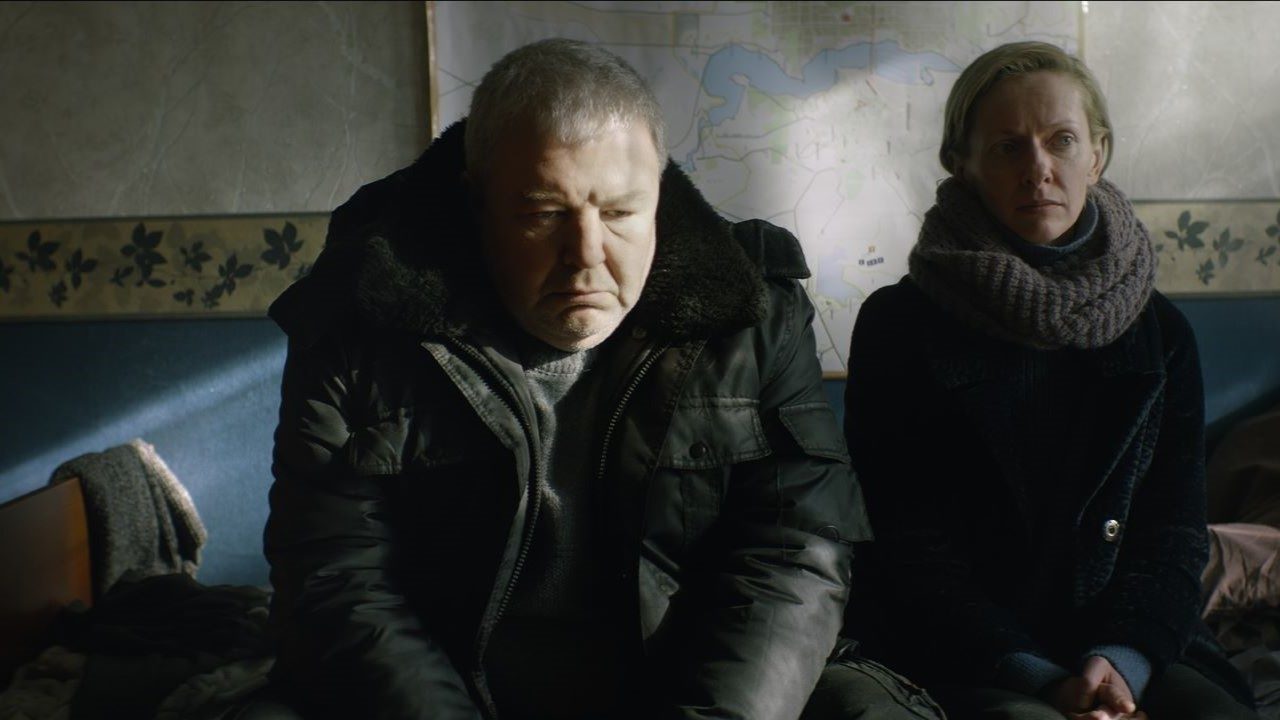
In October, at the "Mayak" festival, Nikolay Larionov's sensitive directorial debut "Eternal Winter" was shown, leaving without awards but winning the hearts of viewers. About the author's subtle work with the theme of loss and the film's connection...
"Eternal Winter" is immersive cinema. It comes from a bleak distance familiar to anyone who, on freezing winter days, trudged along beaten garage paths with their shoes slapping against their legs, who warmed themselves by a pipe in a stairwell and wiped a bloody nose with snow. It seeps through window cracks, fills the room with cold air, and chills to the bone. In the inhospitable Ural winters, those who have never been to the Urals will find something familiar, and it will sting even those who grew up outside the 2000s.
From Denis's diary entries (Sergey Gruzinov), we learn that winter in Magnitogorsk begins in October, that it's 2004, and that he is head over heels in love. He rides a shaky old tram from one bank to the other, sometimes skips school with his friend Fedya (Alexander Novikov), and writes serenades on CDs. He is timid but caring: he goes after his drinking father to the garage so he won't freeze when the power goes out in the neighborhood again.
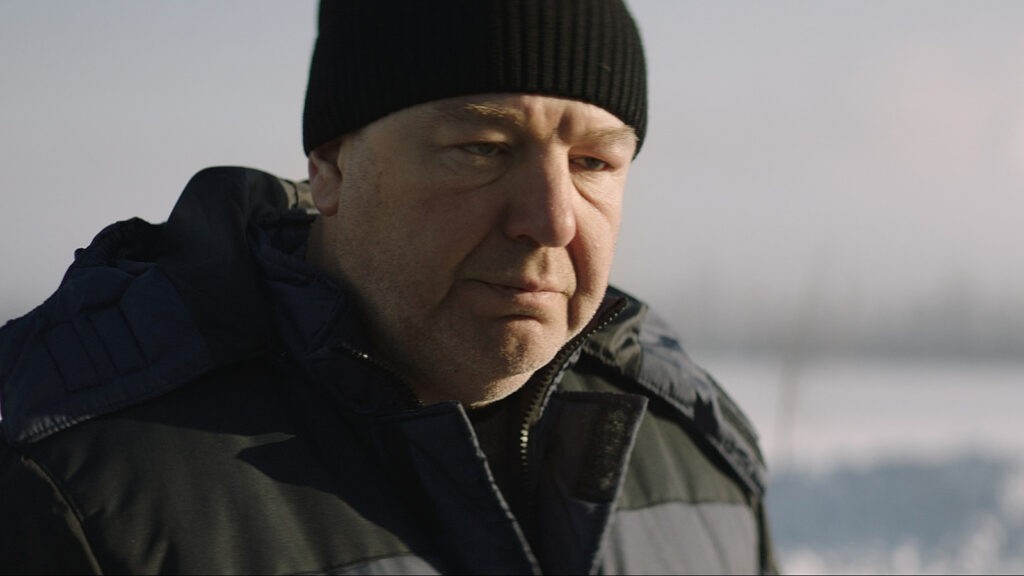
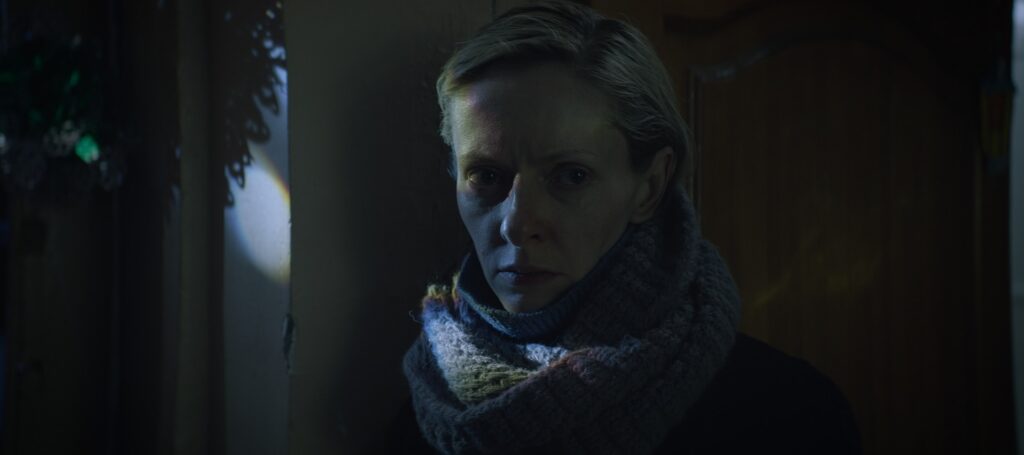
Father Vladimir (Alexander Robak) is a steelworker at a metallurgical plant, mother Elena (Yulia Marchenko) is a music teacher. Everything seems fine: "a three-room apartment, a dacha, a garage, two cars." Not everyone was so lucky even in the "prosperous" 2000s. Over a shot of vodka, dad teaches him to be a "real man," hangs a punching bag in the garage so his son learns to fight, and beats up anyone who dares to offend him. But Denis doesn't get to become a man: he is beaten to death by two thugs on the street just because of who his father is.
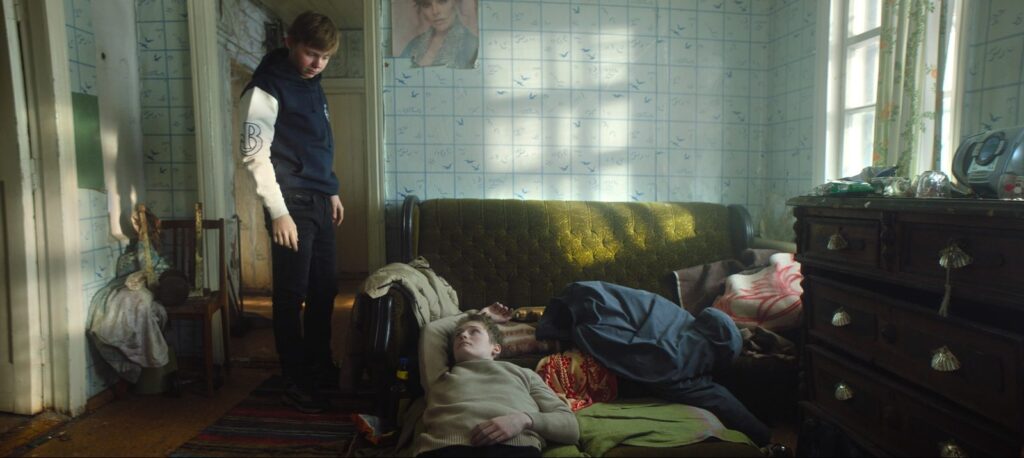
Having written the story within the coordinates of his youth, the director waited two decades before the film reached the screen. During this time, he achieved the necessary maturity, acquired a bright longing for a bygone time—in the Russian tradition, romanticized after decades. Magnitogorsk in 2004 is by no means an attractive place, not an obvious choice for a nostalgic immersion, but it is fundamentally important in the biography of Nikolay Larionov. "The Urals is a place of power," he convinced the crew filming night scenes at minus twenty degrees.
The choice was dictated not only by the familiar texture but also by the sunny winters. The camera of cinematographer Anton Gromov, whose works always give an extra dimension to treacherous Russian chthonic, captures this duality in "Eternal Winter": frosty-sunny cityscapes shrouded in factory haze, warm, pleasantly recognizable domestic life, and at the same time, harsh provincial hopelessness.
The work took a long time to grow. The first drafts of the script were written back in the late 2000s—back then it was a completely different film: much more brutal, naturalistic, inspired by either Balabanov or Haneke, and focused on young Denis.
Rewriting the story years later, Larionov shifted the focus from Denis to his parents, creating a story about coping with loss. The oppressive sense of anxiety still remains key, but death is, as it were, placed in parentheses, lost in the editing cuts, leaving room for speculation and generalization. It becomes ethereal, omnipresent: howling wind on the roof, humming with the never-ceasing rumble of the plant, and lurking behind the peephole, as in "Night Watch."
But Larionov does not manipulate the viewer's emotions, does not speculate on the topic of child death, but carefully enters the territory of conversations about post-trauma, painful and uncomfortable. The question "who is to blame?" will hang in the air, fall on everyone's shoulders, and torment each one. Is it the father, who first kicked the thugs out of the entrance? Friend Fedya, who boasted about his experience in street fighting but then stood by as a silent witness? We observe this tragedy through their eyes, together with them we get to know Denis through his diaries, cigarettes hidden under the bed, and awkward love songs.
In the Russian dimension, "Eternal Winter" inevitably generates new meanings and analogies. Grief seals the characters in an eternal winter, in a timelessness, in suspended animation, in a futile attempt to fight a bitter fate. The father tries to find the killers and take revenge, chasing a red jacket like a bull; the mother follows the traces of her lost son, searches for the slightest mention of herself in the pages of his personal life, gets stuck like in a swamp in things, places, memories. Each has their own trajectory, each their own investigation. Loss dehumanizes them, disunites them, splits them. Under the weight of Robak's eyelids lies the unspoken, the uncried; in Marchenko's glassy gaze sparkles madness and pain. Winter imperceptibly creeps into the house, covers Denis's room with snow, freezes the last human feelings. In the haze of everyday life, each gropingly paves a path to nowhere.
Larionov already deserves to be placed alongside Boris Khlebnikov and Natalia Meshchaninova. His screenwriting and directorial debut elegantly fits into the line of great tragedies of little people—victims of social ugliness. Documentary texture here coexists with a Tolstoyan attitude towards the characters, equally (not) right and unhappy in their own way. Their cinema is almost always about difficulties of communication, about estrangement, alienation, and distance.
Unexpectedly, echoes of the stagnant-era "Hunting for Foxes" by Vadim Abdrashitov and Alexander Mindadze are also found. There, worker and family man Viktor Belov, beaten late in the evening by two teenagers, seeks justice—he either judges his offenders or visits one of them in the colony, fruitlessly setting him on the "true path." But in Larionov's film, Vladimir is not Belov; he is a grown-up hero of the generation of belikovs and strizhaks, lost boys of the pre-perestroika era. Perhaps he knows no other language than violence: their fathers, content with external well-being and professing the religion of "real men," did not teach them otherwise.
In the censored ending of "Hunting for Foxes," Belov beats the criminals in the same place—the circle closes, the conflict is logically resolved. But Larionov, having learned the lesson, understands: "There's no need to look for anyone, it will never end otherwise." He invites the viewer to put the period themselves, to live with the tragedy as long as needed, and to escape the cursed winter without the note "time heals." And from the story, he leaves only a grain—an hour and ten minutes of unsentimental drama.
"Eternal Winter" in theaters from October 31.
Trailer:
Commentaires
0Aucun commentaire pour le moment.
Connectez-vous pour participer à la discussion.