
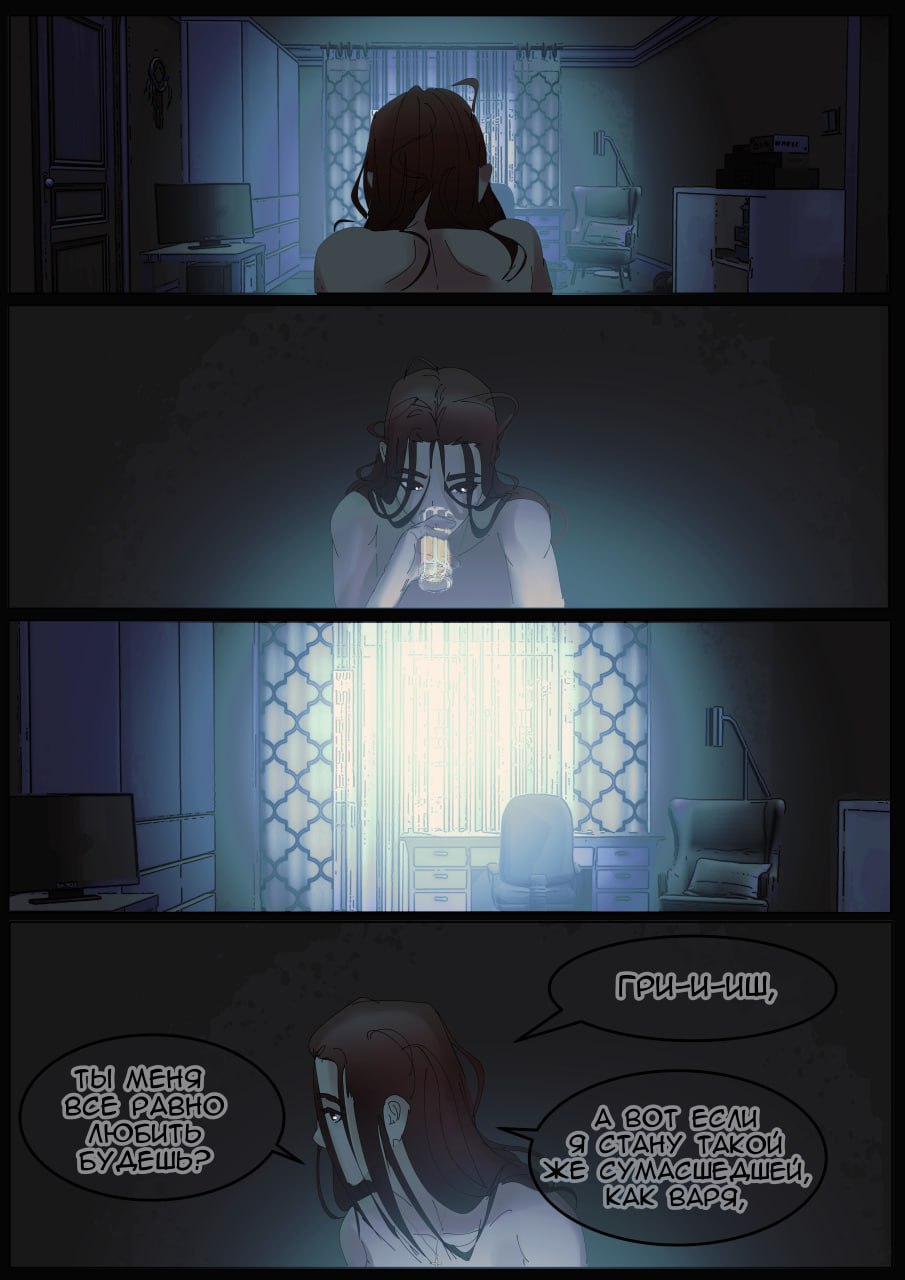
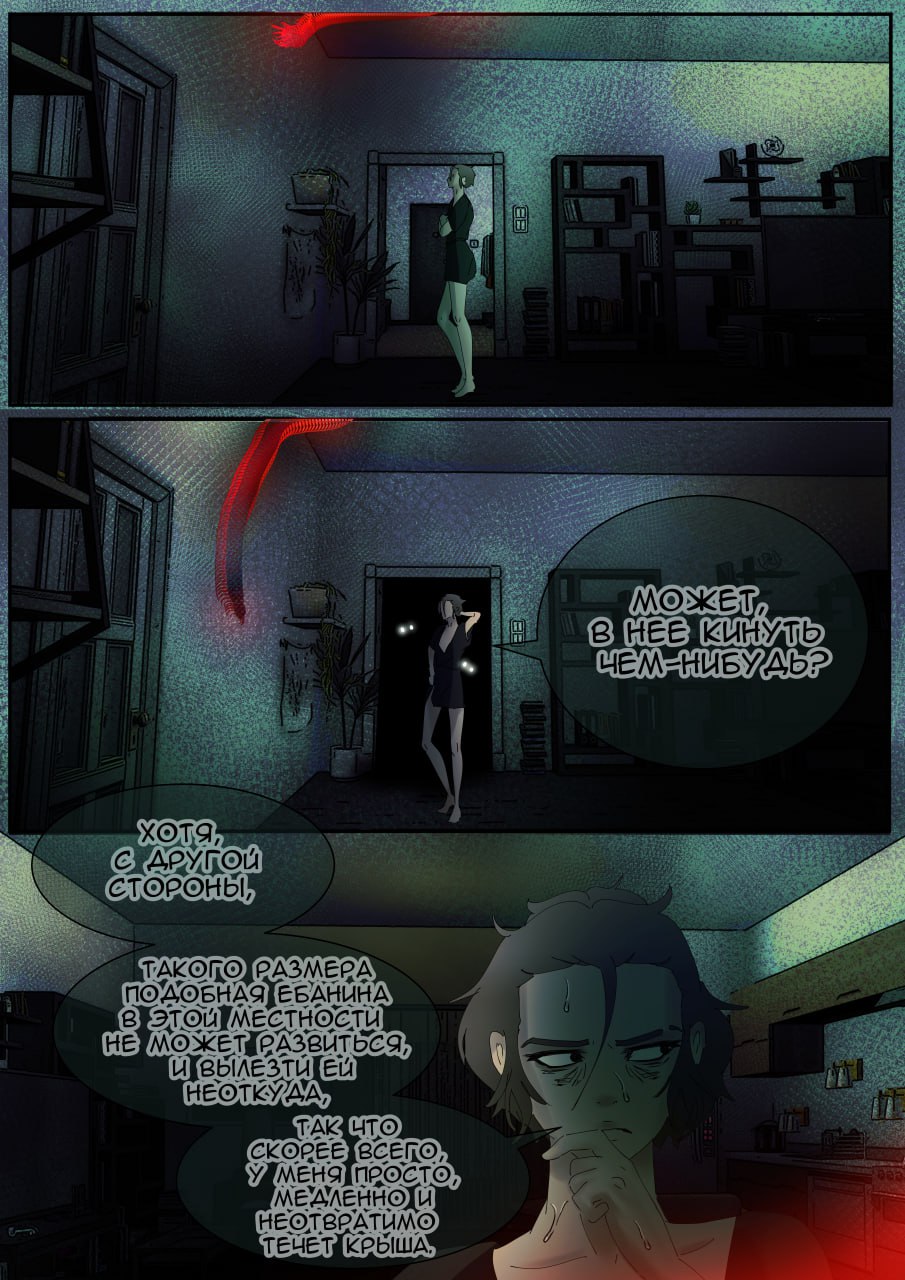
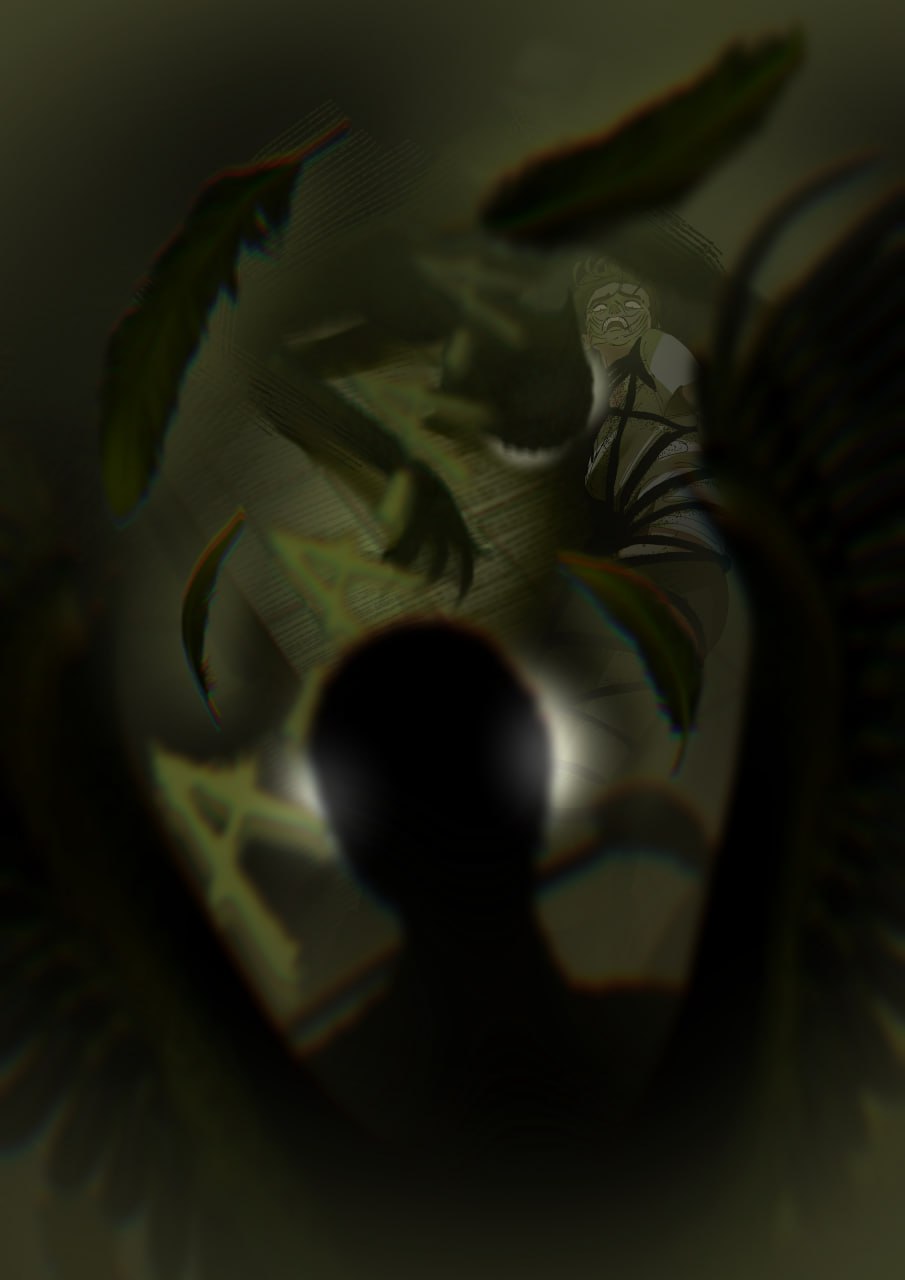
It's finally time to talk about
😢different types of hallucinations😭
First of all, hallucinations are not only visual,
we all know about auditory hallucinations, but there are others. For example, tactile sensations - when it seems that bugs are crawling under your skin, that's exactly from here. Feeling cold and heat out of nowhere can also be a hallucination - I met a girl who had something similar, in a psychiatric hospital.
Hallucinations can occur not only in schizophrenia.
There are many mental illnesses in which you can see all sorts of weird stuff - for example, bipolar disorder, borderline personality disorder - and other head games.
Also, people can see and feel things that aren't there even without having the happy ailments that ruin life. For instance, this can start after a head injury, or due to drug use, medications, or alcohol.
But generally, calling everything that isn't there but a person sees it a hallucination isn't quite correct.
Hallucinations are part of the clinical manifestations of "perceptual deception"
This includes
Illusions
Pseudo-hallucinations
True hallucinations
Illusions are a variant of normal,
this is when you see a cat in the shadows that isn't there, when after a scary story in the dark a chair seems like a monster, or any other visual trick. This is common - but this thing can intensify under strong emotional stress, as well as when using various substances.
Pseudo-hallucinations are what a person perceives as something that definitely isn't there, but! it exists in their head.
With pseudo-hallucinations, people understand that what they see is not something that exists, because they have a persistent feeling that this hallucination is inside their head. Pseudo-hallucinations do not interact with the outside world.
True hallucinations are what a person sees and accepts as part of the world.
Whatever they see, feel, or hear - it's part of their world, it integrates into it so that it's indistinguishable from reality. And a person encountering this for the first time may not even understand that they have a hallucination at all. They might see a demon - this relates to demonomanic hallucinations - and for them, it will be as real as a cup or a kettle on the stove. Even if there is no cup. Even if there is no kettle. And no stove either.
A person following their hallucination can do the wildest things. In Addiction, there is a character diagnosed with schizophrenia, we'll learn about him in the second volume.
But! With a certain level of awareness about hallucinations, experience with them - and also the behavior of other people greatly influences the perception of hallucinations - as well as with well-developed critical thinking, people can begin to recognize the hallucination and distinguish it from the world. It doesn't become a pseudo-hallucination because of this; it still blends into the world and becomes part of it, but with constant encounters with the same hallucination - which is often evidence of trauma - it can be distinguished, and accordingly, coped with. I read about a method of one girl with schizophrenia: when she suspected she was having a hallucination, she photographed what seemed strange to her. In the photo, the hallucination was not transferred, remaining in space.
I'll tell you something else about this later
Comments
0No comments yet.
Sign in to join the discussion.