
Who Run The World?
"The Devil Wears Prada 2" wasn't a revelation. Although it's obvious that in the "old vs. new" comparison, the scales will always tip in favor of the former. Because the 2006 film is steeped in sentimental experiences, pride for Anne Hathaway's heroine, and sympathy for Meryl Streep's character.
Both films react vividly to the contemporary agenda. In 2006, we flipped through glossy pages, unable to tear ourselves away from articles like "Why Aquarians look good in blue." In 2026, the world is online, which monumental publications still find hard to accept. Now the reader's attention span is like that of a six-year-old; you have to fight for it. And these issues are reflected in "The Devil Wears Prada 2." However, the motif of social media, influencers, and bloggers is lost.
Questions about the sequel arise from the first scenes of sterile New York, the smooth color grading, and the lack of societal representation. There is no longer an ode to the fashionistas of the Big Apple, no emphasis on beauty standards.
The conflict again revolves around familiar characters; perhaps the screenwriters were afraid to put Gen Z in leading roles (and they shouldn't have been, as a representative of that generation, I say!). Moreover, the characters become template versions of their former selves. That's sad.
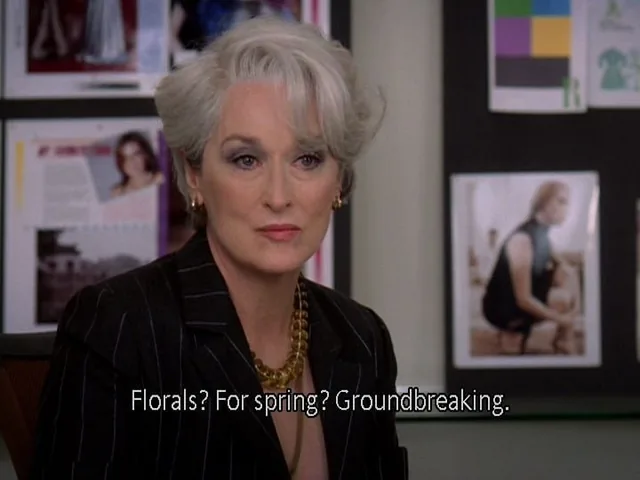
The entire charm of Miranda Priestly lay in the image of an unbreakable monolith, a monumental magazine editor. That's why a single scene of weakness would break the audience's heart. Over twenty years, this image has become entrenched in the public consciousness, so the screenwriters didn't feel the need to maintain the "monolith image" and decided to show Meryl Streep's eloquently pitiful eyes in every scene, forcing her to verbalize her emotions. It feels like a once-great woman has become a sentimental old lady (on the other hand, what other career trajectory could there be? We'll all end up there).
The men in the film—my respects. All except Stanley Tucci are bearded, slightly gray (remember, 40 is the new 30?) and completely compliant. They are like heroes from "Romance Club," ready to follow the heroines' life choices, declaring how much they love their women. Hilarious!
"The Devil Wears Prada" felt groundbreaking because of its focus on a female boss and polite representation of career women. Over twenty years, this idea has firmly taken root in the audience's consciousness, so the feminist statements of the heroines feel weak compared to the contemporary agenda. It feels like the story has closed in on the same themes, especially relevant in 2006.
Globally, the story has developed, closing the gestalts of the first part (like Andy and Emily's friendship, recognition of Nigel's achievements), but nothing more.
To watch or not to watch, that is the question. It seems yes. Despite all my complaints, the audience regularly laughed and rejoiced at the appearance of favorites on screen. And that's worth a lot.
Comments
0No comments yet.
Sign in to join the discussion.