

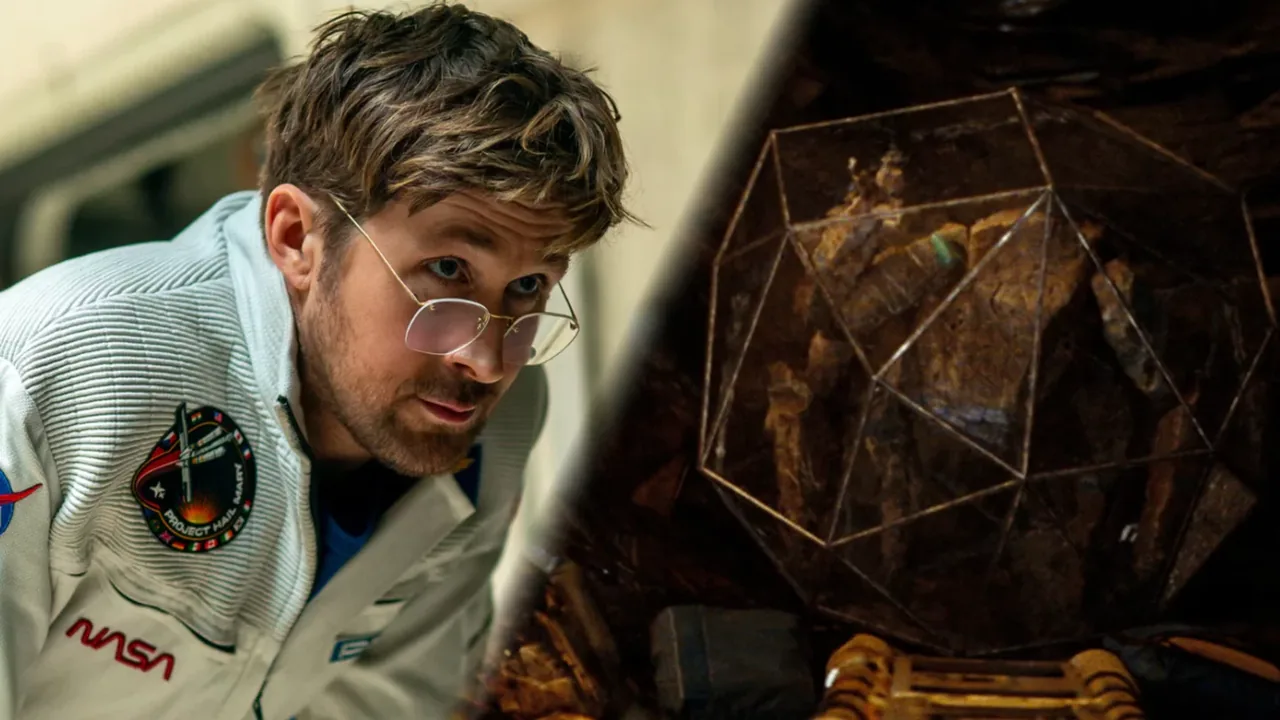
Project Hail Mary is actually not about saving Earth at all. More precisely, formally the plot is exactly about that, but the ending works on a completely different plane. This is the story of a man who spent his whole life avoiding responsibility, normal intimacy, and any situation where he would have to truly risk himself for others.
Ryland Grace at the beginning of the film is not a hero. And the film shows this quite harshly. He does not rush to save humanity, does not make pompous choices, and generally does not resemble a typical science fiction character. On the contrary, he constantly tries to hide from difficult decisions. Even in the flashbacks, it is clear that he would prefer to remain a schoolteacher, live in a safe and understandable environment, and not face the real pressures of the world. When he is offered the mission, he does not accept it as a calling. He is literally forced to participate.
And that is precisely why the ending works so well. His entire transformation does not happen because he suddenly becomes a “chosen hero,” but because circumstances slowly break his habitual behavior pattern. Finding himself in complete isolation, he is forced for the first time to build real contact with another being. Moreover, with a being that is not at all like a human. Rocky becomes for him not just a partner, but the first truly close being for whom he begins to sincerely care.
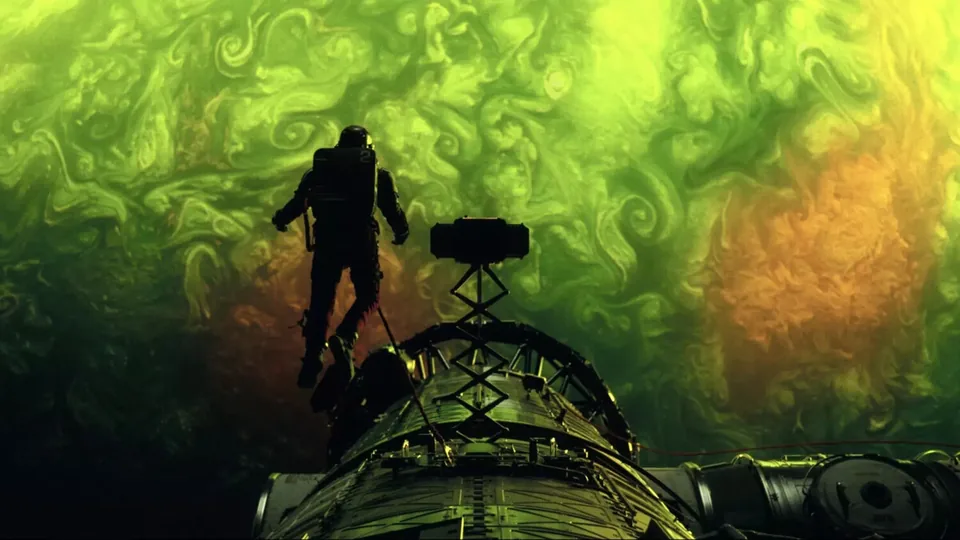
The most important thing in the ending is the moment when Grace realizes that he can return home, but for that he would have to leave Rocky to die. At the beginning of the story, he would most likely have chosen himself. And the film directly leads to this thought. But by the finale, he is already a different person. For the first time, he makes a choice not out of fear, not out of a desire to hide, but out of empathy and responsibility. Moreover, this is not a beautiful heroic self-sacrifice for humanity. It is a much more personal act. He saves a specific friend.
And the fact that he ultimately does not strive to return to Earth seems like a very important detail. It does not feel like a defeat or a rejection of home. Rather the opposite. For the first time in the entire film, he stops living in a mode of constant flight from life. On Erid, he unexpectedly becomes calmer, more open, and even happier than he was among people. He starts teaching again, caring for others again, but without fear and internal withdrawal. For a person who at the beginning of the story was emotionally hiding from the whole world, this is perhaps the main sign that he has finally grown beyond himself.
Comments
0No comments yet.
Sign in to join the discussion.