
"Widow's Bay" has taken over Reddit—fans are convinced something is off with the mayor's assistant, time on the island is anomalous, and Tom himself has long known about the curse. We break down the strongest theories of the series.
Apple TV+ has released the series "Widow's Bay," which manages to be simultaneously funny, creepy, and witty in a single episode—and by the fourth episode, it has already amassed a whole fan base that methodically dissects every scene. Reddit never sleeps, and frankly, it's easy to see why.
What Is "Widow's Bay" About?
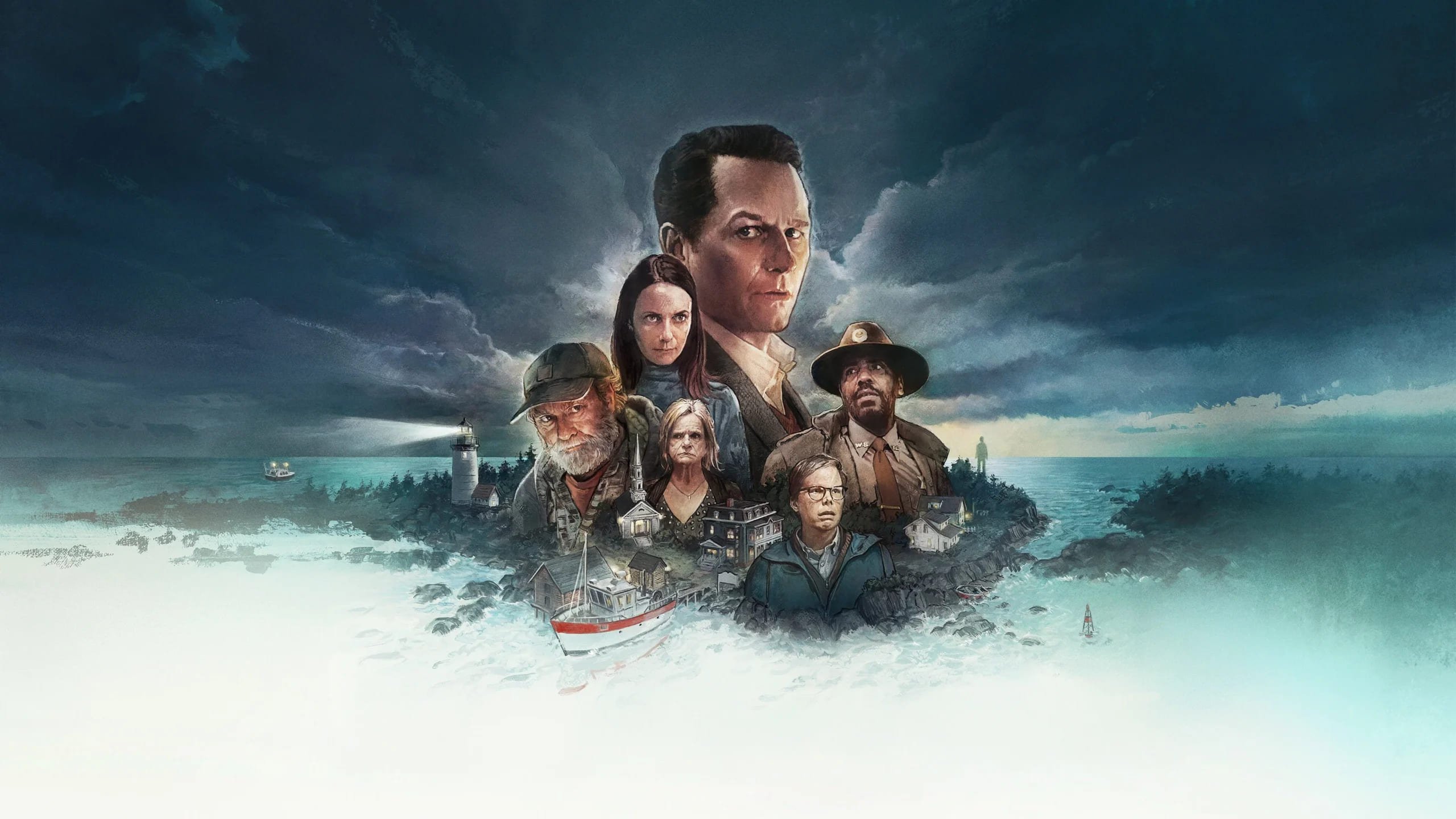
A quiet island off the coast of New England. Mayor Tom Loftis (Matthew Rhys) is maniacally determined to turn the godforsaken town called Widow's Bay into a tourist destination: no Wi-Fi, spotty cell service, and superstitious locals convinced the island is cursed. Tom doesn't believe them; he invites journalists from the NYT and generally acts like someone who has never watched a horror movie. Naturally, tourists arrive—and that's when old stories that seemed too absurd to be true start happening again.
The show's creator is Katie Dippold from "Parks and Recreation," so there's plenty of dark humor. But after the fourth episode, laughing becomes a bit harder. The directing is handled by Hiro Murai ("Atlanta," "The Bear," "Barry"), Ti West ("X," "Pearl," "MaXXXine"), and others.
Tom Is Building Not a Resort, but a Cage
The official reason for Tom's desire to attract tourists is the economic revival of the island. Fans, however, are convinced there's something much more personal behind it. There's a belief on the island that those born here who leave for the mainland die. Tom's son was born on the island. So, the busier it gets around, the fewer reasons the teenager has to run away. The mayor is building tourist infrastructure not for the budget—he's constructing a trap with the best of intentions.
This explains both his almost pathological obsession and why he ignores the obvious signs of an impending disaster for so long. The rational man in him gave up long ago—only the father remains, desperately keeping his son close.
What Happened to the Mayor's Wife? Maybe Tom Is to Blame
The series has only hinted at the mother of Tom's son, but fans have already pieced it together. She left for the mainland—and died. That's exactly what explains the nervous residue of anxiety in Tom. It's not fear of the unknown; it's the memory of a loss he has already experienced.
According to a more radical version, Tom didn't just lose his wife—he tried to get her off the island, and that's what killed her. In that case, his entire tourism project means it's not only a cage for his son but also atonement.
Patricia: Ghost, Witch, or Conduit?
After the first episodes, a theory circulated among viewers that Patricia (Kate O'Flynn) is a ghost. They said only Tom talks to her, and her suggestions for the brochure don't make it into the release. Later, this version falls apart. However, the fourth episode, entirely devoted to her, didn't so much answer questions about who the mayor's assistant is as multiply them.
Patricia is a local native who was nearly killed in school by someone mysterious who sent her classmates to the afterlife. Since then, she has lived on the island among the same people (but former friends ignore her, thinking she's a liar), in the same confined space—with no chance to start over elsewhere because (theoretically) she can't leave.
On the eve of the festival, a mysterious book falls into Patricia's van, triggering a chain of strange events. She prepares punch for the party and makes a toast. Then we see her, wearing a satanic headdress, ordering guests to drown themselves in the ocean. Coming to her senses, Patricia throws the book (which has taken the form of a grimoire rather than a self-help guide) into the fire—and the spell dissipates. But the question of who planted the book remains open.
The most interesting observation is that the creature, which could clearly have killed her on the beach along with the other party guests, did not do so. As if it recognized her as one of its own. Perhaps Patricia is not a victim of the curse but an accomplice? A channel through which the island tests people's strength, so to speak.
Time Here Literally Devours People
The most chilling moment in the second episode is not the clown in the ventilation (though that's great too). The real horror is the "Captain's Room" in the hotel, where the owner goes in for thirty seconds and comes out with the face of someone who has seen things better left untold. In that time, the room has become covered in black mold, clearly hinting that time there operates by its own rules.
But what if this applies to the entire island? The local doctor looks seventy, but his medical record says he's 37. Tom's assistant gets upset when he says she's "over forty"—even though that's exactly how she looks. Fans are convinced the island is not just cursed; it devours time.
The Island Lives in Cycles
From the previous take comes a larger theory. The story about the church and cannibalism, passed down by locals, didn't happen "long ago" but in one of the previous cycles, which is now beginning to seep through reality again, like a damp stain through plaster. Viewers note recurring visual motifs in episodes 3–4—the series carefully provides déjà vu not only to the characters but also to the audience.
This leads to a truly grim conclusion: Tom's tourism project does not break the curse—it triggers a new turn of the cycle, just with tourists instead of witches and a church parish.
The Well as the Island's Hard Drive
At the end of the third episode, Father Bryce puts his ear to the well—and then starts acting as if someone flipped a switch inside him (and later commits suicide). Reddit collectively decided that this is not a classic portal "to hell" but a kind of "archive."
Those who listen to the well risk being "overwritten"—not possessed in the style of "The Exorcist," but literally replaced by versions of themselves from a previous cycle. Hence characters who suddenly utter phrases they shouldn't remember or react to events with a sense that "this has happened before." The well is access to the island's memory, and the price for it is one's own identity.
Rosemary Is the Only One Who Survived the Last Time
Rosemary (Dale Dickey)—skeptical, always smoking, Tom's assistant—reacts to events as if a long-familiar nightmare is returning. Every comment she makes about the curse sounds not like superstition but like eyewitness testimony. And she knows the legends firsthand.
A popular version: Rosemary survived one of the past cycles. Hence the mix of fear and resignation when it comes to the island. She can't be scared by legends because she didn't hear them from her grandmother—she was there herself.
In a more radical interpretation, Rosemary, not Tom, is the true moral center of the story as the only person with experience of surviving horror.
Verdict
"Widow's Bay" from Apple TV+ is a rare case where a series manages to be funny, scary, and smart all at once without sacrificing any of these qualities. Matthew Rhys carries this whole circus on his shoulders with such naturalness that he seems to be playing not a TV mayor but a real person trapped in his own rationality.
The weekly release of episodes is torture for the impatient, but it's precisely this that gives theories time to mature and accumulate details. There are still 6 episodes left. The finale is June 17. What other plot theories will we come up with by then?!
Comments
0No comments yet.
Sign in to join the discussion.