

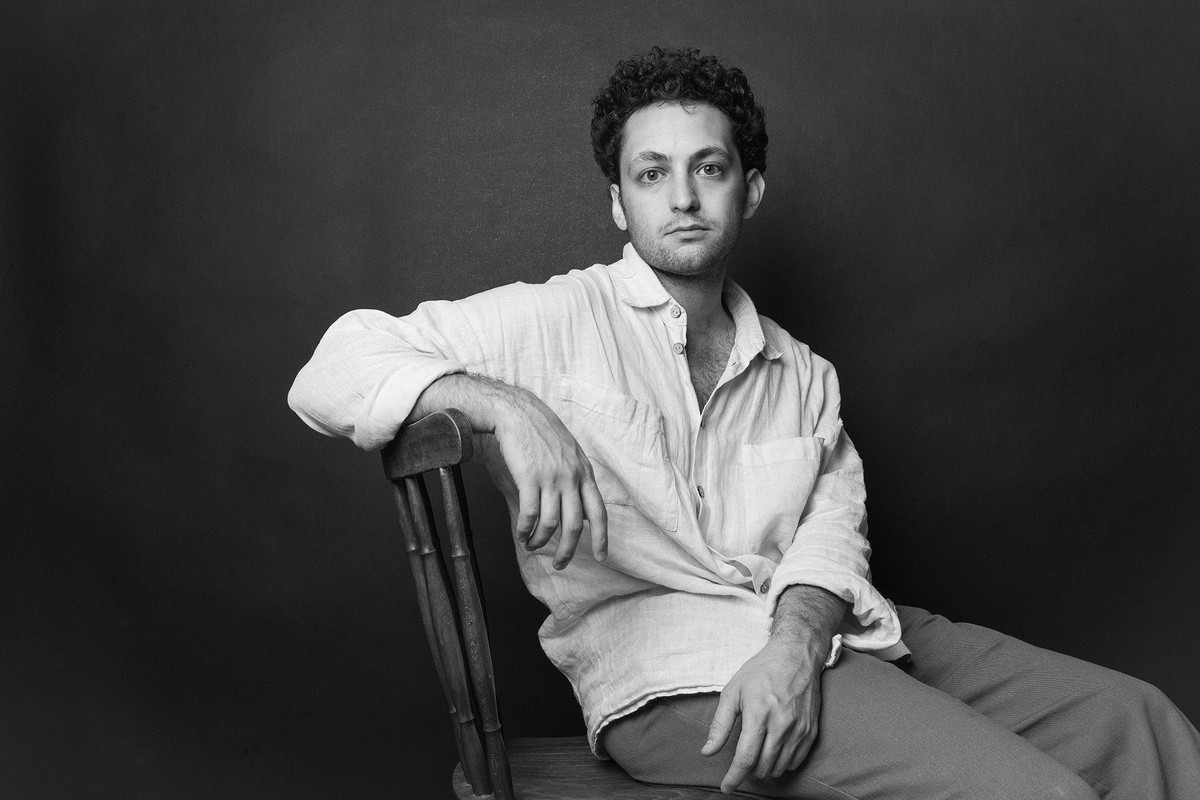
Interview with Andrey Natotsinsky, director of the documentary "Naum. Premonitions": about the patriarch of film studies without bronze, the Hippocratic oath, and the legacy of the father of the Thaw.
On April 29, a new work by Andrey Natotsinsky, "Naum. Premonitions", about the chief curator of our cinema history Naum Kleiman, was presented in Voronezh. We discussed with the director the youth of the soul, the benefits of illusions, and the ever-relevant Khutsiev.
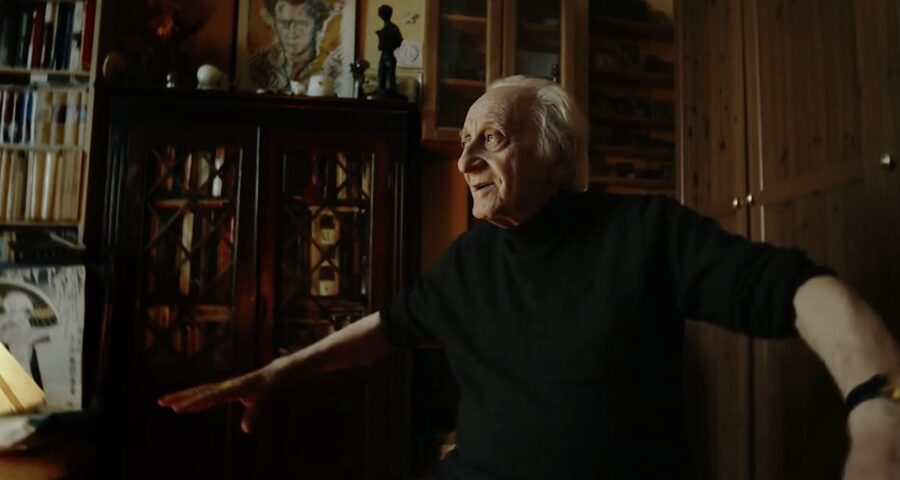
– Why did you decide to make a documentary about Naum Ikhilyevich? Who did you see in his figure?
I started filming out of necessity. Simply because I couldn't not do it. Probably, there are very few such people left now who can send you literally in all directions. Messengers from him lead to all ends of history.
– At what point did you realize that Kleiman would not be the main character in this film, but rather a kind of guide between eras, between the history of cinema, the history of the country?
Fortunately, this film was largely shaped intuitively, and it cannot be said that there was a moment when I decided something. I cannot claim whether Naum is the main character in this film or not. I tried, first of all, to create a harmonious unity. It seems to me that it is very easy to do this with Kleiman, because he himself is a whole and unshakable person. If you listen to him, then, probably, this aura can spread outward.
– In the film, Naum Ikhilyevich's thoughts and memories are often continued with shots from world cinema classics. How did this editing technique, similar to poetry, come about?
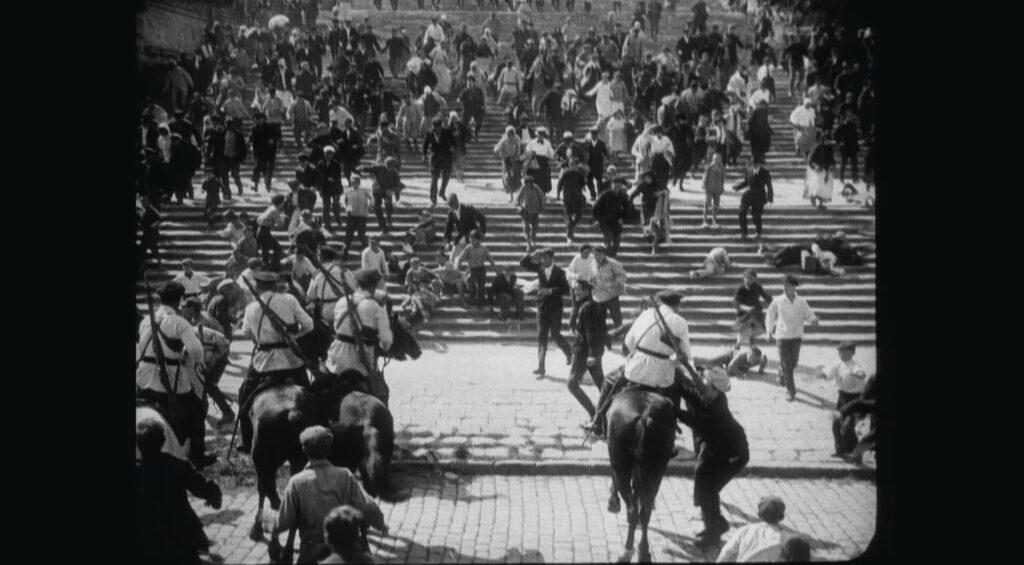
It's like asking a poet how his poems are born. He is unlikely to answer. But I never wanted to comment on Naum's words. I wanted more to create a kind of space of contrasts, perhaps using some of his hints, what he didn't say. And even more — to create a certain space of time for which this or that film, piece, melody was suitable. And they already create tension and atmosphere that build the world of the film.
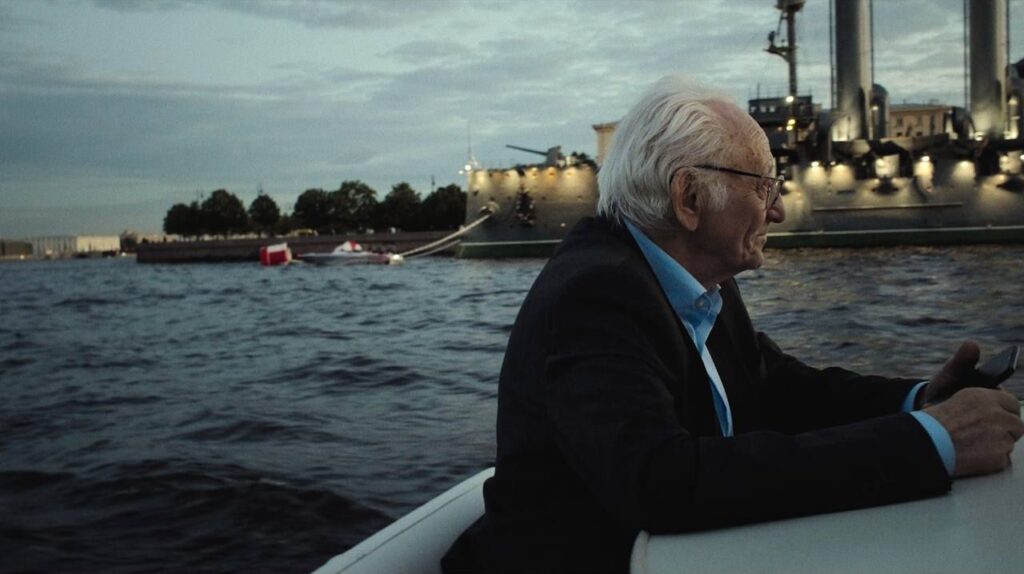
– I read many reviews, and it was repeatedly noted that the film has excessive monumentality in depicting the hero. But it seemed the opposite to me. Tell me, please, how, with such love for the hero, did you manage to maintain this distance and not turn it into a panegyric?
I think a very bad author is one who cannot distance himself from the hero, and I would be a slave of love. But, fortunately, this was avoided. I am sure that my profession helps here first and foremost. After all, the only thing we do this for is to create a cinematic work. It is always bigger than the hero, speaks about the time. If you follow the hero like an obedient donkey, as they like to do in some documentary schools in our country, then such following is more like slavery. This unwillingness to express oneself is completely alien to me.
– In general, Naum Ikhilyevich, in the understanding of, say, my peers, is such a noble elder, a guru who can say very important thoughts about our time, about ourselves. But in your film he is somewhat different, he retains this wisdom, but at the same time he is sometimes playful, sometimes laughing, sometimes even a bit of a hooligan. Was there an intentional task to break this image in the eyes of the audience?
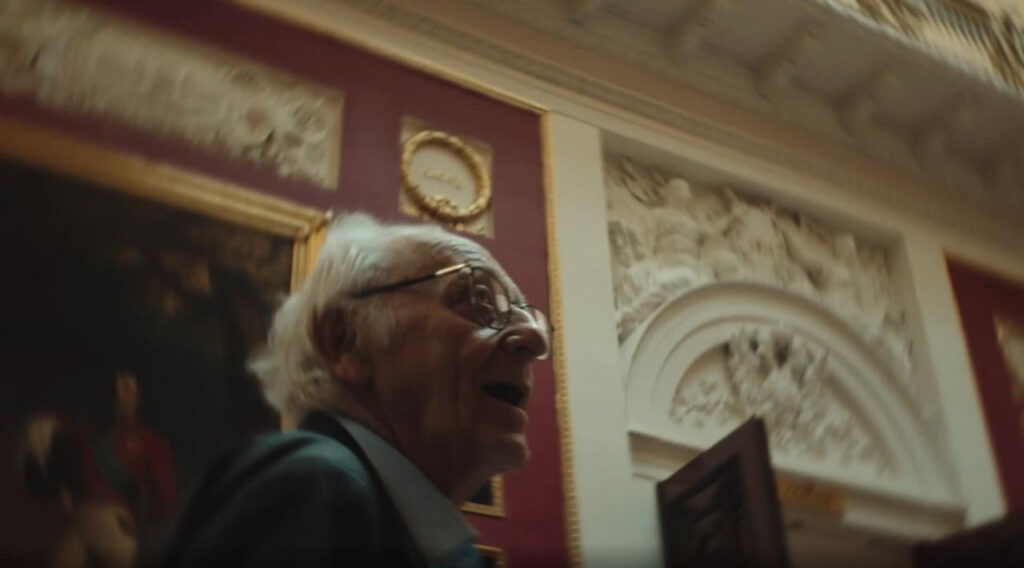
There was no intent. A person, as is known, is a complex complex of contradictory currents, feelings, potentials. A good actor is ambivalent, he is broad. That's why we value Marlon Brando, Klaus Kinski or Marcello Mastroianni. Because they give us that range in which they can be very different in one scene, and sometimes even in one phrase. They change. I think Naum has this huge, above all, human range. And I wanted the viewer to learn and see this. Kleiman always surprises.
– What exactly struck you about Kleiman? I know you've known him for over two years.
Sometimes you can be surprised by very simple things. For example, an instant feeling of kinship. You expect him to be a patriarch and a great elder who will bless you, but you see something completely different. You are surprised by the living and real, which seemed impossible. I experience this miracle every time we meet. If I am sometimes able to rust somewhere in thought, grow old, or be overly ponderous, then in Naum this has never been.
– I know that Kleiman was a comrade of Shpalikov, knew Godard well, was friends with Shukshin. A person who, in our eyes, changed the opinion about the figure of Eisenstein, who for a long time was considered a Soviet propagandist, but it was thanks to Kleiman that we understood that Eisenstein is a personality who reassembled the structure of cinema. And so, together with Vyacheslav Shutov and Sergey Kalvarsky, you are part of his inner circle and even visit him at home. Doesn't it seem to you that when watching, there is a certain distance between the ordinary viewer, when we watch this, and you, who know Naum Ikhilyevich perfectly?
Distance is not always bad. A hero, actor, or director does not have to be a nice and kind interlocutor to each other or to the viewer. Perhaps that is why works exist.
Although I will immediately refute myself and say that people who meet Naum after a lecture feel accepted in the warmest sense of the word. They express their thoughts to him, some talk about their dreams, and he listens to them with genuine interest and involvement. And this deeply amazes people, because we do not often meet such people in life.
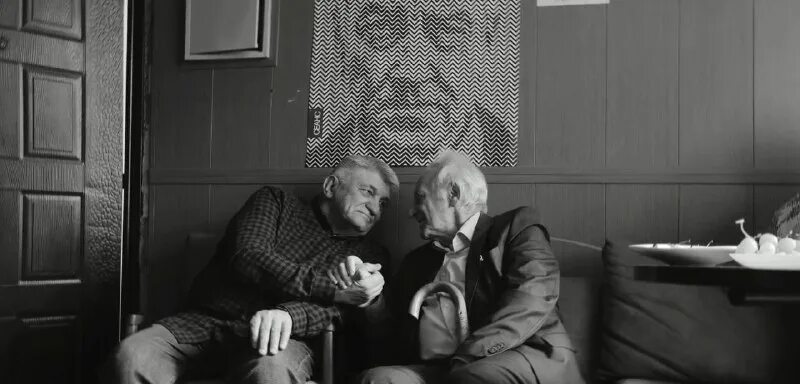
– In the central scene of the film, Kleiman and Sokurov talk about the uncertain future of cinema, modern film studies, and the lost VGIK. I recall that in one interview you said you were not very satisfied with the current state of film criticism. How do you think, can this situation be corrected?
Probably, first you need to understand what idea you serve. If it's money, quick fame, and the "scene" — that's one thing. A serious conversation about film studies is possible only with education and devotion to cinema. I'm tired of being a critic of film criticism; my job, of course, is to make films, but the crisis is obvious. And I think other people see it too.
There is a lot of cowardice in the industry, because everyone wants to make money and write a text hastily. It's easy, of course, to write based on first impressions, because often films come out that do not allow deep analysis. Rarely does a film come out that can touch you beyond the level of impressions or some picture of friendly or not-so-friendly connections.
Ideally, someone should take an oath, of course not to Hippocrates, but to some great figure of cinema. And then it would be inconvenient to write poorly. I hope we return to the point where directors give reason to talk about themselves seriously.
This applies not only to Russian cinema but also to world cinema, because the crisis is universal. I thought that such upheavals as we are experiencing now would lead to the language of art changing. But so far, that cannot be said. I hope that there are people nearby who, in their spirit, fight for the opportunity to express themselves differently.
– We have perhaps lost the tradition of continuity, haven't we? In the film, the figure of Kleiman connects eras and times. There is Alexander Sokurov's course, and we all know outstanding young directors who emerged from under his wing. There is Sergei Solovyov's workshop, which also has worthy students who win at various film festivals. But the school itself seems to be shrinking every year. Some masters become bronze, and their protégés get nothing.
Naum taught me that there is no bad time. In different times, there were figures covered in bronze who lost this very school. I repeat, the crisis is obvious, but we need to do the work and do everything to save this sinking ship; fortunately, we have not lost the helmsmen, as long as there are people who can tell us how to patch the holes in this ship, we will not sink. At least, I still float in these sweet illusions.
The main success of our difficult time is that now everyone can make a film. Be it a phone, a GoPro camera, or X-ray and thermal imaging. Access to such technologies is available to many. The main thing is to have the need and desire to protect your film language and present it to the whole world.
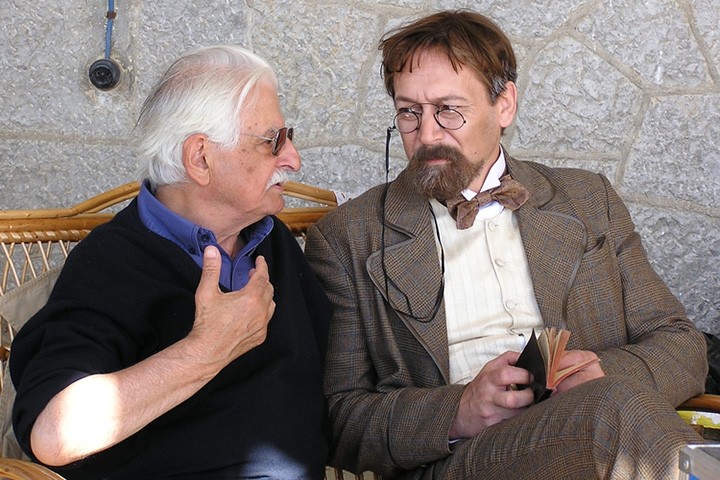
– In the film, Naum Ikhilyevich talks about the concept of premonition. He tells how he, a former physics and math student, first comes to Moscow to VGIK. He is drawn there by an unknown and inexplicable force. With a cardboard suitcase, he jumps into a passing watering truck and, like a hero of Thaw cinema, rushes to the profession that will become his life's work. I cited this episode because I know that you are currently working on Marlen Khutsiev's unfinished final film "Nevechernyaya". What did you feel when you first saw the working material on the editing table?
I felt a great thirst for work. It's not often that you can sit in the editing room and feel such a thing. This is a film that is impossible to imagine in our time, and the fact that it will be released on big screens this or next year is a precedent, first of all, for penetrating a different intonation that, probably, no contemporary director is capable of. Because Khutsiev's language is unique; he shot this as his last film, the sum of some experience.
"Nevechernyaya" is very conservative, like "July Rain" or "Ilyich's Gate", but at the same time it has a young breath, and I tried to fully support it so that it would be felt more acutely in our day.
– As far as I know, this film became a long-term project for Khutsiev and was shot over about 15 years, and when Marlen Martynovich died, the film was attempted to be re-edited three times, one of the first versions was shown at the famous White Columns and even brought to the Locarno festival. Did you see that version, and is it very different from the current one?
Almost half of the material was missing. It was more like a test, a kind of sketch. Instead of words, there was only music, and the image was completely black and white.
Now we are dealing with a two-hour film that has a strict plot development, yet the film lacks a clear narrative, because it is a series of meetings and conversations and the sensations unfolding around them. Most of the film consists of dialogues between Chekhov and Tolstoy.
– When you first touched Khutsiev's legacy, were there any fears that the author's intention might inadvertently change and lose its original image?
Thank God, this fear was not only mine but also Naum's and Ali Khamraev's. This work became for us a way to overcome this feeling. We fought to preserve Khutsiev's special intonation. And it seems we succeeded.
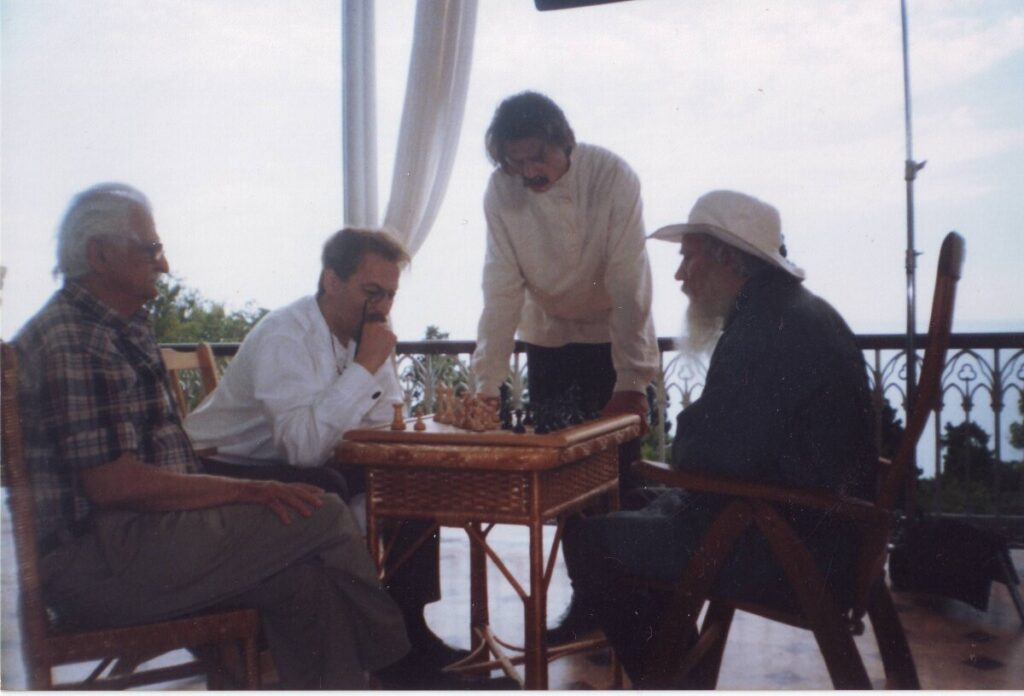
– Now that the film is almost ready, is there a chance that it will break through today's non-flying time, when young people try to make important films that are ignored by big screens. Can this film break down barriers?
This film is a challenge. It will have many passionate and ardent fans, but there will also be those who dismiss it. This is a symbiosis of some generational work. We worked a lot with Kostya Chervyakov on the sound. He is an amazing young man.
The sound of the film is also young, but not modern as one might think. And this combination, which was in Khutsiev — something youthful, something conservative, and somewhere even epic — is present in the film. I think we will soon find out how it unfolds. I eagerly await the first big screening.
Comments
0No comments yet.
Sign in to join the discussion.