
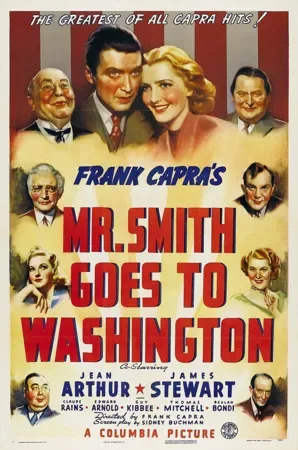
The film "Mr. Smith Goes to Washington" was filmed in Washington, D.C., USA.
Filming Locations:
Lincoln Memorial Reflecting Pool
In the Movie
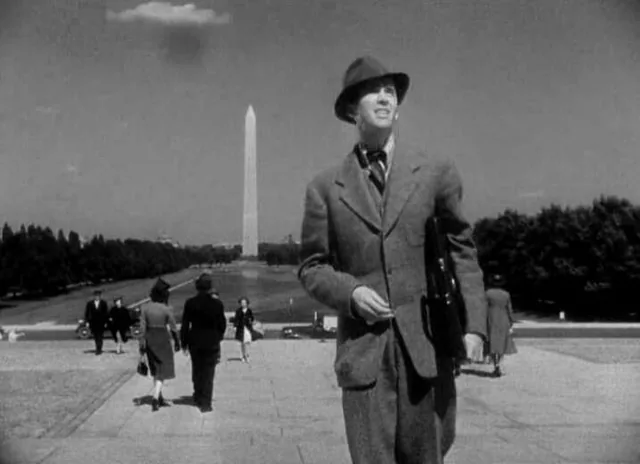
Scene where Jefferson Smith walks through Washington.
In Reality
The scene was filmed at The Lincoln Memorial Reflecting Pool is the largest of the many reflecting pools in Washington, D.C., USA. It is a long and large rectangular pool located on the National Mall, directly east of the Lincoln Memorial, with the Washington Monument to the east of the reflecting pool. As part of the iconic image of Washington, the reflecting pool hosts many of the 24 million visitors per year who visit the National Mall.[2] Pedestrian walkways and shady trees line both sides. Depending on the viewer's perspective, the pool reflects the Washington Monument, the Lincoln Memorial, the mall's trees, and/or the endless sky.
Washington Union Station
In the Movie
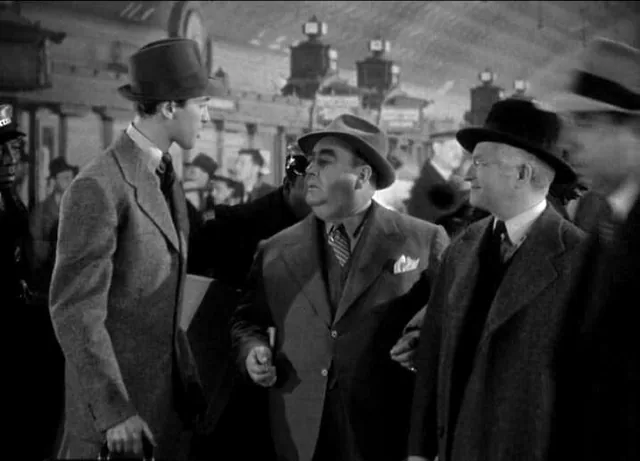
Scene where Jefferson Smith arrives in Washington.
In Reality
The scene was filmed at Washington Union Station is a major railroad station, transportation hub, and leisure destination in Washington, D.C. Opened in 1907, it is the headquarters of Amtrak and the second-busiest railroad station with an annual passenger count of just under 5 million. Union Station also serves MARC and VRE commuter rail lines. Washington Union Station is a major railroad station, transportation hub, and leisure destination in Washington, D.C. Opened in 1907, it is the headquarters of Amtrak and the second-busiest railroad station with an annual passenger count of just under 5 million. Washington Metro, intercity bus lines, and local Metrobus services. During World War II, at the peak of traffic, up to 200,000 passengers passed through the station in a single day. In 1988, a wing of the main station was added, and the original station was renovated for use as a shopping center. Today, Union Station is one of the busiest railway facilities and shopping centers in the United States, visited by over 40 million people annually. The film offers a rare glimpse of the original station before restoration.
Comments
0No comments yet.
Sign in to join the discussion.