

When the Sequel Is Better Than the Original
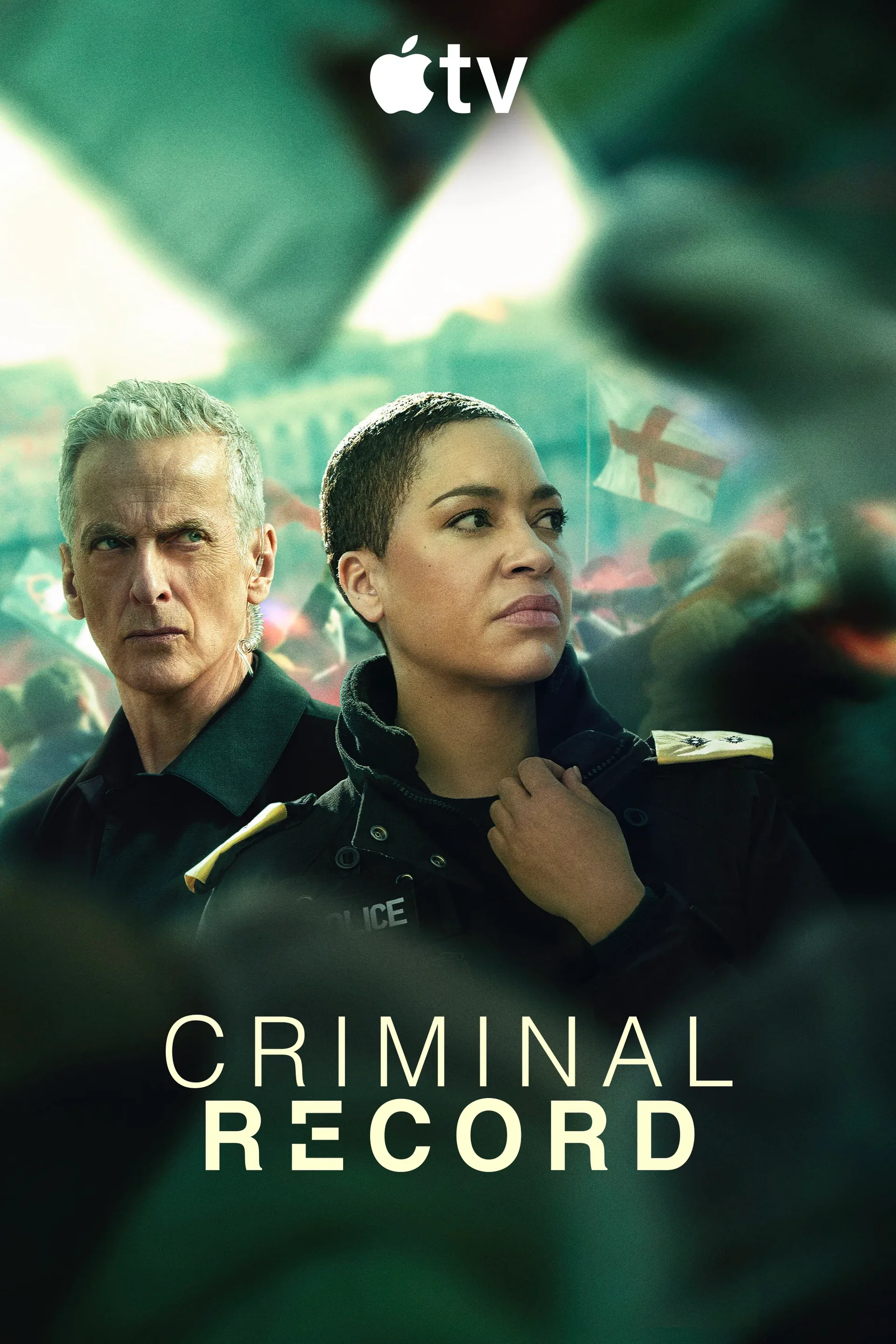
Sometimes a second season of a beloved series comes out and disappoints — as if all the interesting stuff has already been told, and what follows is just commercialism and attempts to milk the beloved characters. With 'Criminal Record', the opposite happened — the sequel only got better.
The first season of 'Criminal Record' was a solid, smart, at times brilliant detective story about a clash between two police officers with fundamentally different views on justice. It felt like a story told to its end — complete, self-contained, with a clearly built catharsis. Yet streaming service Apple TV gave the green light for a continuation, and series creator Paul Rutman sat down to write the second season. The result is a rare case where the sequel not only justifies its existence but also outshines the original in almost every way.
The stakes are higher, the scale broader, the tension denser. Yet the series remains intimate, psychological, very British in its cold restraint — and that is precisely why it works much better than if the creators had gone down the path of increasing action and inviting superstars.
London, Extremism, and Detonators
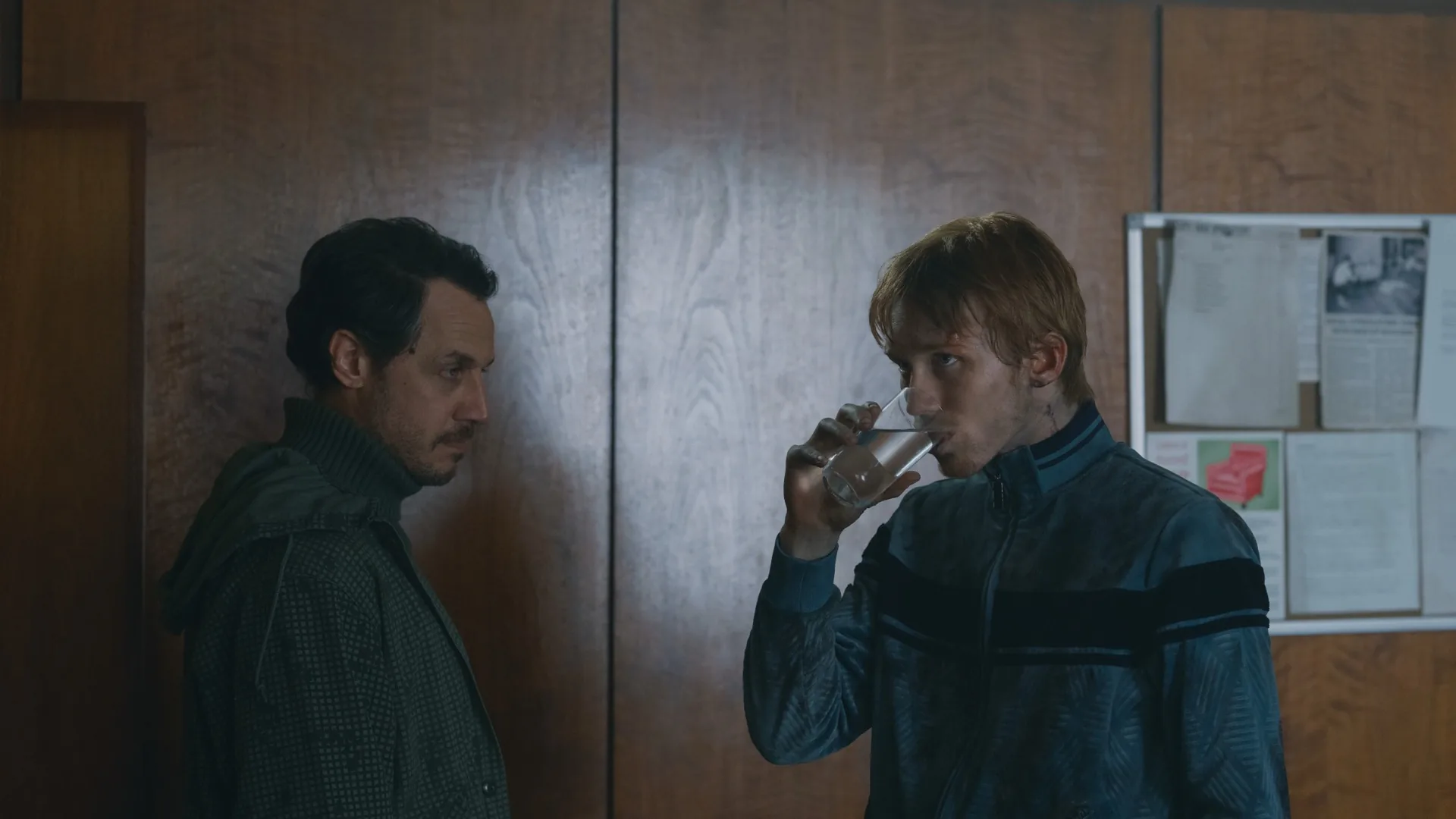
This time, the 'trigger' for the chain of events is clashes at a rally in Suffolk Square. An Islamic protest is attacked by right-wing radicals, and in the chaos, a young Muslim teenager dies. June Lenker (Cush Jumbo) is present at the scene and since then cannot shake the image of a man she noticed in the crowd. She is convinced that he delivered the blow. The investigation leads her to Billy Fielding (Luther Ford), an escaped convict, and he leads straight back to Daniel Hegarty (Peter Capaldi), who now works in intelligence and has his own plans for Billy: they want to turn him into an agent to infiltrate the inner circle of a certain Cosmo Thompson (Dustin Demri-Burns).
Cosmo is a charismatic right-wing populist with a huge online audience, a master of manipulation and lies about racial differences, religion, and national identity. He is slippery, charming, and dangerous precisely because of his 'normality.' The operation that Lenker and Hegarty eventually launch turns into a full-fledged spy thriller with wiretaps, double agents, and moral crossroads from which there is no good exit.
Capaldi, Jumbo, and the Best Rivalry on Modern TV
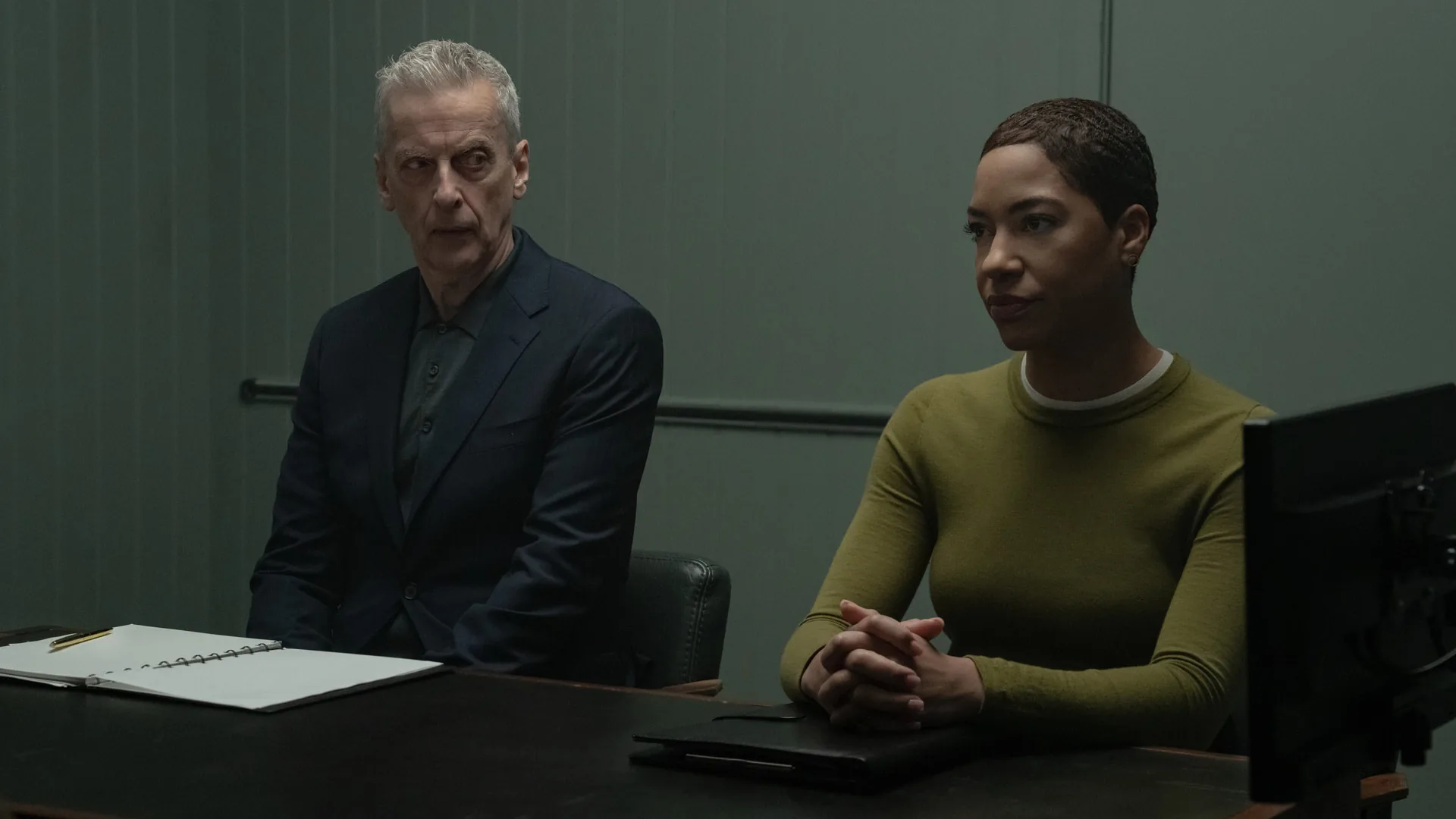
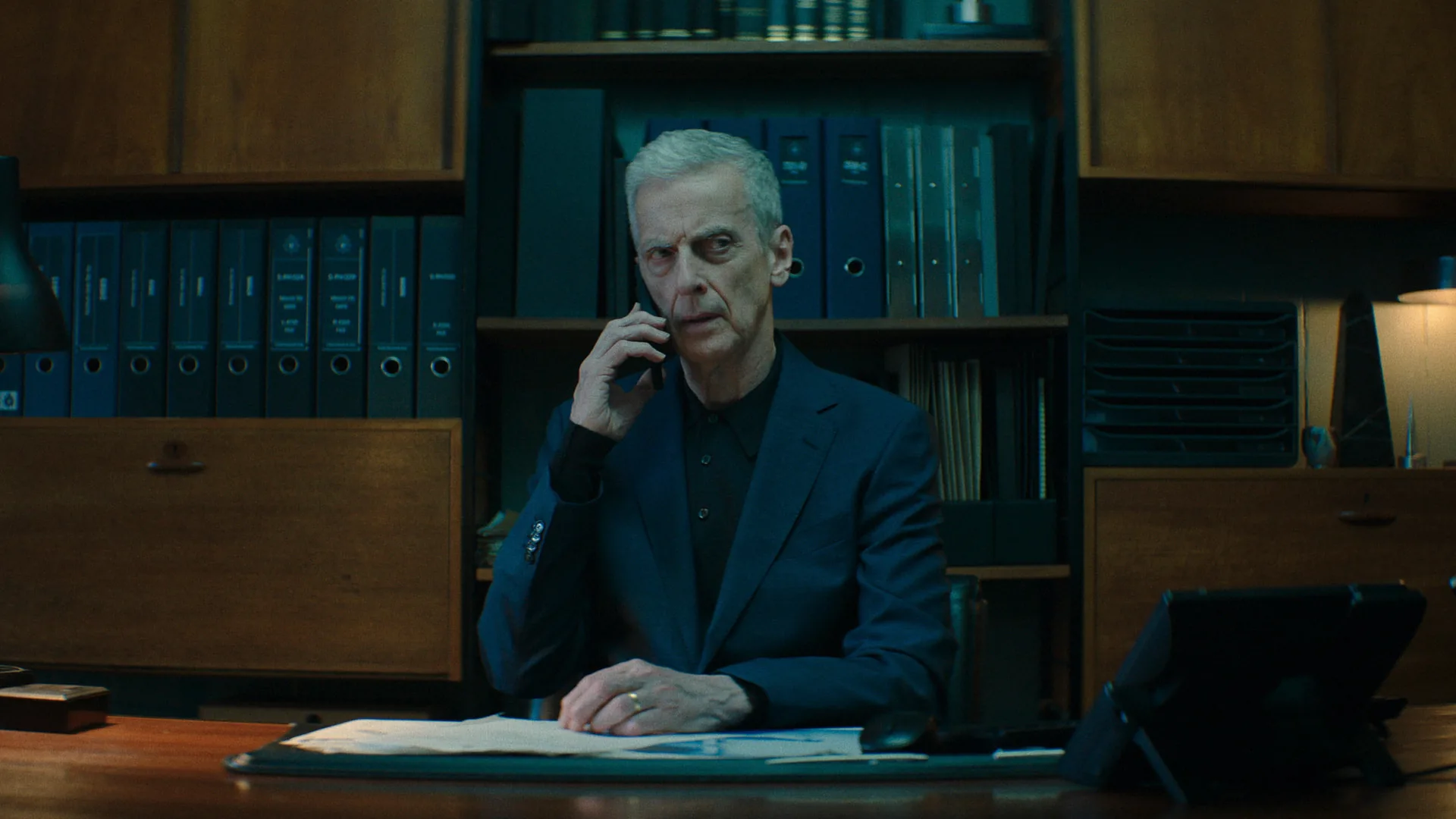
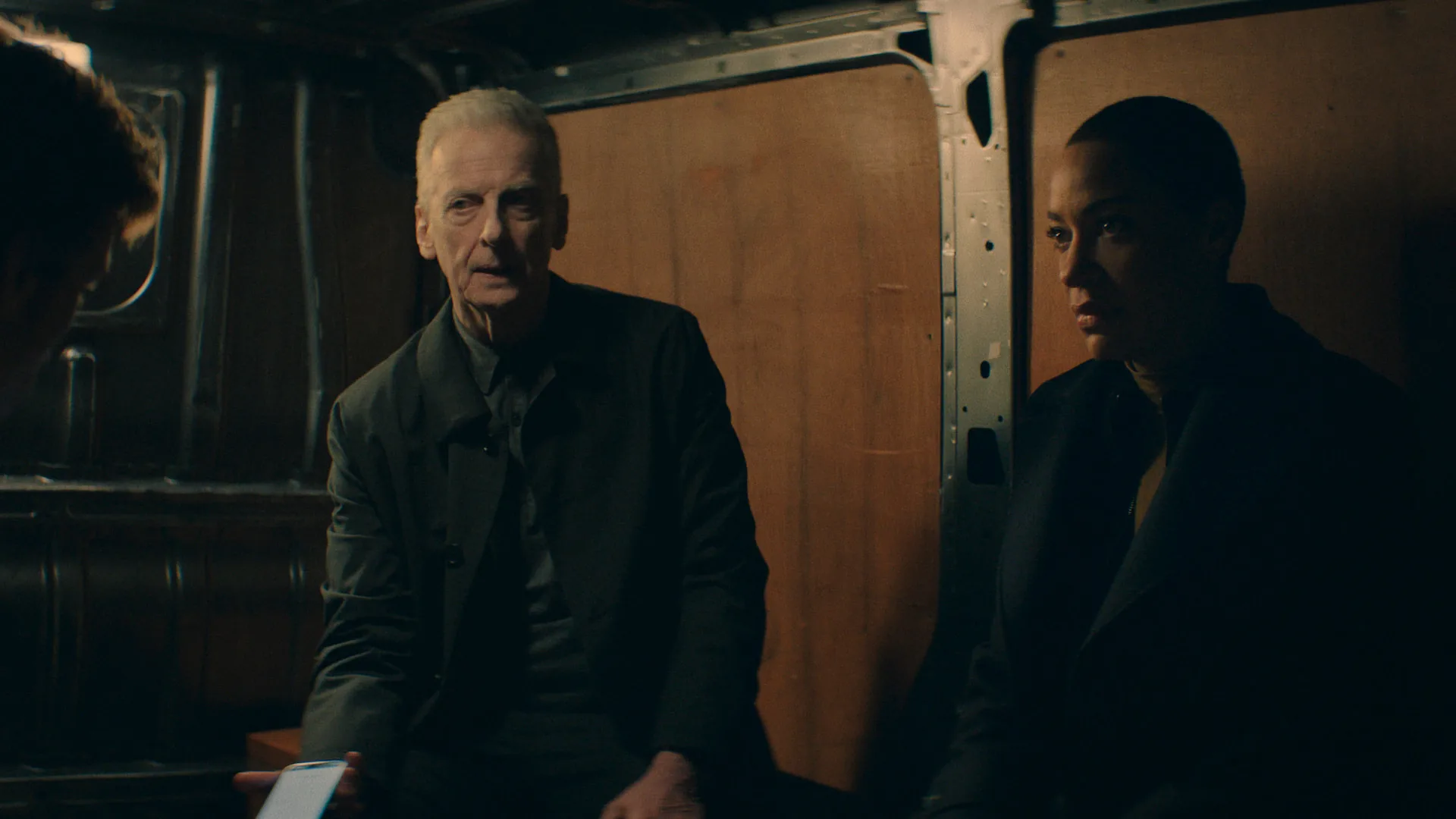
The main reason to watch 'Criminal Record' is the duel between the central characters. And in the second season, something has fundamentally changed in it. In the first season, Lenker feared Hegarty — he could destroy her career with one phone call, but her principles still mattered more. Here, her obsession with the teenager's murder makes her almost invulnerable: when a person is ready to lose everything, it's hard to intimidate them. Hegarty, in turn, has become slightly less toxic, slightly more human — not kind, no, but no longer an illustration of cynicism. For the first time, they exist as equals.
Peter Capaldi plays more subtly than in the first season — less straightforward pressure, more nuance. He can convey with a single look what other actors need an entire monologue scene for. Cush Jumbo matches him with equal precision: her June is not a 'strong female detective' from a set of genre templates, but a living person with doubts, guilt, and that trademark stubbornness that has let her down more than once. If you were to make a list of the best acting duos in modern series — these two definitely deserve a spot.
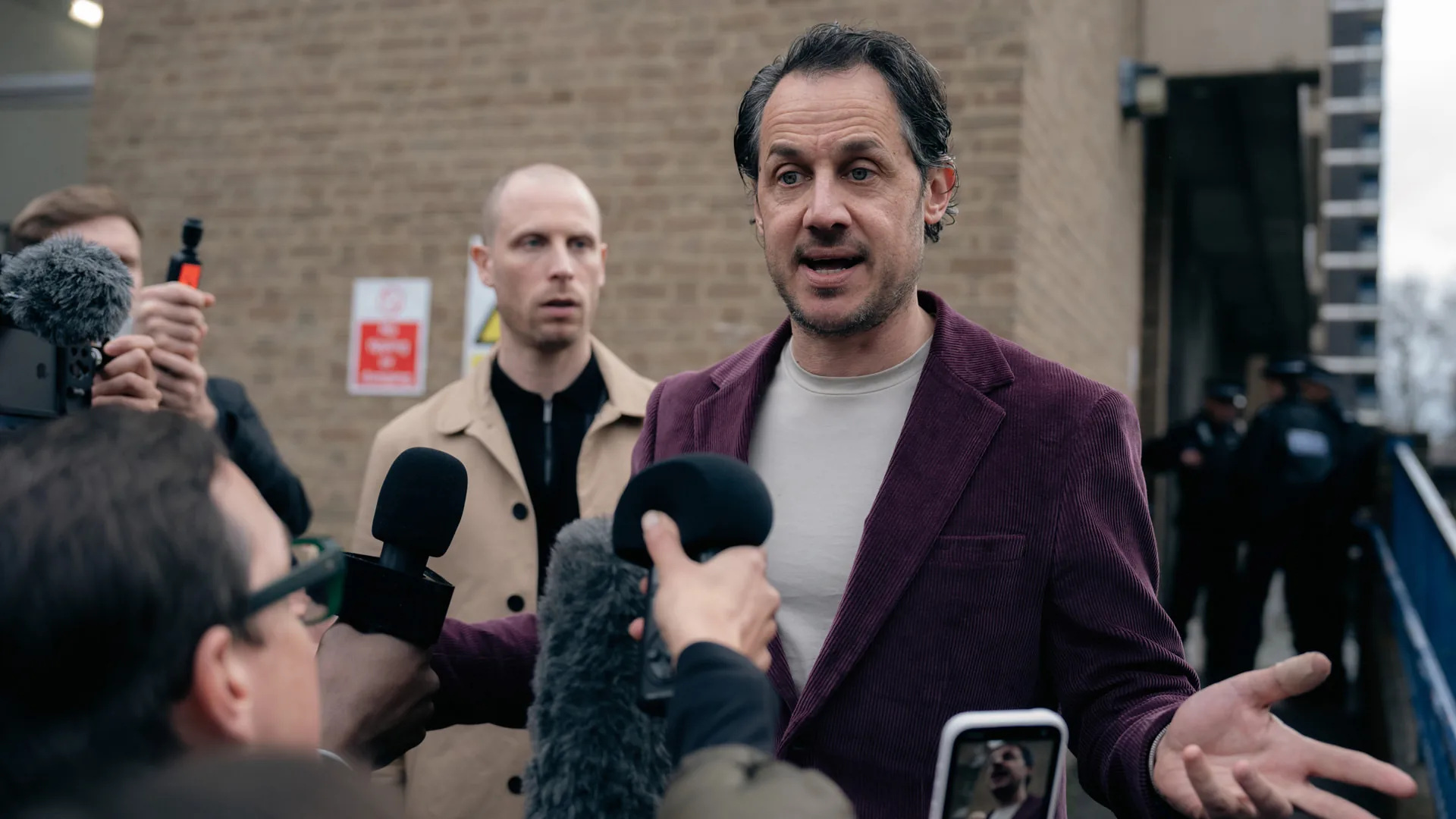
But the second season has another ace up its sleeve: Dustin Demri-Burns and his Cosmo Thompson manage to literally steal the show. He is charismatic, he is an obvious leader, but at the same time, he also avoids stereotypical episodes emphasizing his leadership.
The scene where Cosmo deliberately gets himself arrested — to protect himself while his people try to blow up several buildings in London — is one of the most electrifying moments of the season, largely thanks to Demri-Burns' performance.
Gray Zones and Uncomfortable Questions
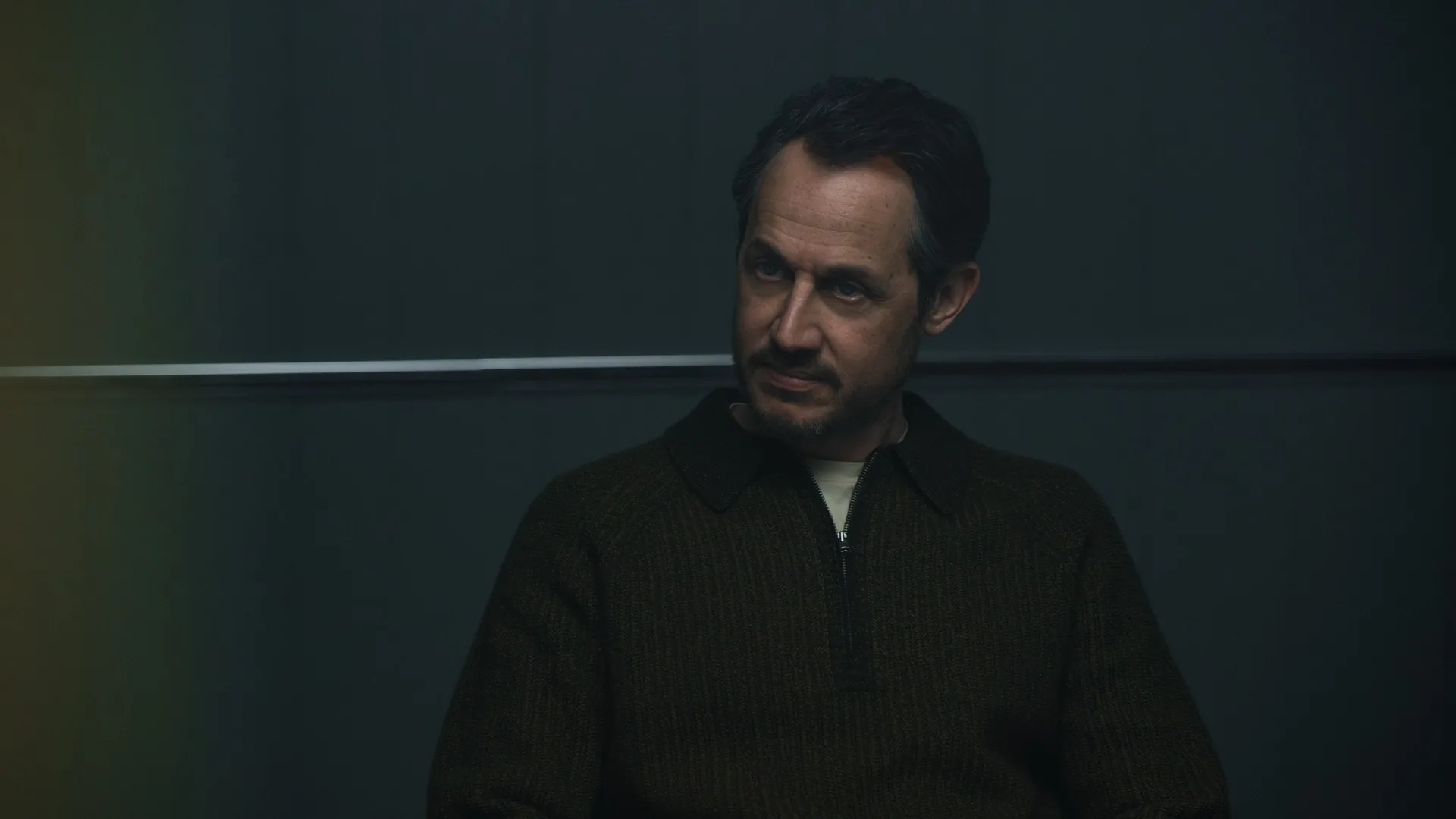
'Criminal Record' never allows itself the luxury of dividing the world into black and white. The main question of the second season, arising towards its very end, is whether it is worth granting immunity to an ideological criminal in order to save lives? And the series is in no hurry to answer. The creators work in a zone of moral discomfort, where every right action has a price, and every deal with conscience has a justification.
The themes — right-wing extremism, racial politics, institutional corruption — sound like a direct conversation about what is happening now in the UK. This directness gives the series weight: you watch a detective story about London in 2026, but you think about things far more universal. The plot twists, meanwhile, work honestly — not cheap surprises for the sake of surprises, but consequences of characters and actions.
Verdict
In our parts, 'Criminal Record' is criminally under-discussed. While everyone is talking about 'Severance' and 'The Studio', one of the best detective series on Apple TV quietly comes out, does everything right, and slips away almost unnoticed. If you missed it — catch up. If you watched the first season and stopped — come back. The second season of 'Criminal Record' proves that sometimes a sequel is not an attempt to milk a cow, but an opportunity to tell a great story about interesting characters.
Comments
0No comments yet.
Sign in to join the discussion.