
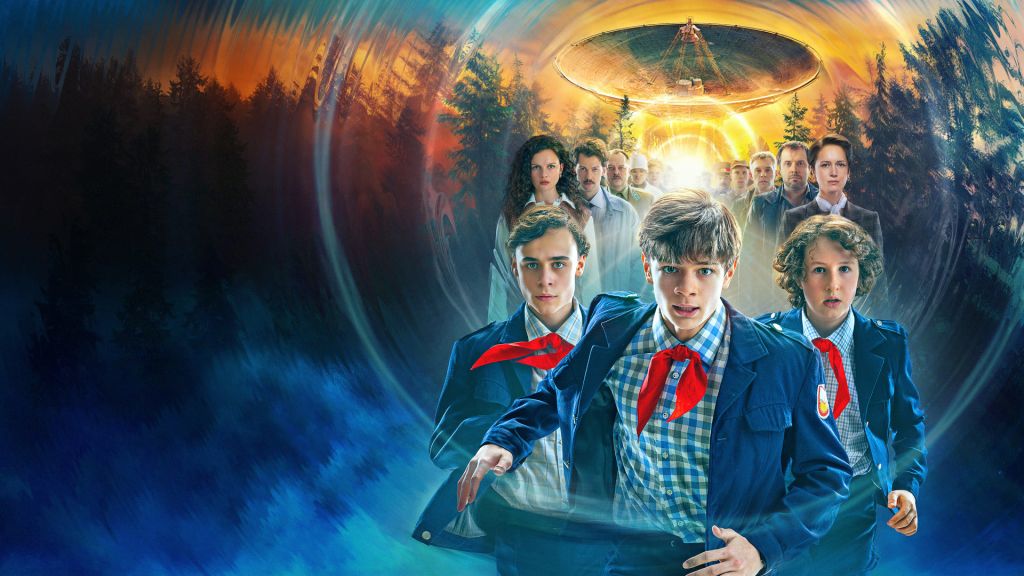
A closed Soviet town, aliens in the bodies of neighbors, and three schoolchildren whom no one believes. Review of 'Radar' (Okko, 2026) — an adaptation of Alexander Mirer's novella written over 50 years ago.
TOP SECRET
Copy No. 1 Department of Analytical Materials Incoming No. 1104-K dated 08.06.2026
ANALYTICAL NOTE based on the results of viewing the television work 'RADAR'
(Production: Russia, 2026, platform Okko, 1 season, 9 episodes)
Basis: A. I. Mirer's novella 'The Main Noon' (1969)
1. GENERAL CHARACTERISTICS OF THE OBJECT
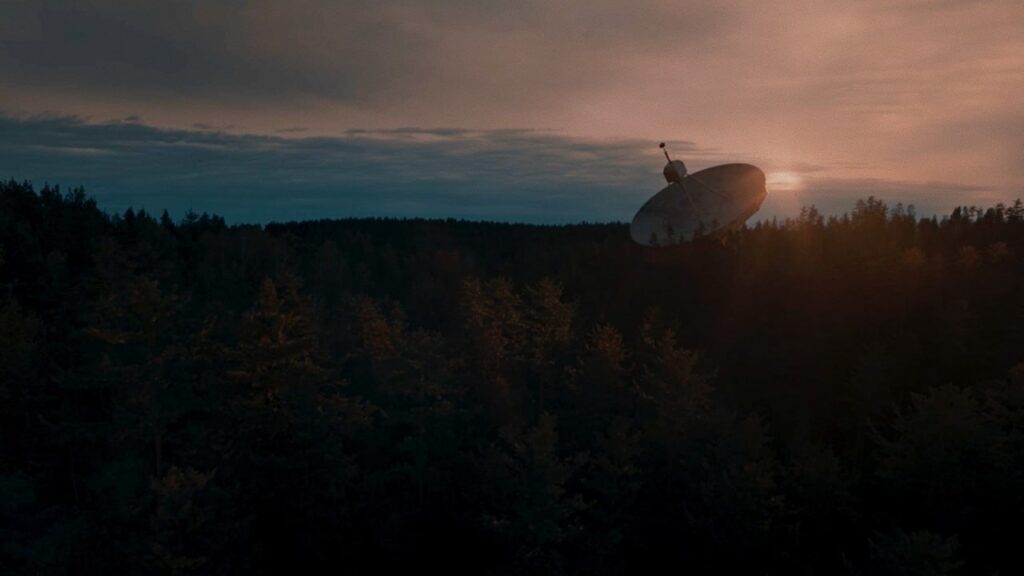
In April 2026, the series 'Radar' was released on the open streaming platform Okko. The setting is the fictional Soviet science city of Radiogorsk, adjacent to a missile defense system facility. The time period is 1988: the last quiet year before the country begins to crumble, though from the inside this is not yet obvious. Three seventh-graders — Lyokha, Tolya, and Syoma — venture into the forest on their own in search of a supposedly fallen meteorite. One gets lost. The search operation triggers a chain of events that ultimately reveals: some of the city's residents are no longer entirely human.
The director of the object is Konstantin Smirnov, who had been nurturing the idea for this adaptation since childhood. He read the novella, remembered it, and never let it go. The screenplay was co-written with Alexey Bezenkov. Notably, the authors do not attempt to reproduce Mirer verbatim: the premise is taken from the original source, but almost everything else is an original development.
2. CHARACTERISTICS OF THE FIGURANTS
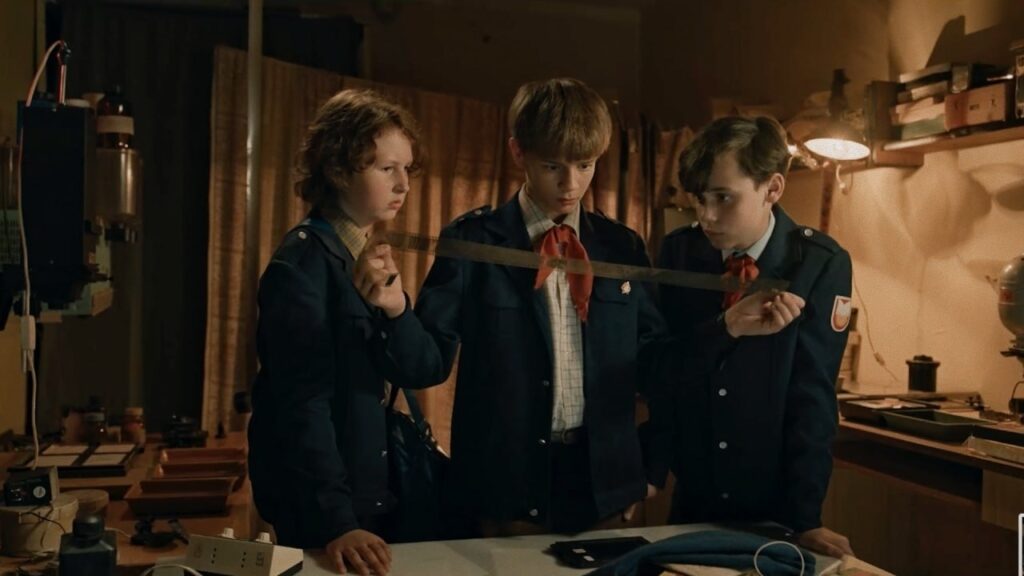
Key figures have been identified and documented. Lyokha Potapov (played by M. Kulagin) dreams of becoming a writer, is writing a novel about aliens, and is in love with his older brother's girlfriend. The latter circumstance drives him to actions that can only be called treacherous, and this makes him a real human. Syoma Lozhkin (R. Kharin) wants to work at the zoo, is bullied by a local hooligan, and dreams of escaping Radiogorsk. Tolya (G. Pytyev) is the son of a lieutenant colonel, living under the pressure of military life and a strict father.
Among the adult figures, we particularly note: Victoria Isakova as the chairwoman of the city executive committee, Olga Svyatoslavovna — one of the first possessed. Police Captain Mikheev (V. Abashin) — one of the few adults who initially retains his sanity. School military instructor Afganets (I. Fominov) — a shell-shocked veteran on whom the aliens' hypnosis does not work in principle: a professional injury turned out to be protection. Local gangster Kapiton (A. Ilyin Jr.) sees enemies in everyone, and this helps him escape the aliens.
3. OPERATIONAL SITUATION. WHAT WORKS
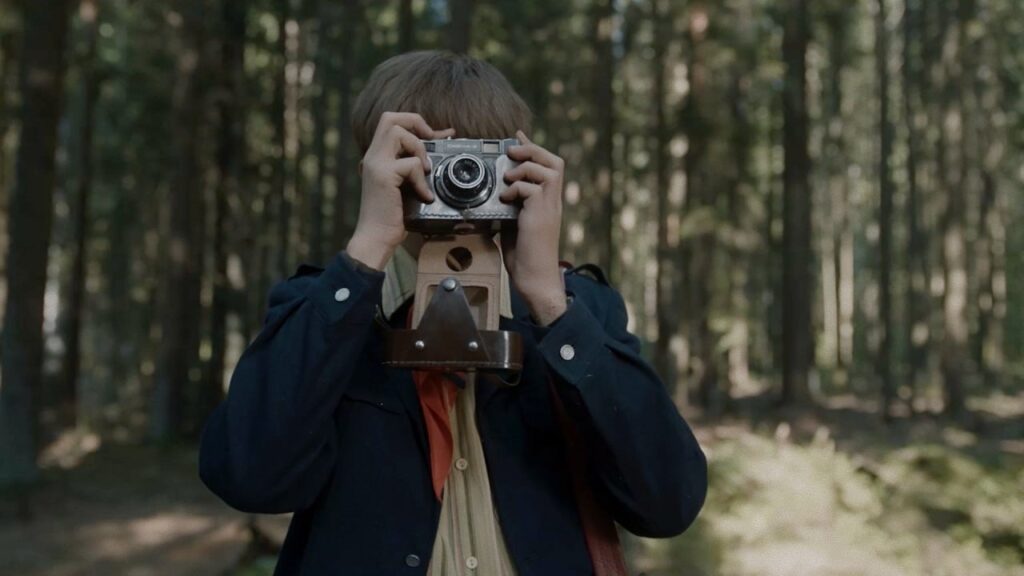
The first episodes of the series maintain an anxious tension almost effortlessly — through the environment. Radiogorsk is recreated without nostalgic gloss: gray houses, queues at the grocery store, a father with a belt, the Afghan war as a backdrop. Several sources independently compare the accuracy of the reconstruction to the work on the series 'Chernobyl'. That is high praise.
The nature of the threat is presented professionally. The aliens in 'Radar' did not arrive with ray guns — they simply possessed people. A possessed citizen looks like an ordinary person: walks correctly, speaks politely, does everything expected. It is precisely this shift by a few degrees from the norm that is scarier than any monster. The first episodes maintain this register confidently. Additional value comes from the fact that the aliens are not villains in the usual sense: they have their own hierarchy, their own logic, their own mission — they are paving the Way and seeking new worlds. This makes them truly alien, not just hostile.
The group of teenagers at the center of events is the main asset. The three boys act not out of heroism, but from ordinary human motives: one wants to become famous, another is afraid of his father, another is in love. When the world is driven by such forces, you believe it.
4. IDENTIFIED VULNERABILITIES
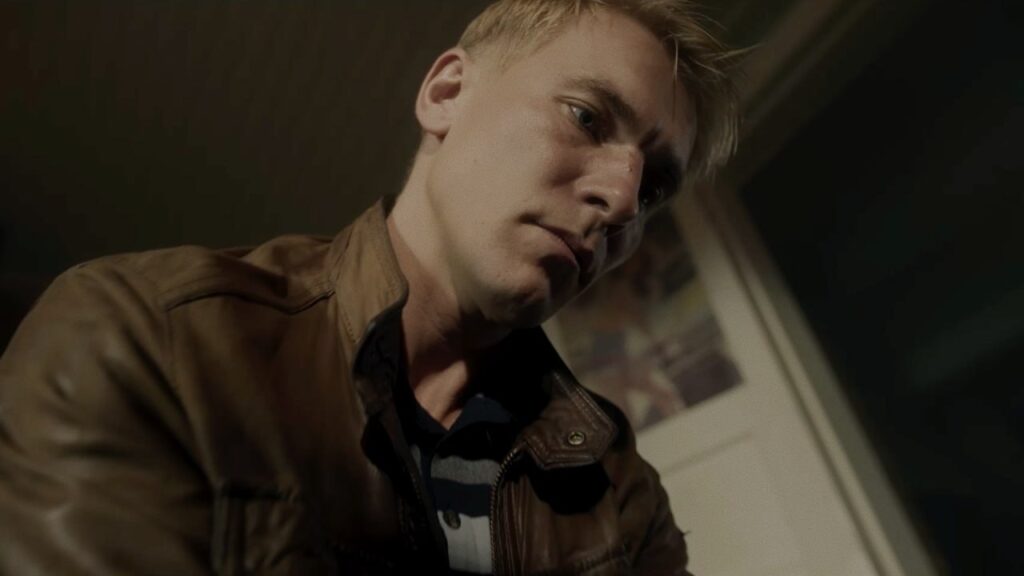
There is a deep problem that is hard to ignore. The series hints at the theme of growing up but does not bring it to its essence. The heroes of 'Stranger Things' acted out of selflessness and affection; the heroes of 'Radar' act out of necessity and self-preservation. This could have been a deliberate and powerful idea about Soviet childhood, from which freedom was drained. But the authors do not develop this motif to the end — it hangs in the air, never forming into a statement.
5. CONCLUSION
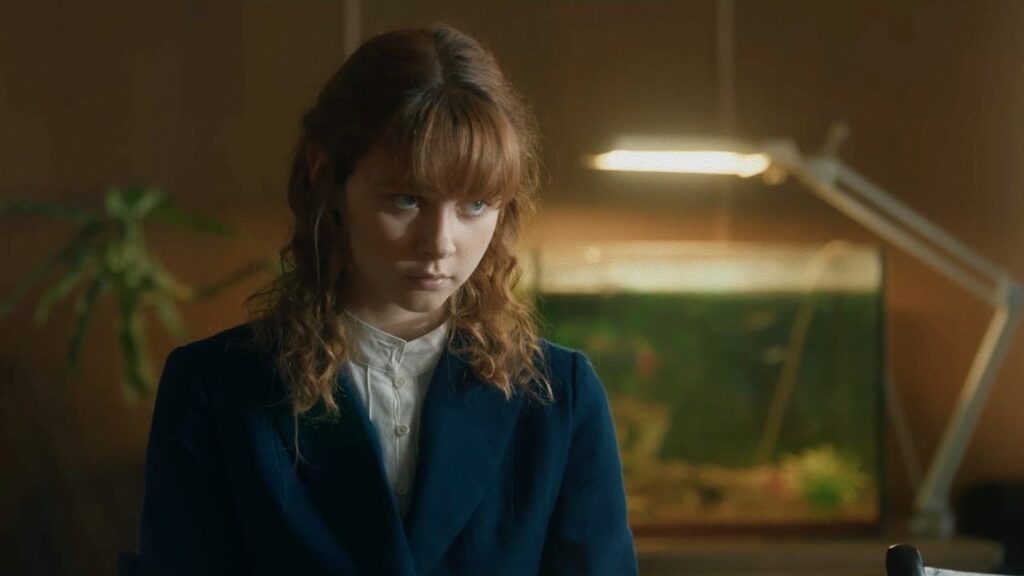
'Radar' is an uneven work, but one that deserves serious attention. Mirer's novella was written in 1969 and waited more than half a century for a worthy adaptation (we do not take 'The Mediator' from the 1990s seriously). The authors did not blindly follow the original source — they took the premise, the essence of the characters, and built their own story. It turned out honest, at times convincing, and in the best scenes, truly unsettling. The final shot of the Ark above the horizon leaves the question unanswered. Perhaps that is the right outcome.
Recommendation: Approved for viewing. Vigilance not to be relaxed.
Executor: [signature illegible]
Date: 08.06.2026
Classification to be lifted in 50 years
Comments
0No comments yet.
Sign in to join the discussion.