

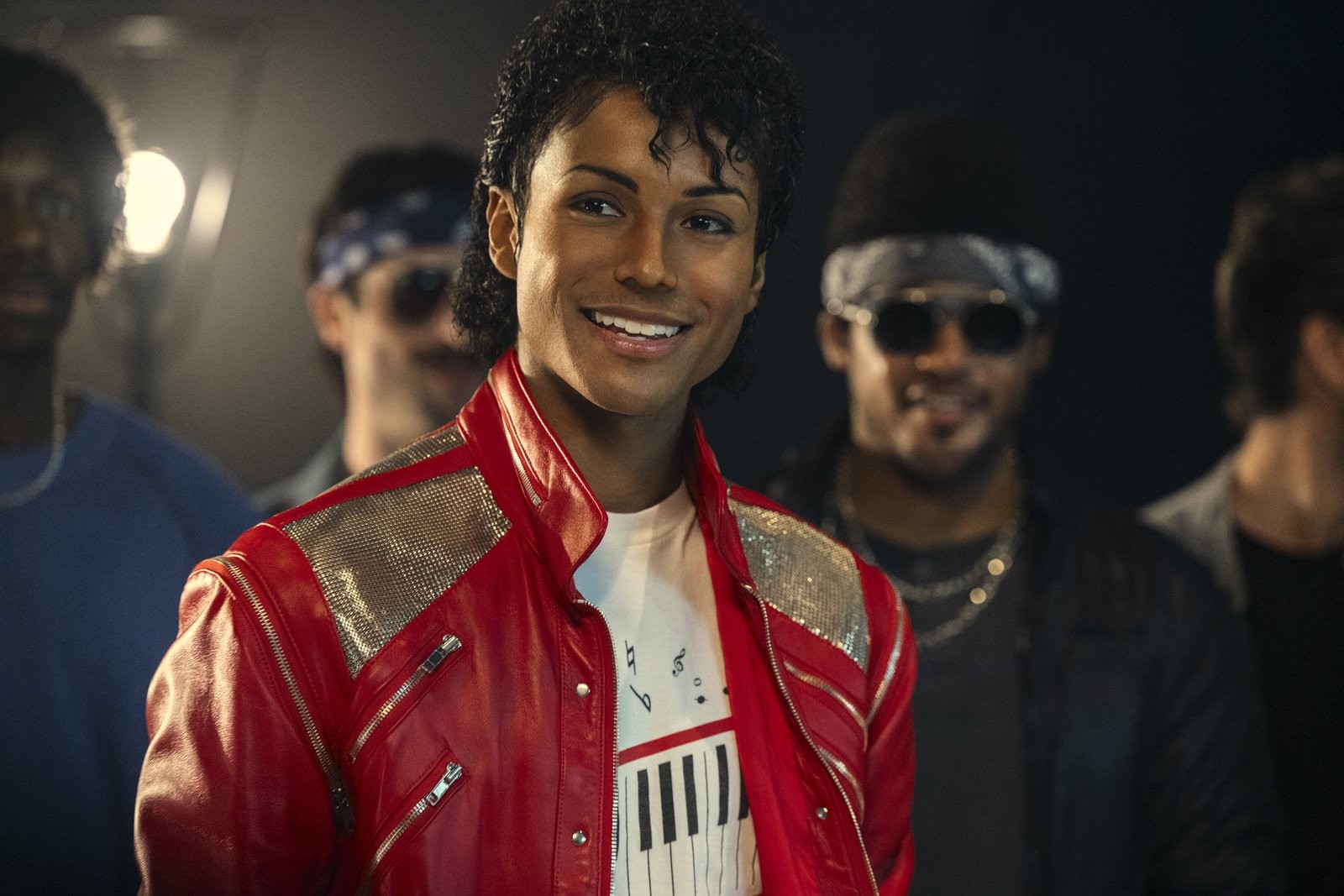
In wide release, the long-suffering biopic “Michael,” which has weathered revisions and criticism but been favorably received by audiences, shines with gold and lurex, where no shadow falls on the radiant face of the artist, but the pulse of the musi...
“Michael” begins with a short prologue in which Michael Jackson himself (Jaafar Jackson) prepares to take the stage at a packed Wembley Stadium, bouncing in place as he warms up — much like Rami Malek as Freddie Mercury in the similarly spirited biopic “Bohemian Rhapsody.” The resemblance becomes obvious thanks to the producing hand of Graham King, who worked on both projects.
Then the screen shows the huge numbers 1966, marking the beginning of the creative journey of a very young Jackson as part of the family ensemble The Jackson 5. The gifted boy amazes everyone with his flexibility and vocal abilities, and everyone is sure that a great future lies ahead — which we are invited to observe over the next two hours.
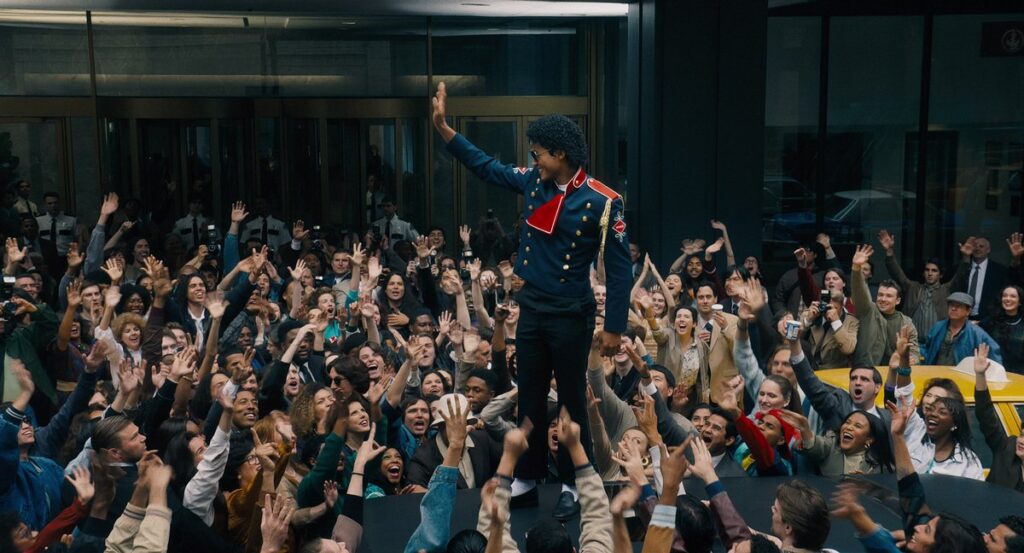
All modern biopics share one thing — rhythmic foot-tapping to the music while sitting in the audience. “Michael” is no exception. If the subgenre of “karaoke biopic” or “tribute biopic” doesn’t exist yet, it’s high time to introduce it. This list can safely include “Bohemian Rhapsody,” “Rocketman,” “Elvis,” and a couple of smaller hits like the film about Bob Dylan.
The formula, served up by Graham King, has found fertile ground on which a dozen more such films will grow: ingratiating, refined, sidestepping sharp corners and not looking behind the beautiful curtains. They will differ from each other only in their playlist. That’s not bad in principle, but then it would be better to set up a dance floor in the theaters.
Here one recalls with longing Oliver Stone and his “The Doors” or “Sid and Nancy” by Alex Cox, where there was room for both hard facts and artistic fiction. But the main thing is not even that, but that the authors were primarily interested in what was inside the hero’s skull, not just in the schedule of world tours or relationships with fans or detractors.
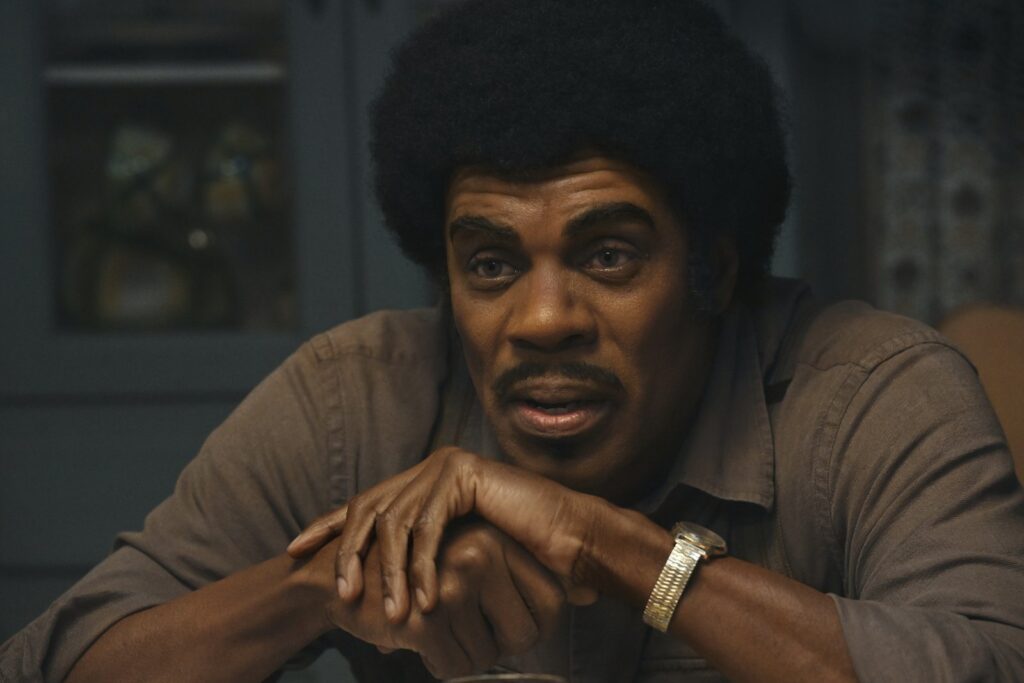
For “detractors,” by the way, in “Michael” the pop star’s father Joseph (Colman Domingo) is responsible, and the attempt to portray him as a demonic figure was not particularly successful either. Yes, he occasionally beat little Michael and made him work to the bone, but this is shown only in passing, and it’s impossible to truly hate Joseph, partly because the film again tactfully omits those facts that would turn him into a real monster.
Joseph, played by the convincing Domingo, fiercely rolls his eyes, looms over the family like a rock, but does not inspire fear: it feels as if at some point he hits an invisible wall separating him from his son. Saying “no” to him seems easy, and then it’s unclear why the on-screen Michael takes so long to take this simple step. However, the creators apparently decided to call this “internal conflict.”
Even more unfortunate is the film’s director Antoine Fuqua. The director of “The Equalizer” and “Training Day,” with an established style and a certain cinematic language, becomes invisible in “Michael.” His work mainly consists of meticulously recreating the artist’s most popular videos, albeit from different, sometimes unexpected angles, which certainly adds novelty and originality. But at the same time, his authorial signature literally dissolves in the glossy shuffling of images cut together in editing, turning the director into merely a function of a caretaker in a plot from the “lives of remarkable people” series.
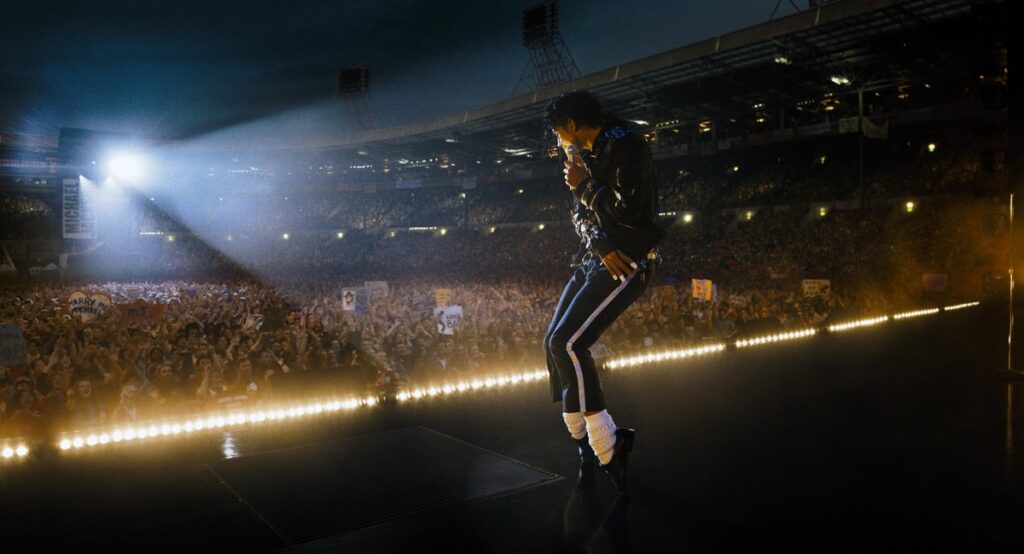
Nevertheless, the box office (already over $800 million) speaks for itself. Viewers who, one way or another, did not pass by the pop phenomenon, and ardent fans of the singer, vote for him with ringing coins and happily sing along to Jackson’s main hits, which the creators selected with sniper precision. There’s “Billie Jean” from the legendary performance at the 25th anniversary of Motown Records, the still unsurpassed “Thriller,” the moonwalk, and the stadium choir for “Bad.” Jackson’s nephew, Jaafar, approached the role responsibly and even touchingly: the ever-smiling child who grew into the King of Pop turned out to be flexible, without excesses, and at times eerily similar, especially on stage.
And everything else, as they say, no longer matters. What matters is that the foot taps the rhythm in unison with the artist, that familiar chords send chills, and that the recognizable image in a glove with lurex flashes on the screen. “Michael” does not try to surprise, wound, or turn things upside down. It simply tries to please us — and it does a decent job of it. But at the same time, it’s a bit of a shame that from a big film about a big artist, all that remains is a big concert. And even that in the format of a cover party. Albeit a very expensive one.
Comments
0No comments yet.
Sign in to join the discussion.