

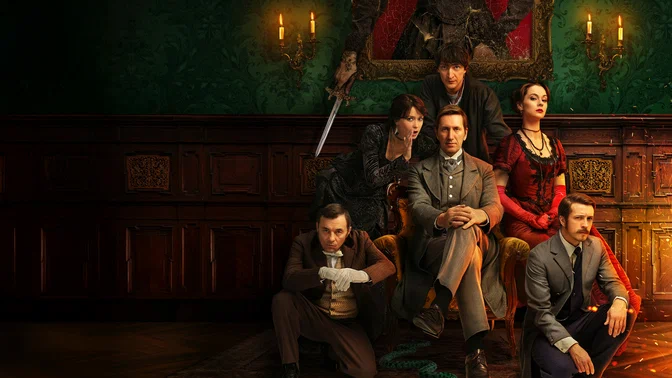
On Okko, 'The Black Countess' has concluded, a mystical detective series by Ilya Kulikov about murders during an immersive performance. We tell in detail what pleased the project and what themes it raises.
From the very first frames, The Black Countess pulls you into its cold, sticky aesthetic. The abandoned noble estate, snowed in up to the windows, looks like a living character: the creaking floorboards, the play of shadows from the fireplace, the heavy drapes hiding not only the windows but also, it seems, centuries-old secrets. The viewer hears the howling blizzard outside and immediately after—whispers, laughter, the clinking of glasses inside. This is the perfect "locked mansion": the roads are blocked, and inside the house are about a dozen actors, a tyrannical director, and a millionaire for whom a private screening is arranged. But the scariest thing in this series is not the mansion, not the sudden discovery of a body, and not even the gun in the hands of another suspect. The scariest thing is what happened before the performance began.
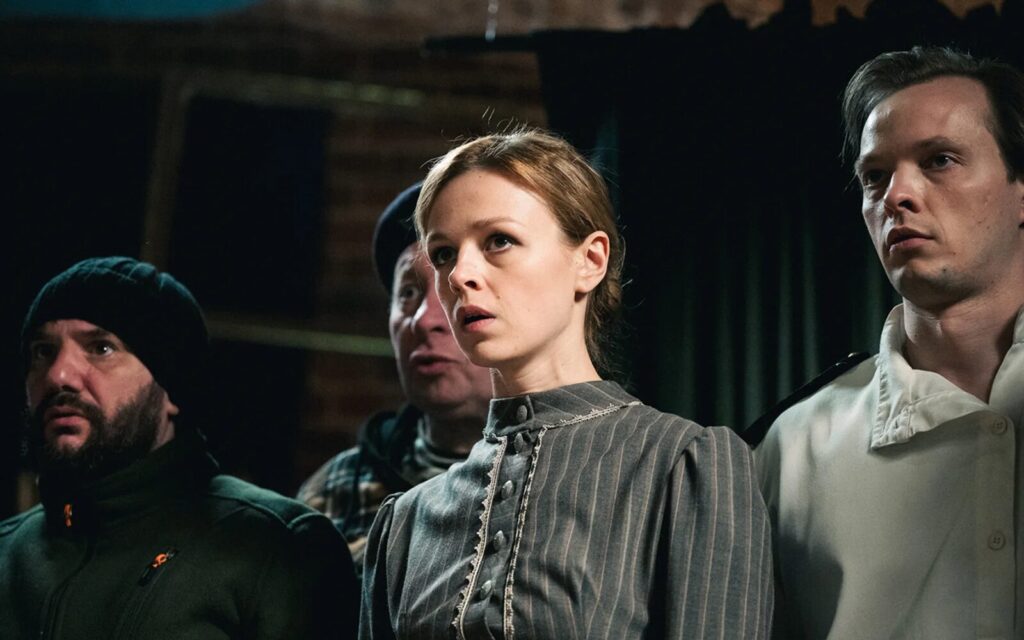
At the center of the plot is a troupe of talented but life-worn actors who, for the mysterious and eccentric (in the early episodes) millionaire Boris (Kirill Kyaro), create a performance in a country estate. Before him is a unique show—an immersive play called "The Black Countess," based on an old noble legend about a ghost that kills its offenders. The conditions are simple and frighteningly unusual: there is only one viewer in the conventional hall—the owner of the house himself.
The actors must perform not on a stage but in the real interiors of the estate, without retakes, without the right to make a mistake, in complete isolation from the outside world. The trouble begins even before the curtain (figuratively speaking) rises. A stifling atmosphere reigns in the house: some actors are clearly unhappy to see their colleagues and are already tired of this conveyor belt of shows, some are openly scared, and the director Timur (Yuri Chursin) behaves as if he is rehearsing not a play but a military operation, even though everything seems to be going according to plan.
And then the first murder occurs. At first, everyone thinks it is part of the production—a spectacular move to heighten the tension. But when the victim turns out to be real, and Boris calmly announces that no one will leave the house until they find the killer, the game turns into a nightmare. The characters find themselves in a classic trap: the killer is among them, there is no way out, no help to expect, and ahead lies a long, dark, deadly night. And the closer dawn gets, the clearer it becomes: each subsequent death is not a coincidence but revenge, born from the filth of theatrical intrigues, directorial tyranny, and human meanness. The ghost of the "Black Countess" seems to roam the corridors, but this ghost has a very real, living face hidden behind a mask.
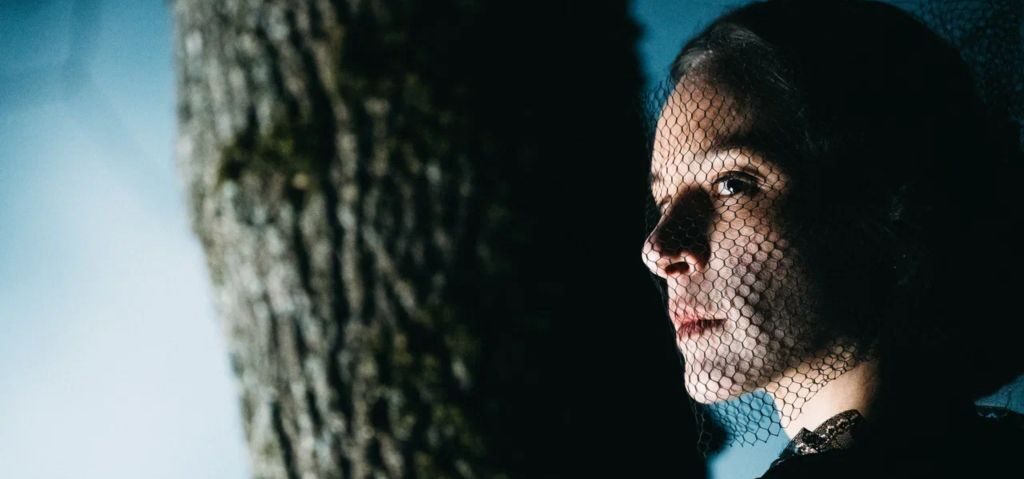
At first glance, the viewer is presented with a classic detective story with elements of a thriller and a slight mystical touch. A guest arrives at the estate to watch an immersive play, but the game quickly turns into a hunt. Motives, alibis, weapons, secrets of the past—this whole set works perfectly. The script is tightly wound, the final episodes are even somewhat surprising, and the dynamics keep you engaged without a moment of boredom.
However, the true value of "The Black Countess" lies in a completely different plane. This is perhaps the boldest and most cynical Russian series about the seamy side of art made in recent years. It surgically exposes the abscesses of the theater and cultural environment, showing the viewer not the stage but the backstage, where there is no place for inspiration and art.
Flashbacks that immerse the viewer in the history of the troupe's creation, the actors' own stories, and the rehearsals of the play work as a powerful dramatic gun that fires not in the third act but throughout the entire viewing. And these memories reveal several bitter, almost indecent truths in their frankness.
The first is the absolute, unlimited power of the director. Timur, played by Yuri Chursin, is a portrait of a modern artistic dictator who can humiliate an actor in front of everyone, force him to perform explicit scenes, or threaten him with dismissal for the slightest objection. And the actors go along with all of this voluntarily, because it is necessary. The series does not moralize; it simply records: here, "serving art" almost always equals "serving a tyrant."
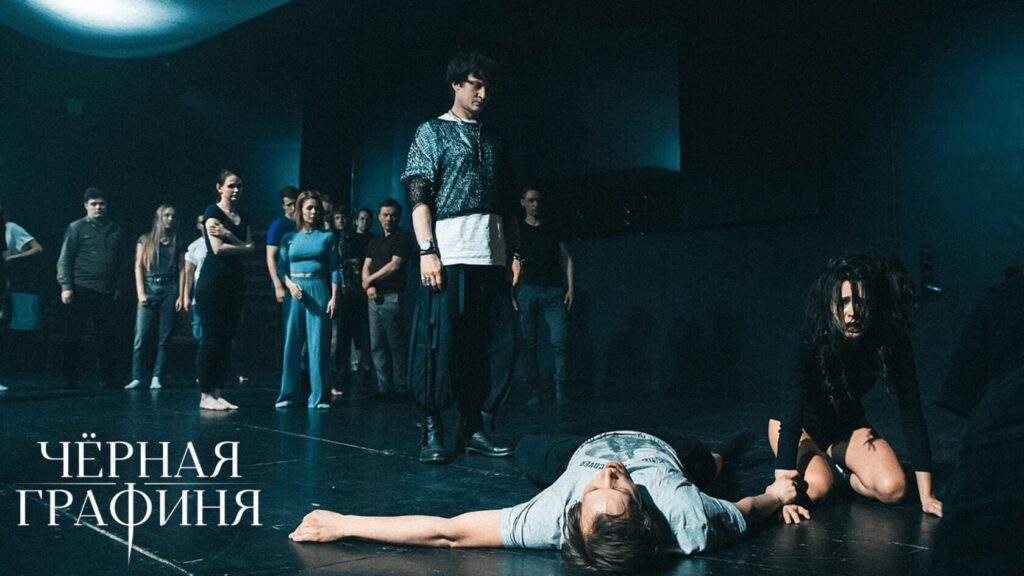
The second truth concerns money, or more precisely, the total economic dependence of the artist. The viewer is clearly shown that an actor in the modern system is not a creator but a hired worker on the verge of survival. Money decides everything, and art without money does not exist—this is a harsh, unpleasant truth that the series is not afraid to show in close-up. Timur often mentions that the actors receive a large fee for their work. And here, art immediately dissolves and even disappears, along with the idealistic idea that supposedly underlies this performance—psychological help for the client.
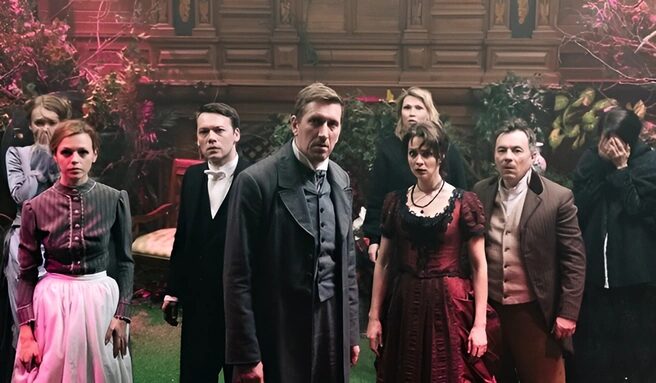
The third, perhaps the most cynical truth, is the internal competition that turns into predation within the guild. Actors are colleagues and friends, but only on stage. Behind the scenes, there is a constant war: for a role, for the billionaire's praise, and later in attempts to figure out who is behind the events at the estate. "The Black Countess" brilliantly shows how creative competition turns into bullying, and envy into a readiness to set someone up, slander them, and in the context of a detective story, even kill.
Special mention deserves the theme of the viewer as the "master" and art as a "service." An immersive performance for one rich person is a devastating metaphor for modern patronage. The billionaire, played by Kirill Kyaro, pays not for talent but for a sense of power and control. He can stop a scene, make an actor cry for real, or rewrite the ending to suit his mood. Yes, there are some boundaries, but even in the first episode, this power feels like something taken for granted. The series asks a frightening question: what remains of art when it is sold to a single buyer?
Finally, the fifth, perhaps the saddest truth that sticks in the memory while watching, is the broken destinies of the actors and their use as disposable material. Parallel to the story at the estate, we learn the actors' stories, each episode dedicated to one of them. In these memories, the viewer sees burning eyes, dreams, hopes. And then, at the estate—their "after" and complete destruction. The industry grinds people down, and new ones easily take their place. And this is shown not through loud monologues but through quiet, almost imperceptible scenes—tired looks, a trembling hand, fatigue during the show.
"The Black Countess" shatters rose-colored glasses and shows that the scariest monster lives not in the basement of an old estate but in the director's chair, in the producer's office, and in the minds of those who are ready to do anything for fame. Yes, formally it is a detective story with murders. Yes, it is beautiful, expensive, atmospheric cinema that you want to watch for the costumes, the dark aesthetic, and the brilliant acting. But it remains in memory not as a convoluted "murder in a merchant's house" but as a bitter and honest diagnosis of an entire industry. Special attention should be paid to the fact that the creators managed to combine a light genre and heavy content without descending into moralizing or grimness.
Yes, the ending of the series may cause controversy (I don't want to spoil it, but the mystical line is a matter of taste and awkwardly integrated into the story). However, for a person who watches the series for the detective story and stayed for this very dark side of the profession, one thing can be said for sure: it is a must-watch. "The Black Countess" is like a piece of mirror literally thrown in the face of the entertainment industry. It is talented, scary, and cynical, but honest.
Comments
0No comments yet.
Sign in to join the discussion.