
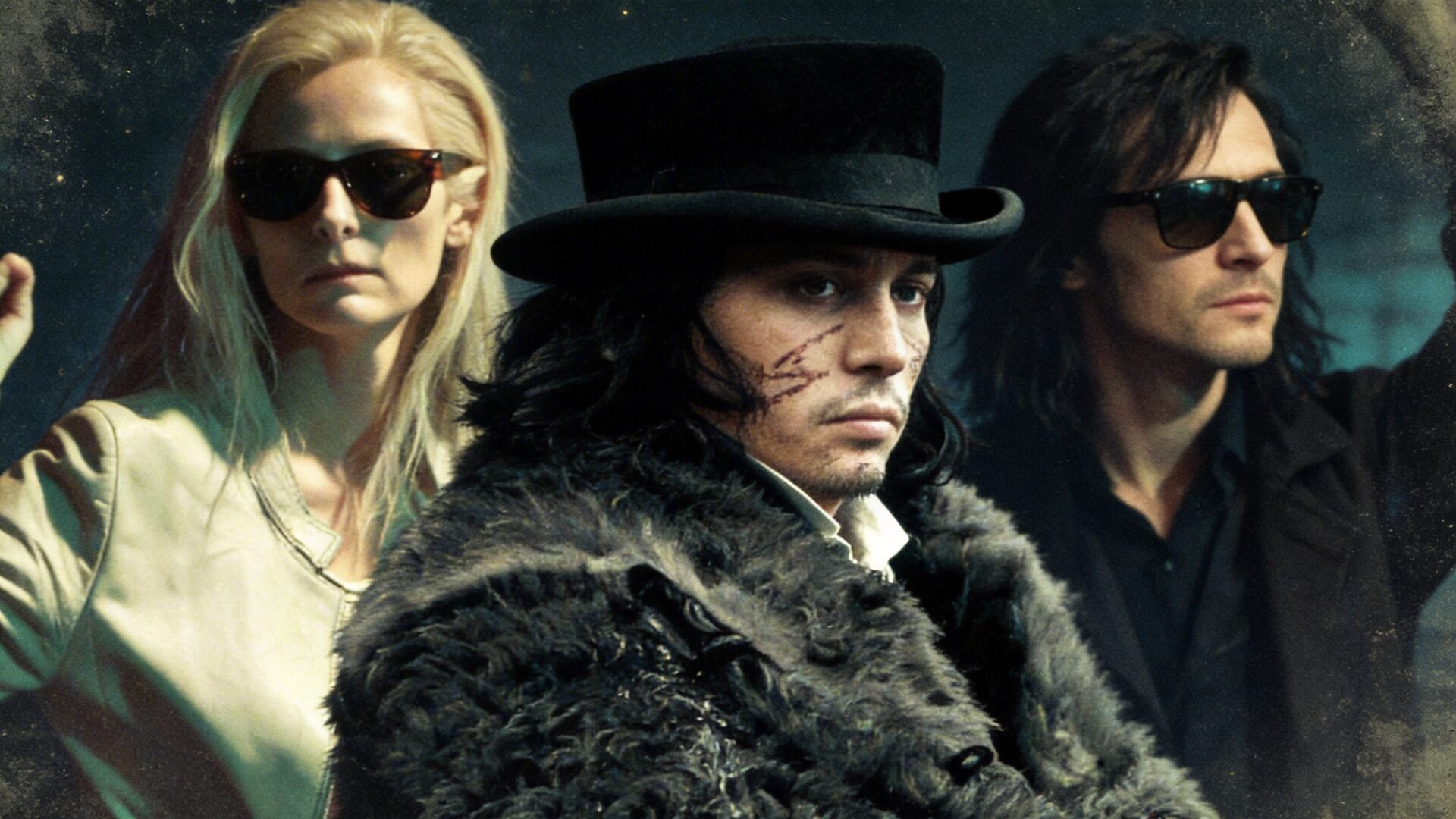
What do a western from '95 and a vampire melodrama from 2013 have in common? At first glance, nothing. But if you watch Dead Man and Only Lovers Left Alive back to back, parallels emerge on their own.
Jim Jarmusch is one of those directors who is a pleasure to rewatch. Not just one film at a time, but in pairs or trios. Not chronologically or thematically—but blindly, when two different films suddenly turn out to have surprisingly much in common. Dead Man came out in 1995, Only Lovers Left Alive in 2013. Almost twenty years and seemingly different genres: a western and a vampire melodrama. But the longer you think about these two films, the clearer it becomes: they are in "dialogue" with each other.
Strangers everywhere and always
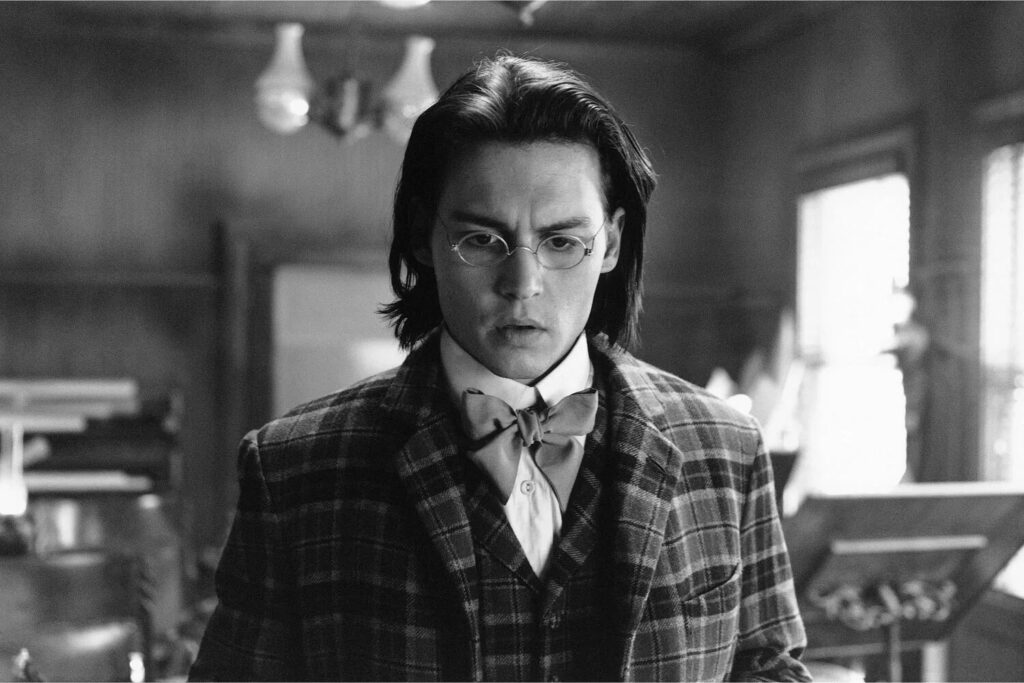
Both films are stories about people (or beings) who don't belong here.
Accountant William Blake (Johnny Depp) arrives in the Wild West, gets into a bind, and from the very first minutes proves to be a man clearly not of this world—literally and metaphorically.
Vampires Adam (Tom Hiddleston) and Eve (Tilda Swinton) exist among humans like anthropologists in a foreign tribe: with interest, weariness, and mild disgust.
Otherness in Jarmusch is not a dramatic conflict but an existential state. His heroes do not fight the world—they simply do not dissolve into it.
What remains after death
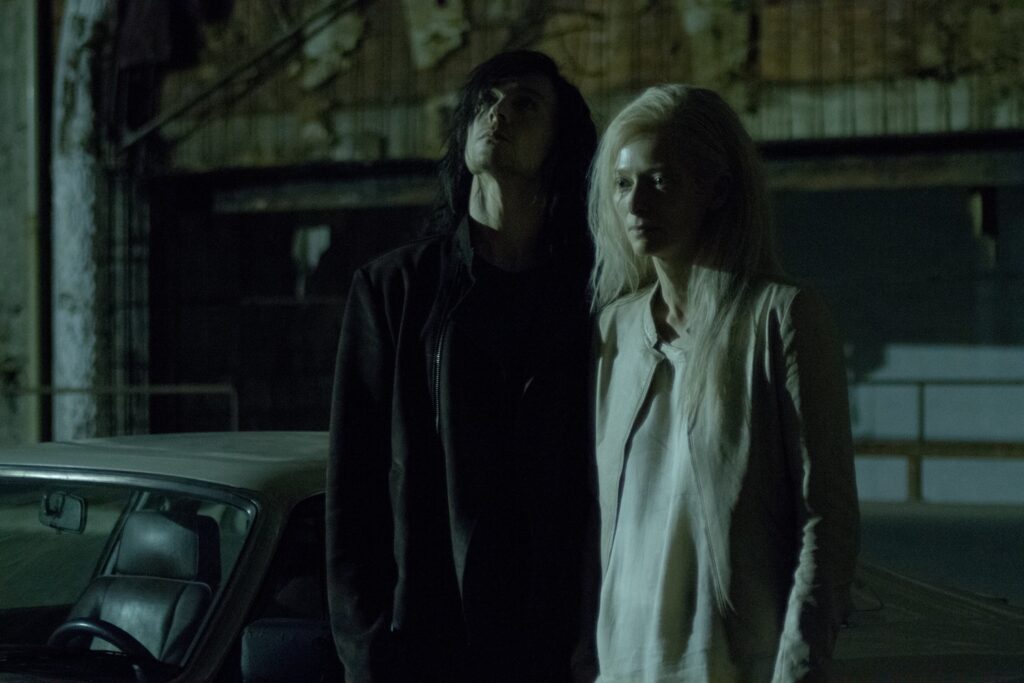
The theme of death in Jarmusch is never just the theme of death. In Dead Man, it is literal: the hero dies throughout the entire film, and the question is not whether it will happen—the question is what happens on the other side. In Only Lovers Left Alive, death is turned inside out: vampires are immortal, but that is precisely why the theme never goes away—it haunts them like a shadow of what they are deprived of.
Both films ask the same question: what does it mean to exist when the usual rules of existence no longer apply?
Poetry as a way to stay sane
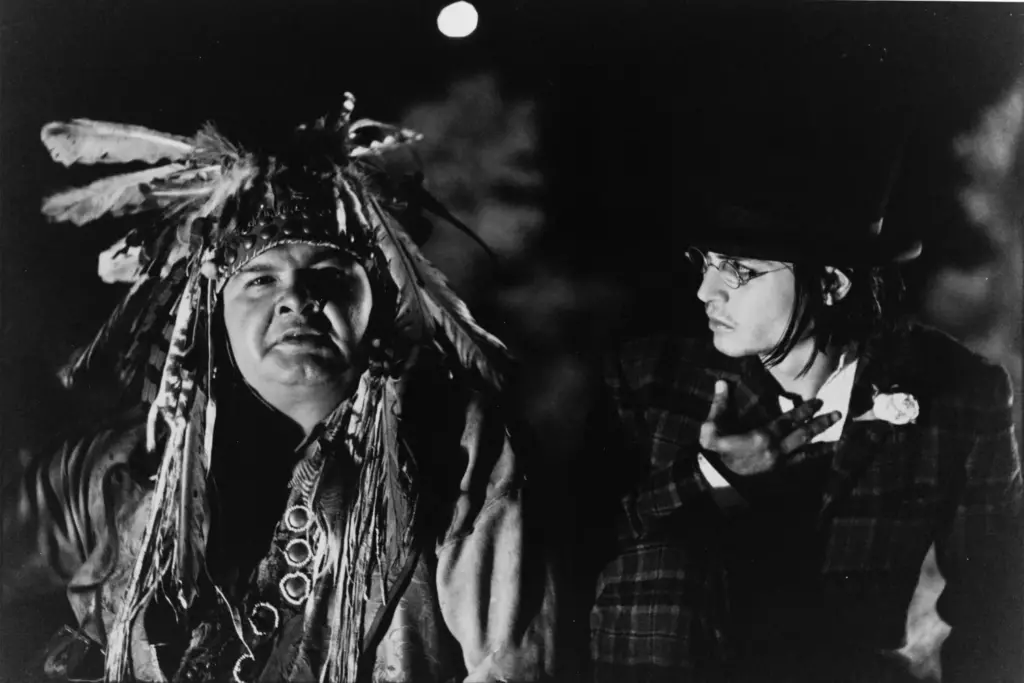
In Dead Man, the hero bears the name of the real poet William Blake—and the entire film turns into an otherworldly poetic trip, where lines from Blake sound in the mouth of the Indian Nobody almost like incantations. In Only Lovers Left Alive, poetry is sublimated into a broader concept of culture: Adam is a musician, Eve reads at a speed any editor could only envy.
Art here is not a decoration of life, but the only thing to hold on to when everything around is falling apart.
Music that speaks instead of words
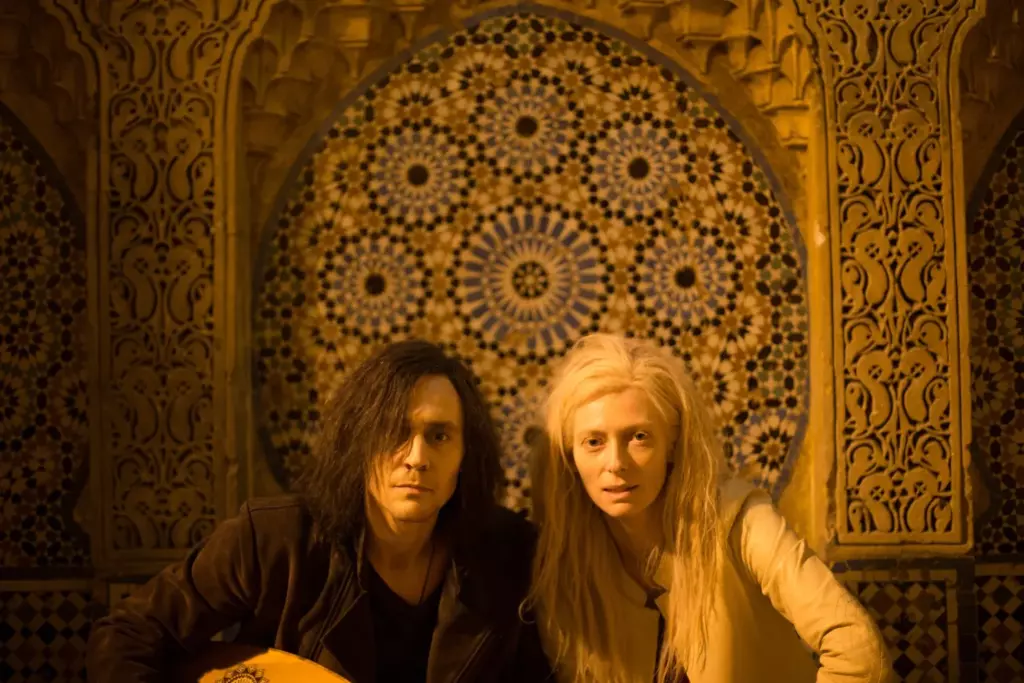
In both films, the soundtrack is a full-fledged character. In Dead Man, Neil Young plays nervous, tormenting electric guitar solos that sound as if the instrument itself is dying along with the hero—convulsively, in bursts. In Only Lovers Left Alive, Jarmusch's band SQÜRL creates a viscous drone-rock with a lute—slow, oppressive layers of sound that exude not pain, but eternity and weariness from it.
The music in Dead Man is agony, in Lovers it is numbness. Different stages of the same thing.
Time that behaves incorrectly
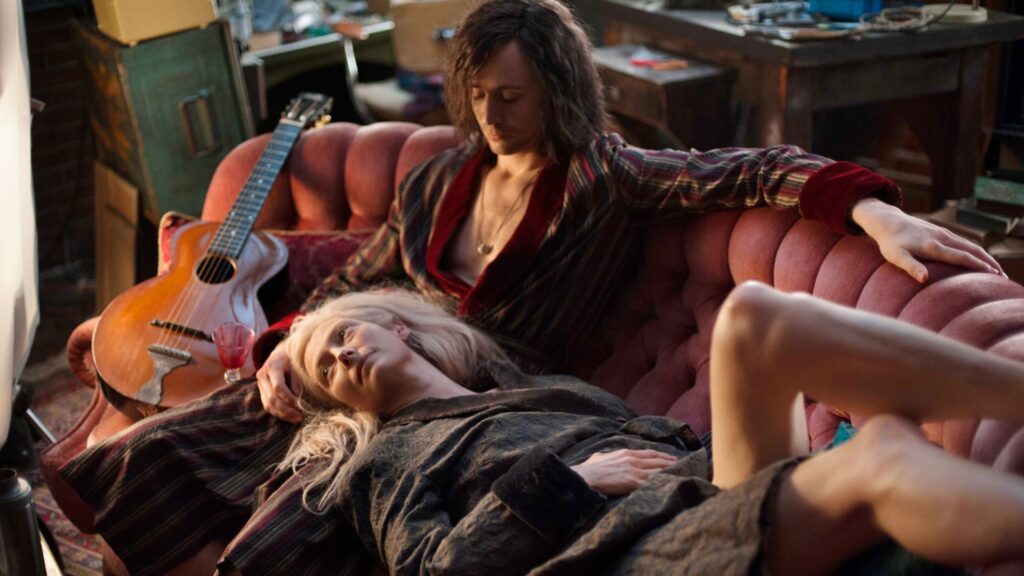
Perhaps the most sophisticated rhyme is in how both films deform time. In Dead Man, it contracts: the hero dies throughout the entire runtime, and by the finale, the boundary between living and dead is completely blurred. In Only Lovers Left Alive, the opposite movement: time stretches to infinity. Vampires remember Shakespeare alive and watch with quiet irritation as humans burn out like matches—quickly, brightly, and meaninglessly.
Jarmusch takes time like plasticine and stretches it in different directions—but both times so that the ground slightly shifts under the viewer's feet.
Is this a coincidence? Most likely not—Jarmusch is simply one of those authors who return to the same questions again and again, each time finding a new form for them. Dead Man and Only Lovers Left Alive are two different answers to the same thing: how to live (or not live) in a world that doesn't care about you.
P.S. Also, John Hurt appears in both films, but you already know that.
Comments
0No comments yet.
Sign in to join the discussion.