
Documentary cinema initiated the development of cinematography and then receded into the background. This article explores how the essences of fiction and documentary cinema coexist.
We are accustomed to perceiving documentary cinema as an independent visual work with one main goal — to inform, to convey facts. But documentality can also exist in symbiosis with other forms of cinema — and before delving into this, it is worth defining the scope of the discussion. Despite semantic nuances, the words "documentality" and "documentary" share the same root — document: something real, truthful, documented in its original form. It is this meaning — recorded reality — that will be implied by all cognate words in this article.
Documentary Cinema as a Haven
Gustav Borg (Stellan Skarsgård's character in Joachim Trier's film) is a film director who made one fiction film at the start of his career and one documentary by the time of the film's events. He casually mentions that his latest work (the documentary) is successful abroad, without going into details. Although thanks to the success of the doc, he got the opportunity to make his second fiction film ever, now with his adult eldest daughter.
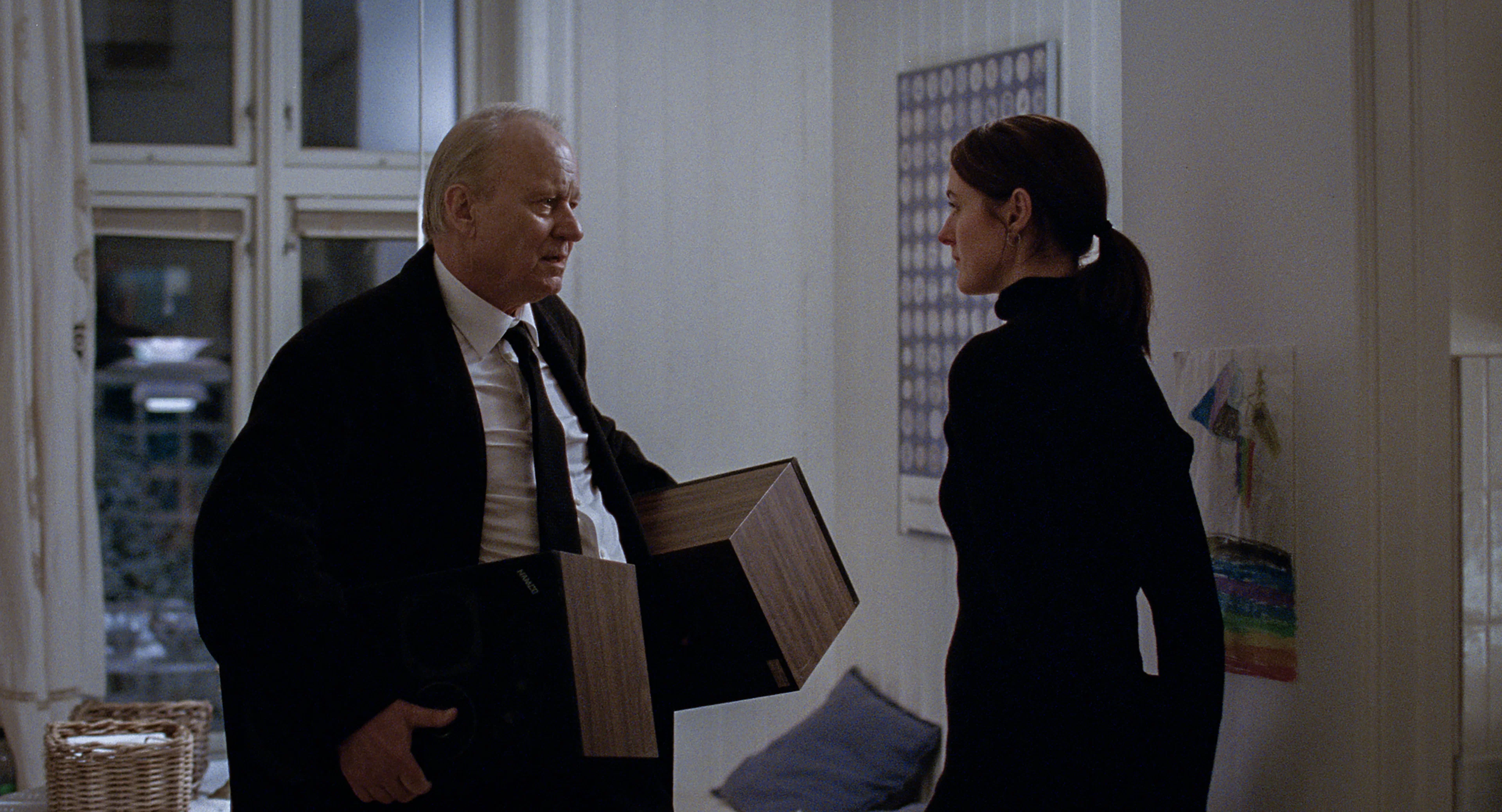
What if the strongest traumas are hidden not in the past, but in the attempt to start over with a clean slate? Joachim Trier gives the answer in his new film 'Sentimental Value'.
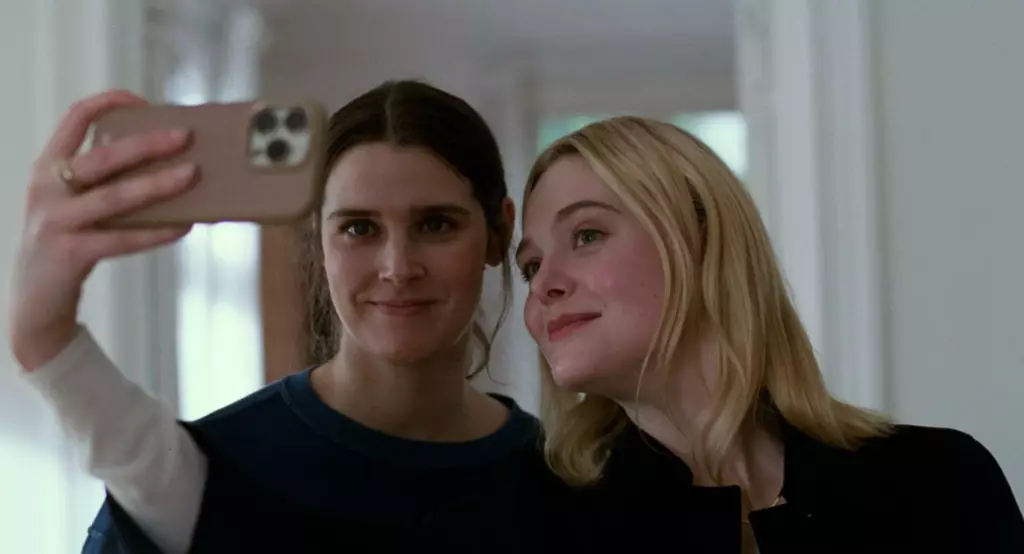
Open materialGiven the sentimental direction of the film and the importance of expressing and having feelings and emotions, one wonders: did Gustav Borg exhaust his emotional resources while working on his first film? He gave a role to his younger daughter, worked with her, invested a lot of effort and feelings, revealed her potential so much that her acting is admired even in her adulthood, and the father, as a director, is almost exalted — many scenes in the film testify to this, whether it's a discussion at a conference or a request from a famous actress for a joint photo.
There is no mention of the director's other fiction works in the plot — and if there were, they would only confirm the idea of an exhausted emotional reserve. Therefore, we conclude that immediately after his debut, Gustav finds a haven in the dryness of documentary cinema.
There are many stereotypes about this genre: that it is boring and unemotional, dry and purely informative. That is exactly how Joachim Trier presents it — deliberately not giving the viewer the slightest detail about his character's documentary film: neither the title, nor the subject, nor the emotional attitude towards it. Meanwhile, much more attention is paid to fiction cinema in the film.
In this case, documentary filmmaking, as a field/genre/type of narrative, serves as a haven and a home. For Joachim Trier, home is not only a story of generations, family, and memories, but also a place where one can come and "unload" from complex feelings and emotions, immersing oneself in the routine study of facts.
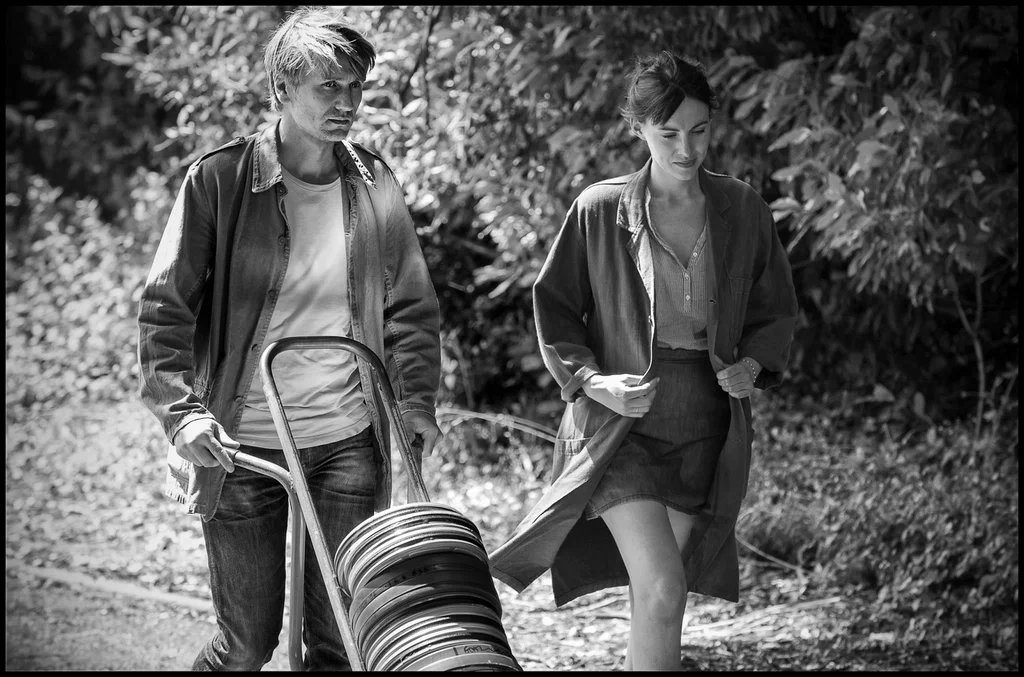
In Philippe Garrel's film 'In the Shadow of Women' (2015), everything is quite different: the film's characters work in cinema; for them, a film project is a point of unity and rapprochement both before and after a family crisis. Working on a documentary film exists outside of quarrels and conflicts; for them, it is a sterile space they return to only under conditions of mental peace.
And in Pablo Larraín's film 'Maria', documentary filmmaking is revealed from a side similar to Gustav Borg. Angelina Jolie's character uses it as a tool to escape reality, a kind of safe haven where one can honestly indulge in nostalgia.
Documentary Cinema as a Safe Condition for Truth
Sometimes the interviewee needs the camera and recorder even more than the director:
— Turn on the recording.
— I don't have a recorder.
— Then remember.
Maria Callas (Angelina Jolie's character) constantly seeks the right moment to schedule a meeting with the journalist who is filming a documentary about the last days of her life. Filming a documentary for her is a way to escape reality, immerse herself in nostalgia, admiration, and the feeling of love and success. Answering the journalist's questions, she relives her life — the viewer understands this through flashbacks.
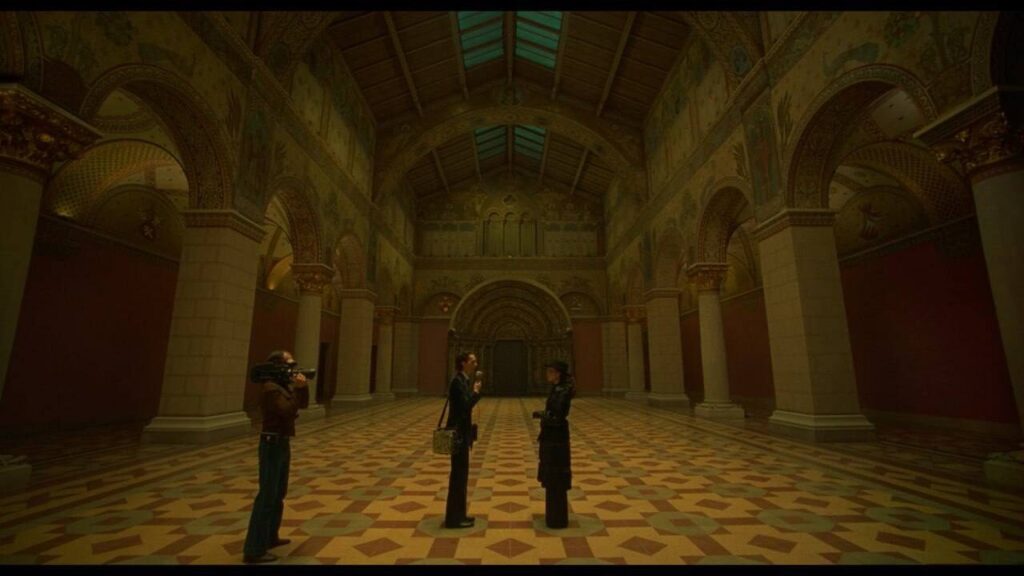
'Oh, Canada' by Paul Schrader starring Richard Gere is another film where the essence of documentary cinema is a secondary, supporting character, and the film set is a confessional (a space of truth).
The main narrative line is built around an interview that Leonard Fife (Richard Gere) gives to his former students as part of filming a documentary about his life and work. However, Fife himself became a famous documentarian quite suddenly — by his own account — when he captured rare political footage. This accident led him to teaching (so it turns out not such an accident, since documentary cinema played a role in shaping his career):
"I built a career by extracting truth from people. You will be a witness. This is my last prayer."
Fife, having reflected on his life, relationships, and the futility of existence, decides to confess. Two conditions are fundamentally important to him: the camera as an instrument of torture ("looking straight into the lens, anyone will talk") and the presence of his wife Emma (Uma Thurman), the closest person to whom he feels guilty. Before filming begins, Malcolm (one of the students filming the interview) shows Fife a cross made of tape on the floor — he must stay on this spot to be in frame. On this cross, both metaphorical and physical, Leonard remains in moments of regret, happiness, and nostalgia under the lens's aim.
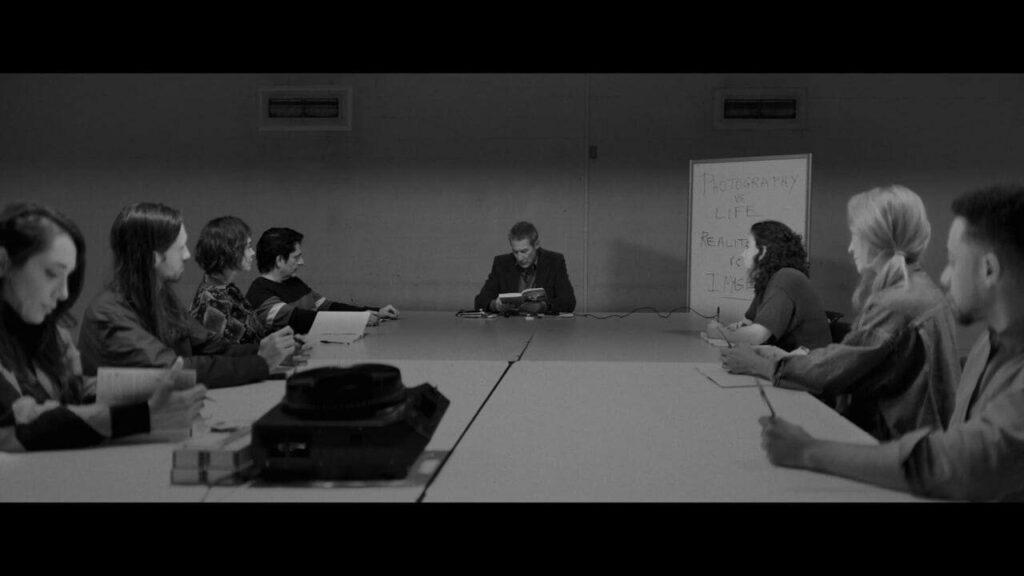
Without going into details, I will mention a few more details related to the role of documentary filmmaking.
In one of his lectures, Fife discussed with students Eddie Adams' photograph 'Saigon Execution'. He accompanied it with words about the execution of a soldier who would live forever thanks to the photograph. One female student objected:
"He will die every time."
Everyone has their own truth, no matter how documentary the film may be.
Documentary Cinema as a Foundation
Let's consider the option when documentary cinema becomes the foundation not within the plot, but outside its framework.
'Grey Gardens' (1975) by the Maysles brothers is a documentary about the lives of two bohemian women who "declined" into poverty in their ancestral mansion. The two Eddies (mother and daughter) are relatives of Jacqueline Kennedy. Both are charismatic and headstrong; it is interesting to watch them even without staged shots and clearly defined interview topics. They talk about life, food, clothes, music, and the sea. The film captivated audiences so much that a little over 30 years later, a film of the same name was made, covering 40 years of the lives of Big and Little Edie.
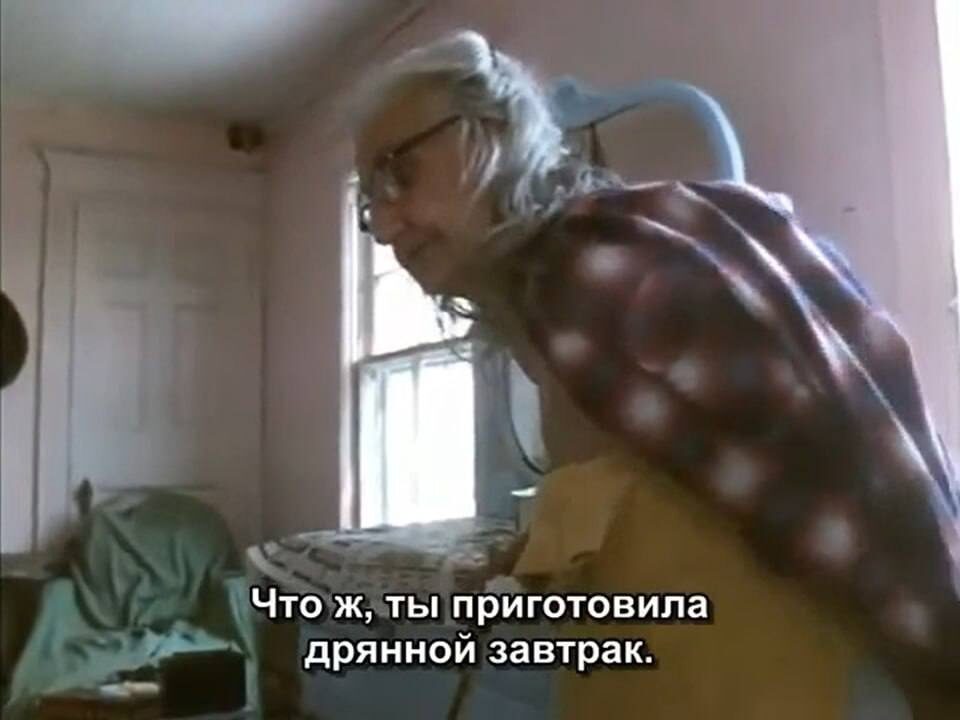
Although references to the documentary basis appear only closer to the end of the film, the title already makes it clear where the "roots" of this film lie. In 'Grey Gardens' (2009), Michael Sucsy adapted every word of the heroines, every feeling and emotion, showed how the Maysles brothers filmed and how Little Edie attended the film's premiere.
Documentary cinema in this case plays the role of the primary source from which fiction cinema is born.
Documentary Cinema as a Guarantee of Authenticity
There is an opinion that a documentary film is one hundred percent truth: everything is exactly as the camera shows, no more, no less. However, even documentary cinema is an artistic view of the author to the same extent as fiction cinema.
Reality and fiction merge until they take form. A story can be as truthful as possible, but whether it is believed or not is decided by the author's discourse (mode of narrative). In Todd Solondz's film 'Storytelling' (2001), the viewer is introduced to two novellas. In one: a creative writing student presents a story based on real events to her classmates — no one believes it. In the other: a director in crisis makes a documentary about a schoolboy in the context of personal and social problems — everyone believes it.
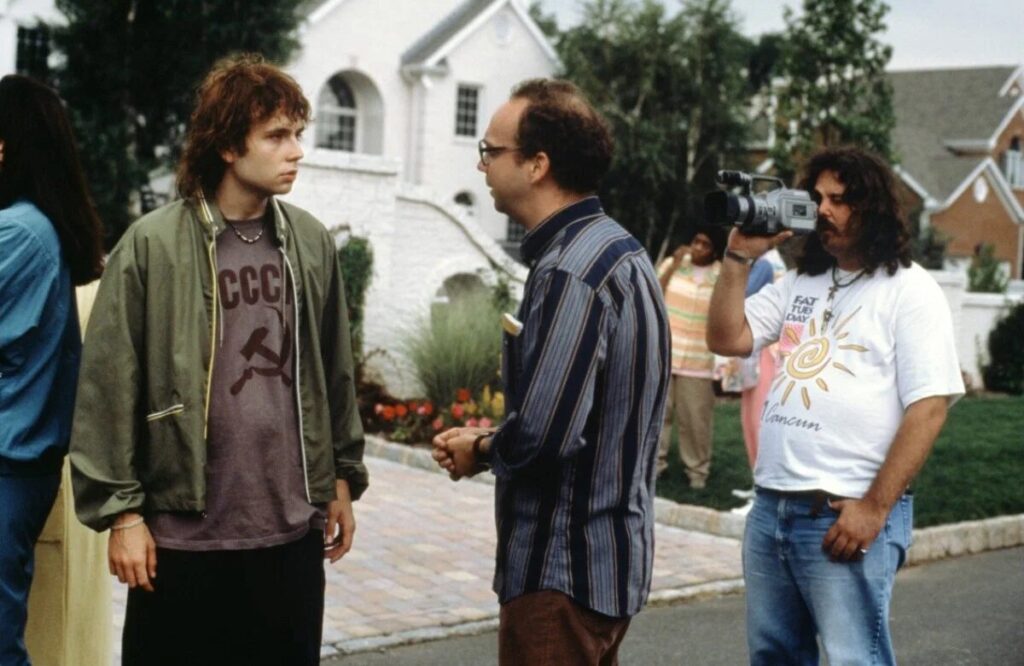
Documentary cinema is perceived as truth by default — simply because it is documentary. The genre itself becomes a guarantee of authenticity. But is it right to endow the form with absoluteness? Or should we perceive cinema as an artistic statement and only formally divide it into genres?
It is easy to say "divide into genres" — but where is the boundary? If everything happening is real, but the event itself is fictional — is that documentality? If people know they are being filmed, they can already adjust their behavior, meaning there is no complete authenticity. And if there are actors in the frame, but they are not acting?
In the film 'Broken Nose, Empty Pockets' by the Ross brothers, the bar owners decide to throw a party for the closure of the beloved establishment — and open the doors to local regulars. Everything on screen looks absolutely real: a real place, guests with real names, footage from security cameras, live conversations. Everything is real — except for the fact of the bar's closure, its location (in the film it's New Orleans, not Las Vegas), and the carefully selected cast: the people on screen passed a casting, but there is no script — instead, alcohol.

Nothing is real.
Here, documentality is a tool for building trust: it works for the directors' artistic idea and the image of the bar itself. And in the symbiosis of documentary form and artistic intent, mockumentary is born — a genre that is actually not documentary at all.
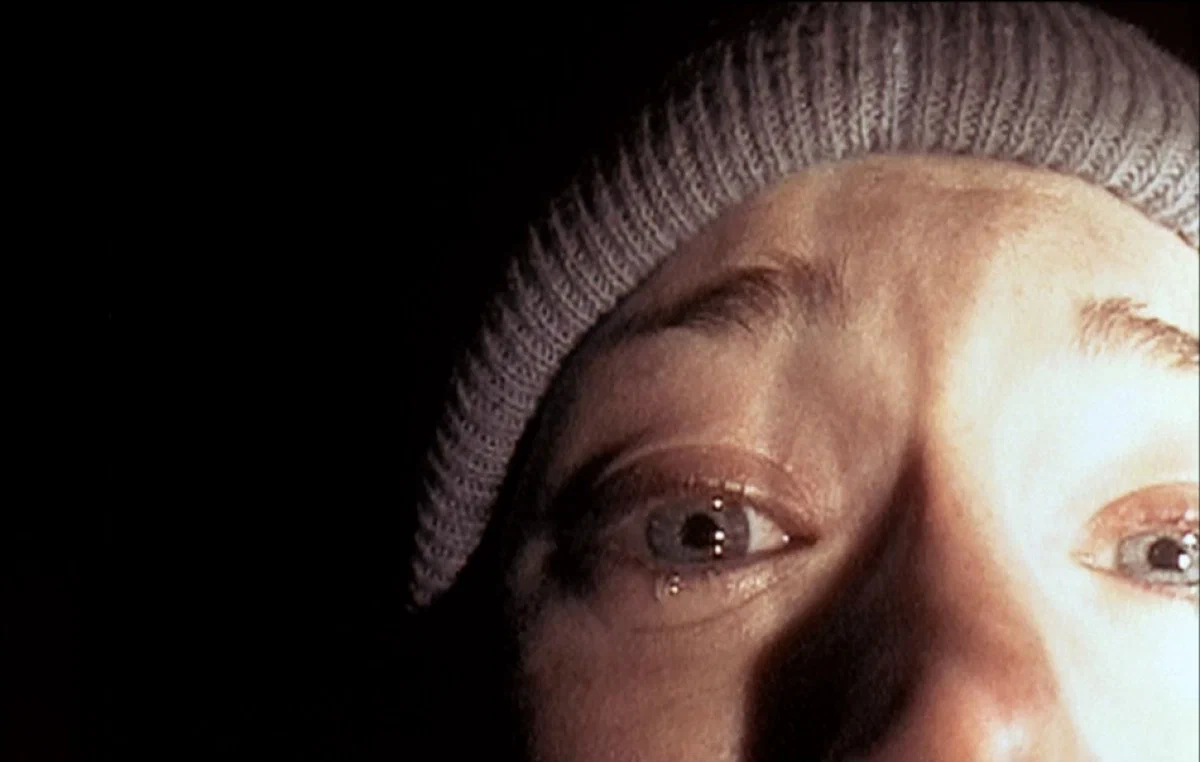
Another example of a hybrid genre is 'The Blair Witch Project' (1999) by directors Daniel Myrick and Eduardo Sánchez. A pseudo-documentary film that inspires trust from the first seconds thanks to handheld, first-person footage and lines like "I want to film it," "it's important for the film"... Once again, the filming method misleads the viewer and awakens trust in the characters.
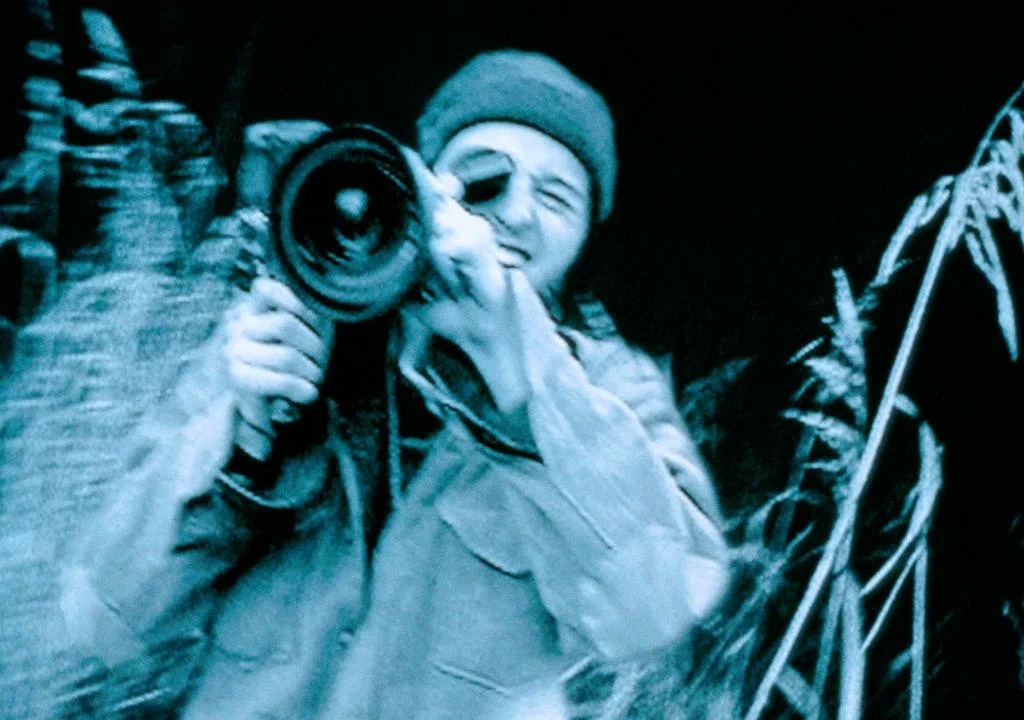
But this time, it's not so simple:
"In the camera, there is filtered reality; you can pretend that everything is not quite as it is."
So say the directors — through the voice of one of the characters. This conveys confusion and internal contradiction: what is documentality really? Authenticity merges with staging, precision, human masks, and fantasies. On one hand, it is obvious that the film is fictional; on the other, the director openly uses documentality as a tool, not hiding it and insisting: everything filmed on camera contains a degree of fiction. For him, there is no documentary cinema as a guarantee of authenticity — just as there is no authenticity itself.
"Then my film makes no sense."
This is said by Pierre, the main character of the aforementioned 'In the Shadow of Women' (2015) by Philippe Garrel — at the moment when he discovers that his entire life was built on lies. For Pierre, documentary cinema is synonymous with truth and the only guarantee of authenticity. For his wife Manon, it is more of a tool, as for the bar owners from the Ross brothers' film.
The Role Documentary Cinema Plays
Fiction cinema shot in a documentary style does not become documentary because of that — it merely turns into an object of study. But documentality itself — as a filming method, genre, or persistent stereotype about authenticity — can play completely different roles in completely different films. It is in this flexibility that its phenomenon lies.
Comments
0No comments yet.
Sign in to join the discussion.