

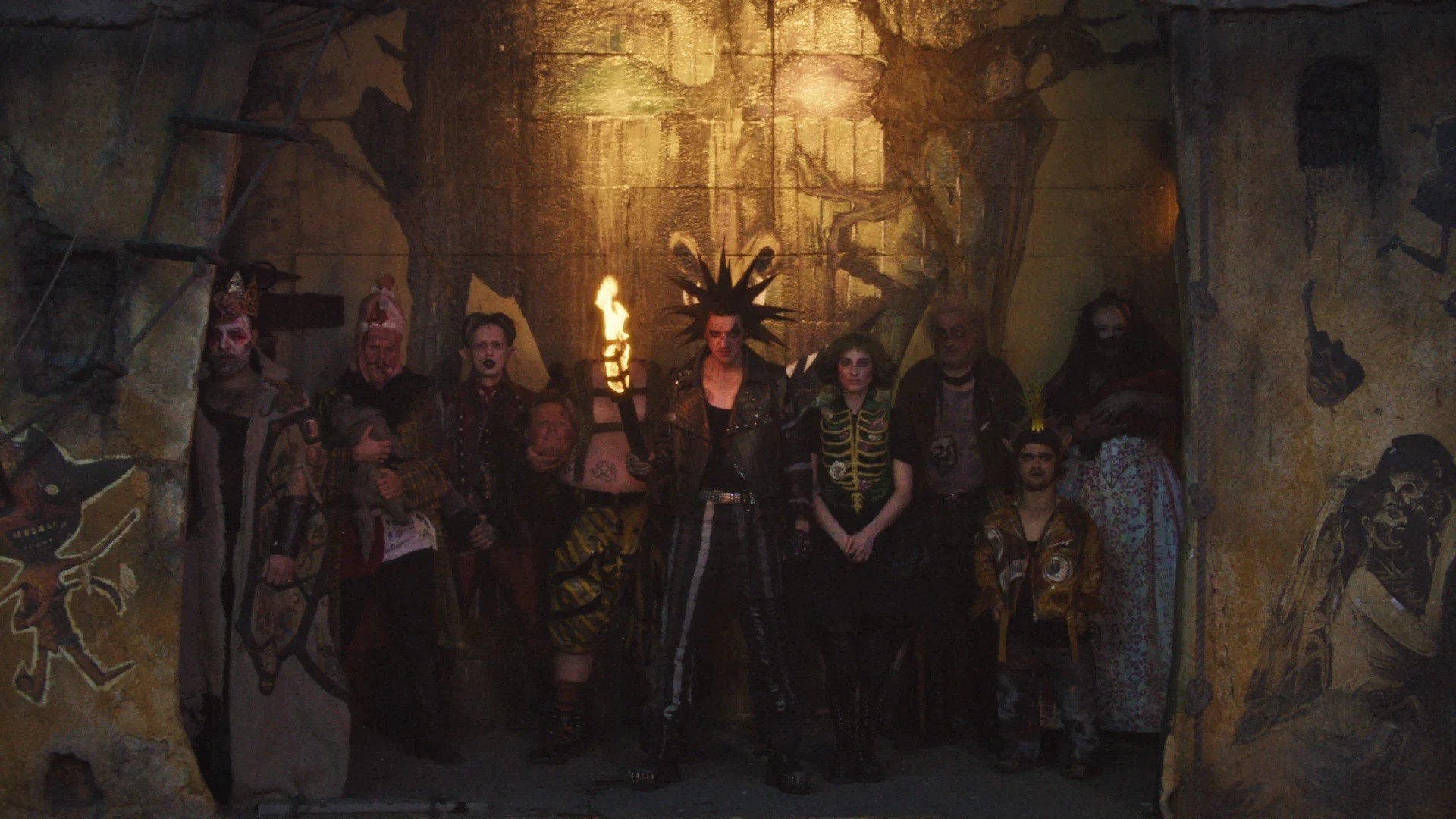
Rustam Mosafir’s film “The King and the Jester. Forever” has been released in wide distribution, where on-screen Gorshok and Knyaz fight the Necromancer in a fairy-tale world. Why the film chooses not a jump but a careful descent from the cliff – in...
Director Rustam Mosafir, who has been quite prolific lately, previously ventured into genre fantasy (“The Scythian”) and wandered with Pyotr Fyodorov and Lisa Boyarskaya along dangerous forest paths (“The Fugitives”). Now he has finally entered the universe of “The King and the Jester,” whose fairy-tale mythology and chthonic witch forests merged into one, creating ideal conditions for creative flight. First came the sensational series—half biopic, half musical—that divided the band’s fans into “before” and “after.” Later, Mosafir tackled a full-length feature about the misadventures of Gorshok (Konstantin Plotnikov) and Knyaz (Vlad Konoplev), who had to save their songs from oblivion and defeat a new villain—the Necromancer (Ilya Grishin). The musical part of the film once again became the main component, skillfully weaving the band’s lyrics into the dialogue (it turned out original, but if you’re not a fan, understanding what everyone is talking about will be difficult).

Kinopoisk has premiered the first two episodes of the series about the horror-punk band “The King and the Jester.” About why this series is not only a bright premiere this spring but also a unique
Open material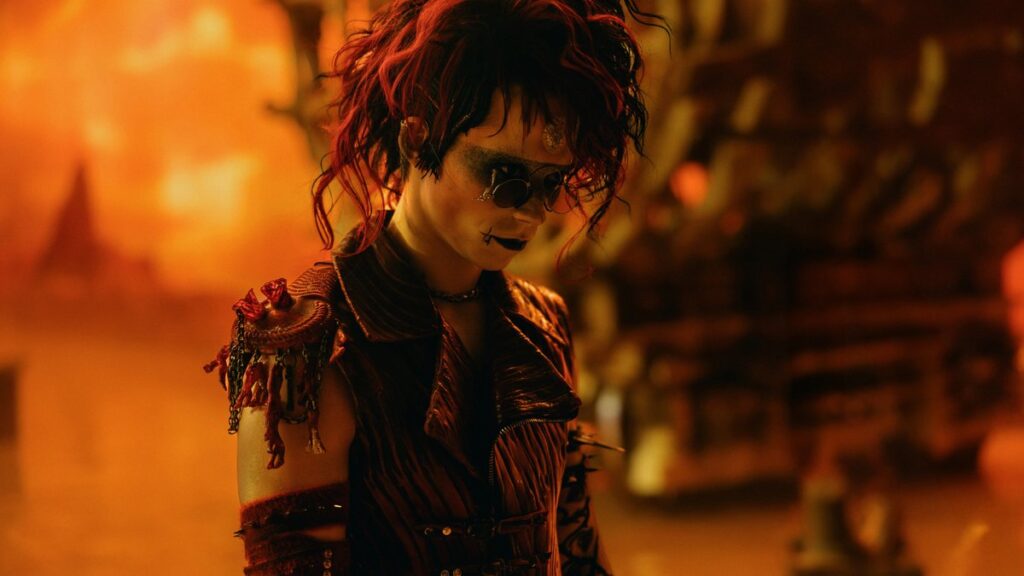
Mosafir approached the creation of this new, albeit entirely fairy-tale, film about the band with the same thoroughness and the same group of associates who worked on the previous project. Plus, the band member Andrei Knyazev closely monitored the process, and his presence, by the way, feels the most vivid in the film. It seems that Knyaz, like his on-screen counterpart, undergoes some therapy after the events of the series, simultaneously closing some important gestalts.
This raises the question: “What does the viewer and the film itself have to do with it?” The answer must be sought within “The King and the Jester. Forever” itself.
The references that “The King and the Jester” generously throws around are recognizable from the very first frames. There’s “Mad Max,” specifically the 1981 film with Mel Gibson, rather than the more polished 2019 version by the same George Miller. Also included are almost all post-apocalyptic action films from the video salon era with bizarre makeup, animatronics, and a general decline of civilization.
More modern things also squeeze in, such as the bloody-trashy but very funny series “Metalocalypse”, whose guitar duels perfectly fit the lore of the series and the subsequent feature film. And although Mosafir doesn’t always hit the mark, he chooses the right vector. And if we’ve watched a dozen glossy fairy tales, why not have a punk fairy tale, even if carefully combed?
Although, alas, it doesn’t always smell like punk. The film looks more like an operetta cabaret, where chaos is carefully managed from a prompter’s box, in which either Rustam Mosafir himself, screenwriter Alexander Buzin, Andrei Knyazev, or all the producers at once appear alternately. Because of this, during viewing, some scenes evoke not creative disorder but a real mess in the head. And despite obvious artistic merits, the film lacks coherent plot moves and a bit of mess and underground (even the presence of Stas Baretsky and his reincarnations doesn’t save it). Everything is sacrificed to form and delicacy, just so as not to accidentally offend anyone.
Simply put, the red signal flares of the series have quietly been replaced by safe LEDs. Did this affect the quality of the story? Globally, no, but the warmth has noticeably diminished.
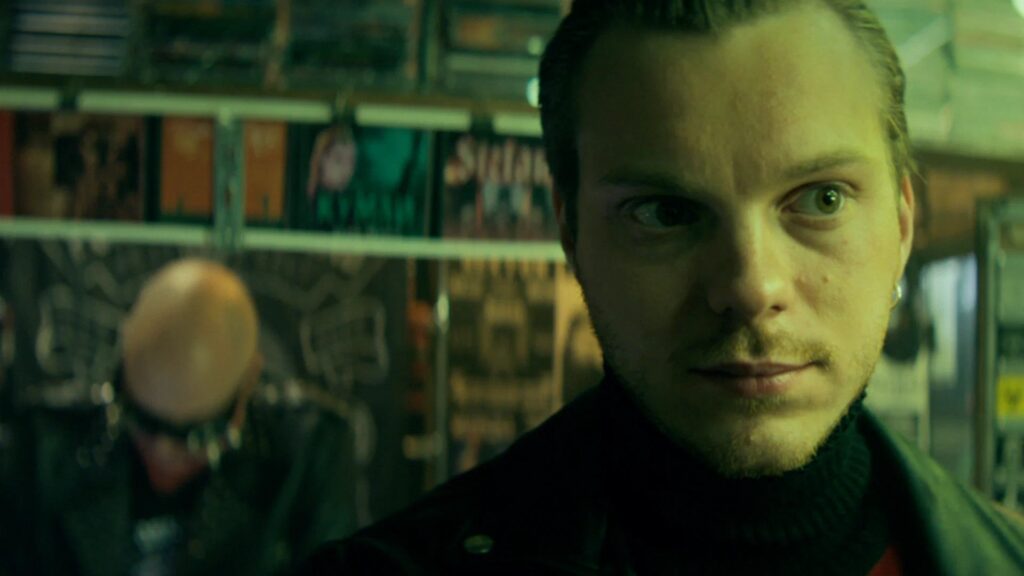
All this is seasoned, however, with quite good humor (the scene of Knyaz meeting fans in a music store will be remembered for a long time) and another successful duet of Vlad Konoplev and Konstantin Plotnikov, whose Knyaz and Gorshok, respectively, carry the lion’s share of the stalling plot. Knyaz here is almost a Byronic character, sadly looking at the gloomy St. Petersburg sky and pouring out his sadness either onto easels or to a crazy psychiatrist, whose role was kindly taken by Gosha Kutsenko. Gorshok is still the same wild subculturalist, explaining anarchy to fairy-tale characters and ready to stand up for a friend and his beloved, despite disagreements. A lively, long-lasting duet that literally begs to be on screen in a sitcom format. Versatile and effective, like the unforgettable duets of the 90s: Oleinikov and Stoyanov, Nagiyev and Rost.

“The King and the Jester” overall has many pleasant little surprises, especially, of course, for those who grew up with “The Gardener,” “The Sudden Head,” or “The Forester.” They will easily recognize the new characters that appear in the film (the old man dreaming of freedom looks especially impressive). For those who have stayed on the sidelines all this time, the film is unlikely to add fresh air. It will rather remain simply misunderstood. Another question is that approximately at the point where chains break and rings fall in ecstasy in punk rock, the story of “The King and the Jester” unexpectedly turns into a bromance. This is not repulsive at all, but it evokes a feeling of slight deception.
Comments
0No comments yet.
Sign in to join the discussion.