

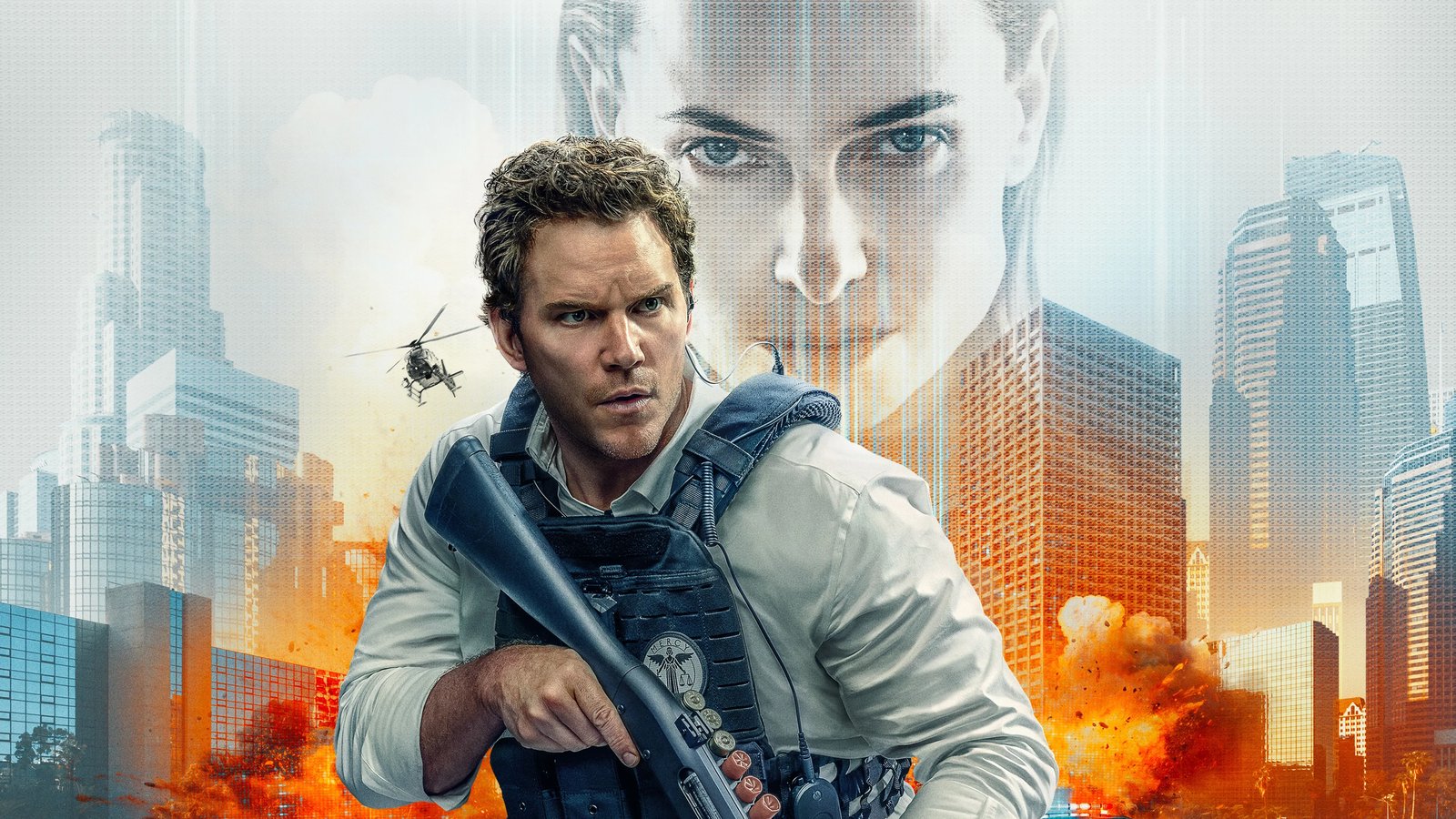
A new screenlife thriller by Timur Bekmambetov, "Execute Cannot Pardon," has been released online, in which Chris Pratt's character builds his own defense in a virtual court. Does the film deserve an acquittal? – in our review.
The new film by Timur Bekmambetov, "Execute Cannot Pardon" (the comma is intentionally absent from the phrase — the director will place it for you closer to the middle of the film), is quite characteristic of the director's recent work. Bekmambetov has long been, and seemingly not without success, immersed in the "screenlife" genre, persistently proving that a digital footprint can become a full-fledged fabric of a feature film. True, it works out for him every other time: the fully successful and suspenseful "Profile" and "Searching" were followed by two outright failures — "The Replacement" and "War of the Worlds". And it doesn't matter at all where Bekmambetov is — in the director's chair or directly behind it, overseeing the product as a producer. The style and directorial signature are visible from afar.
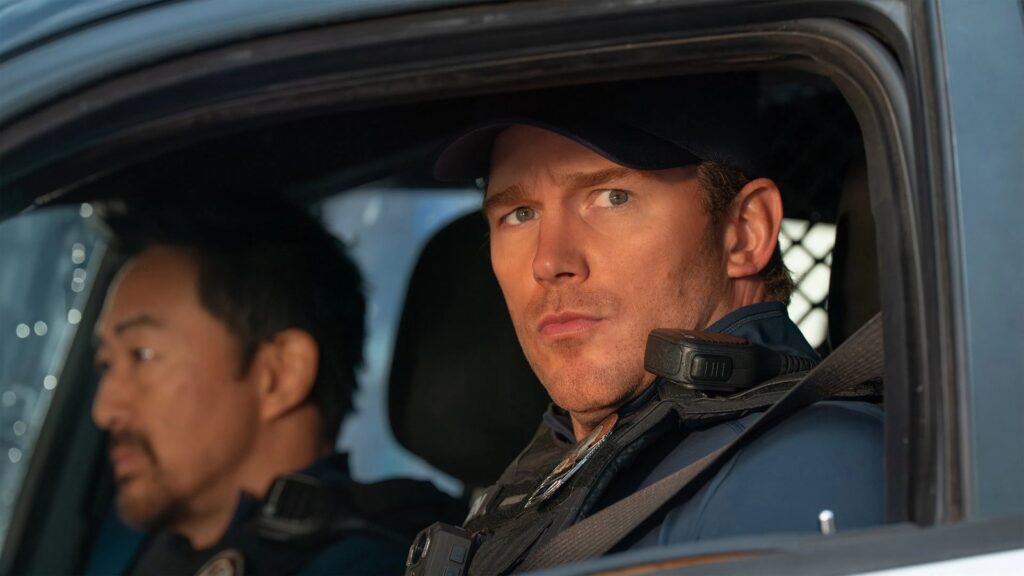
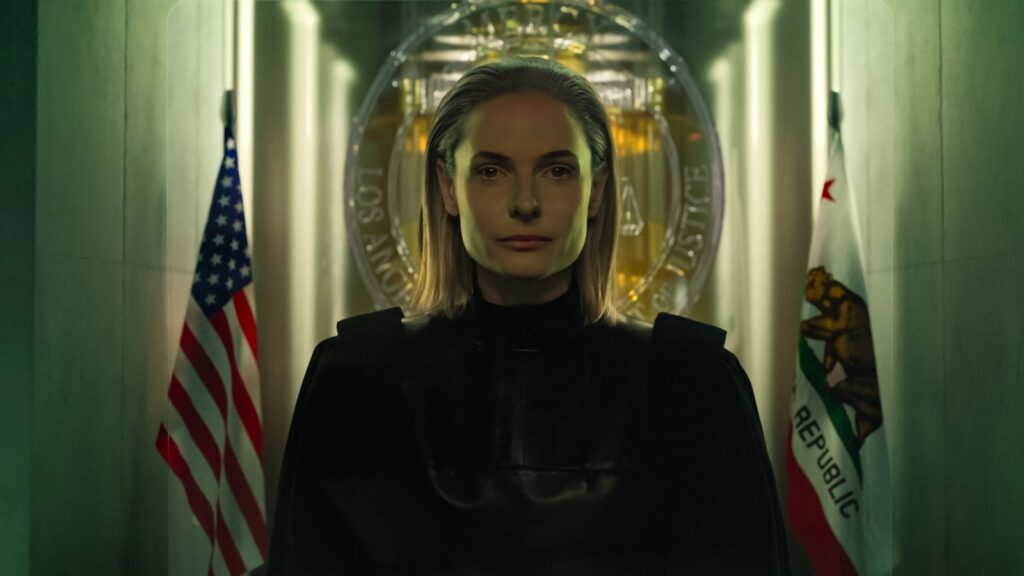
And this year, Bekmambetov presented viewers with another techno-thriller: the story of former police officer Chris Raven (Chris Pratt), who allegedly killed his wife. The action takes place in America in the not-too-distant future, where legal procedures are entirely entrusted to artificial intelligence (a judge with a deepfake of Rebecca Ferguson), delivering a verdict within an hour and a half (here Bekmambetov grimly anticipates that we are close to such a reality).
True, the statistics of guilty and acquittal verdicts are not presented to us, intriguing with silence. By inertia, one inevitably recalls "Judge Dredd" with Stallone, and "Minority Report," to which Bekmambetov nods especially clearly, and "The Fugitive" with Harrison Ford, and "Equilibrium" — in short, any film about a person's collision with Themis. And in the case of "Execute Cannot Pardon," it is also an encounter with a virtual judge — impassive and devoid of human dimension.
Understanding the futility of betraying himself and the illusory nature of hopes for a strong script, Bekmambetov immediately takes the bull by the horns in terms of form. The film demonstrates a dizzying whirlwind of action scenes broadcast from city cameras, smartphones, and police body cameras. Shorts from social media burst into this stream, because the digital life of each of us seems more interesting and eventful than ordinary life. But at the same time, it harbors many dangers: every innocently dropped word can easily be interpreted by the AI judge as a threat and carefully packaged in a folder of "evidence of guilt." It is unfamiliar with concepts like "a surge of passion" or "a moment of despair."
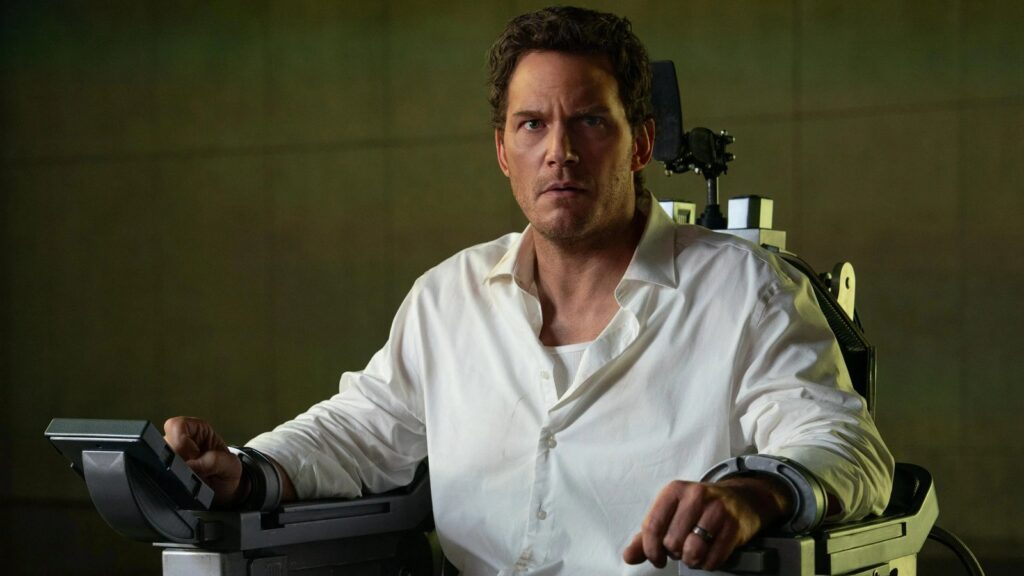
At first, the flickering of frames disorients, but once you get used to the rhythm of the narrative, we are invited to relax and surrender to the will of awkward but nevertheless captivating plot twists. And sometimes the film even slips in unexpected moves with false suspects (besides Raven, of course). Chris Pratt in the role of a police officer fighting for his life, tied to a chair, is not a refreshing but quite stable role for such a format, far from his usual image of a simpleton hero. His performance does not captivate seriously and more often disappoints with the absence of his usual humor.
Another actor (even the same AI) could have successfully occupied this almost electric chair, and nothing would have changed significantly. And if this can be considered a complaint, then let it be the main one. But Rebecca Ferguson in the role of the cold AI judge (cold?) fits perfectly here. Dry, emotionless, with a bright but even and coldly flawless appearance, as if truly generated by a neural network. She has to play almost with her eyes alone, but any reaction at certain moments is read instantly. And the main paradox is that she looks more alive than most of the film's characters.
"Execute Cannot Pardon" does not claim to be anything innovative in the genre and will most likely be quickly forgotten, but nevertheless, life occasionally boils in it, and the director's enthusiasm is felt. The film is packed with events, and although the main character is chained to a chair for most of the time, the film itself does not stand still. It really wants to be liked at least a little and spins intensely around its axis.
And sometimes it manages to successfully present its most attractive side, to which one can easily lean. And if you manage to raise the bar of disbelief higher, the film will win you over with its restless energy, visuals, and a fairly simple but clearly told story. And even with some journalistic anger. Bekmambetov sometimes frightens with scenes seemingly taken from news screens and honestly warns: you cannot trust AI in principle. And especially in matters of life and death.
Comments
0No comments yet.
Sign in to join the discussion.