
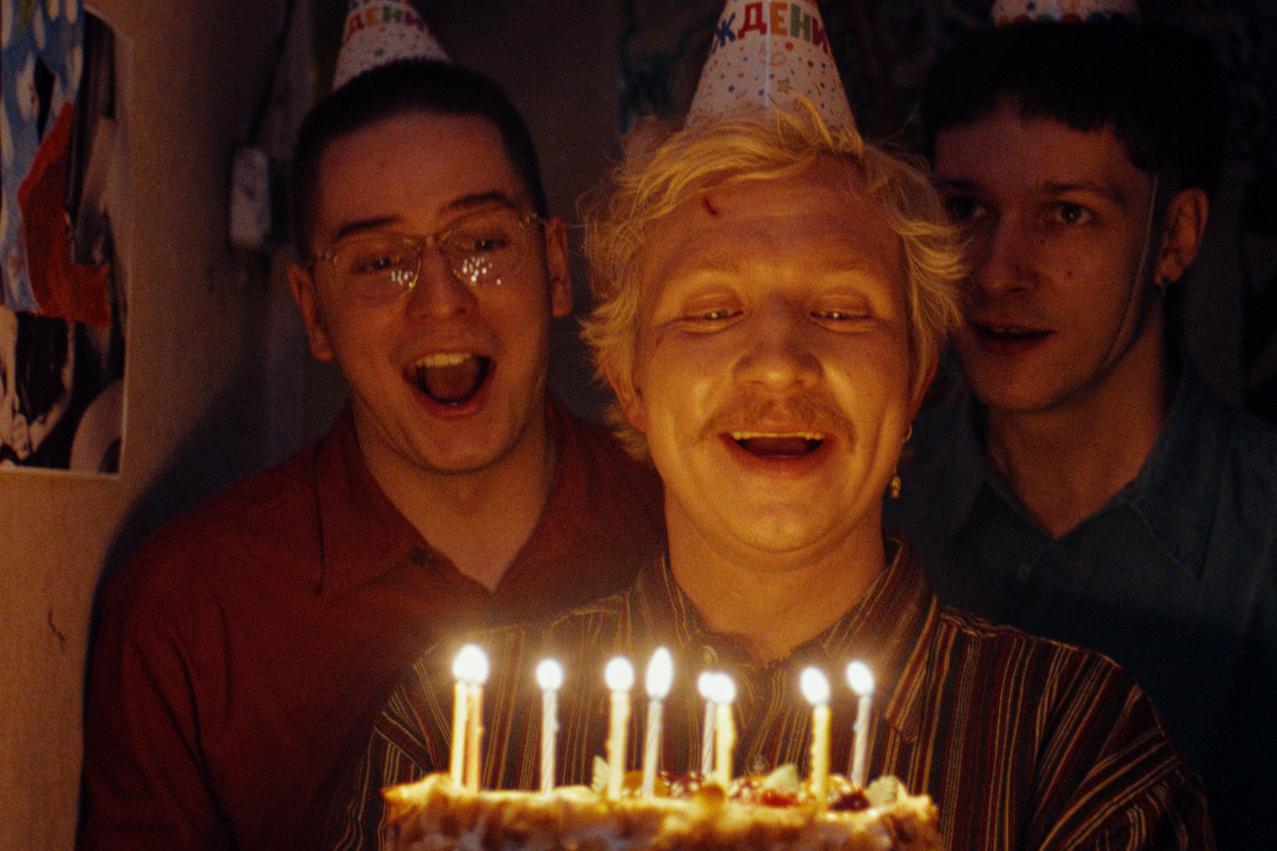
Since February 5th, Sergey Malkin's intimate autofiction 'Yura Was Here' is in theaters. About the voice of a generation, romantic Moscow, and neurodivergent film characters — in a piece by Sofia Bikkanova and Daniil Popov.
Oleg (Denis Paramonov) and Seryoga (Kuzma Kotrelev) are almost thirty-year-old Moscow freelance artists. They play in a niche band (somewhere between surf rock and grunge), sort through a deck of colorful caps from thrift stores, wander around nighttime Moscow, and argue with their gloomy communal apartment neighbor Andrey (Vasily Mikhailov). The friends' freedom is unlimited, they have no responsibilities: they devote all their time to music, and breakfast can be someone else's syrniki.
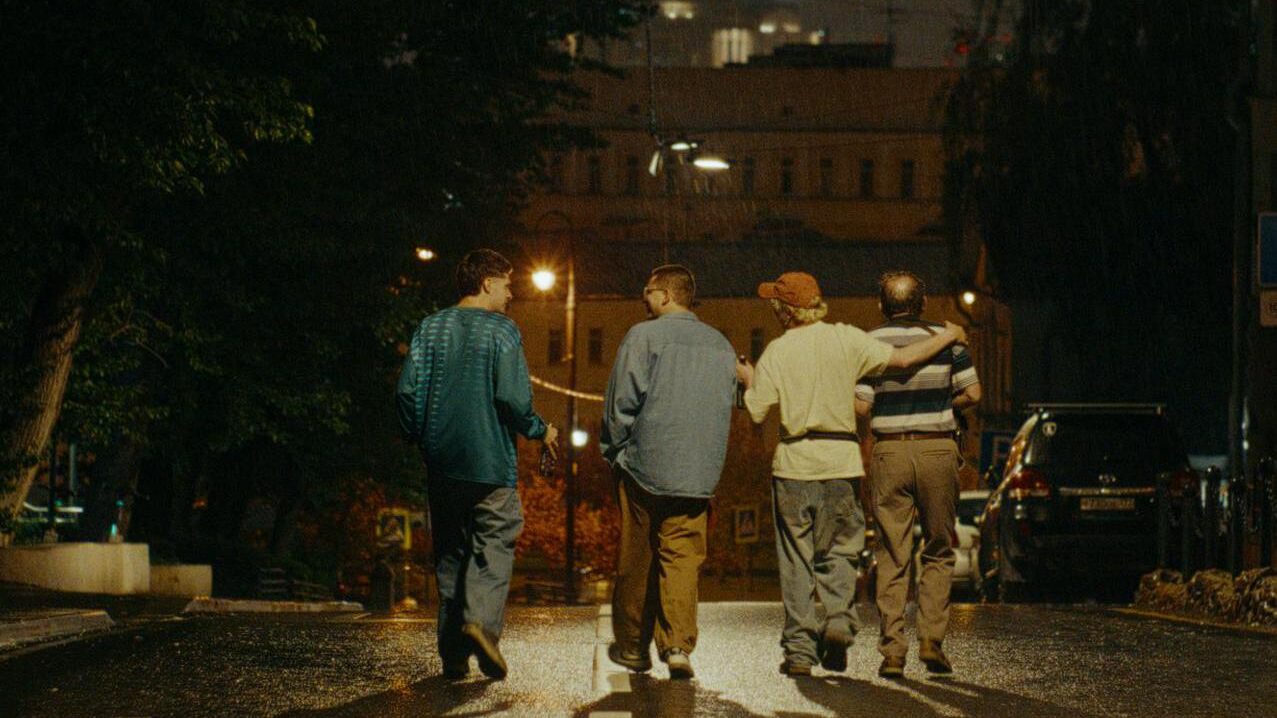
The endless celebration of life ends when Oleg's father is locked up for ten days and he has to take temporary care of his uncle Yura (Konstantin Khabensky), a man with mental disabilities who needs constant care. Here the first difference in the characters' personalities emerges: Seryoga immediately warms up to the stranger, initially interacting with him more and trying to understand him, while Oleg negotiates the band's participation in a local festival, drinking beer at a bar without any pangs of conscience.
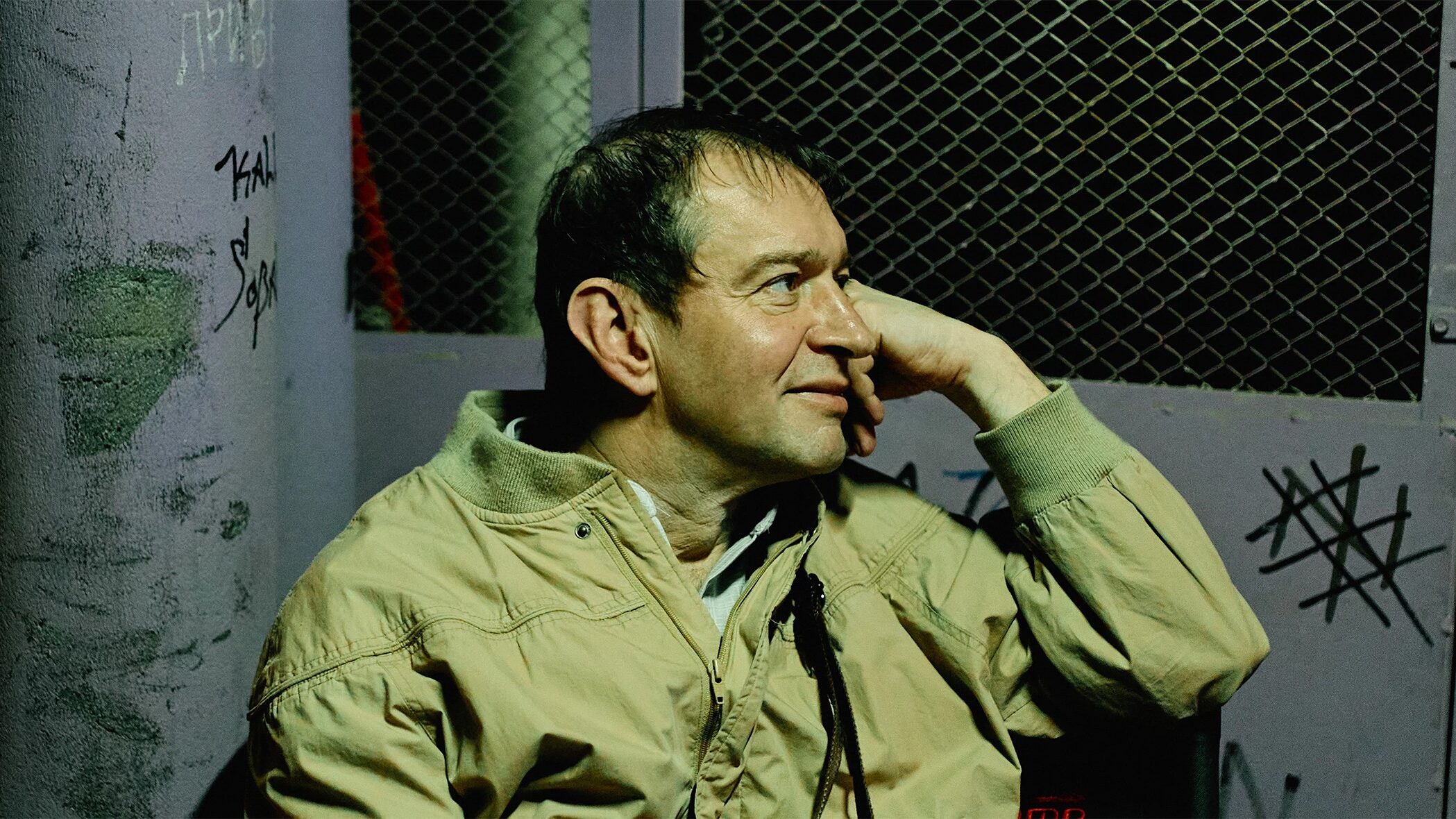
The main find of Malkin's film is the completely unrecognizable Konstantin Khabensky in the role of Uncle Yura – a close and special relative of Sergey. One of the leading Russian actors builds the image of a person with mental disabilities incredibly sensitively, carefully, and does not exploit the neurodivergent image, which has already become a cliché in modern cinema.
Starting with Barry Levinson's breakthrough 'Rain Man', which first showed an autistic person not as an outcast isolated from others, but as a full-fledged living person, the image of people with ASD in cinema began to acquire certain mannerisms and stereotypical portrayals. Most of them sometimes became objects of cruel unintentional jokes and parodies. The living person with their rich and amazing inner world began to disappear behind the character with mental disabilities.
Khabensky breaks this tradition and plays Yura as a restless, open child trapped in an adult man's body. He does not use obvious clichés like tantrums and screaming. He does not utter a word in the film's hour and a half, but wins the viewer's heart from the first frame with his spontaneity and sincere love for others, even if they do not reciprocate at first. His character is like the shards on the wall of the protagonist's rented apartment. For some, these scattered pieces are household trash; for others, they are fragments from which one can assemble a device that will illuminate the lives of distant and close people with all the shades of unity and a brief moment of true happiness.
But Yura in the film is not only the uncle who swept through the lives of bored and irritated 30-year-old guys like a comet, but also the image of the inner child hidden deep inside every grown-up person. This is the best version of us, not yet covered with a layer of bitterness, indifference, and a collection of cynical quotes for all occasions. A blank slate, capable, with complete trust, of making everyone a little better, awakening them from the gray sleep of everyday life, and giving hope for something greater than just ordinary life.
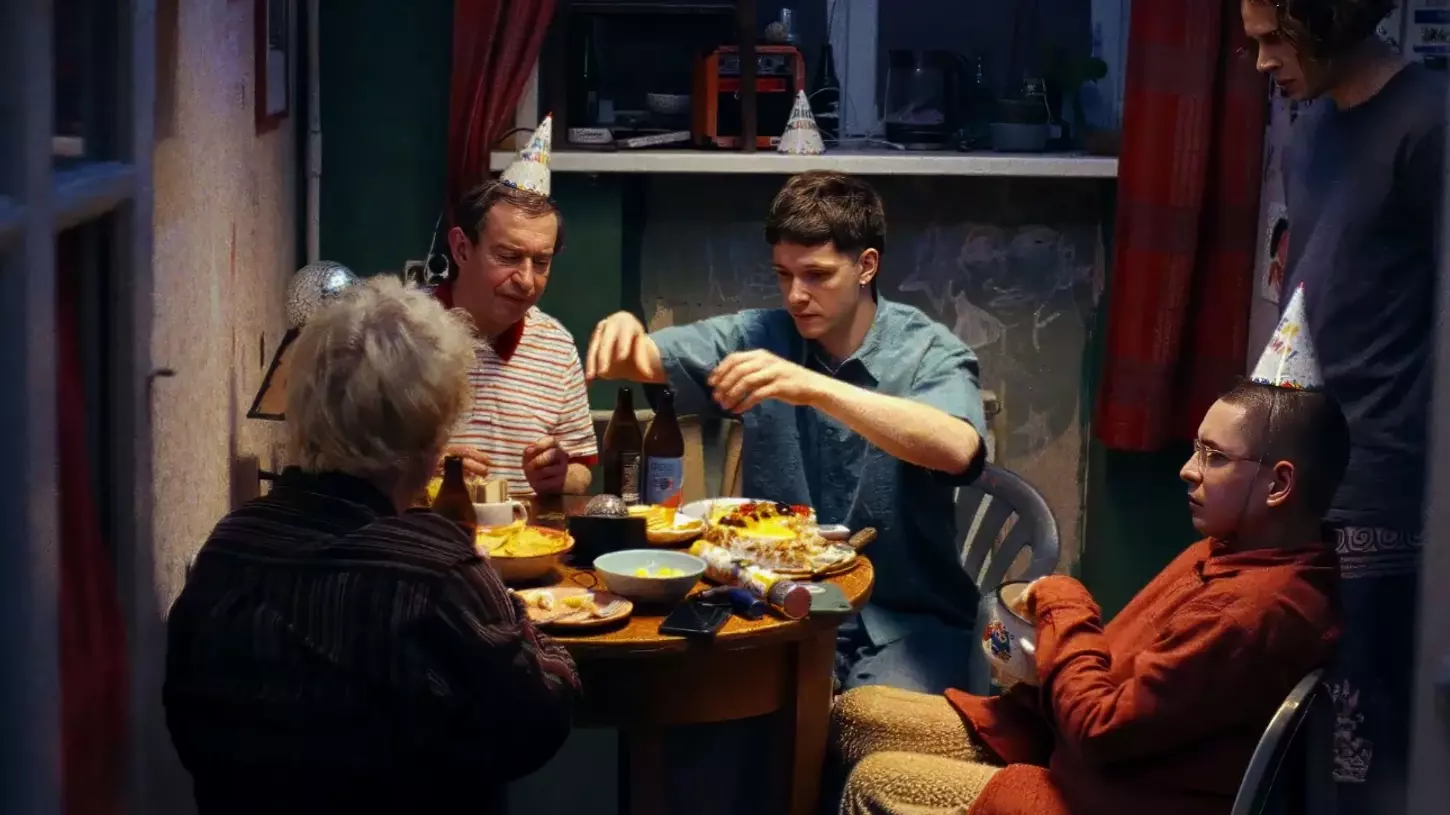
The characters of the friends turned out to be lively, dynamic, recognizable — they endlessly joke, tease each other, argue, rib each other, but never leave each other in trouble. This is their true emotional closeness. In an hour and a half, they go from carefree guys with youthful rebellion against everyone to people who can take responsibility for their neighbor. They retain their playfulness and kindness, because only with such a touching, soft, cheerful intonation can one talk about 'being an adult.' It helps them live and move forward, even if the interview with an important recording studio failed and the landlady is kicking them out of the apartment.
Even the unsociable Andrey, who at first is always gloomily chewing something, goes through his own journey. He has no intention of helping Yura, interacting with him, or accommodating his neighbors. The culmination of this confrontation is a cleansing fight between the arrogant Andrey and the determined Oleg, after which one of them becomes softer and develops sympathy for the friends, while the other learns to find a compromise.
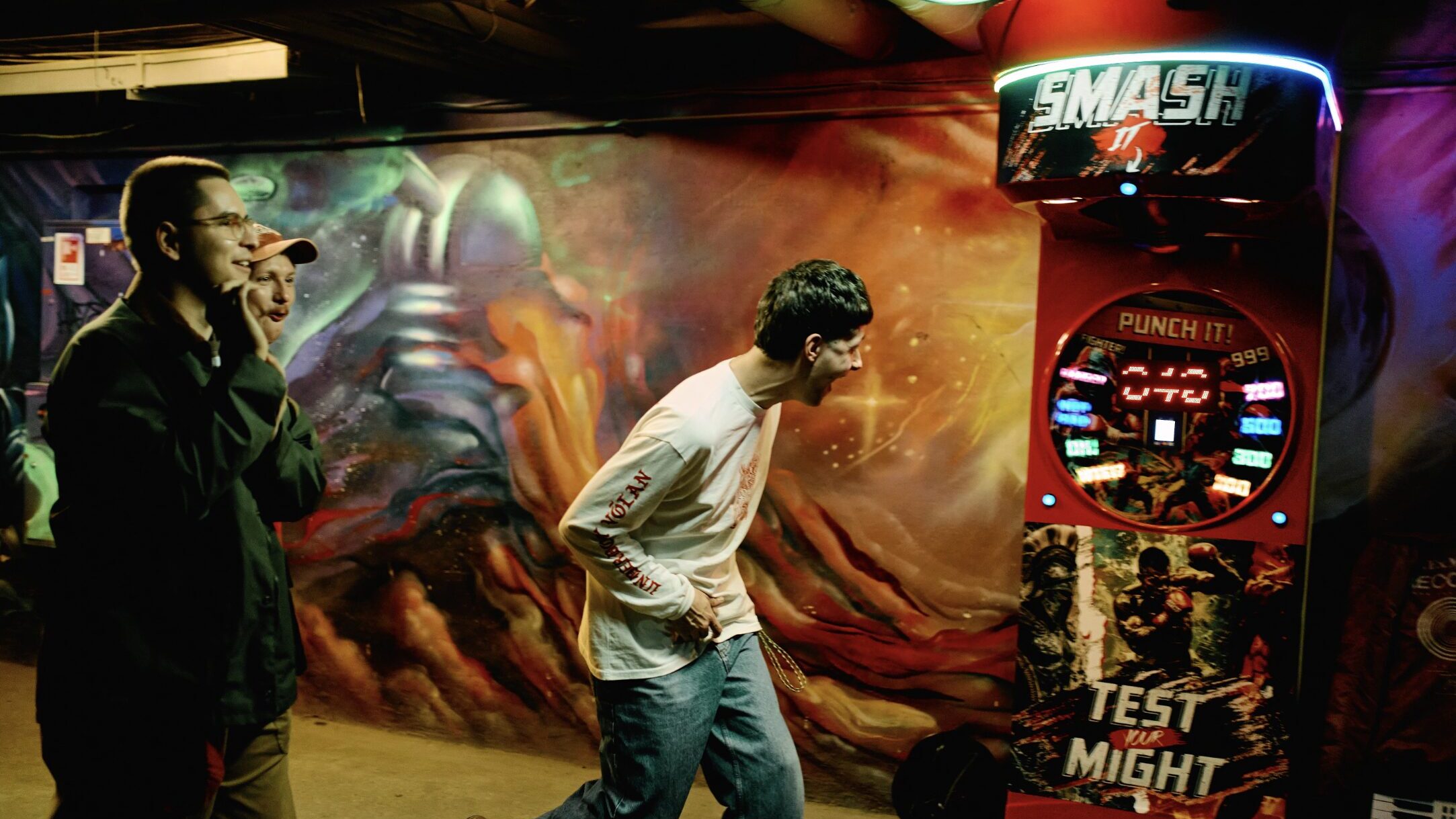
The film is full of small endearing details. Walks in the rain with silly dialogues, solving all issues by playing rock-paper-scissors (first round — only scissors!), arguments about what to put in hot dogs for dinner, and fashion advice in a thrift store. 'Yura Was Here' gives the feeling that you were here too, drawing the viewer into the daily lives of young people searching for themselves in this life.
Moscow itself became one of the main images: in nighttime kitchen conversations and street expansion plans, in Kitay-gorod under the rain, in small bars, Asian eateries, in traffic jams under the scorching sun, on small central streets and vacant lots on the outskirts — it is always with Oleg, Yura, and Seryoga. This is a mutual feeling: the characters seem to carry it in their hearts, and the capital, in response, shapes the tempo and style of their lives.
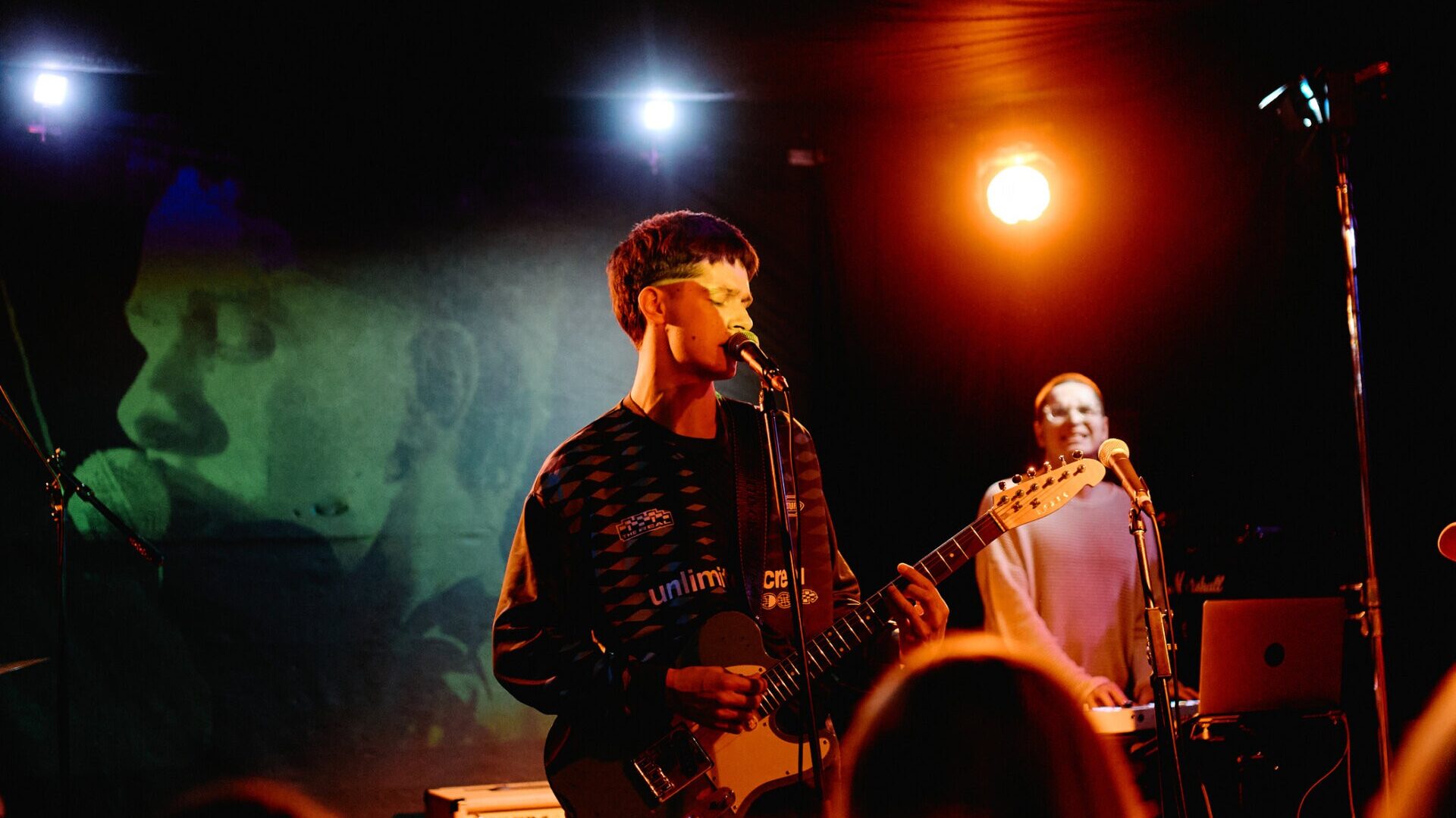
'Yura Was Here' is the feature debut of Sergey Malkin, a graduate of the Moscow Film School and author of several short films. According to the director, the film is based on his personal experience, which is perhaps what makes the story so vivid and the characters recognizable. Malkin's short films often explore love, but in his feature debut there is not a hint of romantic relationships. He looks broader and adopts an intonation that resonates with the voice of an entire generation.
Oleg and Seryoga's experiences are easy to understand because many people also find it hard to grow up. This 'recognition of oneself' is supported by the cultural context woven into light improvisational dialogues and the film's aesthetic plan. The work with color and light makes 'Yura Was Here' hit not only the heart but also the fashion: minty-transparent, unnatural colors of a sunny day, neon, God knows where from, pink rays of evening, the rough texture of junk in a rented apartment, and the gloomy red ecstasy at a concert.
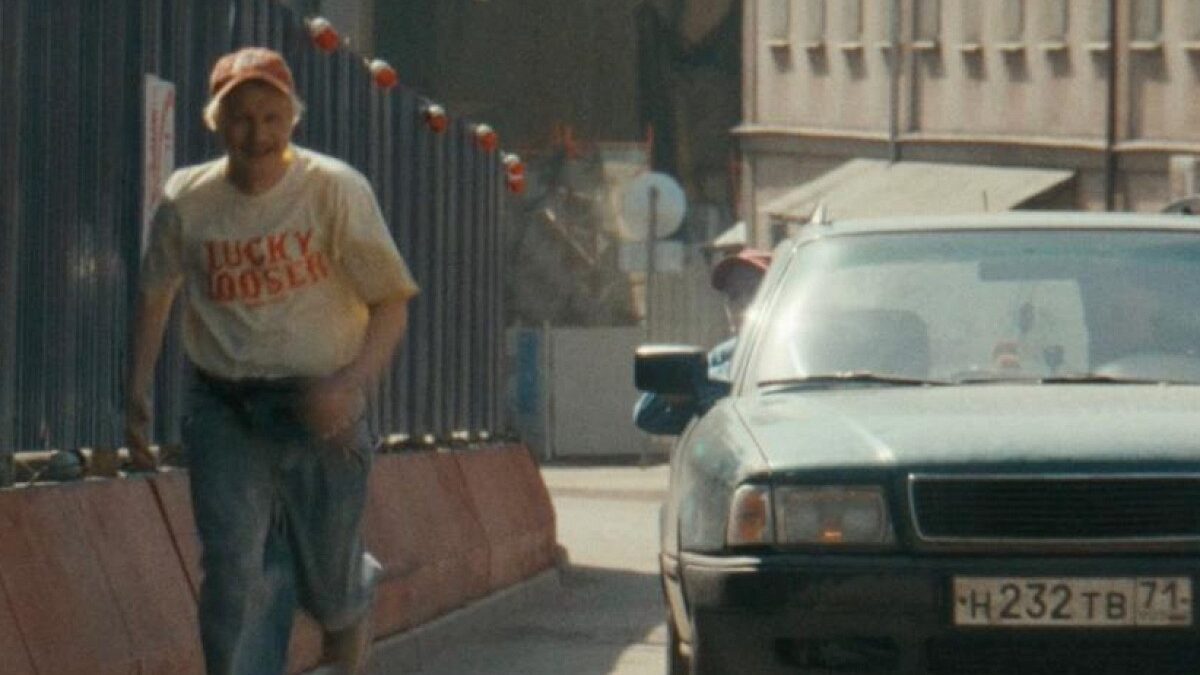
'Yura Was Here' is not aestheticization, not romanticization, and not escapism, although the characters often run somewhere. It is an open and frank dialogue with the viewer, devoid of moralizing and equipped with lightness and humor about growing up, finding oneself in a huge city, the nature of creativity, love for one's neighbor, and the need for kindness. The film has no cheap dramaturgical tricks, no emotional swings with the audience, but it has honesty and an invitation to become part of this pleasant company. Because once you find Yura, you cannot live without him. Words that have seeped into the wallpaper will not fade away with any renovation. New tables will stand, other people will walk, whisper about great things, but only one thing remains unchanged—the inscription 'Yura,' which will continue to permeate the lives of the next confused generation. He is an invisible tenant, cementing friendships and changing the lives of others.
Authors: Daniil Popov, Sofia Bikkanova
Comments
0No comments yet.