
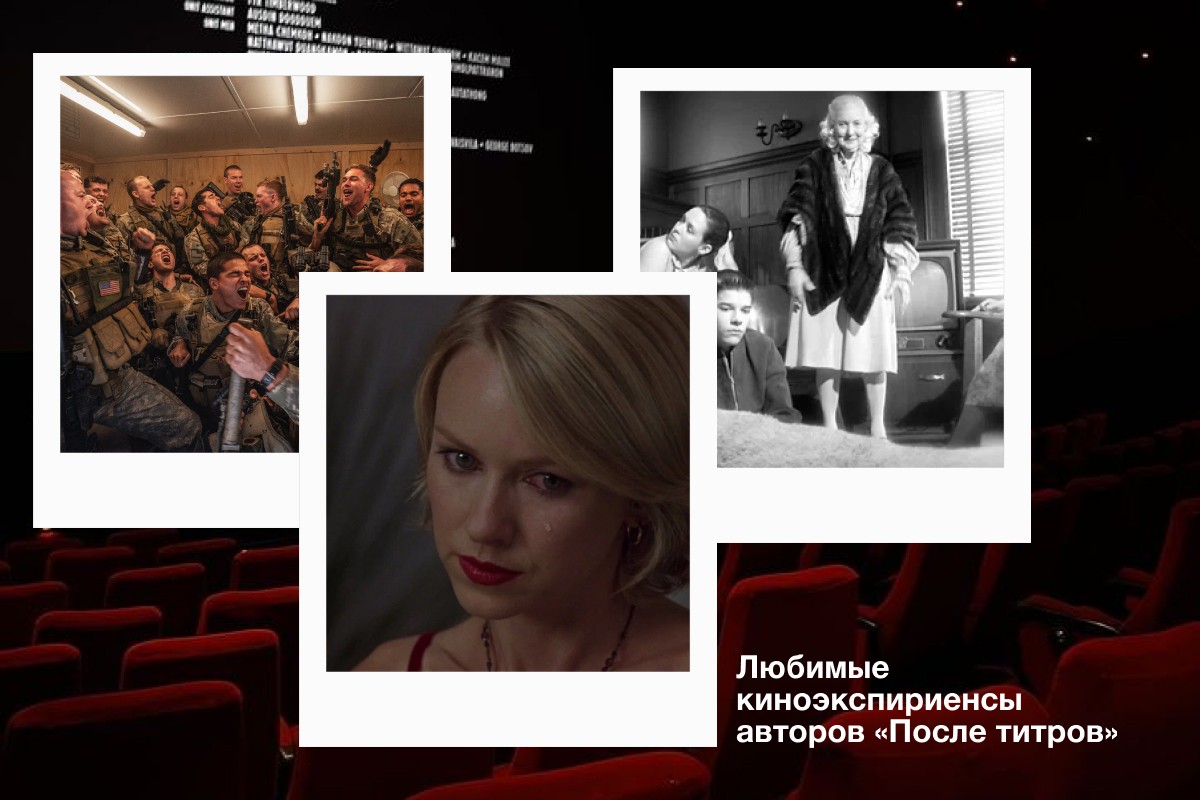
We tell you about seven films that can give you an incomparable viewing experience.
A new work by Chinese visionary Bi Gan, awarded a special jury prize at Cannes, has started its theatrical run in Russia. This amazing multi-layered arthouse film with an unusual narrative structure cannot be fully comprehended—it can only be felt. The authors of 'After the Credits' have selected seven more films for you, the very process of watching which is a unique cinematic experience, or, as it's fashionable to say now, an experience.
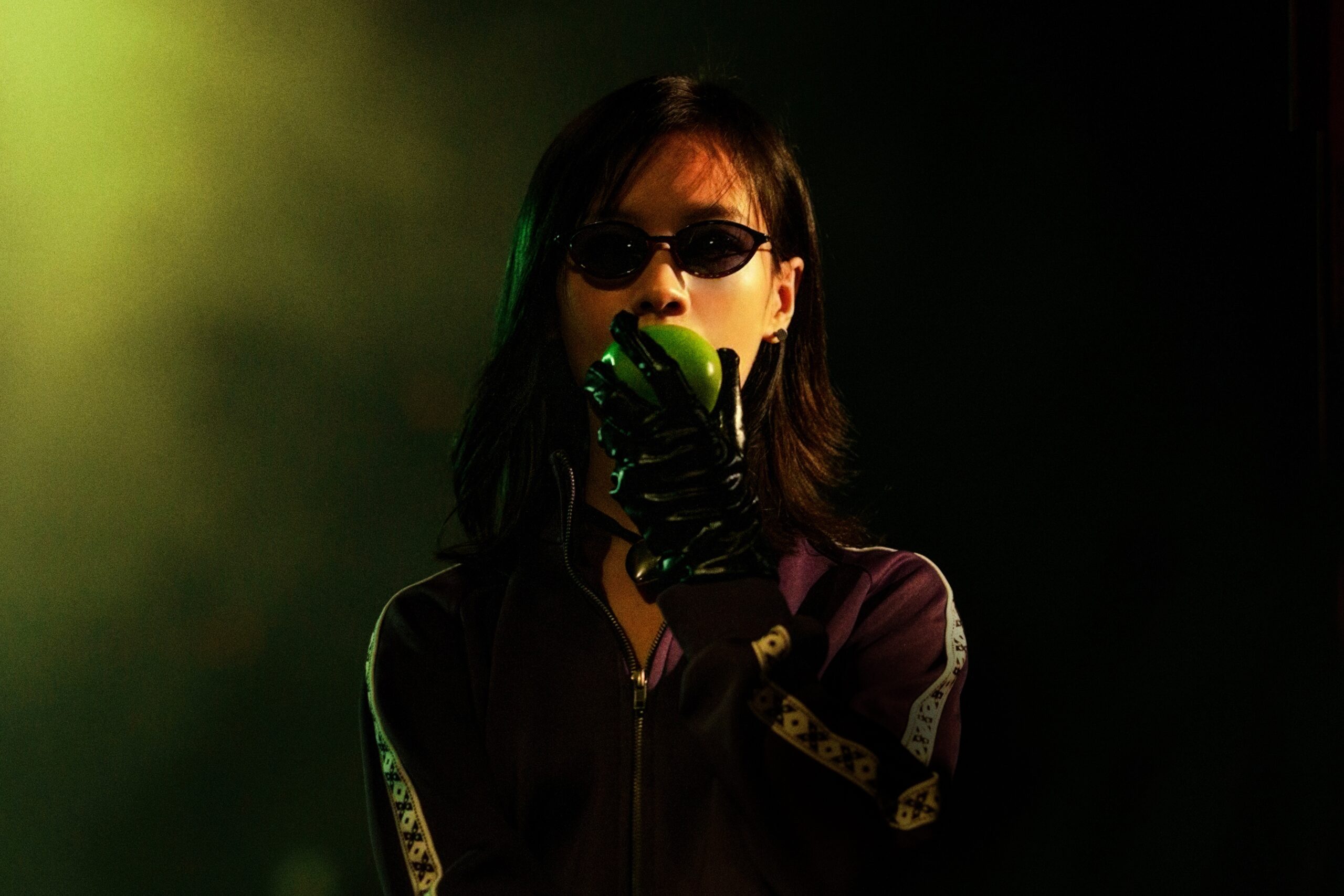
On January 22, the Cannes winner Bi Gan and his 'Resurrection' will hit Russian theaters. We tell you about the most subversive premiere of this winter.
Open material'Cléo from 5 to 7'
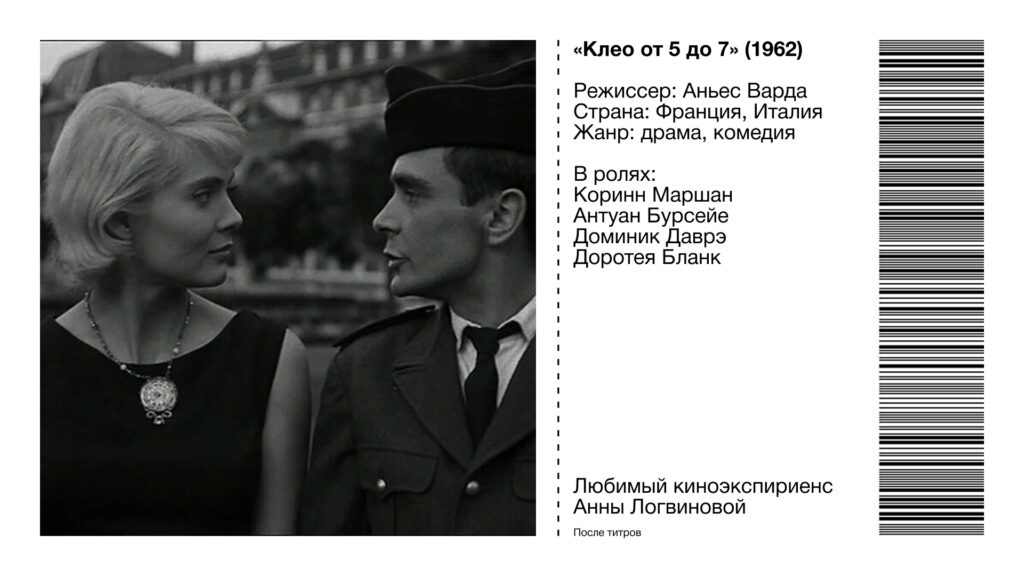
This film is contraindicated for anxious viewers. At the heart of 'Cléo from 5 to 7' is a surgically precise experiment with time, capturing the path from prediction to its minute-by-minute fulfillment. Interestingly, the first part is captured on color film as something beyond human perception (or the director's budget only allowed for a few reels). Agnès Varda, later called the 'grandmother' of the French New Wave, ventures into subjective realism. Here, the familiar improvisational manner of performance and an attempt to capture the vanishing moment are evident. Particularly attentive viewers will notice Jean-Luc Godard, a friend of the director, in a poetic episode.
The story unfolds in strict accordance with the runtime. The entire film, an hour and a half in the life of the not-so-talented singer Cléo, exactly matches real time, breaking the logic of cinema where actions of several days, years, or eras can flash by in a split second. The viewer, like the heroine, freezes in anticipation of the medical test results that determine her fate. The visual language of the film changes along with Cléo's own perspective: from narcissistic self-gazing in shop windows (objectification) to attentive contemplation of passersby's faces (subjectivity). Black-and-white film underscores the graphic nature of Parisian streets and documents every step. It seems too sincere to be true...
'Two-Lane Blacktop'
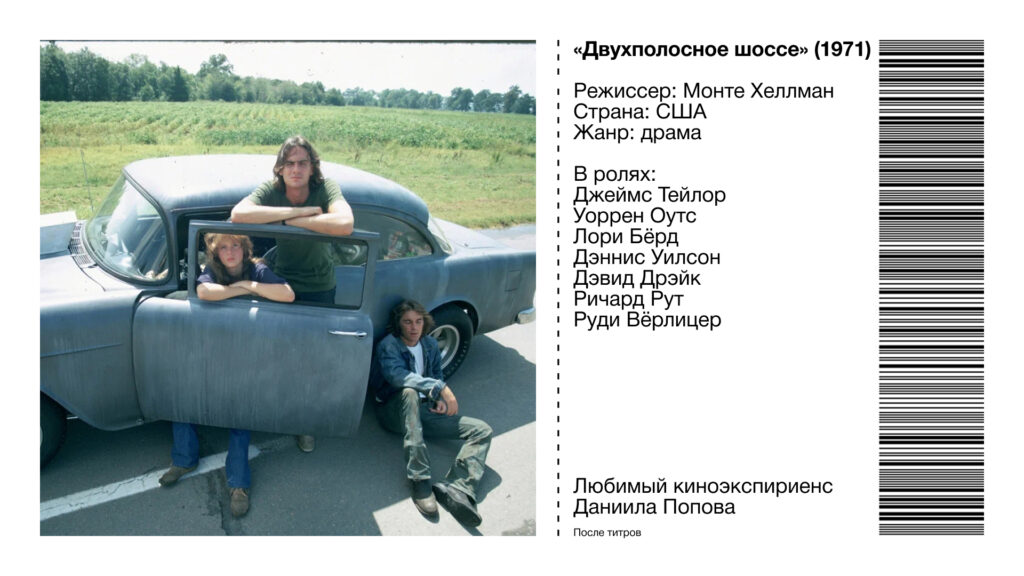
'Two-Lane Blacktop' by American outsider, Tarantino's favorite, and misunderstood genius Monte Hellman is a film that, 60 years later, remains a living embodiment of freedom and emptiness that no storms or temporal cataclysms can dispel.
What strikes most is how the director reforms the familiar road movie before our eyes. Having honed his skills on reinterpreting the classic Western in the revolutionary 'The Shooting' and 'Ride in the Whirlwind,' he strips another major American genre of characters in the usual sense. The main characters here are not people but nameless functions; they only have nicknames denoting their profession (Driver and Mechanic), and all conversations boil down to technical specifications and automotive terms. They themselves resemble cars more than their own vehicles. These last of the hippie tribe have already permanently fused with their 'Chevrolets' and 'Buicks' and race at breakneck speeds into the unknown towards nothing, burning themselves out.
The rampant obsession of youth with racing cars—unrestrained drag racing—serves in Hellman's film as a metaphor for existential flight from a new alien reality. The free and seemingly eternal 1960s were unexpectedly marred by the Sharon Tate massacre and the Vietnam campaign. There are no more illusions, and to postpone reality, you need to floor the gas and wander forever along this Route 66 without beginning or end, occasionally picking up hitchhikers like Beckett, Salinger, and Styron.
To more strongly convey the feeling of growing alienation, the director often resorts to long wide shots with lifeless landscapes of endless fields and gray gas stations with people seemingly frozen in timelessness. Meanwhile, all scenes in the car are shot through a glass that is either foggy from rain or road dust. Reality is distorted and mangled like a car lying on the road after a serious accident.
'Mulholland Drive'
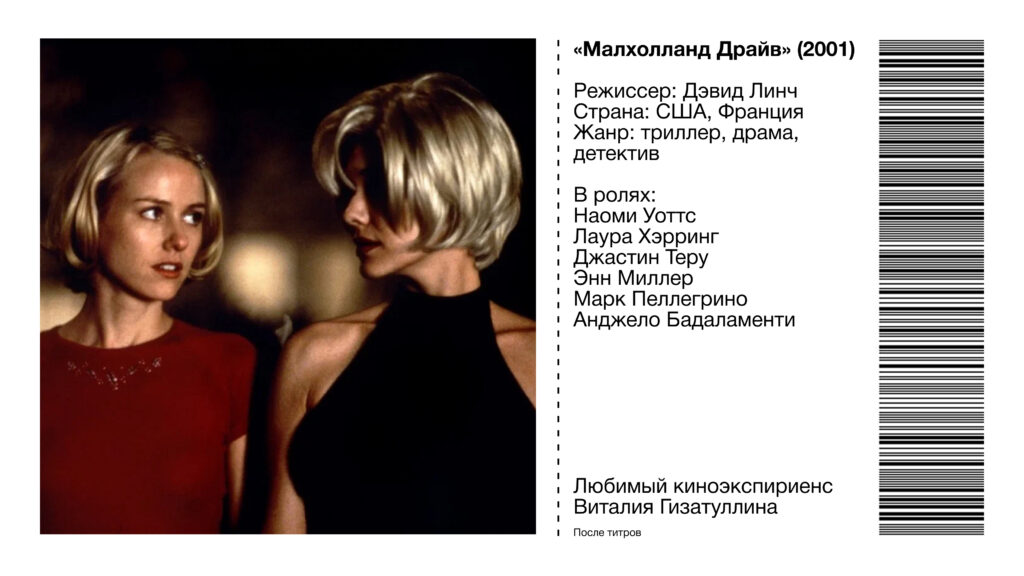
In its time, 'Mulholland Drive' by David Lynch made an indelible impression on me. Turning on this cult film hoping to watch another detective noir about a girl lost in Hollywood, at some point I realized that I was not just watching a movie by a director, but was directly inside his inflamed consciousness, and therefore standard plot logic should not be expected here.
Lynch, like a magician, makes you watch the hand that supposedly holds a coin, and then unexpectedly and deftly pulls the rug out from under your feet, leaving you alone with the Club Silencio, the wandering monster behind Winkie's, and an inexplicable fear of the little old man. The main charm of this film is that even more than twenty years after its release, you still have no answers to what happens in the film, while questions, in turn, multiply to this day. It's like 'Pulp Fiction' from the world of dreams: nothing is clear, but it's very interesting, and every time you want to watch it again.
'My Winnipeg'
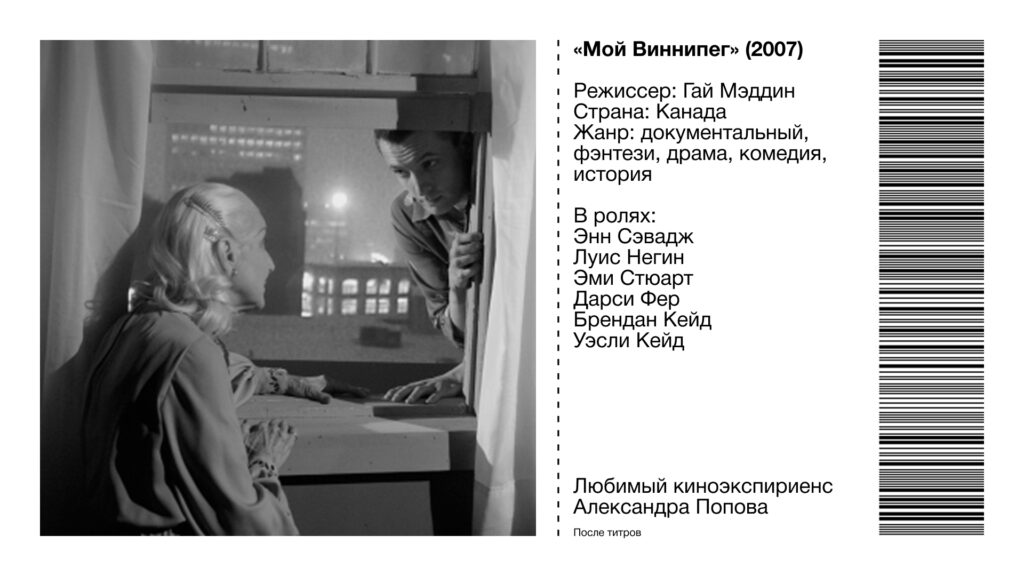
'Well, yes, I would have been the greatest hockey player!', declared Guy Maddin to journalist Maria Baker at the presentation of the film, in which he roasts Isabella Rossellini on an electric chair (and she, it seems, even liked it). Maddin loves older actresses: they descend from the screens, peel off from the projected image, remind of the politically incorrect era to which they belong.
Anne Savage—a beautiful pin-up starlet sleeping on the chest of an investigator in a noir detective film or bouncing in the saddle of a young cowboy or terrified by ghosts—could hardly have imagined that she would be needed by cinema at 86. Guy Maddin was making a personal but fictional story, a doc-fantasy about escaping a city of horse heads, hockey, and sleepwalkers, and he needed a fictitious maternal figure, training material for alienation.
'Winnipeg'—mumbles the narrator in a low voice, shortening the distance between the Canadian (public) and the personal. It is both a toponym, a set of sounds, and an incantation. Winnipeg carries infinite symbolism. It is like 'Porto of My Childhood' by Manoel de Oliveira, like 'Roma' by Federico Fellini, like almost everything that falls under the crow's gaze of Agnès Varda. But Guy Maddin is half as greedy and equally lazier, so the Canadian won't go to conquer—it's easier and cheaper for him to fantasize.
'Silence'
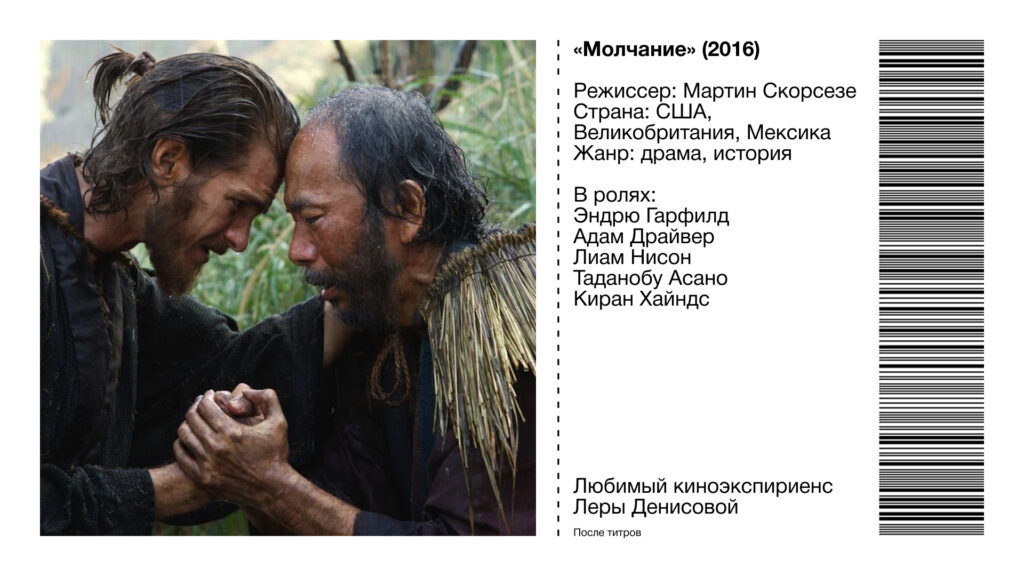
Shortly after completing work on 'The Last Temptation of Christ' in 1988, Martin Scorsese read the novel 'Silence' by Japanese writer Shusaku Endo and became passionate about adapting it. The project's realization dragged on for several decades, but the eponymous film, released in 2016, was certainly worth it.
This film has a unique hypnotic form that immerses us in the central theme, the crisis of faith, on a physical and emotional level—literally 'head first.' Two and a half hours of minimalist sound design, practically without musical accompaniment: only natural noise, waves, silence, and rare dialogues, creating a feeling of suffocating isolation, something otherworldly yet familiar, anxiety and hopelessness.
The cinematography by Rodrigo Prieto with long static shots and the amazing cast work cement this experience in memory forever. Although the film has many prolonged scenes of torture and violence, it is still based on contemplative stillness. A mesmerizing and uncompromisingly brutal transcendental cinematic poetry that holds you captive from the first minutes until the final credits. And even after them, it seems to stay with you, like a cold, gloomy day that chills you to the bone.
'I Remember'
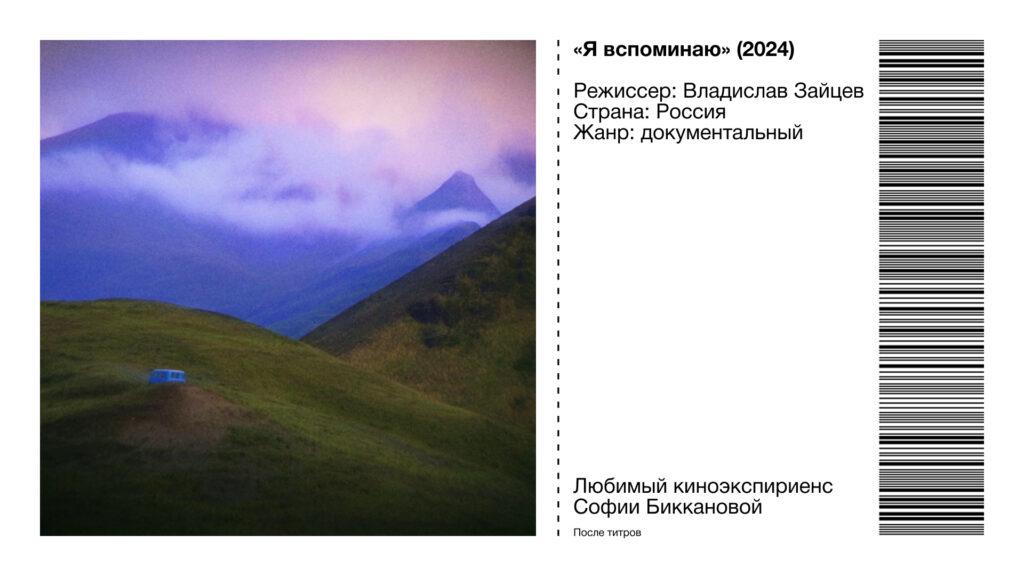
A timid plotless wandering through the nooks and crannies of memory. 'I Remember' by Vladislav Zaitsev is a documentary film that does not claim any objective recording. Instead of a story, it becomes a catalog of impressions, barely perceptible moments with no beginning or end, which seems to be leafed through in any order. In some fragments, very early ones, there is a lot of noise, glow, unclear voices and sounds, while in others, later ones, a contour suddenly appears, and instead of frightening outlines, specific sketches emerge. They are not arranged in strict chronological order, smoothly flowing from one to another, from late winter into spring. The measuredness, fluidity, and lack of specifics make these memories universal.
The subject of study is childhood. Fragments of a walk deep in winter in a park, where due to snow and the passage of years, objects blur. A kaleidoscope of a carousel with an echo of laughter. The gray-blue of a January morning, through the melancholy of which you have to get to school. A yellow floor lamp, icons, and dusty chiffoniers in grandmother's apartment, hypnotic wall clocks. You definitely remember something from this list.
'Warfare'
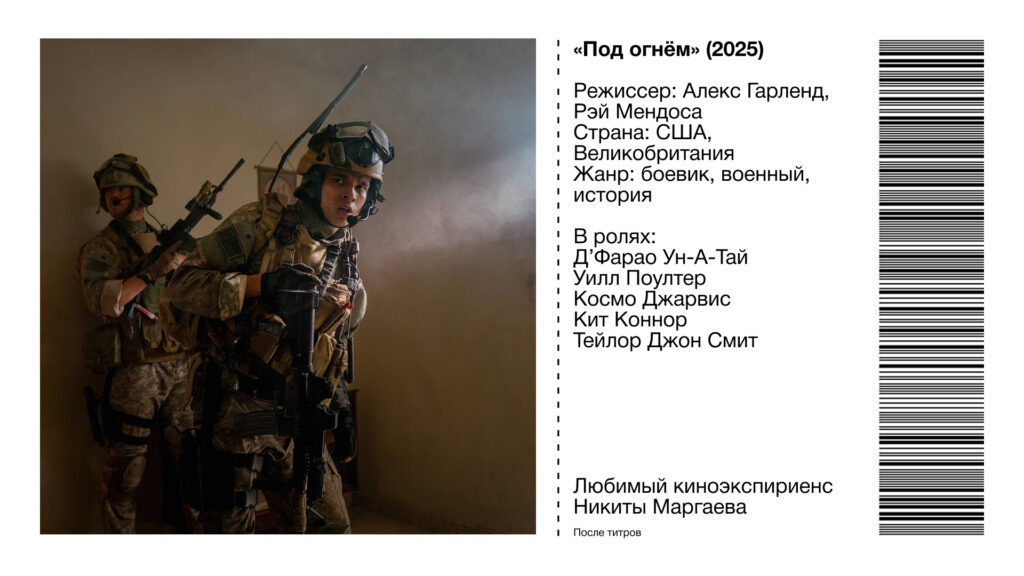
The uniqueness of the latest work by Alex Garland lies in the fact that 'Warfare' is purebred war cinema, an almost impartial contemplation of combat operations recreated on screen with frightening documentary accuracy. The British director and his co-author Ray Mendoza, a participant in the events depicted in the film, do not praise anyone or curse anything, consistently avoid any moralizing, and exclude all emotional-lyrical ballast, including the personal stories of the characters.
On the one hand, this approach reduces the soldier characters to barely distinguishable faceless silhouettes, whom you have to empathize with simply by virtue of their presence in the frame. And to top it all off, they speak in operational-tactical language, only occasionally interspersing army jargon and jokes. On the other hand, this is exactly the effect the filmmakers were aiming for. There are no pompous speeches before battle, no folded photos of loved ones in pockets, no endless supply of ammunition, no 'scheduled' self-sacrifices, no tracer bullets in slow motion. Garland proved that harsh realism, backed by a powerful audio and visual presentation, is far better at facilitating immersion than clichés and stereotypes that have lost all credibility.
For all that, 'Warfare' also significantly stands out from the author's other works, whose arsenal invariably included religious symbolism, philosophical passages, genre mixing, compositional poetics, and strong female characters. And although this work still prompts reflection after viewing, its main value lies in the opportunity to experience an exceptional cinematic experience that no other war drama can offer.
Comments
0No comments yet.
Sign in to join the discussion.