
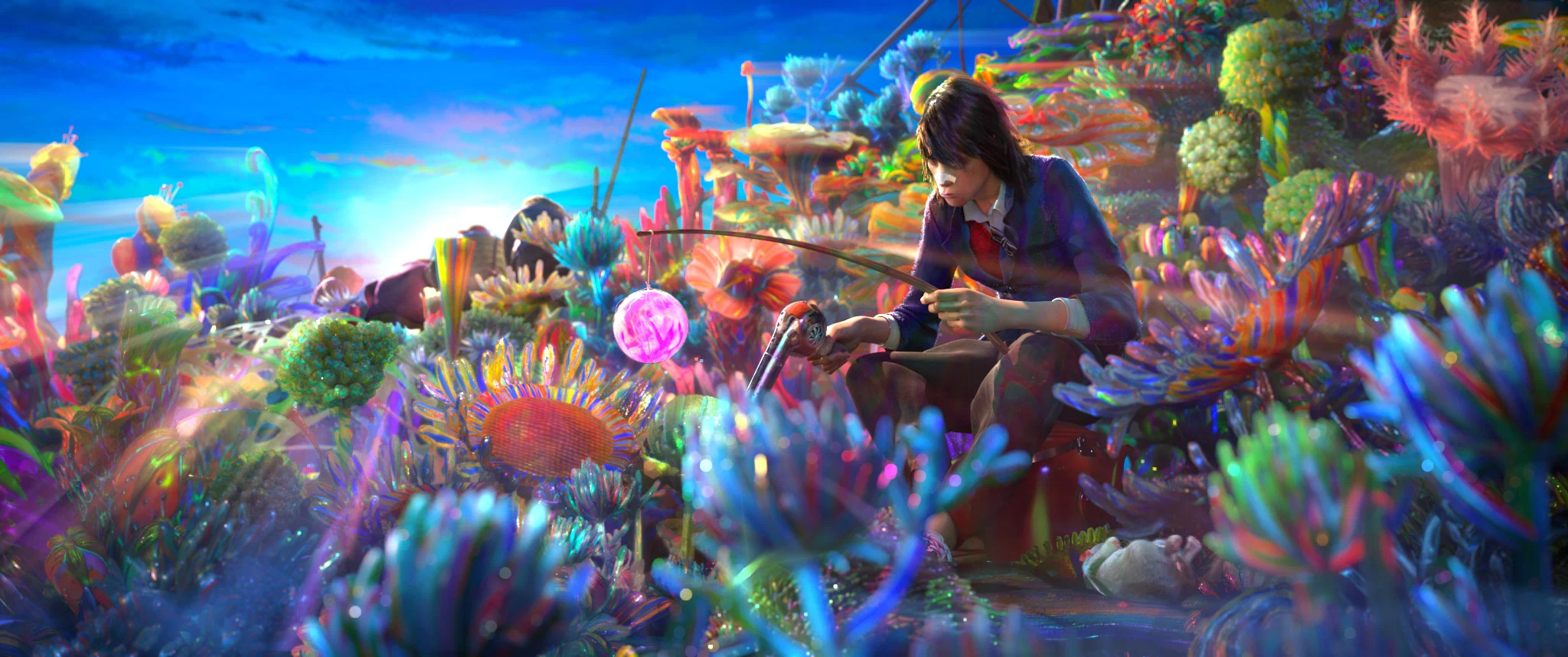
'Ocean of Wonders' is a nonlinear exploration of grief, packaged in the shell of a chaotic quest. A rich existential drama about how even in the abyss, the only anchor for a person remains the sensitivity of another. It was shown at the 73rd Berlin I...
Incredible artistry and an honest conversation about the problems of consumer society. 'Ocean of Wonders' by Tian Xiaopeng is a complex visual canvas that demands emotional involvement and a readiness for deep psychological analysis from the viewer. Let's explore why the Chinese version of 'Alice in Wonderland' is relevant and why the film should not be interpreted so straightforwardly.
Shenxiu misses her mother, who left the family after the divorce. Her father and stepmother, absorbed in caring for the younger child, do not notice her longing. On the girl's birthday, the family goes on a sea cruise. In the evening, a strong storm breaks out, and Shenxiu is washed overboard, where she meets a mysterious creature. Believing it will show her the way to her mother, the girl enters a magical world teeming with amazing inhabitants. To save her new friend and return home, she must overcome many dangers.
Visual Revolution: Digital Ink and Impressionism
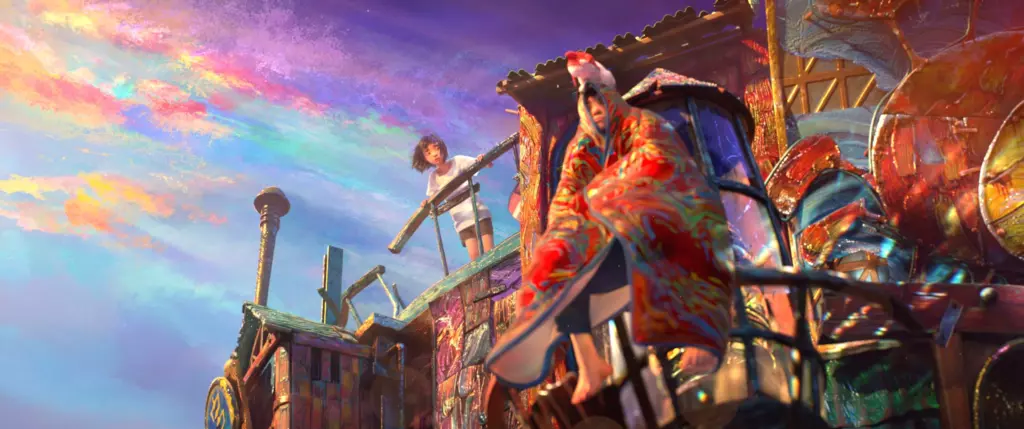
The first thing that strikes you when watching is the surprisingly fluid graphics with shimmering textures. Chinese animation takes a step toward visual radicalism, turning the screen into a vibrating impressionist canvas. The technology used by the authors can be described as '3D particle painting.' This visual variability resembles traditional Chinese ink painting (shui-mo), but transferred into three-dimensional space. The behavior of a drop of color in water, its fragmentation and blurriness, undoubtedly served as inspiration for the animators.
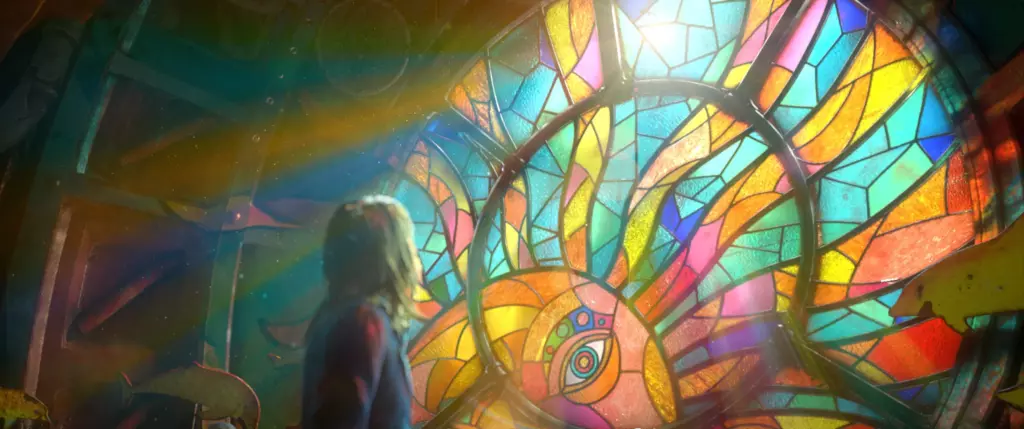
In the inconstancy of color in 'Ocean of Wonders,' one can discern impressionist paintings, oil stains on asphalt, the iridescence of soap bubbles, a kaleidoscope, and stained glass windows. Such abundance enchants and clearly divides the world into two poles: the joyless, gray real world and the hypertrophied emotional sea world. However, after viewing, a slight dizziness often appears. The viewer feels as if they have been taken out of a washing machine, where there was a mesmerizing abundance of color, but also many sensory triggers. This feeling of oversaturation is a deliberate technique: the main character's world is unstable, literally falling apart into particles.
Psychology of Loss and Healing
A beloved voice in the darkness, calling in a snowstorm at the peak of emotion, instantly hooks the viewer's heart. In the outlines of the elusive mother figure, everyone will see their own person, their own loss. The main character, a girl named Shenxiu, acutely feels the presence of her mother, who once abandoned the family. Thus, besides the theme of losing a loved one, 'Ocean of Wonders' becomes a deep exploration of childhood trauma and a collection of metaphorical 'bad advice' on adult behavior after divorce.
The girl's father, experiencing his wife's departure no less acutely, chooses a strategy of repression. He withdraws into himself, starts a new family, and ignores any signs of attention from his older daughter. In this coordinate system, Shenxiu becomes an 'invisible child.' The film can be read as a painful reflection of a child on how to regain parental attention: either perform a feat or disappear.
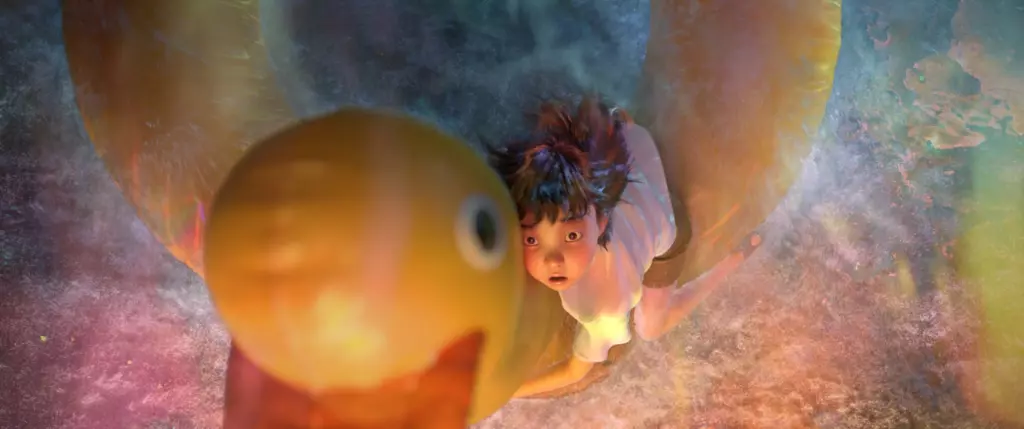
Shenxiu is defined as an overly passive, almost depressive character. Her determination only increases in the last third of the film, when self-belief becomes a matter of saving herself and her new friend. Until that moment, the heroine resembles a barely alive jellyfish, letting the sea waves carry her in any direction. This passivity is an accurate depiction of the apathy accompanying severe grief.
Why This Is Not Like Ghibli
Many rush to compare 'Ocean of Wonders' with the works of Studio Ghibli and . At first glance, there is similarity: a little girl in a world of spirits, a strange restaurant, a magical helper. However, such a comparison is unfair. Here, both the production methods (Miyazaki is the triumph of 2D tradition, Tian Xiaopeng is the technological chaos of the future) and the core messages are fundamentally different.
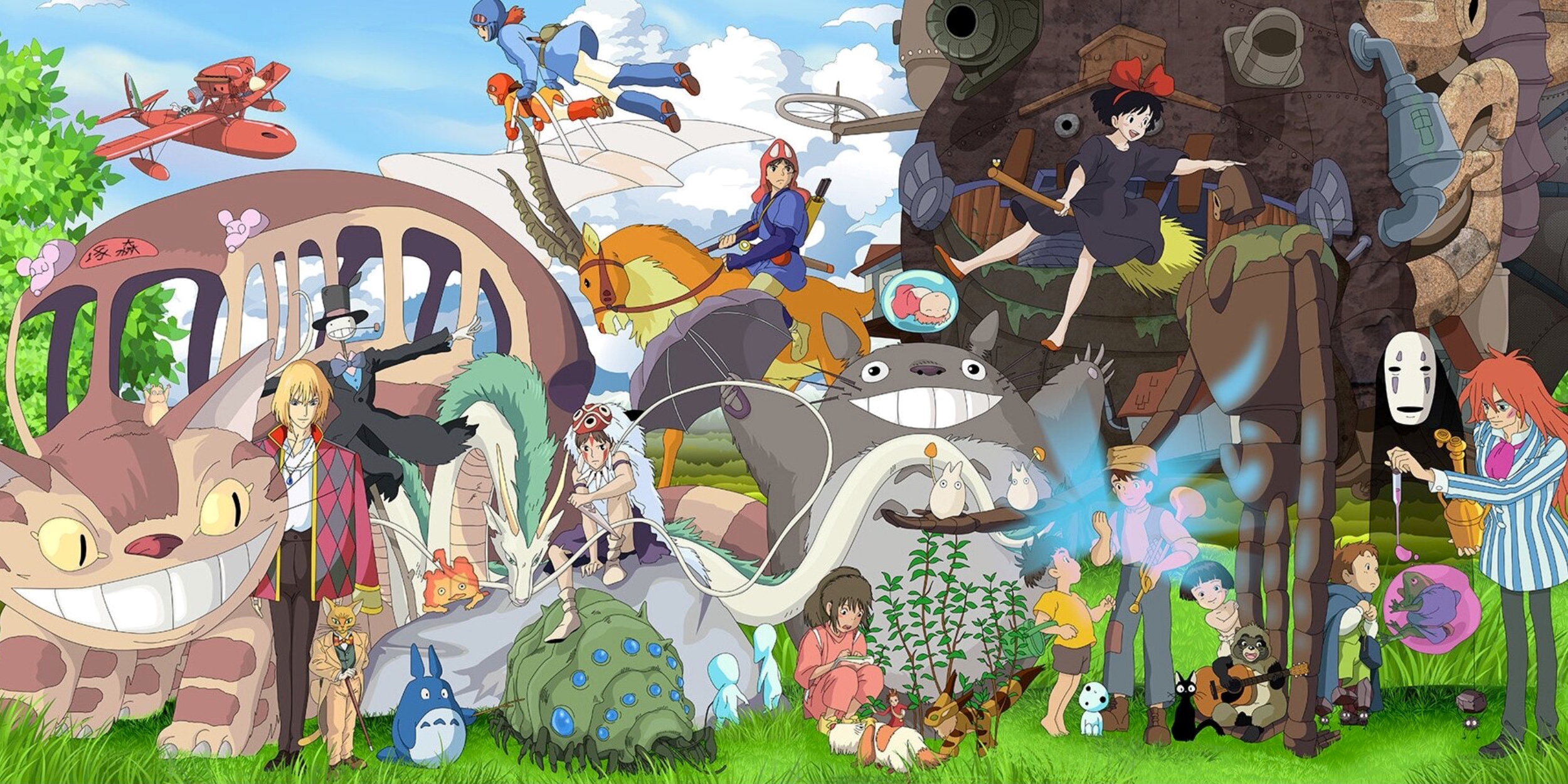
On December 7, possibly the last anime by the brilliant Hayao Miyazaki, 'The Boy and the Heron', will be released in official Russian distribution. In this regard, our editorial team decided to briefly tell why
Open materialThe film features an exaggerated Asian manner of character behavior, where jerky gestures, eccentricity, and cries become a hallmark. The Chinese animated film speaks to the viewer allegorically, trying to hint at the main plot twist from the very first minutes. If in Miyazaki's works the spirit world is an existing parallel reality, then in 'Ocean of Wonders' it is rather a landscape of a tormented soul.
How the Underwater World Works and Why It Has More in Common with Ours Than It Seems
The girl crosses an important metaphorical threshold when she sets off to find her mother. But at the same time, she loses her mother's sweater, the only material object connecting her to the past. The loss of a physical 'anchor' in an attempt to find inner support becomes a key moment in the heroine's development. Sometimes Shenxiu's striving resembles an obsession, an end in itself bordering on madness, but given the scarce context of love in her life, the viewer is ready to forgive it.
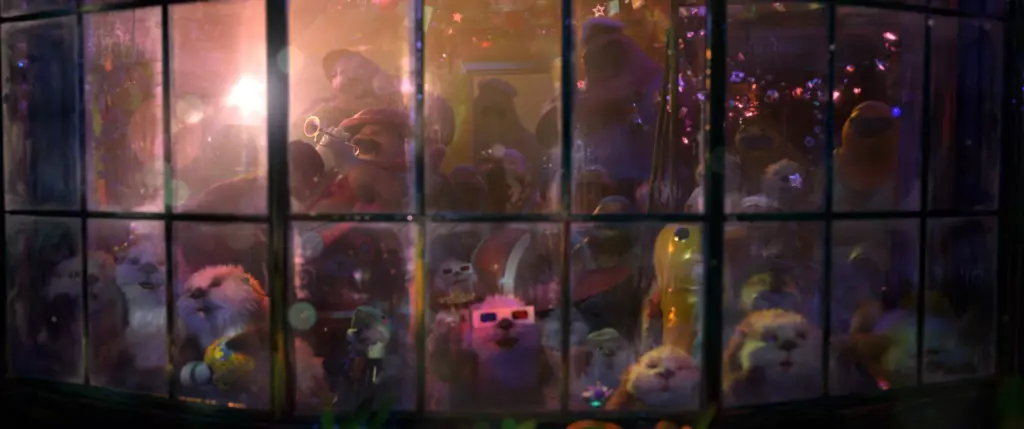
The structure of the allegorical world is interesting: it has significantly more structure than reality. There is a gray, predatory, eternally hungry mass, the 'Red Phantom,' embodying fears and suffocating attachment. On the other side of the magical world's spectrum is the restaurant 'Ocean of Wonders' and its fish customers. It seems that the image of the 'consumer,' prone to endless overconsumption, is especially close to Chinese issues. The customers here are capricious, sticky monsters demanding pleasures.
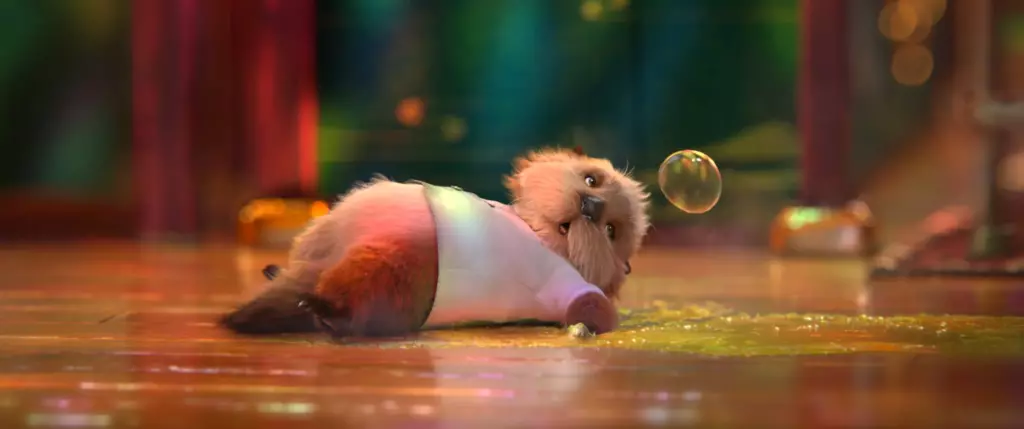
Opposing them is the staff led by Nanhe, a trickster and restaurant owner. He is lively, energetic, with his adorable otter mascots and a difficult fate. A full-fledged description of the 'service sector' in the fantasy world becomes a harsh lesson for Shenxiu: to survive, you need to work, move, and most importantly, follow the condition — 'don't cry.' Tears here are material; they attract destruction.
Where Silence Leads
The mystical character Prankster, whose prototype could be the white rabbit from 'Alice,' reveals the metaphor of silencing problems. He appears at moments of identifying the girl's 'pain points.' The Prankster either pursues her or, conversely, guides her toward the truth that the child's psyche refuses to accept. He embodies those chaotic thoughts that are born in the darkness when reality becomes unbearable.
Nanhe, in turn, is the antipode of this chaos. Despite his greed and strange appearance, reminiscent of both the Joker and a wandering performer, he becomes the only adult who speaks to Shenxiu as an equal. His self-sacrifice and feigned cheerfulness are armor behind which hides an equally wounded soul.
Even in the Thickness of Water, Light Is Visible

The film's finale puts everything in its place, turning the fairy-tale quest into a powerful existential drama. Happiness, it turns out, lies not in achieving a mythical goal, but in attention and sensitivity. Sometimes a modest gesture, a gifted colored ball, or simple participation is enough to revive a child's faith in the best. 'Ocean of Wonders' is a manifesto in defense of emotions. In a world where indifference and suppression of feelings flourish, the ability to sincerely smile (not the fake smile Shenxiu practiced in front of the mirror, but a real one) becomes the highest act of courage. This is a heavy, visually overloaded, but infinitely valuable film about how even at the very bottom of the ocean, you can find light if there is someone nearby ready to lend a hand.
Comments
0No comments yet.