

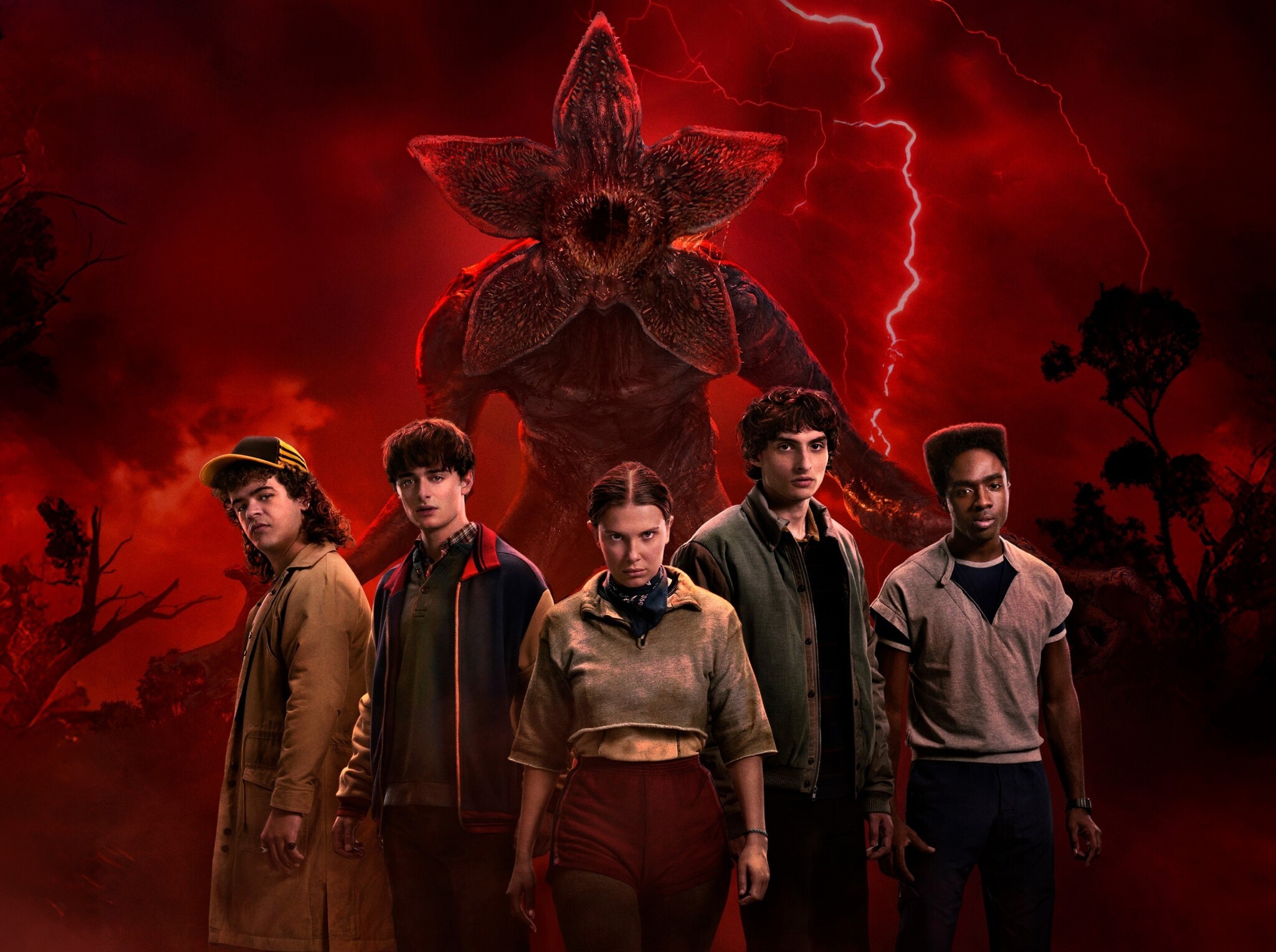
The finale of 'Stranger Things' divided fans in half: some cry over Mike's basement, others over the wasted potential of the battle with Vecna. The 'After Credits' editorial team watched the two-hour resolution and is ready to deliver a verdict: did...
Netflix released the finale of Stranger Things on December 31 (on the morning of January 1 for us), when half the world was already popping champagne, and the other half was preparing to watch the two-hour resolution of a story that the Duffer Brothers had been working on for almost ten years.
The editorial team at 'After Credits' watched 'The Rightside Up', wiped away tears (or rolled their eyes — opinions varied), and is ready to figure out whether the phenomenon series deserved a worthy conclusion or simply staged a safe group hug goodbye.
Spoilers for the finale of 'Stranger Things' ahead

The Duffer Brothers closed their nearly decade-long story exactly at the moment the world was preparing to launch fireworks — and, honestly, the finale of 'Stranger Things' itself turned out to be a pretty good fireworks display. The two-hour episode 'The Rightside Up' is not without flaws: the first hour drags a bit with familiar character briefings and CGI battles in the Upside Down, which feel less tangible than the mall chases from the third season. But when the dust settles and the camera returns to Mike's basement, where it all began, the series remembers what it was truly good at — a story about friendship, growing up, and that monsters are defeated not by lone superheroes, but by a group of teenagers who simply don't abandon each other.
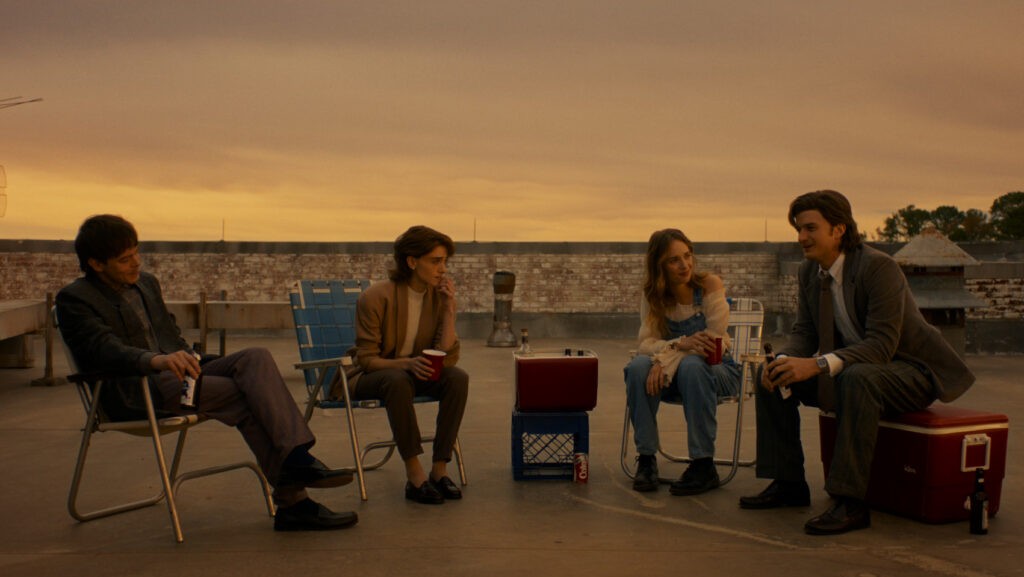
The creators gave each of the main characters their moment of heroism: Joyce delivers the decisive blow, Nancy cosplays Sarah Connor (or Rambo, as in the memes), and Eleven fights Henry Creel in a final battle that cost her life — or didn't, if you believe Mike's theory that Kali created an illusion of her death (I DON'T BELIEVE IT!). The storylines are neatly wrapped up, though not without controversial decisions (hello, underused Linda Hamilton), but the main thing is that the emotional arcs of the characters are brought to a logical conclusion. The scene where the friends put away the D&D books, as if saying goodbye to childhood but leaving themselves the right to return to the table someday, is exactly the farewell the series deserved — one that recalled 'Star Wars' and 'The Goonies' more than 'Game of Thrones' with its bloodbath.
'Stranger Things' ended not triumphantly, but with dignity — and in 2026, it's unlikely there will be another series whose finale is shown simultaneously in 500 theaters.

The fans were overhyped. Matt and Ross Duffer claimed an epic finale with a well-developed story for each character. Because of the loud promises, the merciful finale feels like a fairy tale with a catch. And some viewers reached the end credits with a slight sense of emptiness, while others continue to ask questions.
Why so many characters? In the pursuit of making the story of Hawkins schoolkids family-oriented, and later queer-oriented, the Duffers inflated the cast so much that the characters barely fit in one room. This also leads to the helplessness of secondary characters, for example, Joyce Byers. In the first season, she was a grieving mother actively processing her loss. In the second, she found quiet happiness, but, as we know, not for long. In the third, she was again saving her son, and in the fourth, she fought to bring her loved one back from captivity. The finale of the grand story relegated Joyce's role to that of a bystander, dramatically standing near Will. Winona Ryder's character was deprived of emotional range but given a happy future, for which fans are undoubtedly grateful. Thus, characters perform one function over eight episodes, while simultaneously narrating every action so the viewer doesn't have to look away from playing Subway Surfers.
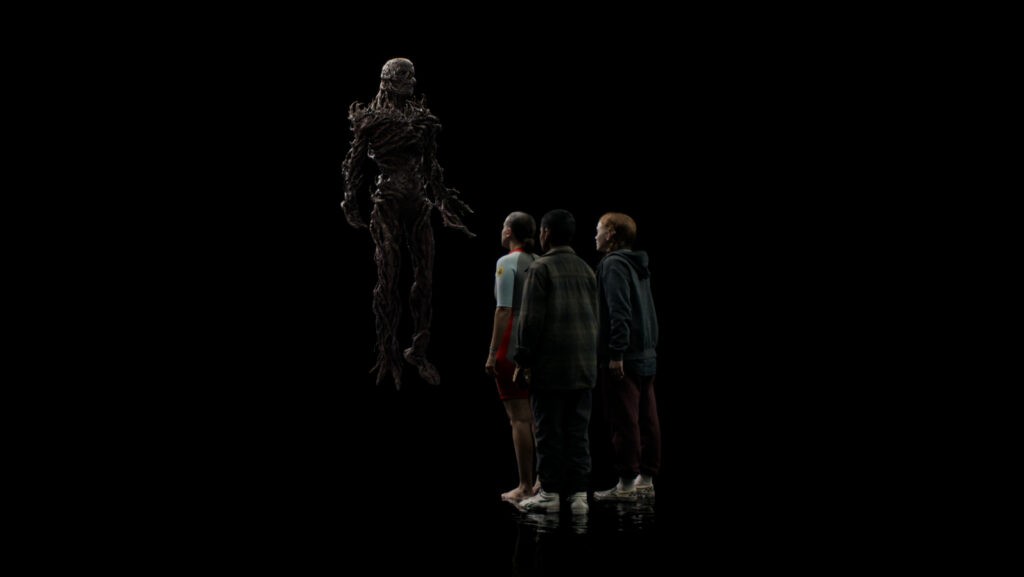
Why so many flashbacks in the final episode? For those who followed the series for nine years, it's indeed a reason for a tearful farewell to a wonderful era, but for those who joined later, it's no more than a repetition of recently seen content. If in the fourth season, flashbacks of Eleven's childhood in the lab explained in detail the chronology of the monster's formation, in the fifth, they were exclusively sentimental moments.
Does the viewer know the origin of the magical artifact that took over young Henry Creel's mind? No. Do we know who created the source of absolute evil that the world's security forces are hunting? What happened to the military base in Hawkins after the Upside Down disappeared? How was the fate of the pregnant women injected with Kali's blood decided? Unfortunately, the grand finale does not answer any of these questions. However, it shows how society processes collective trauma, whether it's the end of the world or an earthquake. In the last hour of the final episode, the viewer is affirmed in the all-powerful meaning of friendship and love. Sometimes that's enough.

The final episode of 'Stranger Things', perhaps the main series of our generation, despite my sincere love for the project, I just can't call a titanic triumph (though a giant kaiju does drop by for a couple of minutes, only to lose to guys with rocket launchers and slingshots). The main problem with the last episode lies not even in the script, riddled with plot holes and illogicalities, but in the statements made by the Duffer Brothers. During the buildup, these two promised a mind-blowing epic and 'the most brutal death in the history of the series'. Naturally, empty talk is punishable: some fans, trapped by inflated expectations that the creators themselves set, expressed their 'meh'.
Some viewers rightly point out the brevity of the battle with the villainous duo, as well as the fact that the kids got off with minimal losses. Others, on the contrary, have dubbed the fight with the pixelated arachnid 'Marvel-esque', and not in its most effective form. But despite the partly justified skepticism, the Duffers managed to redeem themselves after the uneven middle of the season, presenting a worthy conclusion to the story. And I'm not talking about the boss fight (though the scene of the final takedown of the antagonist is mind-blowing, as each blow against the villain is shaded by flashbacks from past seasons showing the suffering of characters who were robbed of childhood and normal life), but about the final third of the episode, where we are presented with a sunny and serene Hawkins.
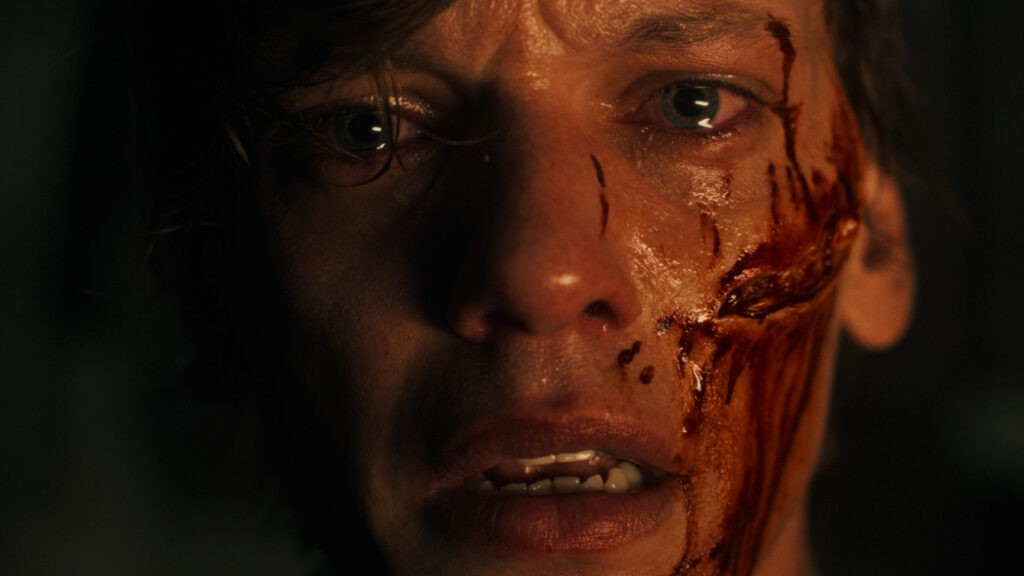
Yes, it's not the epic resolution many were expecting, but a genuine catharsis, a bittersweet happy ending that is perhaps the only appropriate one in our troubled and turbulent times. Especially since at the end of the fourth season we already saw the city bleeding, and why expect such gloom from the finale is decidedly unclear. The screenwriters weren't shy about obvious plot devices, like the tear-jerking D&D scene, through which they closed the compositional circle and sent a 'hello' to internet conspiracy theorists with their theory that all events of 'Stranger Things' are a game session. It was also predictable that after the main characters put their character sheets on the shelf, the younger generation would take their place at the table. Otherwise, why were they even introduced into the story if not for an epilogue in the spirit of 'the chain of generations will not be broken'?
The final plot twist, giving Eleven a chance to survive, seems logical in the context of the series, precisely because it is highly likely just a figment of Mike's imagination. This indicates that the character played by Finn Wolfhard followed Hopper's advice from his heartfelt monologue. In reality, I think Millie Bobby Brown's character most likely went into the stratosphere along with the rest of the Upside Down's contents. 'Stranger Things' is first and foremost a coming-of-age story, our Gen Z 'Harry Potter'. Even if the battle with Vecna is inferior in epicness and drama to the fight with Voldemort, the final minutes create a mood akin to what millennials felt watching the final scene on Platform 9 ¾. Oh, how hard it is to say goodbye!

The finale of 'Stranger Things' feels like the perfect conclusion to an epic Dungeons & Dragons campaign — the kind where a group of friends, led by a Dungeon Master, travels through portals to other worlds, fights ancient monsters, and uncovers secrets accumulated over years of adventure.
Imagine: Hawkins is your home table for role-playing, where each season was a session full of unexpected twists, deadly traps, and heroic rescues. In the finale, Vecna appears as the final boss, and we witness the culmination of the arc where the characters finally unite their forces, use rituals to seal... It's a great finale: the moment when the dice roll favorably, and everyone applauds the Dungeon Master. Like in a good D&D campaign, the Duffer Brothers masterfully close the storylines: Eleven evolves from a novice sorceress to a legendary hero, whose abilities peak in the decisive battle, much like a character gaining epic levels. Steve, Dustin, and company are the typical party: a tank, an inventor, and a charismatic bard, each with a growth arc and emotional stakes. The finale delivers a certain catharsis — a reward in the form of peace and new horizons.
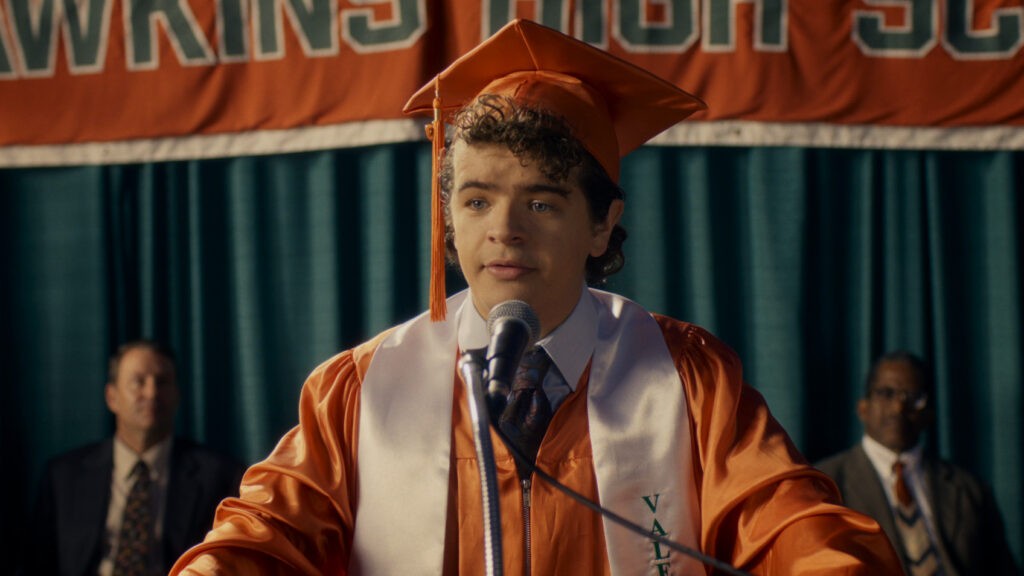
The finale underscores the essence of Dungeons & Dragons: friendship conquers chaos, improvisation saves the party from total annihilation, and nostalgia is the best trophy. 'Stranger Things' ended like a campaign remembered for decades, with a sense of completion and a slight sadness for the adventures. You just want to say to the creators: you rolled a natural twenty!

Over the 10 years the series ran, the world changed beyond recognition (as did almost everyone who watched it from the very beginning). Netflix finally developed its own 'signature style' (not in a good way), dictated by time and viewers, which extends to any content, even the most author-driven. So 'Stranger Things' from a small magical indie story, which it was in the first season, turned into a large-scale television blockbuster with all the pros and cons of that phenomenon. There are hundreds of questions, most of them rhetorical, one of them: was such a hopecore finale planned from the very beginning, as the showrunners claimed, or not? But in a sense, it appeals to those 'kids' who grew up alongside the main characters. After all, they (all of us) are now surrounded by an equally complex world in which you need to believe in something to find the strength to live.
Throughout all eight episodes, there are major pacing issues: the plot either rushes unbearably or is unjustifiably stretched, with too little time to close all the plot and character arcs. It's hard to tell who from the cast, including one of the best in television history, is most tired, but it's hard not to notice. And I think many already realize that we are in for more than one spin-off, and most likely, no matter what anyone says, even continuations (let's prepare surprised faces), because even the particularly controversial final season turned out to be incredibly successful.
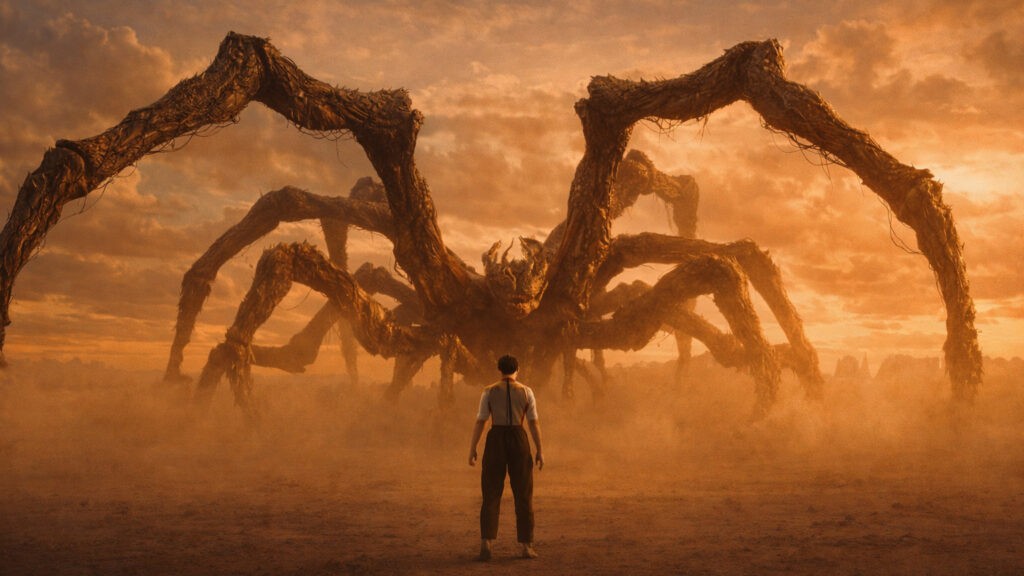
And despite all this, many will truly miss this 'memory box' of the Duffer Brothers, made up of what they loved most in childhood, what stories they grew up on, and what inspired them, which they made almost the whole world fall in love with. Perhaps no one knows how to say goodbye properly (as in real life), but under the immortal 'Heroes' by David Bowie, it's always very beautiful.
Comments
0No comments yet.
Sign in to join the discussion.