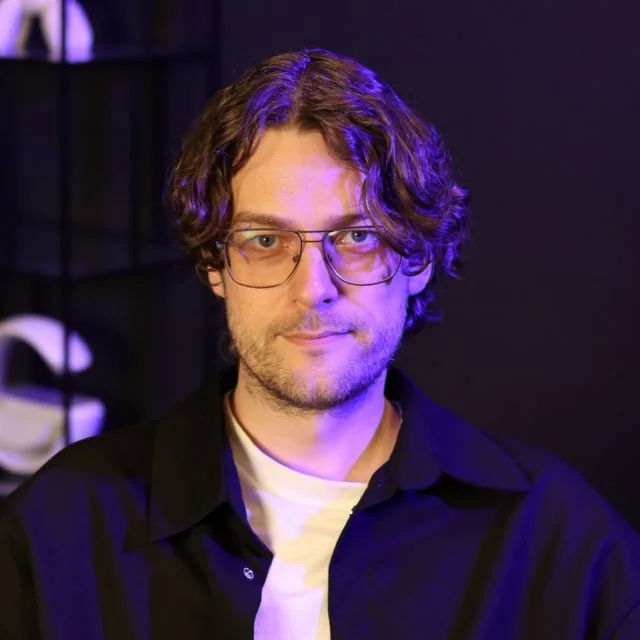

Watching a film by Paolo Genovese is like a session with a psychotherapist: the first ten minutes seem harmless, but then you start fidgeting and realizing unpleasant things about yourself. The Italian director doesn't blow up buildings or chase heroes across rooftops — he simply seats a few people in one room, asks the right question, and watches everything fall apart. Secrets, friendships, marriages, illusions — with Genovese, everything crumbles so that truth and nature can triumph.
He is called a master of chamber drama, but that's too academic. Genovese is an architect of emotional disasters who builds traps out of ordinary human situations. You enter voluntarily because you recognize yourself. And you come out feeling like you've peeked into your own file, where everything you preferred not to think about is recorded.
From Adman to Architect of Human Souls
Genovese's biography reads like a screenplay about a late calling. Born in Rome in 1966, he didn't start his career in cinema — over a hundred commercials for McCann Erickson taught him the main thing: how to grab a person by the gut in 30 seconds. This skill would become the hallmark of his films — the ability to instantly immerse the viewer in a situation without lengthy expositions or tedious backstories.
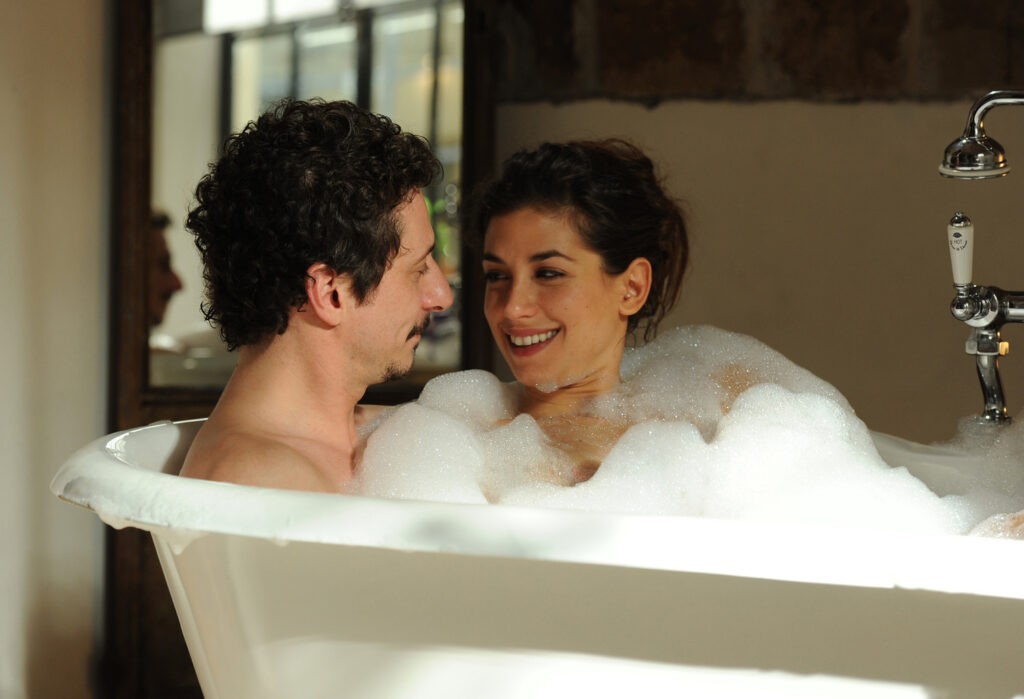
His feature-length (and independent) debut came in 2011 with the comedy "Immature" — a light but commercially successful film about eternal teenagers in the bodies of adult men. It seemed Genovese would take his place among Italian directors of pleasant family comedies. But the director clearly had other plans. Back in 2004, together with Luca Miniero, he made the little-noticed film "No Messages on the Answering Machine" — about a man with a split personality. That theme didn't take off then, but the seed was planted: Genovese was interested not in comedy for laughs, but in human nature with all its cracks and dark corners.
"Perfect Strangers": When the Smartphone Becomes a Detonator
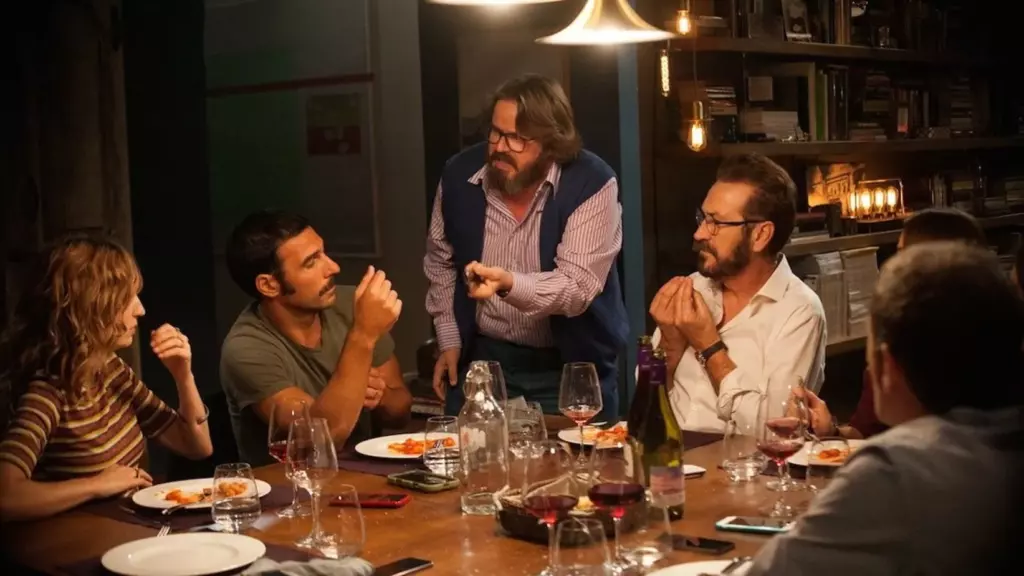
2016 was that moment for Genovese when talent, intent, and time converged at one point. "Perfect Strangers" — a film that could be called an experiment if not for its deadly accuracy in hitting the nerve of modernity. Seven friends, one dinner, one harmless game: put smartphones on the table and make all calls and messages public. What could go wrong among people who have known each other for twenty years?
Genovese created the perfect chamber drama — a genre where there is nowhere to hide, neither for the characters nor the director. There are no spectacular panoramas, chases, or large-scale sets. All the action unfolds in one apartment, around one table, but the tension builds so masterfully that the film turns into an emotional thriller. Every new call is a detonator, every message a shard that can wound.
The director works like a jeweler, not a sculptor. He doesn't mold images with broad strokes — he polishes every line, calibrates every gesture. In interviews, Genovese admitted that he can spend hours choosing the right adjective because the Italian language is rich in synonyms, and choosing a word is half the battle. On set, he almost never allowed actors to improvise, demanding strict adherence to the script. This is not dictatorship — it's the understanding that in a chamber drama, every detail works like a clockwork: move one gear, and everything falls apart.
The cinematography in "Perfect Strangers" is a triumph of invisibility. The camera doesn't draw attention to itself, doesn't show off with flashy angles. Instead — impeccable focus on the actors, masterful editing, and precise timing. Just as Sidney Lumet in "12 Angry Men" made a room with one table visually interesting, Genovese turns the apartment into an arena of psychological duels. Moreover: there are eight chairs at the table, but only seven characters. The eighth seat is for the viewer, and many shots are taken from that very point, creating the illusion of your presence at the dinner. You are not an observer — you are an accomplice in the catastrophic dinner.
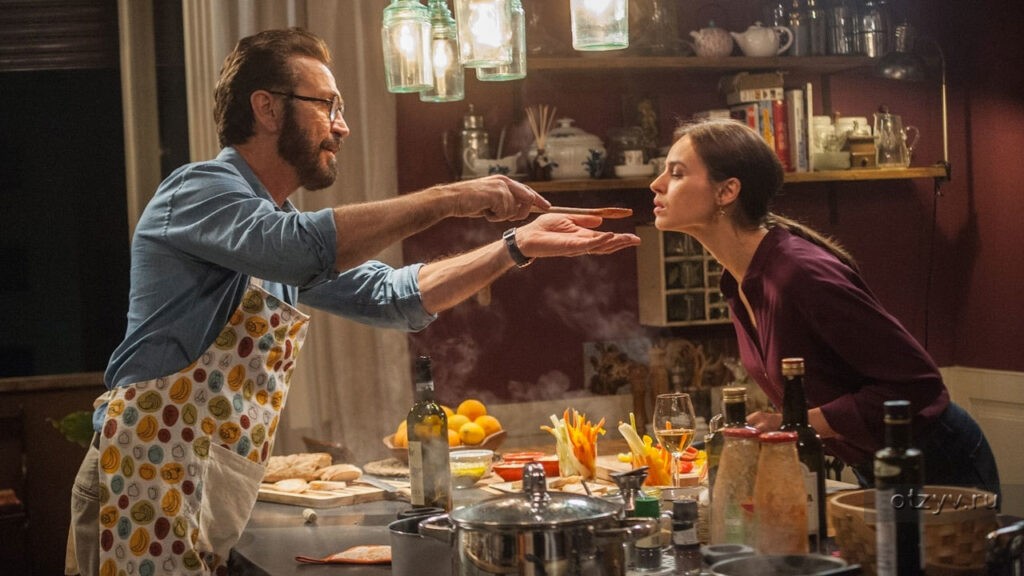
The film's success was phenomenal: two David di Donatello awards, three Silver Ribbons, festival prizes, and over $30 million in box office. But the main thing — "Perfect Strangers" became the most remade film in cinema history. Spanish, French, Greek, Russian, Chinese versions — over 18 adaptations in total. Why? Because Genovese tapped into a universal fear: in the era of total digitalization, our lives are no longer just in our heads — they are stored in a device that can be hacked, lost, or accidentally shown to the wrong person.
Technology as a Pretext: Digging Deeper
It would be tempting to declare Genovese a technophobe, a Luddite director warning about the dangers of smartphones. But he himself categorically rejects this interpretation. In interviews, the director has repeatedly emphasized: technology for him is just a tool, a way to get to the real theme. And the real theme is how little we know the people we live with. Before, our fears and secrets were locked in our heads, and it was impossible to reach them. Now they are stored in a little black box that we constantly carry with us. And that box is fragile.
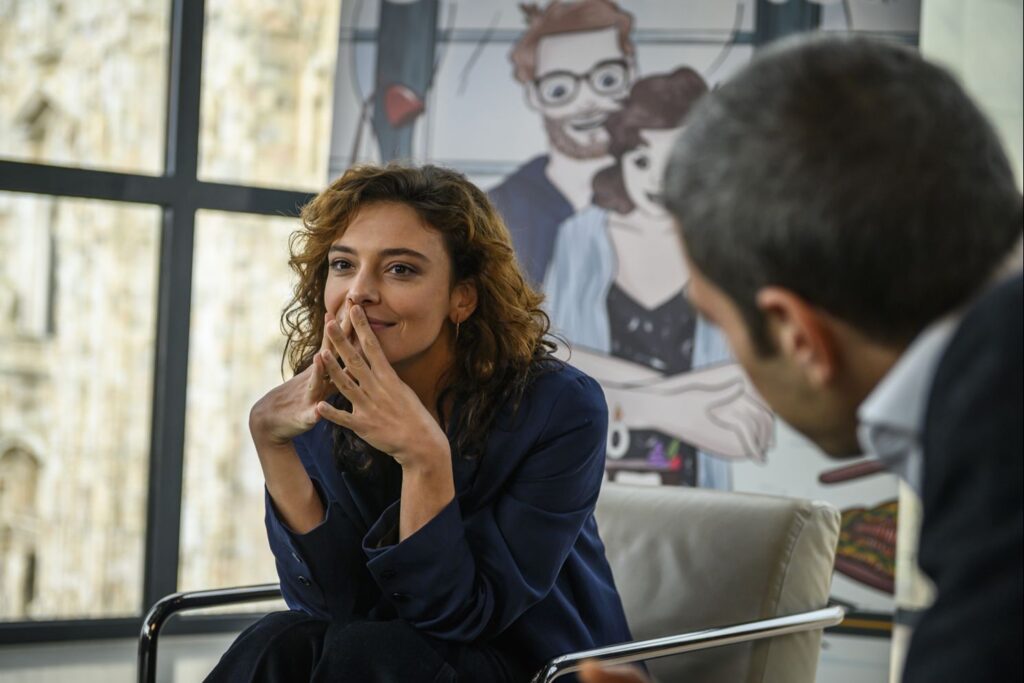
The smartphone in Genovese's hands is the modern equivalent of Chekhov's gun on the wall. If a phone lies on the table in the first act, it will definitely go off in the third — only not with a bullet, but with the truth, which hurts more than any wound. The director does not demonize technology — he shows that progress always gives us a choice between physiological and pathological use. Information can liberate, or it can breed addiction and change the nature of our relationships.
Conceptuality as a Method: From Realism to Abstraction
After "Perfect Strangers," Genovese could have followed the beaten path — continue making chamber dramas using the same formula with the obligatory inclusion of gadgets. But the director chose a riskier route: he began to complicate the form, turning films into conceptual constructions balancing on the edge of realism and philosophical parable.
"The Place" (2017) is almost a mystical parable. A mysterious man at a table in a bar offers different people to fulfill their deepest desires — but in return, they must carry out strange, sometimes cruel tasks.
Formally, it's again a chamber story, a talky film (almost all events happen off-screen), but Genovese steps beyond everyday plausibility into the realm of existential questions about the price of happiness and the nature of desires. And it's impossible to look away.
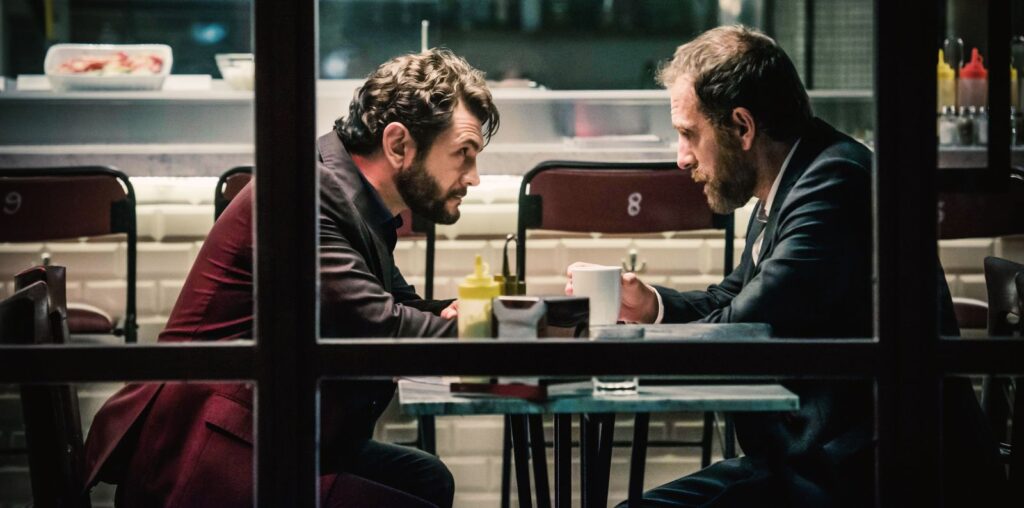
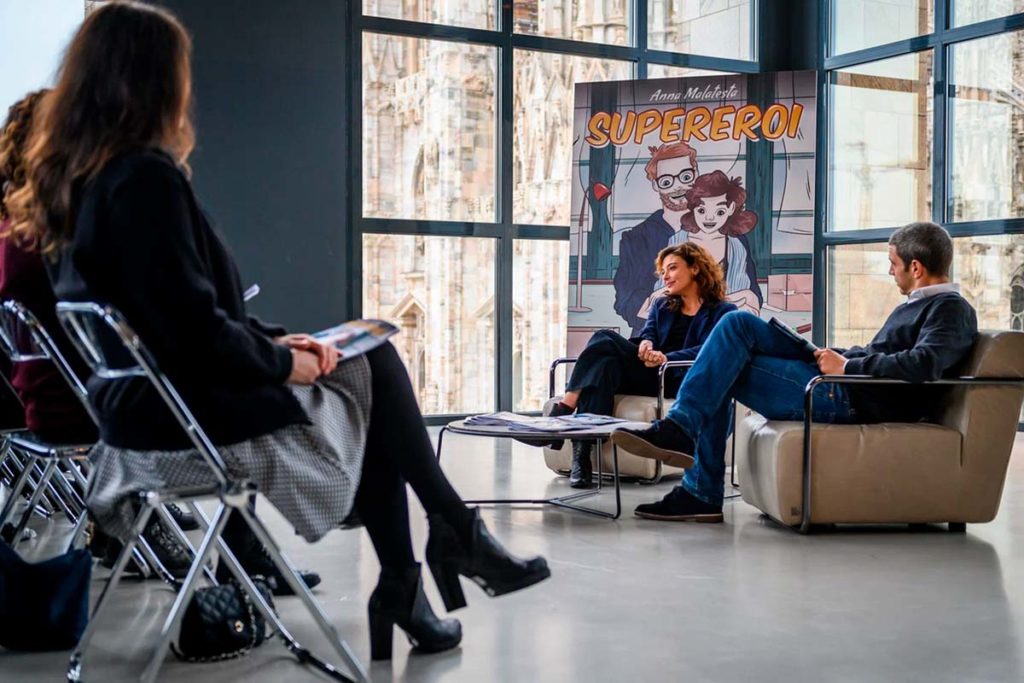
"Superheroes" (Supereroi, 2021) was Genovese's attempt to return to classic romantic drama — but, of course, with his signature complexity. He is a physics professor, convinced that everything in the world follows formulas. She is an impulsive comic book artist, an enemy of all conventions. Their love story is scattered over twenty years, but told non-linearly: past and present are mixed so that sometimes characters from different time planes meet in the same frame without noticing each other. Genovese seems to dissect the relationship, breaking it down into its components — the first meeting in the rain, quarrels, reconciliations, the birth of a child, infidelities, fears — and then reassembles them into a mosaic portrait of love.
The director himself said: spending ten years together is hard, twenty is rare, and more is the lot of superheroes. The film is shot on a scale unusual for Genovese: the action moves from Milan to the cliffs of the island of Ponza, to Copenhagen, to Marrakech. For the first time, the director works not with chamber space, but with the visual poetry of wide shots and romantic locations. Critics noted that he finally learned to speak the language of images, not just dialogue — although his signature tendency for aphoristic lines hasn't gone anywhere.

"The First Day of My Life" (Il primo giorno della mia vita, 2023) is perhaps the most ambitious and risky project of the director. Four suicidal individuals meet a mysterious guide who gives them seven days to reconsider their decision to die. They become invisible in their own lives — they see loved ones, observe the world, but cannot intervene. This is a purgatory for the living, group therapy under the supervision of a life coach who himself is in deep depression.
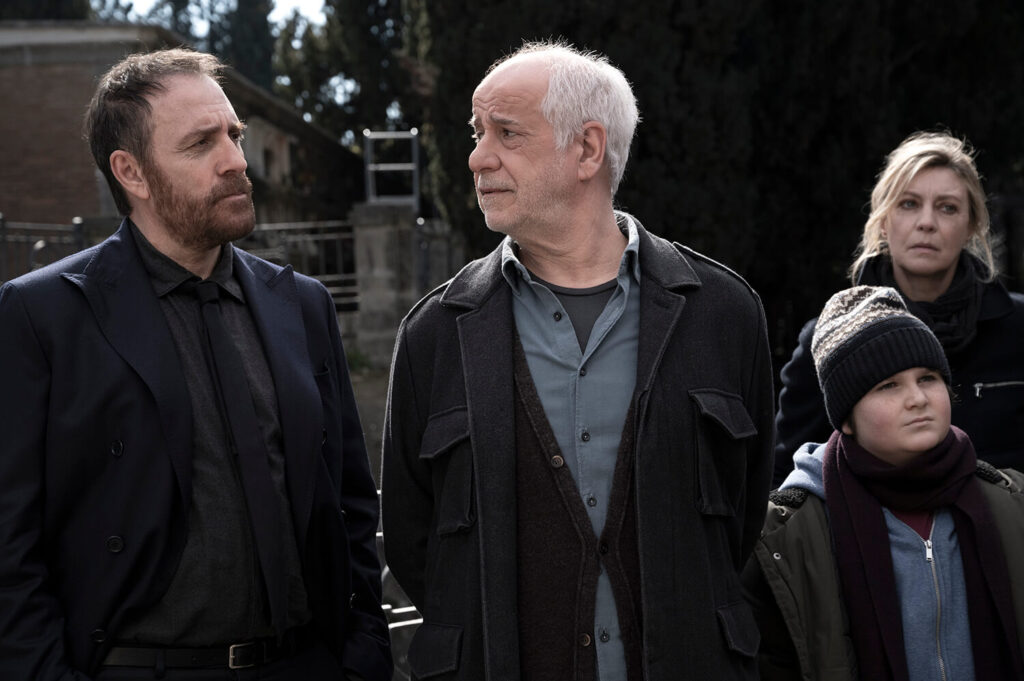
Genovese moves the action of his own novel from New York to Rome, giving the city a mystical, almost noir appearance — dark tones, muted light, an atmosphere of stopped time. Scenes were shot on fishing platforms near the old Fiumicino lighthouse, on the streets of Cinecittà Est, in the Aniene valley. Interiors were built on the pavilions of Cinecittà studios, which allowed creating that very speculative abstraction — not quite a real world, but not entirely fantastic either.
Here Genovese finally formalizes his main creative principle: take themes that concern everyone — love, death, parent-child relationships — but transfer them into a conceptual space. The characters are torn from everyday life and placed in an artificial situation that forces them — and the viewers — to look at eternal questions from a new angle.
"Madly": The Mind as a Set
Genovese's latest film to date — "Madly" (Follemente, 2025) — takes conceptuality to the limit. A man and a woman on a first date, but the action takes place not only in a real apartment but also inside their heads. Each character has multiple inner personalities — personified emotions that argue, advise, sabotage. The camera constantly moves between three spaces: reality, the "male mind," and the "female mind."
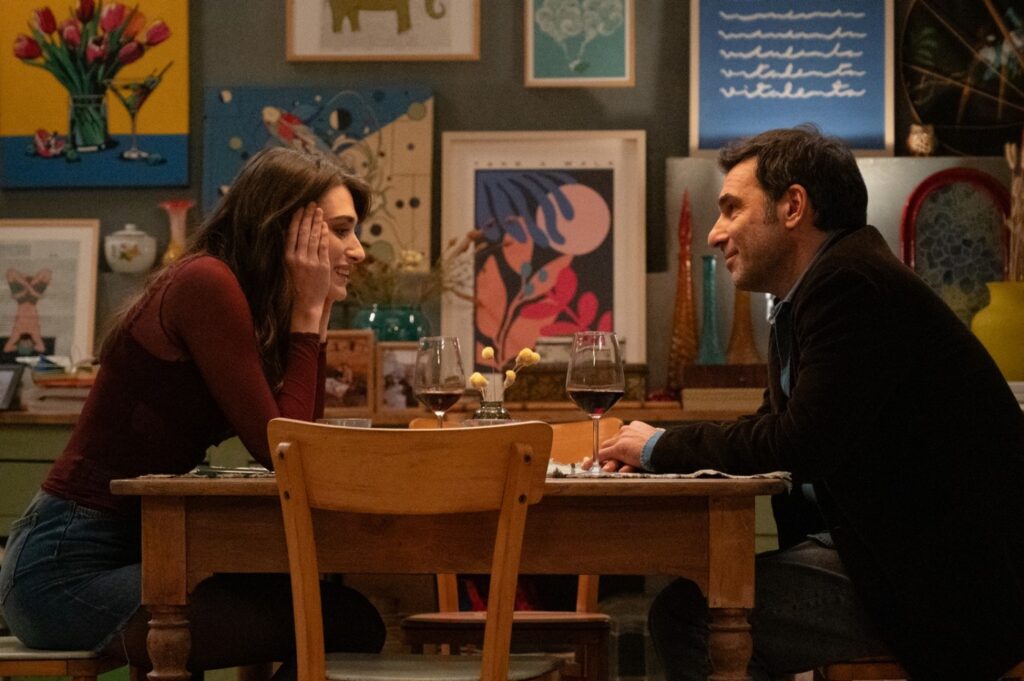
The idea had been floating in the director's head since 2004, when he made a low-budget film about split personality. Twenty years later, Genovese returned to the theme, but with a much more complex visual concept. He built the male mind space as a dark warehouse filled with artifacts from different eras — vintage style, dim lighting, chaos and disorder. The female mind is lighter, more orderly, but also full of stories and things from the past. The main thing is that the viewer can instantly understand which space they are in.
Critics received "Madly" with caution, noting that the concept sometimes outweighs the emotional connection with the characters. It is an act of narrative architecture, promising to expose the chaotic mechanics of attraction, but sometimes losing balance between form and content. Perhaps the triumph of formula in "Perfect Strangers" went a little to Genovese's head. He began to approach films more as formats ready for repackaging in different cultures than as traditional stories.
Theater, Not Cinema?
The paradox of Genovese is that he makes films that by all indications should be theatrical plays. Intimacy, talkiness, unity of place and time, focus on dialogue — all these are attributes of traditional drama, not cinema. In fact, "Perfect Strangers" was indeed staged in theaters — in Russia, the play was first produced by the Theater "Na Liteynom," director Sergey Morozov spoke about confession monologues where the line between character and actor blurs.
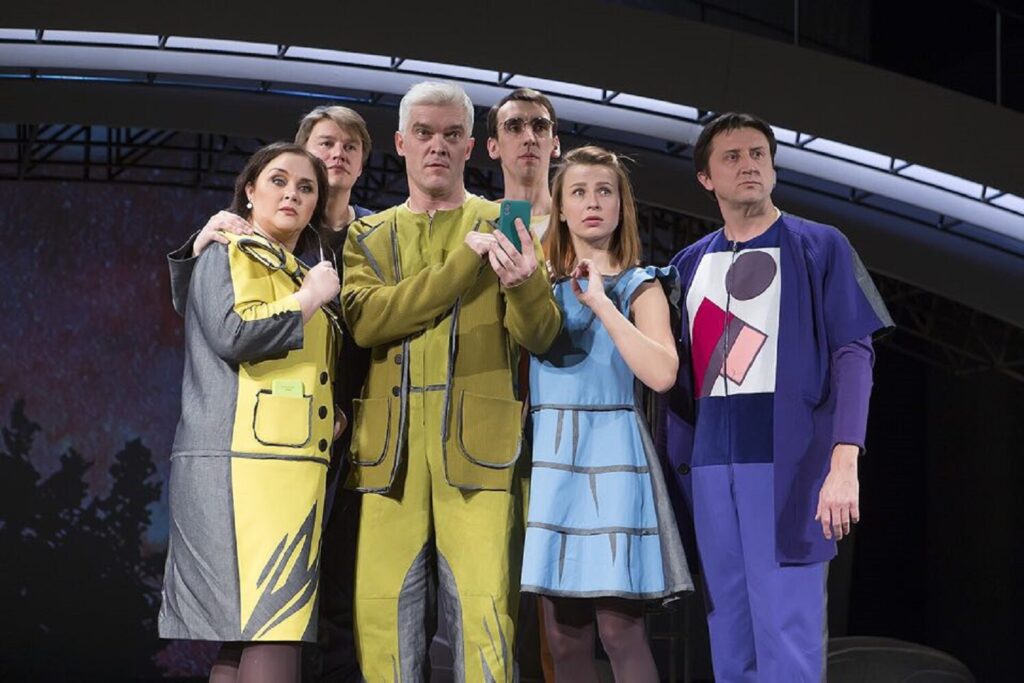
But Genovese chooses cinema for a reason. His direction is the art of stepping back, giving space to the actors (albeit without much improvisation), to the dialogue, to the situation. In a chamber drama, any visual showing off would look fake — here you need the precision of a surgeon, not the painting of an artist. The comparison with Sidney Lumet is not accidental in reviews: like Lumet in "12 Angry Men" or "Dog Day Afternoon," Genovese understands that in a confined space, the main thing is rhythm, timing, the ability to charge every dialogue and gesture with climactic force.
Genovese's cinematographers — primarily Fabrizio Lucci, with whom the director works constantly — create images without ostentatious beauty. The camera doesn't shout about itself, but every frame is precisely calibrated. In "Perfect Strangers," there was a fundamental decision to shoot all dinner scenes at night, in real meal time. The actors actually ate at night, creating an authentic atmosphere — viewers feel it, even without realizing why the scenes seem so real. For "Madly," everything was shot during the day in a pavilion, but it worked just as well — each film has its own style, and the director's task is to find it.
Influences: From "The Blues Brothers" to Kieślowski
Paolo Genovese's cinematic influences are unexpected and diverse. In his youth, he was blown away by "The Blues Brothers" — pure spectacle, action, music, energy. The opposite pole is Polish director Krzysztof Kieślowski with his "Decalogue" and "Three Colors." From Kieślowski, Genovese learned to understand the incredible power of dialogue: no action, no special effects, just people talking — and it generates the most powerful emotions.
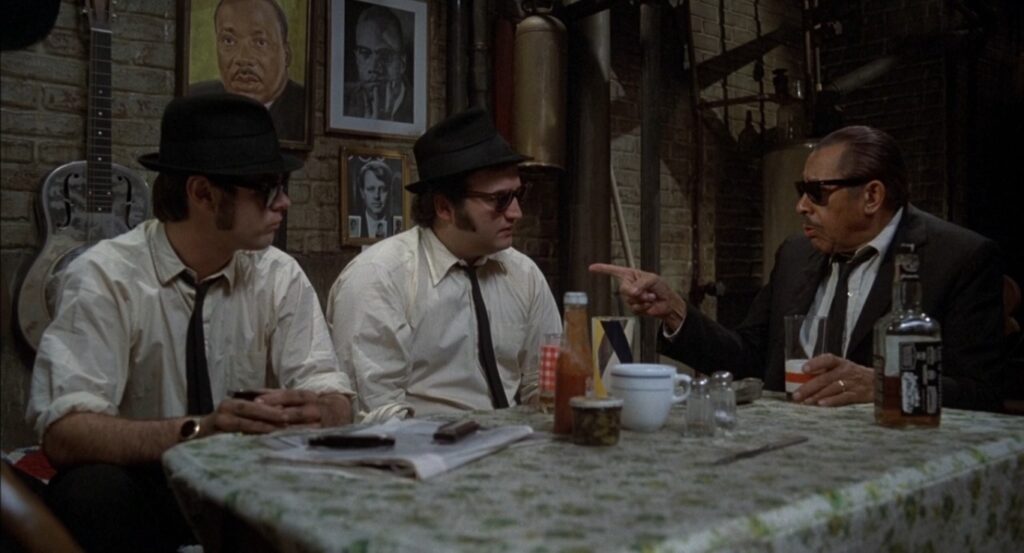
This dichotomy — spectacle and intimacy, external and internal — defines Genovese's style. He doesn't choose one side but tries to combine: create outwardly minimalist films that internally boil with energy and emotions. His characters hardly move in space, but their inner worlds are roller coasters where every turn threatens disaster.
What Unites All of Genovese's Films
If you try to find a common denominator in the director's filmography, you get a triad: relationships, secrets, artificial situations. Genovese is not a director of everyday life. He doesn't show life as it is — he constructs laboratory conditions in which human nature manifests itself brighter, more painfully, more distinctly.
"Perfect Strangers" is a laboratory of trust. "The Place" is a laboratory of desires. "The First Day of My Life" is a laboratory of the meaning of existence. "Madly" is a laboratory of attraction. Each time, Genovese invents the rules of the game, launches the characters into it, and watches what happens. And each time it turns out painful, honest, funny, and recognizable — because beneath the artificiality of the situation lie real human fears and hopes.
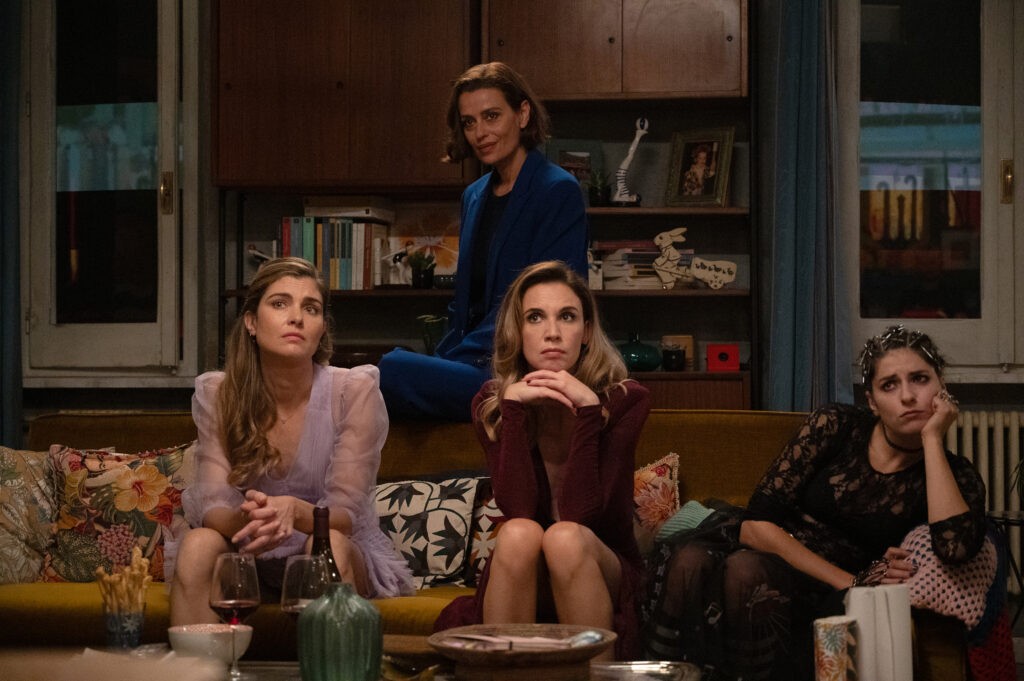
The director always starts with reality — with friends' stories, his own observations, overheard conversations. But then imagination kicks in, completing the story, moving it from the plane of documentary to the realm of artistic generalization. Genovese doesn't make films about specific people — he makes films about all of us. And that's why his films are so easy to remake: faces, accents, cultural realities change, but the essence remains unchanged — because human nature is universal.
Every Word Matters
His experience as an adman left a permanent mark on Genovese's method. In advertising, every second is worth its weight in gold, every word must work toward the result. Moving into cinema, the director didn't lose this skill — on the contrary, he perfected it. He can spend hours choosing between synonyms, arguing with co-writers about which adjective more accurately conveys the emotion.
The process of working on a script with Genovese is collective but rigidly structured. A team of co-authors meets twice a week, each contributing ideas. The other five days, the director writes alone — because he needs to organize all the material, pass it through himself. Then another meeting, discussion, criticism — and a new cycle. The advantage of this method is that many options end up on the table, and in a film where characters can talk about anything, this wealth of choice is critically important.
On set, Genovese is the owner of his script. He wants actors to deliver the text exactly as written. This is the understanding that every phrase is calibrated, every word chosen for a reason. Actors are given some freedom in conveying the long friendship of the characters — jokes, jabs, inside jokes can be unrehearsed, adding realism. But the foundation, the core of the dialogue, is sacred.
Paolo Genovese as a Diagnostician of Modernity
Ultimately, Genovese is interesting not so much as a virtuoso director — his visual style is deliberately restrained, even ascetic. He is interesting as a diagnostician, able to accurately identify the pain points of modern man. Our dependence on technology and at the same time vulnerability to it. The illusion of closeness with people we essentially don't know. The fear of choice and at the same time the inability to live without goals. The inner voices that argue in our heads every time we need to make a decision.
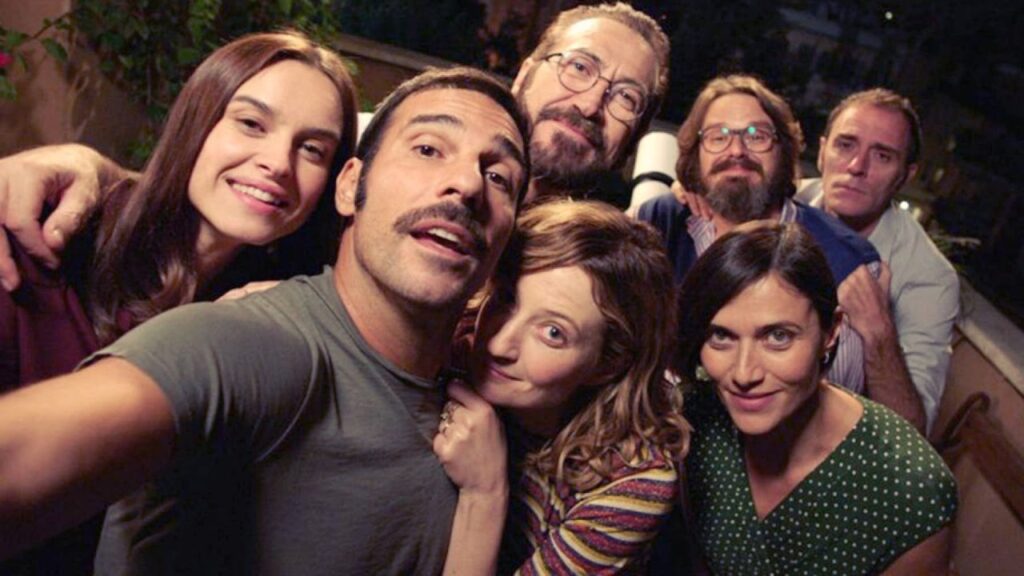
All this Genovese packages in a form that balances between entertainment and philosophy. His films can be watched as gripping thrillers — and they work on that level. But you can dig deeper — and discover existential questions that have no clear answers. "The First Day of My Life" doesn't say whether the heroes who decided to leave life are right or wrong. "Perfect Strangers" doesn't assert that honesty is always a blessing and secrets always evil. The ending often remains open, leaving the viewer to decide what happens next.
Perhaps it is in this openness that the secret of the Italian director's success lies. He does not dictate, does not preach, does not give ready answers. He simply opens the box — and invites you to look inside. And there, in that little box, turns out to be the whole world: with all its contradictions, fears, hopes, and endless human imperfection, which is both a curse and the only thing that makes us alive.
Comments
0No comments yet.