
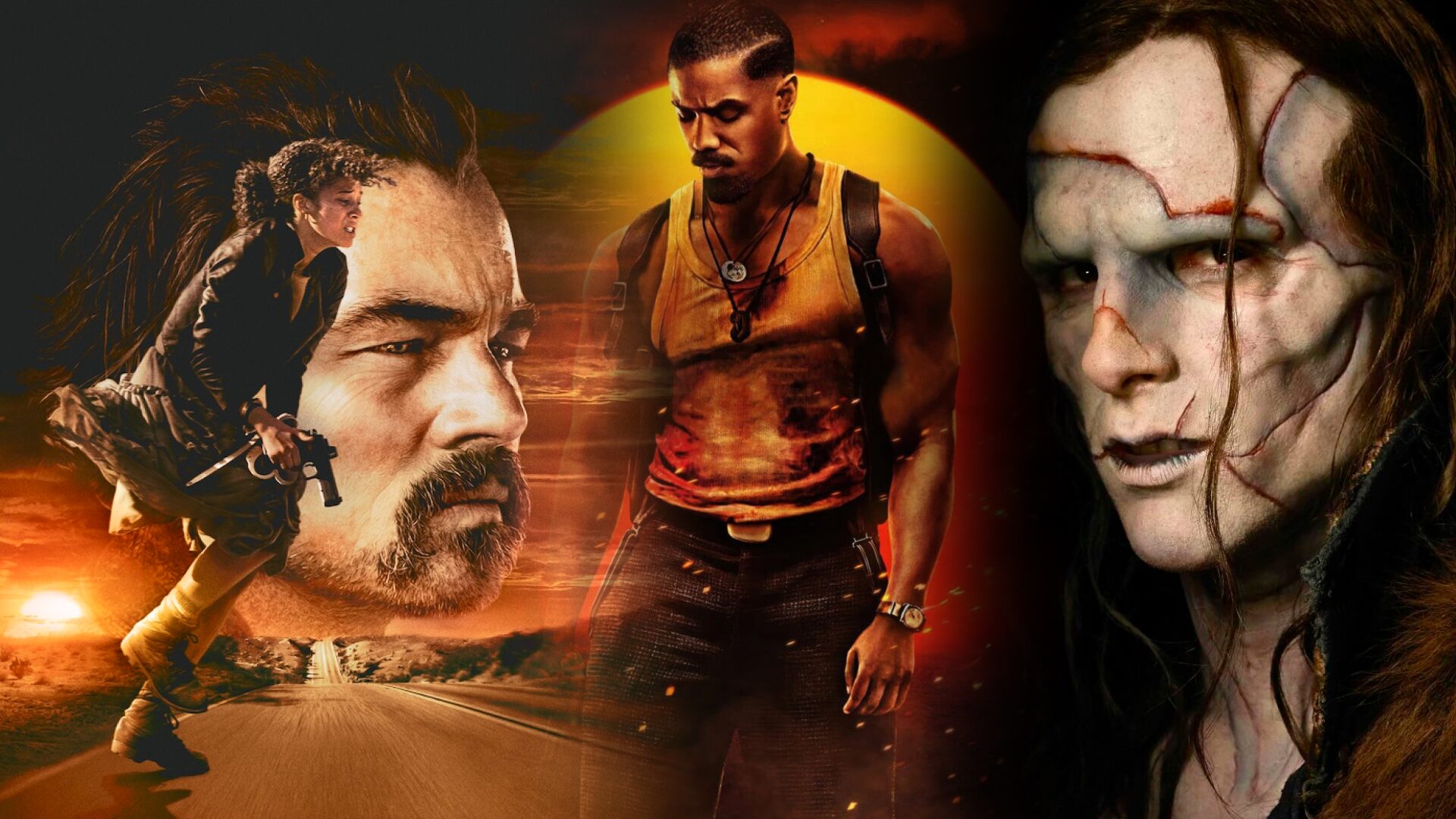
From 'The Battle of the Battle' with Leonardo DiCaprio to 'Sinners' by Ryan Coogler—your attention to the best films of 2025, which proved that auteur cinema can still surprise, and mainstream cinema can be creative.
2025 turned out to be that rare year when critics and audiences almost unanimously agreed—and that in itself is a sensation. In an era of endless sequels and franchises that suck the last juices of creativity out of cinema, a miracle suddenly happened: auteur cinema not only survived but made itself heard. From an almost three-hour epic by Guillermo del Toro about a famous scientist and his monstrous creation, to a stylish vampire action film by Ryan Coogler with two Michael B. Jordans, the year was remarkably diverse. Paul Thomas Anderson reminded us why he remains the leading formalist of modern cinema, Mike Flanagan once again brilliantly adapted Stephen King, and Park Chan-wook made a hilarious comedy. Here at the editorial office of 'After the Credits,' we watched everything we could get our hands on (legally and otherwise), argued ourselves hoarse, and finally compiled a list of films that defined the year in cinema. We're sure you won't guess the leader of our top until the very end.
10th place – 'Train Dreams'
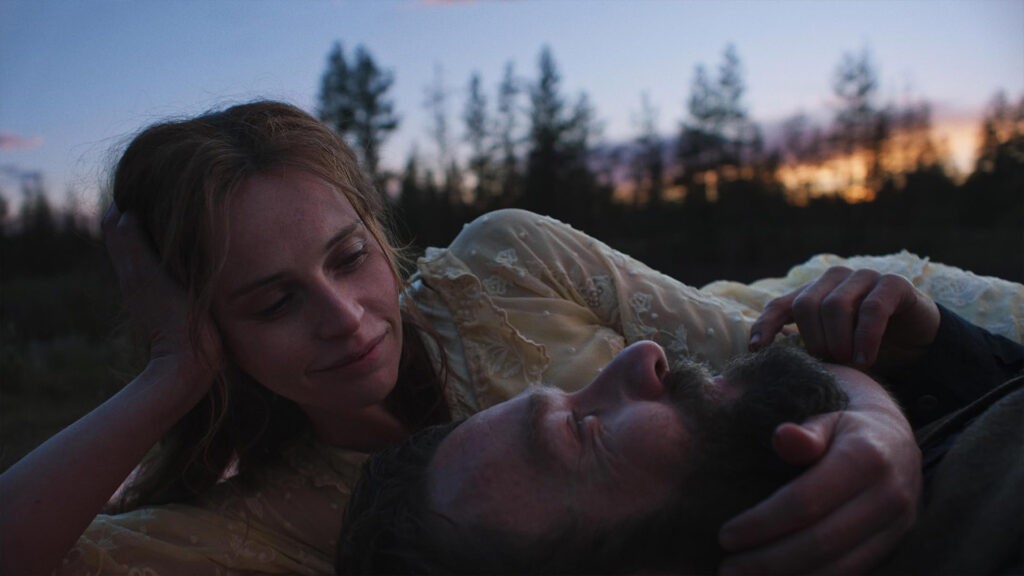
Director Clint Bentley, whom many remember as the screenwriter of 'Sing Sing,' took a novella by Denis Johnson and turned it into a meditative statement about how easily history forgets a person, even when he builds it with his own hands. The film debuted at Sundance, made the top 10 films of the year according to the National Board of Review and the American Film Institute, and Joel Edgerton received a Golden Globe nomination—all deservedly.
The action takes place in the early 20th century, in the mountains of Idaho, where lumberjack and railroad worker Robert Grainier (Edgerton) disappears for months at work—felling trees, laying ties, building bridges. America is rapidly industrializing, steam locomotives roar, cars appear, and Robert remains somewhere on the sidelines of this progress, living a simple and quiet life next to his wife Gladys (Felicity Jones). After a family tragedy, he becomes a hermit, a witness to many decades of American history that rushes past him like those very trains through the forests.
'Train Dreams' is a film that proves you can make a captivating story without a conventional plot (essentially, a man worked, got married, died—that's the whole plot). There are no dramatic twists or action scenes, but there is stunning cinematography, a soundtrack by Nick Cave, and Edgerton's performance that gives you goosebumps. This is a film-feeling, where every frame is saturated with melancholy and the beauty of wild nature, and the main character asks himself the very same questions about the meaning of life that we do now. Leisurely, deep, sometimes heavy—but this is exactly the kind of cinema that stays with you for a long time.
9th place – 'Frankenstein'
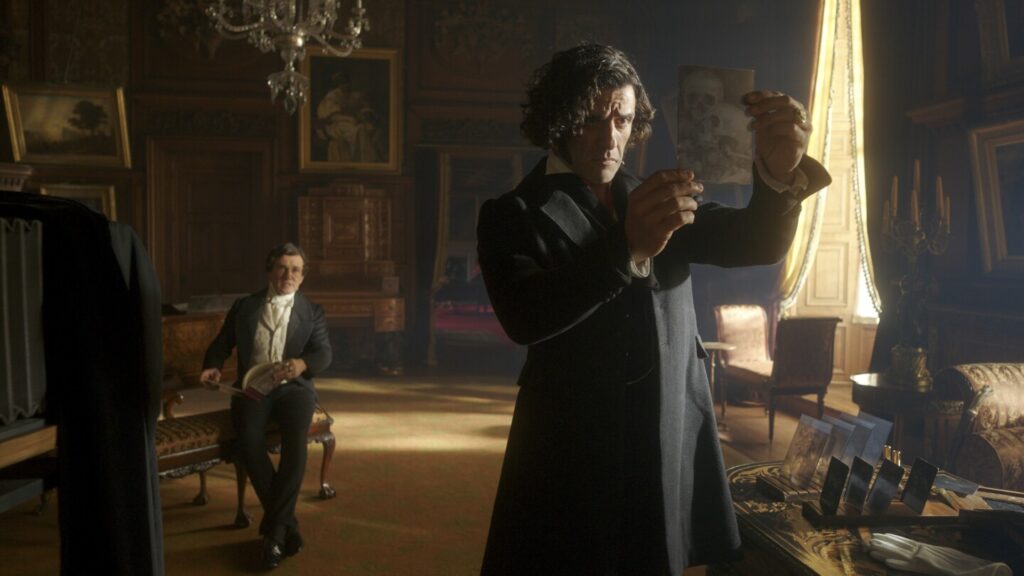
Guillermo del Toro's 'Frankenstein' does not change the rules set by Mary Shelley's novel. It is comfortable, as it was two hundred years ago, dressing up in Gothic, overcoming others' skepticism and disbelief, but not through an appeal to 'low' sensual techniques (fear and horror), but thanks to an unusual arrangement of elements long assimilated by humanity. Creators, many creators surrounded Mary Shelley: her husband Percy Shelley, Lord Byron, a progressive feminist mother, and an egocentric philosopher father. The writer heard the noble sighs of dozens of Victor Frankensteins, including the one sitting in her amazing head. To compose and be haunted by one's own creation, to be tempted and take responsibility—the torments of an author who accidentally created a monster.
Guillermo del Toro released a whole bestiary of creatures into the world, proving that he is another Prometheus, another testing God, but is he satisfied with this state of affairs? The Mexican director has repeatedly made it clear that he is not only with those who give life against their will, but also with those who live that life. Guillermo del Toro is a monster, so his thoughts constantly visit unknown life forms (the Amphibian Man, Pinocchio) or outcast people (Elisa Esposito from 'The Shape of Water,' Ofelia from 'Pan's Labyrinth').
Perhaps this influenced what the 2025 'Frankenstein' turned out to be. Still gloomy in its elegance of dead forms, but now in the name of creation, not the creator. The monster spoke about itself, exposing Victor, and we got a new idea of monstrosity. Mary Shelley's eternal plot has the right to remain unchanged, but the new century is not without the authority to reshape narratives to the needs of modern man. Not only God, but also Adam, not only the author, but also the book, not only the father, but also the son.
8th place – 'Sorry, Baby'
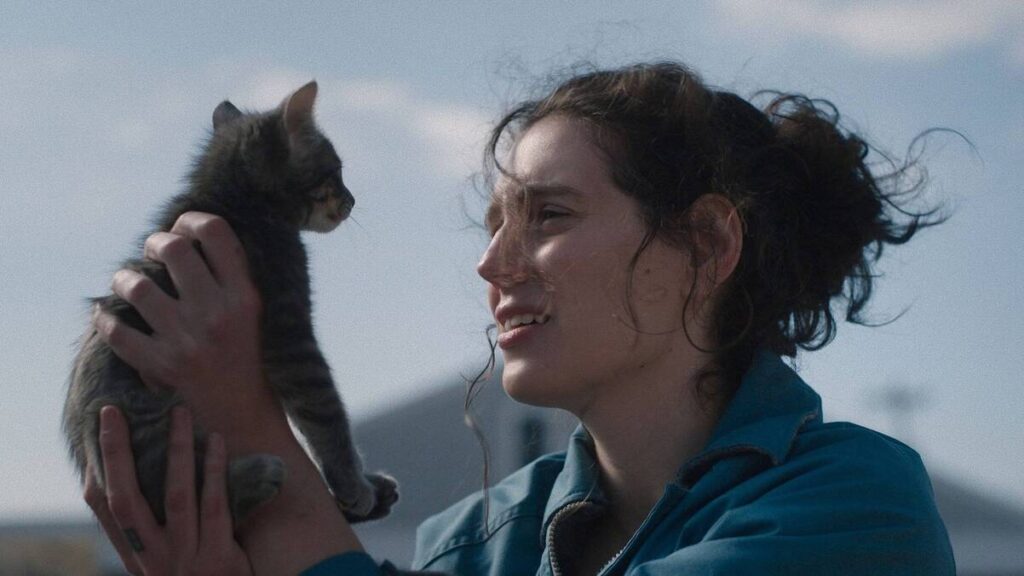
Eva Victor in her debut dared to do something very bold: she wrote and directed a film in which she herself played the lead role. Watching 'Sorry, Baby,' it quickly becomes clear that no other actress in the world could have embodied the lead role, at least not the way the director herself does. Her performance is not like ordinary acting—it is rather a pure living of the character.
Agnes is a literature professor at a university and leads a very ascetic and secluded lifestyle. Soon we understand that she has been in deep depression for a long time after a certain traumatic event. It would seem that such a description of the plot lends itself to a spectacle that is maximally gloomy, moralizing, and heavy. But Eva Victor surprises the viewer by avoiding stereotypes.
She created a film that speaks not so much about the darkness of despair and the horror of trauma, but about how a person copes with these experiences. About how light gradually penetrates the darkness. In this measured and sometimes cold narrative, the value of warmth that can be found in friendship, in a simple stranger, or even in a stray kitten shines especially brightly. The film 'Sorry, Baby' says that terrible things are inevitable, but when there is someone to share your pain with, everything becomes fixable.
7th place – 'The Life of Chuck'
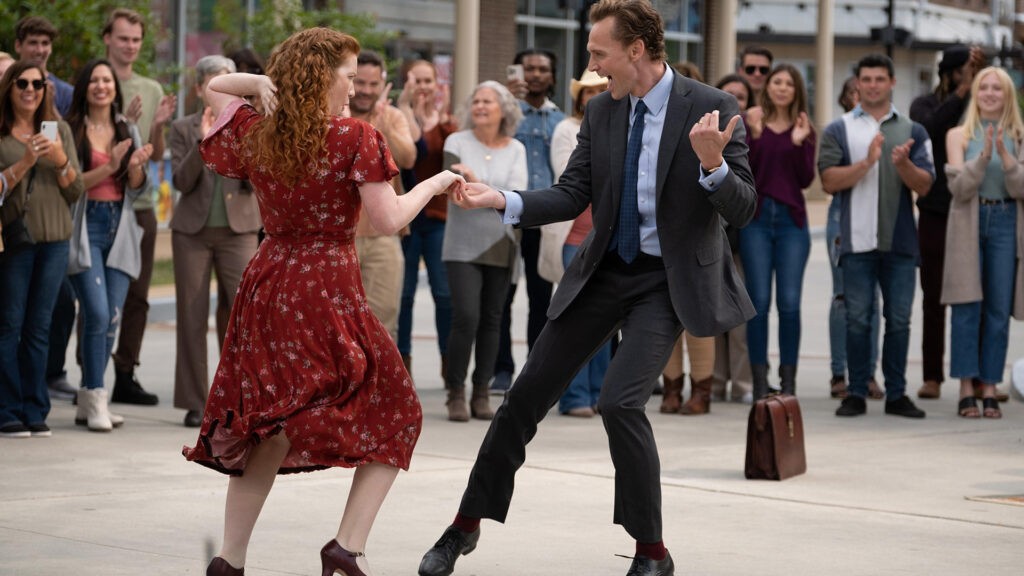
'The Life of Chuck' is perhaps the most life-affirming and kind film based on Stephen King. Mike Flanagan, who has already adapted the master twice, carefully turns a short story by the horror master into a touching and inspiring movie. The film has a touch of mysticism and a sense of the inexplicable, but above all, the picture hooks you on the level of feelings and emotions. I deliberately don't want to say a word about the plot—this is exactly the case when it's better to watch the movie with a clear head.
A pleasant bonus was the numerous cameos by Flanagan's favorites, references to Carl Sagan, the ironic appearance of the director himself in the frame, and, of course, the dance number of the incomparable Tom Hiddleston.
'The Life of Chuck' is a film-reminder of the value of life in every moment and manifestation, and a very tender and important reminder, especially in these times.
6th place – 'Siraat'

Perhaps there was no film in 2025 more disturbing, topical, and resonating with the spirit of the times than the one that Spaniard Oliver Laxe brought to Cannes. A meditative, almost dreamlike parable about wandering through the Moroccan desert to a hypnotic rave soundtrack turns out to be an absolutely ruthless encounter with reality for the viewer. 'Siraat' in its third act sounds the alarm with such frantic and unambiguous fury that there are no questions left about what the author is trying to say or why this work saw the light right now.
Laxe speaks frankly and without beating around the bush about the end of the world, but until a certain point keeps it in the background, as a backdrop for the main story, as something almost mundane, happening in parallel or perhaps already happened. We see a mosaic of disparate but recognizable images: wrecked cars, crowds of refugees, furrows from tracks in the sand, scattered shell casings, chilling (but uninformative and not particularly interesting to the characters) radio reports, and the faces of locals frozen in silent horror, as if hell has just opened before them. Whether you dance until you drop or run without looking back, a mind-blowing trip (in the context of the film, both meanings are valid) will not protect you from the storm.
Partygoers indulging in escapism, carefreely dancing right on a minefield—isn't this the most accurate portrait of our society (and especially people from the art world) in 2025?
5th place – 'The Tools'
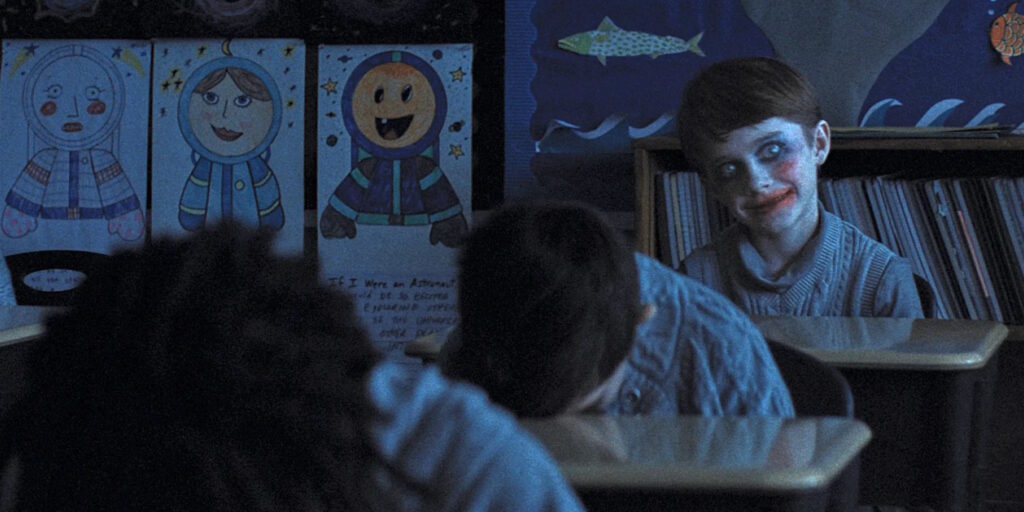
All students from one school class suddenly and without a trace disappear, except for one child. Panic begins in a quiet town: what or who could have caused the mass disappearance? The mystery is to be investigated by unexpected figures: a teacher trying to drown her guilt and horror in alcohol (Julia Garner), the father of one of the missing (Josh Brolin), and several residents whose measured life in an American suburb has overnight turned into a nightmare that breaks all the usual rules.
'The Tools' by Zach Cregger ('Barbarian') is that rare case when a film that almost instantly became a box office hit also claims the status of a modern classic of the genre. It was picked apart, argued about, and gave reason to talk again about the revival of auteur horror that can captivate both film critics and the mass audience. The film is distinguished by the ambitions of a solid detective and the manners of Osgood Perkins and Stephen King. The film skillfully keeps you in suspense, scares you seriously, sometimes deliberately confuses you, but that only works in its favor.
This is undoubtedly the main horror of the year, where a genre experiment boldly combines with an elegant parable about harmful addiction. And it is done so skillfully that all the carefully hidden meanings and references can easily be missed the first time. Aunt Gladys is a separate conversation. A worthy new addition to the collection of mesmerizing monsters. Her image works one hundred percent, even if you don't fully understand what exactly she represents. However, in good horror, such disturbing understatement is the main strength.
4th place – 'The Method of Exclusion'
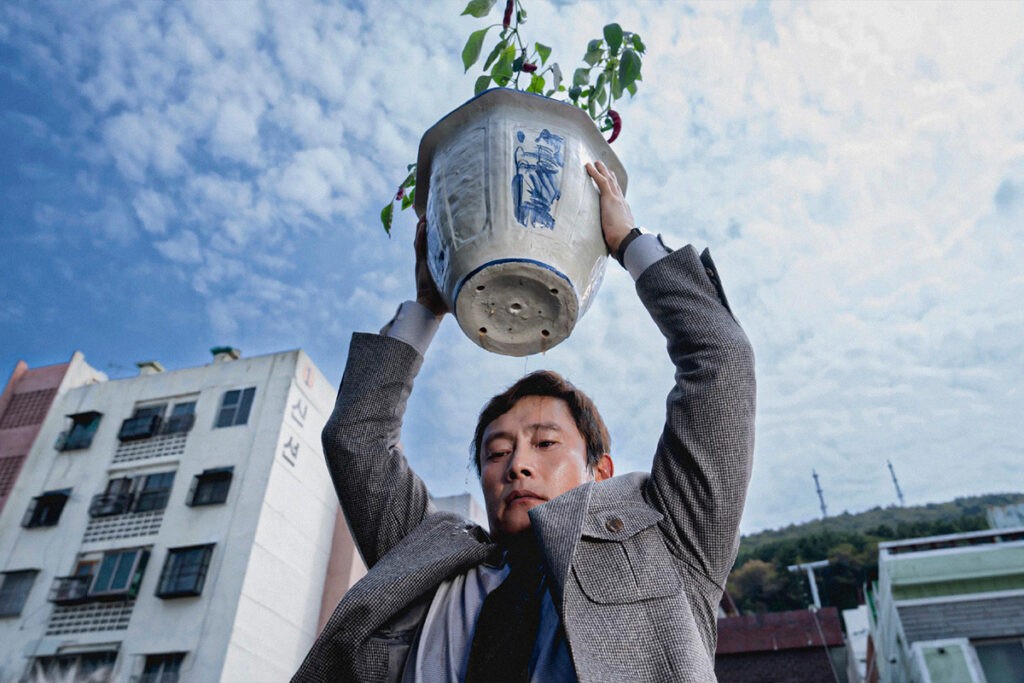
Yoo Man-soo (Lee Byung-hun) is a high-class specialist with twenty-five years of experience in the paper industry. Owner of a renovated family home and an exemplary family man, he is confident in the strength of his world. Therefore, sudden dismissal comes as a real shock to him. Months of fruitless job searching turn into a threat of losing everything. In desperation, Man-soo comes to a radical solution: physically eliminate his main competitors—the same qualified and desperate unemployed people as himself.
Against the backdrop of caustic pamphlets like 'Eddington' by Ari Aster, Park Chan-wook's 'The Method of Exclusion' looks surprisingly intimate. Formally, it is also a satire on capitalism with its takeovers, AI, and corporate demons. But the director shows Eastern wisdom: he is more interested not in the system, but in how its failures affect the microcosm of a single family. The crisis comes when men who basked in stability find themselves on the edge after being laid off. Their wives have to decide: to be with them to the end, turning a blind eye to breakdowns. Or, when the situation reaches a boiling point, physically get rid of the problematic 'asset.'
It is the female half that Park Chan-wook watches most closely, deliberately turning off the moral tuning fork and remaining an outside observer. As a result, the strongest side of the film is not its venomously satirical fervor, but a subtle production drama about people caught in the epicenter of a fall. Unexpectedly, but true: in a year of loud pamphlets, one of the most convincing anti-capitalist works turned out to be a story about a family.
3rd place – 'Sinners'
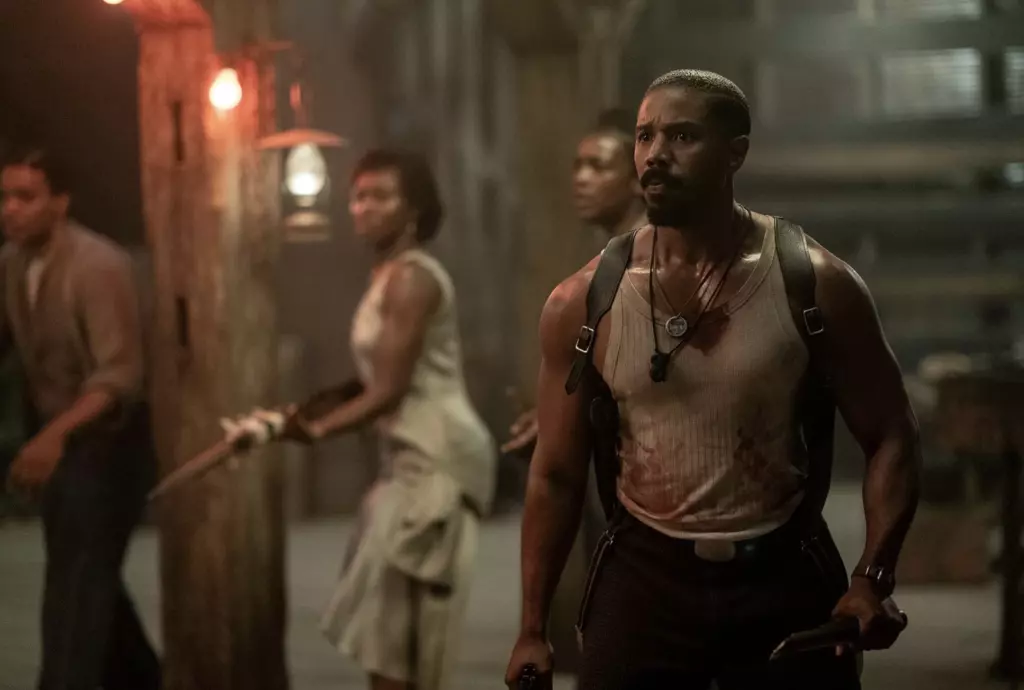
Against the backdrop of several other major and loud releases by the end of 2025, 'Sinners' by Ryan Coogler seemed to be slightly 'lost,' but it is truly one of the strangest (in a good way) and deepest triumphs of the year. And the final bastion of original ideas among studio blockbusters. The film was released worldwide on Easter weekend and became a miracle that neither Hollywood nor audiences expected. It grossed $368 million worldwide and became (at that time) the highest-grossing original film in the last 15 years, as well as the tenth highest-grossing R-rated film in history.
I think one of the main secrets is that a seemingly local narrative about the Jim Crow South of the 1930s turns into a universal myth about preserving oneself against 'immortal' assimilation. This resonates with everyone who has ever felt a loss of identity and 'roots,' or the need to fight for them.
For me, everything in this film is wonderful, but the incredible music written by Ludwig Göransson and acting as the true main character works like a defibrillator for the soul: from blues, with stunning vocals by Miles Caton, for whom the role in 'Sinners' was his film debut (but it's almost impossible to believe), to Irish motifs, and one of the best original soundtracks in the last ten years.
This is not a reinvention of vampire cinema; in fact, it's not even a horror. In the current era of popcorn movies with obvious imposed messages that simply stop working because there is no soul behind their creation, such a thoughtful and personal story that makes so many viewers around the world feel something is a breath of fresh air. All this turns 'Sinners' into an experience that hasn't happened often lately. Exaggeration or not, but I'm sure we'll be talking about this film for years to come.
2nd place – 'The Battle of the Battle'
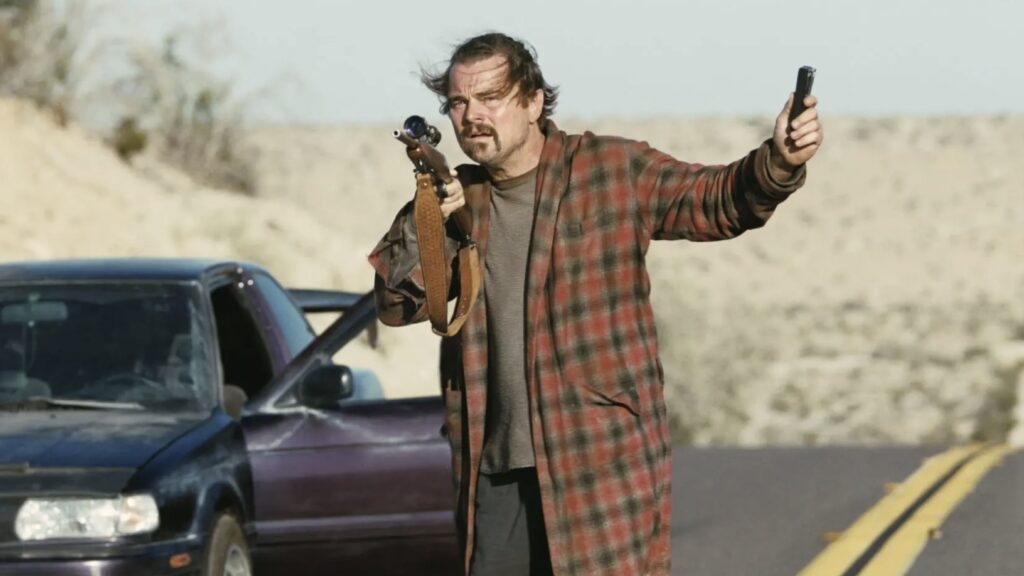
Paul Thomas Anderson remade 'Finding Nemo' (if you're a fan of the classics, then 'The Searchers') with a volume of Thomas Pynchon in his hands. In the director's rendition, the classic plot of how a somewhat paranoid and lost father tries to save his actually much more adaptable child (in this case, a daughter) turns into a great American novel. The father, played by Leonardo DiCaprio, cannot accept a world in which he is a relic of a bygone era; Nazis seek love and recognition; yesterday's revolutionaries save, albeit with some incredible absurdity, today. Everywhere there is confusion, fear of losing ideals, with which the heroes, as a rule, lose themselves as well.
A direct adaptation of Thomas Pynchon's prose in Anderson's career was 'Inherent Vice', but it is in 'The Battle of the Battle,' only inspired by Pynchon, that the director allowed himself lightness, managed to reflect the excessiveness of the writer's style, the absurdity of his novels turning into melancholy. Nuns with machine guns; DiCaprio's hysterics over forgetting a secret password; a karate sensei (the great Benicio Del Toro) dancing during an arrest. 'The Battle of the Battle,' like the best of classic works, is terribly captivating; you almost immediately want to rewatch it. And by this alone, it wins over the reality to the criticism of which, they say, it is dedicated.
1st place – 'Sentimental Value'
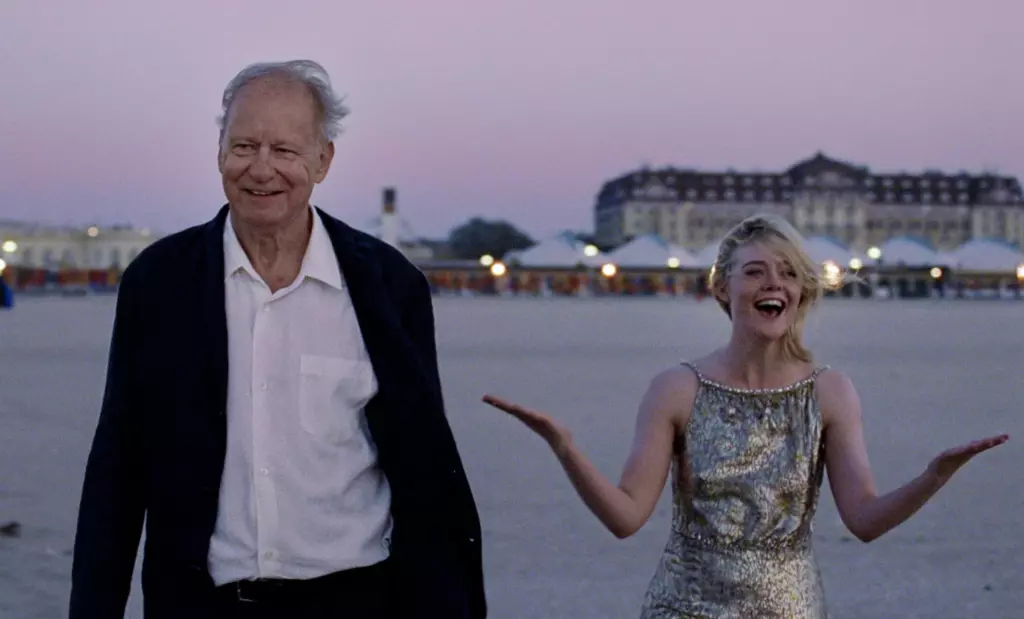
2025 burns with the flame of family dramas. So among loud, sometimes ironic rivals, 'Sentimental Value' conquers the viewer with pure sincerity. It seems the film breathes it from the first frame to the last, starting with a prologue about the history of a house and its inconspicuous details, ending with an open finale where the interpretation of the main characters' relationship remains off-screen.
It is especially therapeutic to watch 'Sentimental Value' with loved ones, because it is them you want to understand and forgive in the passing year. Add to the idea of mutual mercy the acting duo of Renate Reinsve and Stellan Skarsgård, and there is no doubt that this is the main film of the year.
Comments
0No comments yet.