
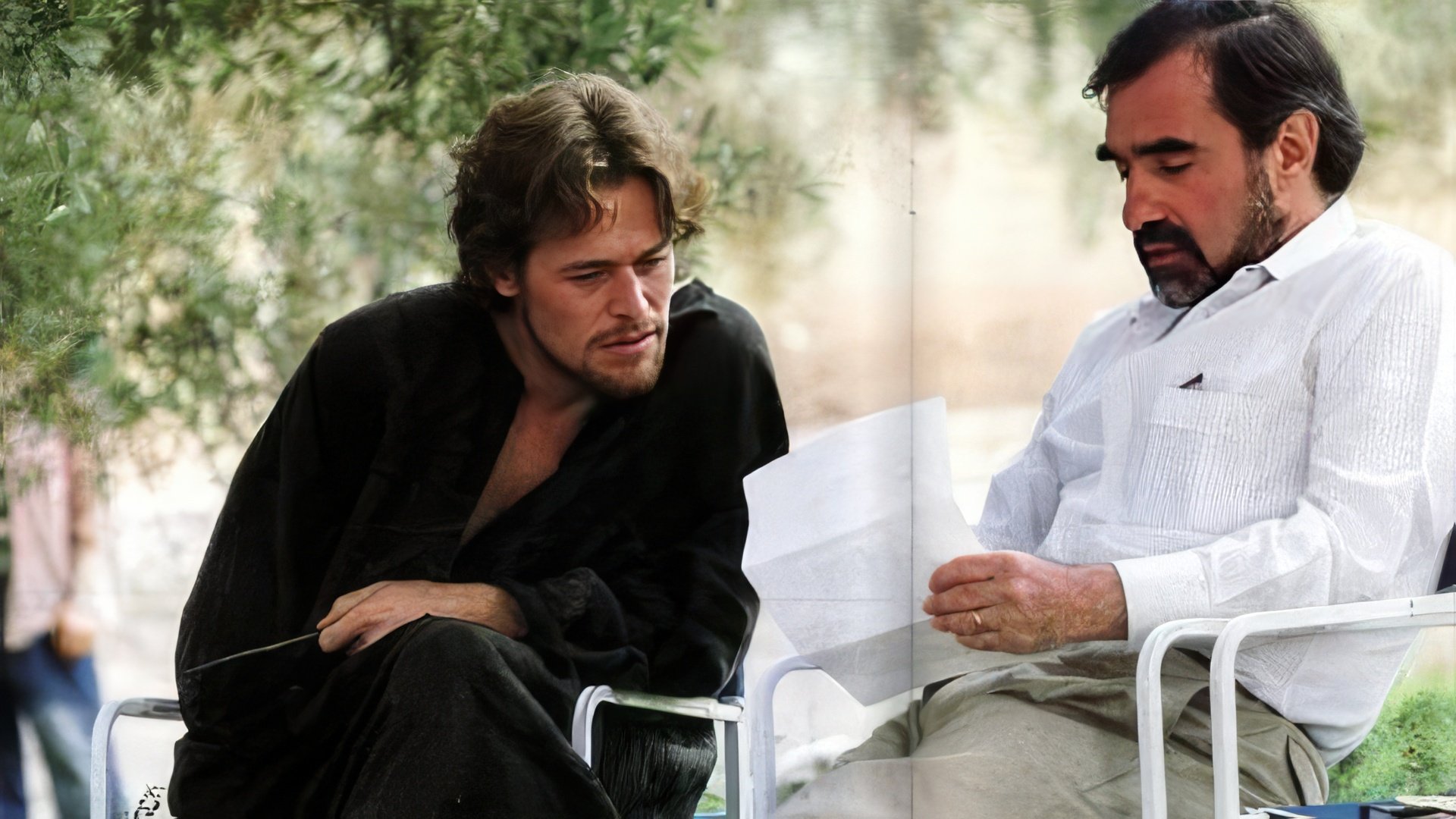
Only know Scorsese from 'Casino' and 'The Irishman'? Here's a selection of five films, including a biopic about Buddha, a feminist drama, and a horror comedy about a hapless clerk, and they all look no less successful than his gangster stories.
Martin Scorsese has established himself among audiences worldwide as a first-class master of films about the mafia and its surroundings; he knows every inch of the "mean streets" firsthand.
But behind the facade of "goodfellas" and other New York gangs hides a great author capable of making both a brutal satire of the media and the first anti-musical long before "La La Land."
"The King of Comedy"
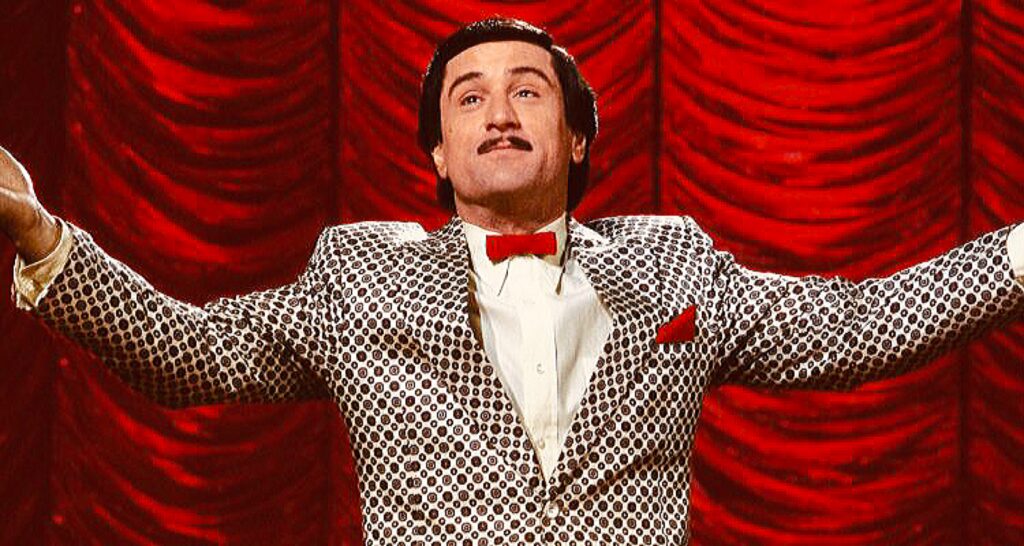
"You're cool on TV. You're a star" — these words from a simple song of the "Star Factory" project ironically describe the plot of one of the unconventional and important works of the great Italian-American of world cinema.
After returning to form with the iconic "Raging Bull," Scorsese wanted to realize the main project of his life — "The Last Temptation of Christ" by Greek writer Nikos Kazantzakis, but it didn't come together. Then, luckily for Martin, his faithful friend and the main actor of his career, Robert De Niro, advised him to take a break and make a film of a lighter genre.
The result was a paranoid comedy about an unsuccessful stand-up comedian and experienced stalker Rupert Pupkin, who lives with cardboard figures of stars in his apartment and rarely distinguishes fantasies from reality. To finally get his 15 minutes of fame (almost by Warhol), he simply kidnaps the country's main TV host and takes him hostage.
"The King of Comedy" is the biological father of "Joker." All the themes, like the anti-hero misanthrope, show business as a factory for grinding down personalities, and an indifferent society that creates an environment for the emergence of freak madmen, are not yet so strongly developed here, and the film does without a "bloodbath," but the tension and fear of a character who does not know the word "no" are felt even stronger.
Interestingly, in "Joker," De Niro, who played Pupkin in Scorsese's film, appears already in the chair of a respectable TV host who publicly humiliates Arthur Fleck. And one can only wonder: is this a "grown-up" urban clown who became part of the system after triumph, or just another arbiter of destinies from a ratings channel.
Interestingly, the persistence and stubbornness of Pupkin's character annoyed Scorsese the most. He often found it emotionally difficult to be in the editing room and assemble the film's frames. Such personalities, like Rupert, had recently shot Reagan and Lennon and sent threatening anonymous letters to the director himself after the filming of "Taxi Driver." There was reason to be afraid.
"After Hours"
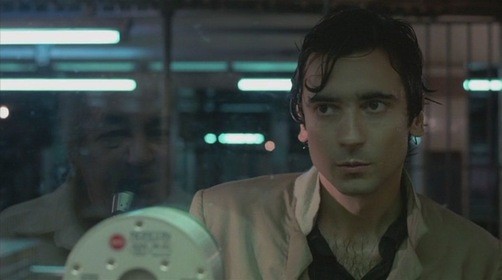
In the list of Scorsese's most underrated works, the black comedy "After Hours" most often comes up. A unique genre experiment by a mature master that did not become popular in his homeland but won the Grand Prix at the Cannes Film Festival, beating out "The Sacrifice" by Tarkovsky in that category.
In the plot, a young and tired New York programmer meets a pretty stranger in a diner one day and arranges to meet at her apartment in SoHo. This journey will cost him his money, sanity, self-control, and introduce him to the dark side of the Big Apple. "After Hours" even 40 years later looks maximally alive and fresh. It works on different levels.
The motifs of an innocently accused hero hunted by a mob of angry lynchers ironically reinterpret "The Wrong Man" by Alfred Hitchcock. The film's mesmerizing and ominous soundtrack slyly winks at Bernard Herrmann's anxious scores, and the shooting style even copies the camera movements in "Marnie." And the femme fatale who ruined the main character's plans for a quiet night directly inherits the tradition of Hitchcock's blondes.
Martin made the perfect therapy film for every viewer. After the box office and critical failure of "The King of Comedy" and untreated pneumonia, Scorsese makes a film where various zigzags of misfortune avalanche onto the character.
Seeing such endless misadventures, anyone who watches will compare it to their own life and realize that things are not so bad.
"After Hours" reveals the secret life of the night city and turns this mystery to the max: conceptual exhibitions of contemporary art, where anyone can become material; entertainment clubs and bars behind whose doors bacchanalia and uncontrollable absurdity occur; and strange residents, as if stiffened from cold neon lights.
All this creates an atmosphere of a Kafkaesque nightmare in reality, a branch of hell in a gloomy New York neighborhood, where strangers will go through all the circles of Dante and only then, perhaps, escape from the rabbit hole.
"Alice Doesn't Live Here Anymore"
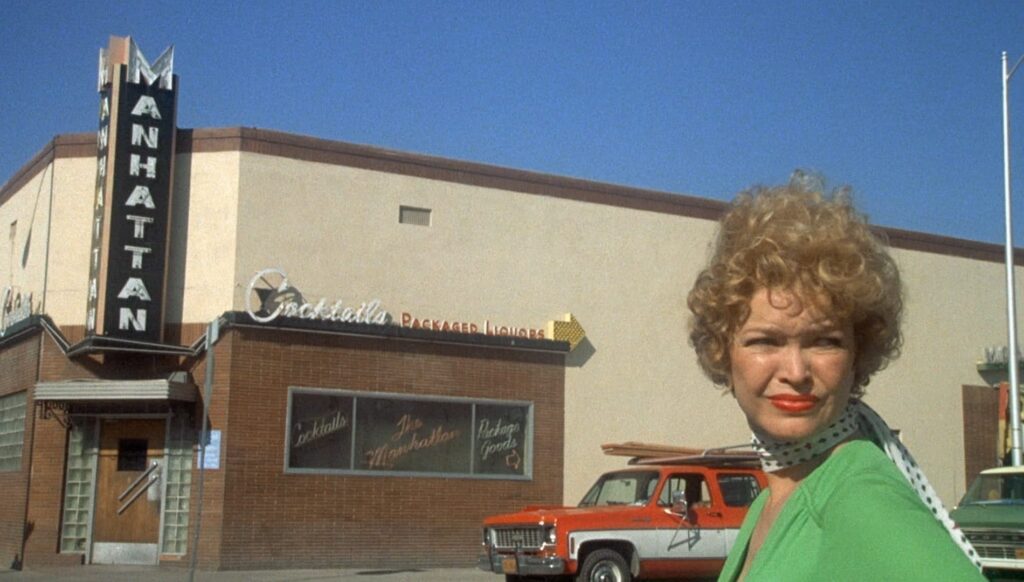
What do "The Exorcist" and the curious, pro-feminist drama of the young Italian-American have in common? Actress Ellen Burstyn. Having brilliantly played the mother in "The Exorcist," she, having received audience recognition and an Academy Award, decided as a producer to create a story about a protracted search for female happiness in one-story America, about a yellow brick road on deserted, vagrant streets.
She recruits Scorsese for the role of director. The author of the ballad about Little Italy and its inhabitants had not before placed a female figure at the center of the story.
Strong, powerful, and unhappy men were the backbone of his stories. To bring Martin closer to understanding the female perspective, the film crew of the future picture began to be recruited entirely from the opposite sex.
The editor was Marcia Lucas, wife of the future author of the main space opera; the assistant director was his then-girlfriend Sandy Weintraub, and the production designer was Toby Rafelson, wife of the director of the famous "Five Easy Pieces."
"Alice Doesn't Live Here Anymore" surprises primarily in its form of presentation. The prologue of the film was done in the style of Fleming's "The Wizard of Oz." The huge, fairy-tale studio set of the main character's childhood abruptly, like a rushing tornado, threw her into the gray, worn-out reality of the American dream with an abusive husband and lost dreams of a golden city under a blue sky.
Almost all shots are filmed with a handheld, live camera in the style of Cassavetes and the authors of the French New Wave. In this film, Scorsese generally gives himself complete freedom and makes a film entirely within the European tradition, pulling out homages to "Breathless" and "The 400 Blows" from his sleeve.
And the heroine's eternal odyssey through motels and various poor corners of America in search of inner freedom even allows the film to be unofficially called "Alice in the Cities" after the eponymous classic of the German New Wave.
But, of course, the main success and gem of the film is Ellen Burstyn herself in the role of Alice. Her character takes the best from iconic female characters on the verge of a nervous breakdown, like the psychologically terrifying "A Woman Under the Influence" by the same Cassavetes and the chilling "Rosemary's Baby" by Polanski.
Playing in a range from madness to consuming fear for her future fate, she draws a new portrait of an American woman who frees herself from patriarchal shackles and approaches an understanding of her true desires.
"Kundun"
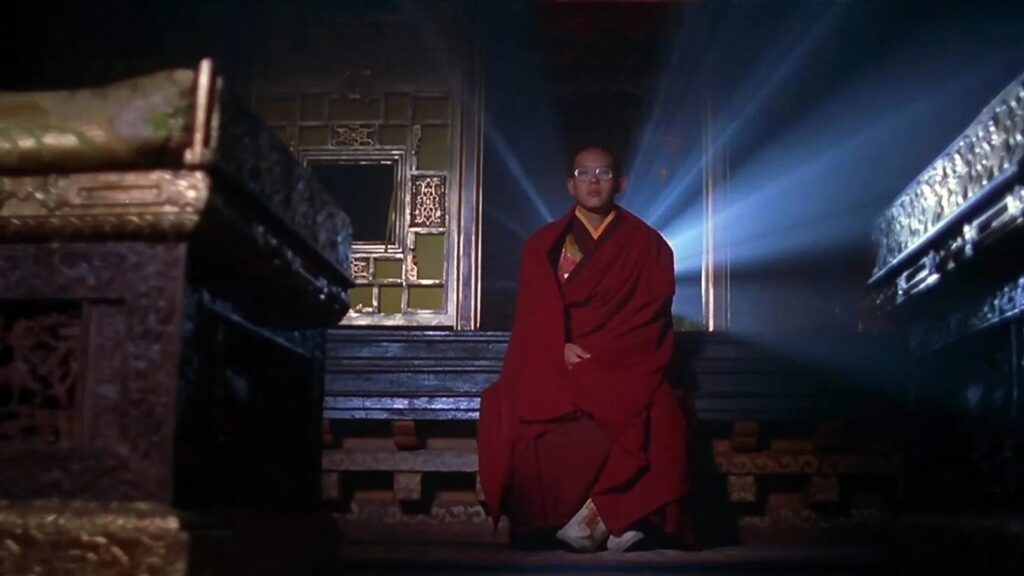
If "The Last Temptation of Christ" turned the life of the Son of God upside down, showing him as a man with passions, which caused widespread discontent among religious organizations, up to protest marches, then "Kundun" is directly opposite in concept. Although the film also outraged the public, this time in China, and permanently banned entry to the Celestial Empire for members of the film crew.
The real life of the current 14th Dalai Lama is presented in the genre of a historical, lavish biopic, sometimes overly sterile and correct towards the film's hero: from the moment of accepting chosenness in childhood to forced flight to India due to the Chinese "red" threat. Scorsese presents Kundun detachedly and somewhat coldly, not without reason.
Buddhism is not a close denomination to Martin. He is a devout Catholic. But the director tries to understand a religious movement alien to him and depict on screen the miracle of great humanism.
Buddha, along with the eponymous faith, is associated in his mind with his mother, Catherine Scorsese, the main and beloved person in his life, who appeared in bright cameos in almost every work of her son. The film's credits are dedicated to her. The woman died during the filming of the movie.
Partly for this reason, the director's gaze depicts the Dalai Lama not as a living character with inner demons, but as a real deity, miraculously captured in the camera lens. Scorsese cannot contain his reverence for this figure and sometimes turns the film into a talented madrigal.
But the reverence and uneven authorial position towards the personality of the real Kundun are considerably leveled by the cinematography of the great Roger Deakins. The main cinematographer of the Coen brothers' masterpieces saturates the film's fabric with the splendor of color and light.
Chinese folk rituals, majestic and boundless snowy landscapes of ancient Tibet, the dreamlike early years of the new Buddha, who did not yet know his destiny. And at the head of the table are all shades of red: the color of the flags of the advancing Chinese empire, the fury and anger of peaceful inhabitants, and the blood of hundreds of innocently killed monks in one of the film's main, simultaneously mesmerizing and terrifying scenes.
"Kundun" is a ceremonial portrait of the new reincarnation of Buddha, executed professionally and technically accurately. It is flooded with the colors of the Dalai Lama's life and does not skimp on the richness of the image, making it one of the most beautiful films of Scorsese's entire career. But in terms of story, in some moments it crumbles like an ancient sand mandala, leaving only memories of possible greatness.
"New York, New York"
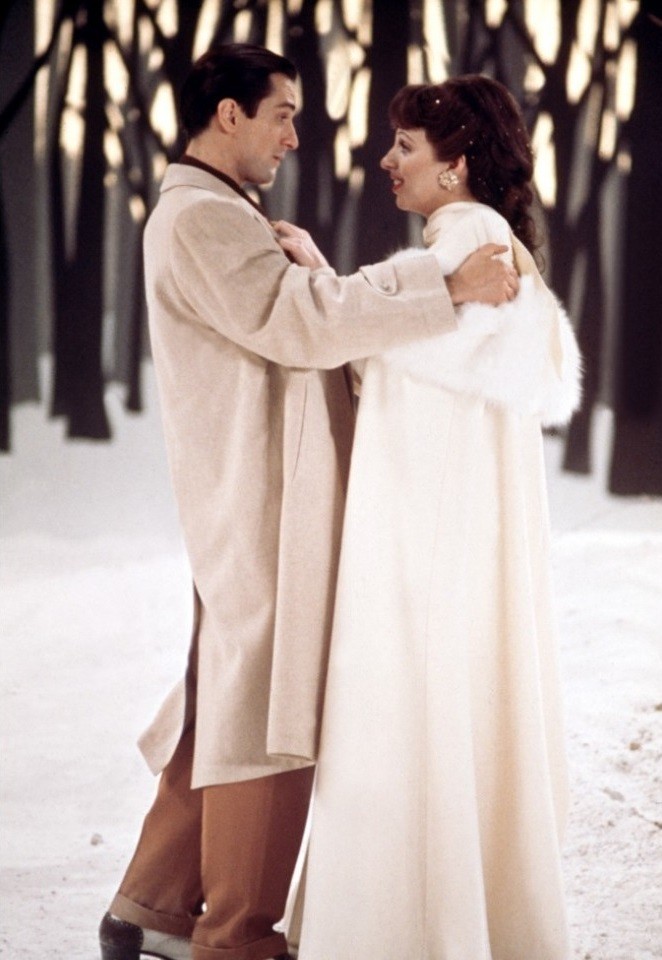
"La La Land" should move over, because this classic 1977 film anticipates the famous movie by Damien Chazelle.
Such a revolutionary approach was appreciated by neither audiences nor critics. Many considered the film a direct imitation of the iconic "Cabaret" by Bob Fosse and were disappointed that Scorsese after "Taxi Driver" turned the wrong way.
At the end of the war, in the rhythms of jazz, two people meet. They don't get along, but soon become a couple and a talented creative union. A young saxophonist and a young singer will go through fire and water, but they will not escape the test of brass pipes.
"New York, New York" on one hand is flesh of the flesh, a rich and bright homage to all classic Hollywood pre-war and post-war musicals, especially "Singin' in the Rain" by Stanley Donen, "Funny Girl" by William Wyler, and "An American in Paris" by Vincente Minnelli.
The colorful style and special method of shooting are recreated by Scorsese with cinephile zeal. Giant studio sets, doll-like snow-covered houses, Wes Anderson-like symmetry, and an atmosphere of a holiday that is always with you leave no doubt that this is a tribute to the main American genre.
For greater authenticity, the main female role was given to Liza Minnelli — a great singer and extraordinary actress, daughter of Hollywood classic Vincente Minnelli and Judy Garland, the canonical performer of Dorothy from "The Wizard of Oz." And Robert De Niro was sent for three months to the orchestra of the famous Benny Goodman to learn the basics of playing the saxophone.
But Scorsese would not be himself if he did not break the rules and create one of the first anti-musicals. He disrupts the entire idyll of a world where a happy ending is a mandatory condition for life with characters that are too real for a fairy-tale genre.
They are like characters from Cassavetes' films: restless and unhappy with their actions, they split the screen into parts. And against the backdrop of their stormy real feelings, the ideal world of the musical becomes thoroughly false, a flat theatrical set that falls apart from the real truth of life.
Comments
0No comments yet.
Sign in to join the discussion.