
The adventure buddy movie “Volchok” has been released in Russian theaters. A film with elements of fist fighting and another on-screen friendship between representatives of two different classes. Does Konstantin Smirnov’s new film hold up? We figure...
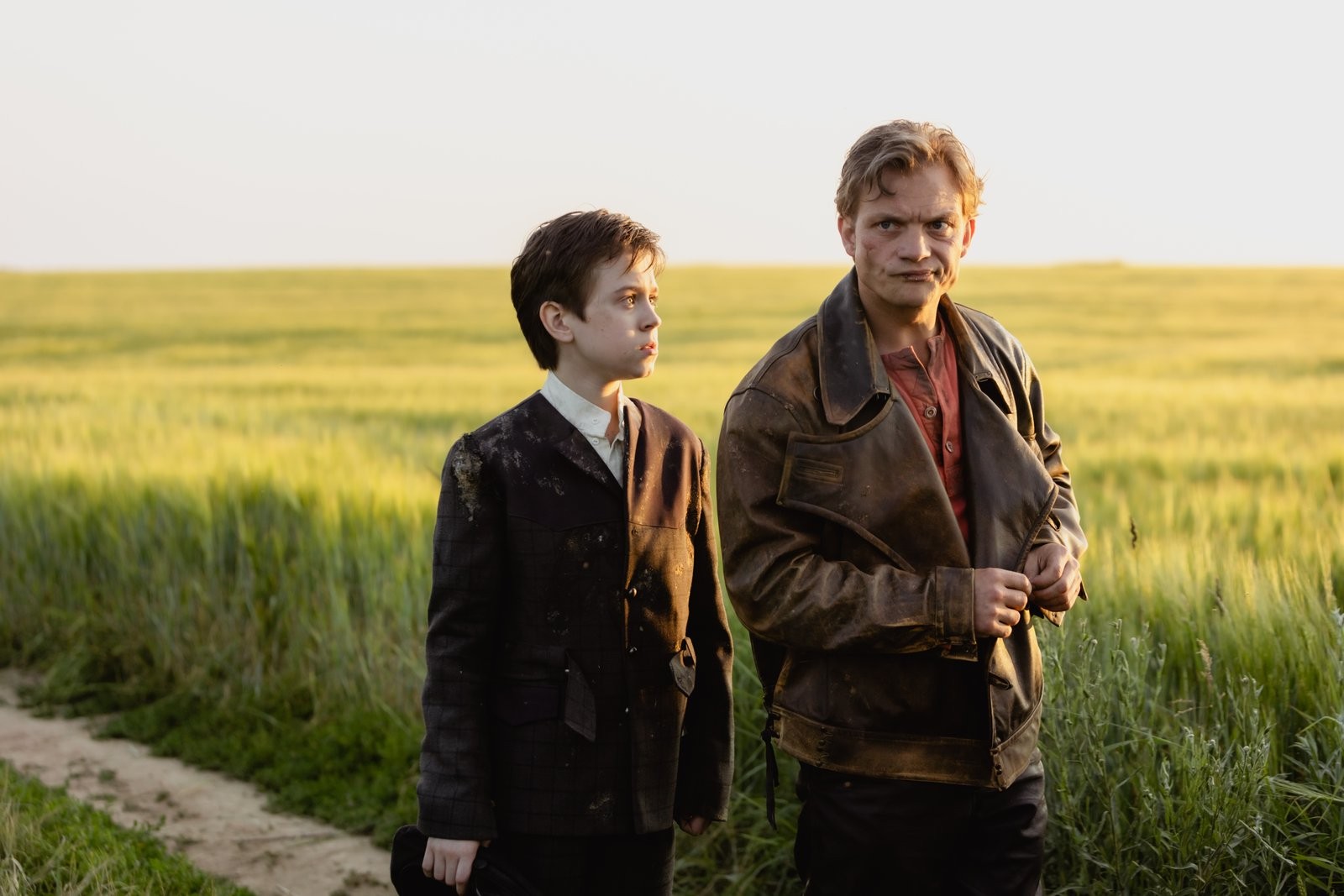
The new Russian adventure buddy movie “Volchok” hit the big screens last week and earned a pretty decent box office in its first weekend (according to data from the “Bulletin of Film Distributor” — 155 million rubles). But let’s be honest, the film achieved such serious numbers partly because it had no serious competitors in its segment during the release weekend. The film by Konstantin Smirnov (“Girls with Makarov”) tells the story of a young nobleman Vanya (Mark-Malik Yurashkin) with transparent, naive eyes, who, due to the sudden death of his father, becomes the sole owner of all his parents’ property.
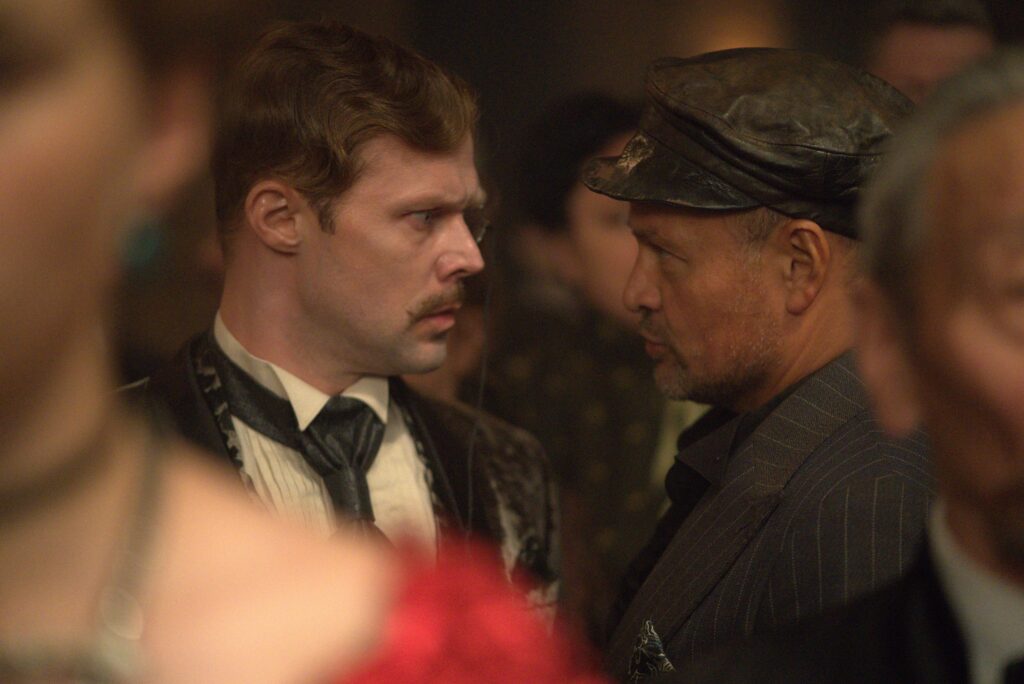
Naturally, distant relatives start flocking to such a prize, the most nimble of whom turns out to be the boy’s own uncle Vesnitsky (Danil Vorobyov) — a gambling addict who has lost everything, for whom free money could be a great way to start life anew. At the same time, the uncle looks as if he wants to get rid of the boy physically in advance; and when the boy refuses to sign the guardianship document, he even seems to feel something like relief: meaning plan B (and actually plan A) can be calmly put into action. Vesnitsky goes to Khitrovka and hires thugs with weathered faces (as always, textured but slightly stuck in their roles, Kirill Polukhin and Mikhail Evlanov).
But to make sure everything works out, the uncle of dishonest rules also recruits, just in case, the charming bounty hunter Elsa (Yulia Khlynina), who has no equal in finding people. During the first attempt to kidnap the boy, the thugs run into a street fighter nicknamed Volchok (Evgeny Tkachuk), who has just fled the ring, unwilling to lose a fixed fight and having knocked out a giant Pole. Saving the boy is a piece of cake for Volchok. And then it’s a classic of the genre: the fighter needs to hide from the wrath of his former patron, and the young aristocrat urgently needs to get to Nizhny Novgorod under the wing of his father’s loyal friend (Sergei Makovetsky). Here their interests coincide.
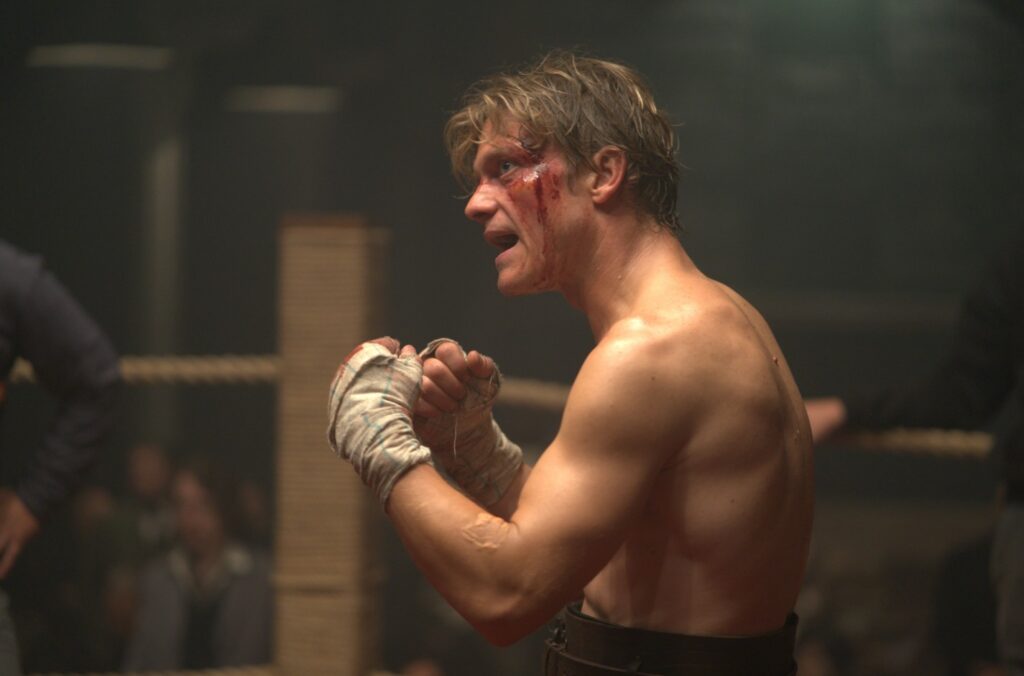
If asked what in “Volchok” can catch the eye and emotions, the answer will be obvious: Evgeny Tkachuk and his fists. The screen Volchok in this film is incredibly lucky with cameraman Stepan Beshkurov (), who films fights not as a convulsive shake, but as clear, tough, and therefore very convincing choreography. Of course, in places it strongly resembles the fights from “Snatch,” but what can you do: every creator stands on someone’s shoulders.
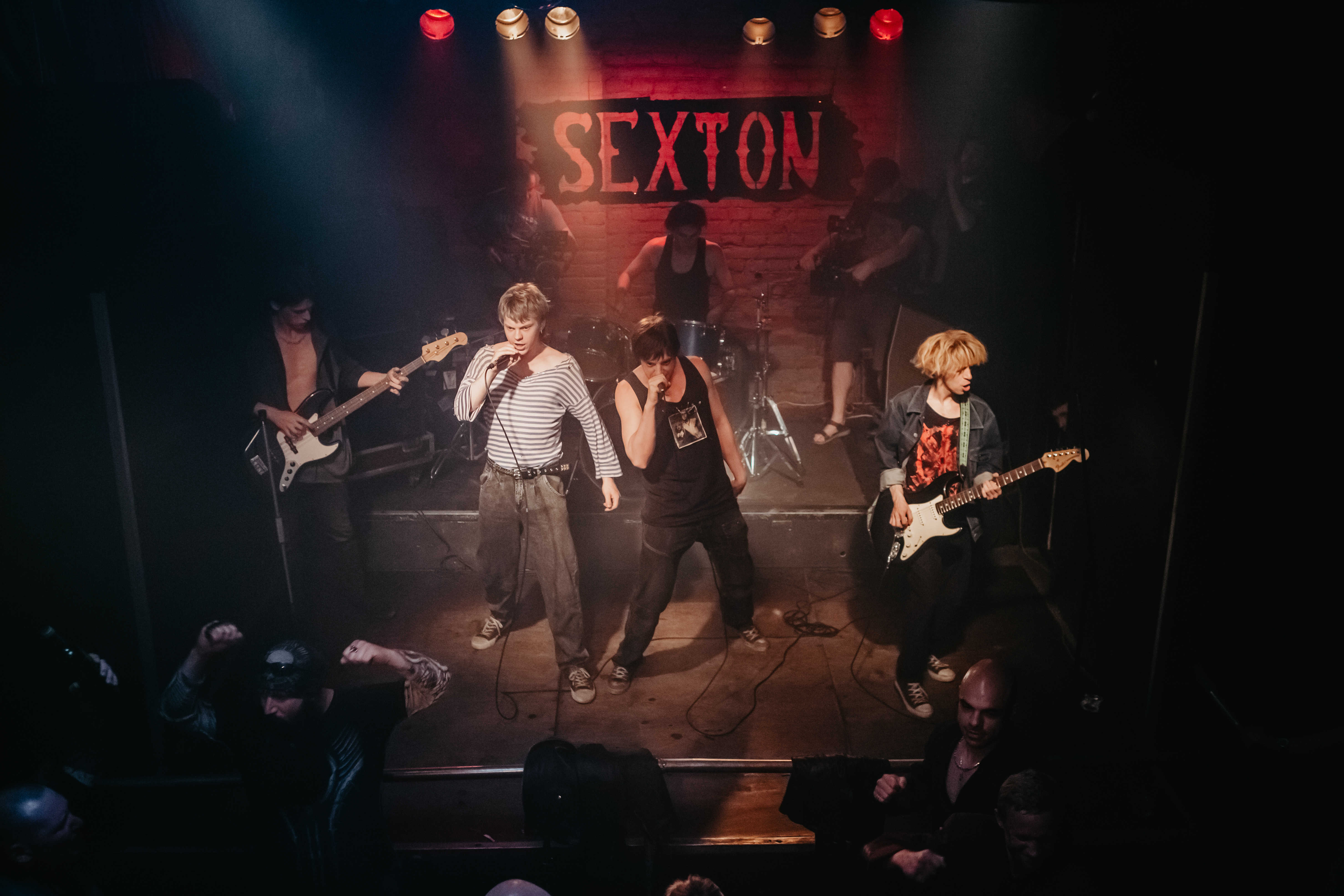
On Kinopoisk, the premiere of the first two episodes of the series about the horror-punk band “The King and the Jester” took place. About why this series is not only a bright premiere this spring, but also a unique
Open material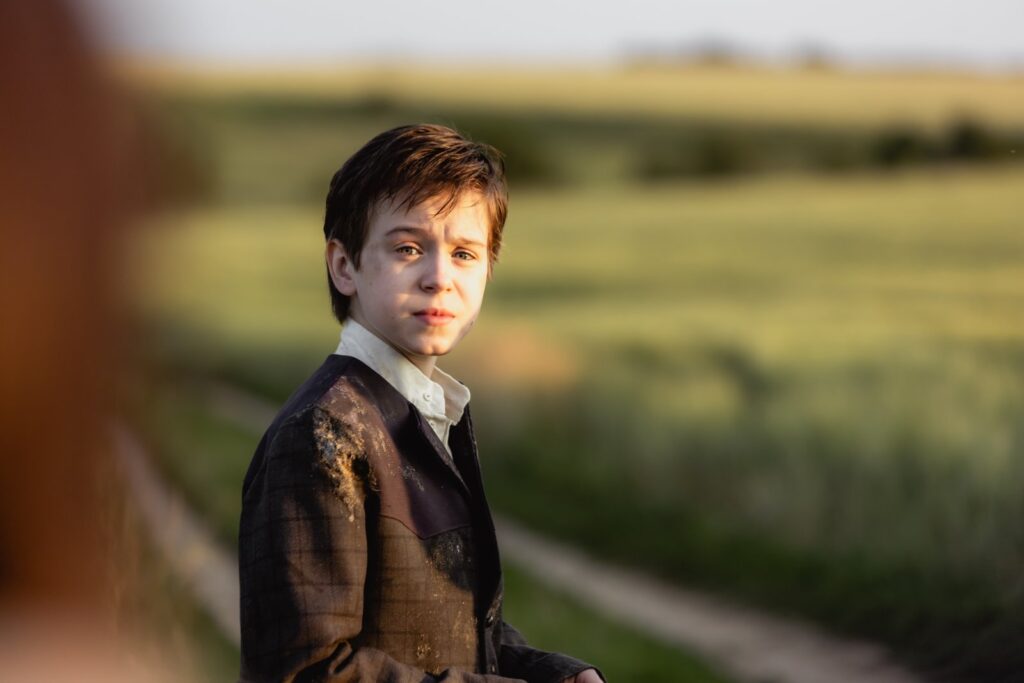
However, in Smirnov’s film, each blow of Volchok to someone else’s jaw carries not screen weight but is felt even in the cinema seat. Everything is so natural that you involuntarily start to remember when we last fought with such conviction. Perhaps only the perestroika-era “Fan” with Alexei Serebryakov comes to mind, where real karatekas worked as extras. Here it’s the same school, the same convincing movements, multiplied by Tkachuk’s excellent physical shape. Cameraman Beshkurov handles the camera with intelligence and tact: he knows exactly when a close-up is needed, when a wide shot, and when a risky somersault can be done. Everything turns out very picturesque, and Tkachuk justly steals all the attention, turning every skirmish into a mini-attraction.
But when the roar of fights subsides and the actual “buddy movie” begins (a story about the friendship of two opposites), the film noticeably runs out of steam. The plot, having taken a decent starting speed, by the middle begins to rapidly lose pace and brave composure under the weight of its own clichés and the need to fit into the runtime. Characters change decisions with kaleidoscopic speed: one moment Volchok fiercely shuns a toothbrush as a symbol of hated progress, and the next he clumsily but voluntarily scrubs his teeth with it. How did he come to such a decision? No time to explain, because we still need to make it to the final chase.
Sometimes characters change their tune (not literally) on the fly, and at times they even disappear from the screen mid-sentence without achieving their goal. The relationship between the brutal fighter and the young master develops along a well-worn track, and the finale drags on painfully, clearly hinting at the possibility of a sequel. At the same time, the film’s characters (but more often again Volchok) occasionally make quite successful jokes, leveling the overall balance of the film, which starts to wobble slightly after two-thirds of the runtime.
However, despite all these rough edges, “Volchok” works exactly as intended: as an unpretentious but technically crafted street circus attraction. Which contains a simple and crisp idea that sometimes the strongest alliances are born not in the silence of offices, but on a dusty road, where a punch can be more eloquent than any oath.
Comments
0No comments yet.
Sign in to join the discussion.