

The adaptation of John Green's novel about OCD turned out to be surprisingly honest. Isabela Merced plays a teenager whose head is a real battlefield. Review of 'Turtles All the Way Down' – a film that doesn't promise a magical cure.
Remember how everyone cried over The Fault in Our Stars? That story was written by American John Green. In the novel Turtles All the Way Down, he makes teenagers cry again — but this time not with a story of lovers with cancer, but with a tale of a girl whose main enemy lives inside her own skull. Director Hannah Marks adapted Green's 2017 novel, where the author openly spoke about obsessive-compulsive disorder. And you know what? It turned out to be far more honest than you'd expect from yet another young adult melodrama.
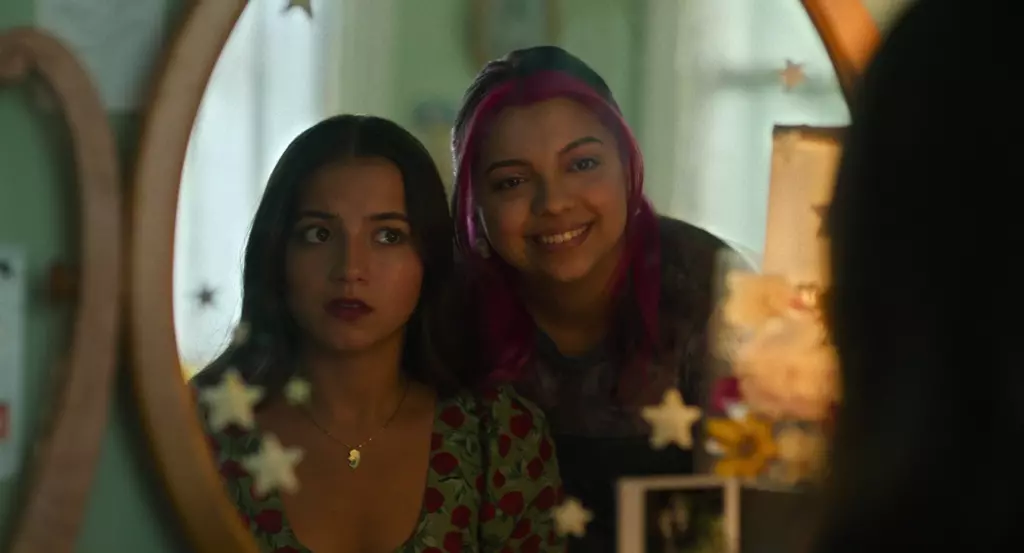
Seventeen-year-old Aza Holmes (Isabela Merced) lives in a constant war with her thoughts. Her OCD manifests not as cute perfectionism from glossy TikTok videos, but as a real hell: intrusive thoughts about bacteria, infections, and the microbiome that give her no peace. She compulsively picks at a wound on her finger, drinks hand sanitizer, and literally drowns in spirals of anxiety. Meanwhile, her best friend Daisy (Cree Cicchino) hatches a detective adventure: she wants to find missing billionaire Russell Pickett and claim the hundred-thousand-dollar reward. The plan leads them to the mansion of the billionaire's son Davis (Felix Mallard), whom Aza once met at a camp for grieving children (yes, that exists).
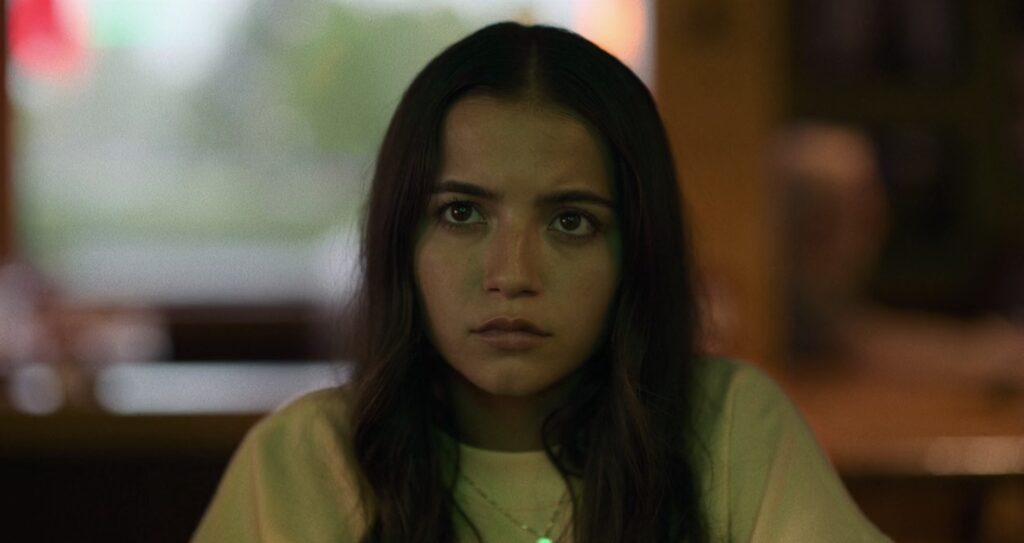
The film's main strength is that Marks does not turn OCD into a romanticized quirk or a plot twist. The director finds a visual language to convey Aza's inner chaos: quick cuts, pulsating static noise in the sound design, intrusive shots of multiplying bacteria. This works precisely because it doesn't explain the problem to the viewer bluntly, but immerses them in the heroine's subjective experience. Therapy scenes with the psychiatrist (Purnaa Jagannathan) are devoid of didacticism — the doctor tries to help, Aza resists, and that's normal. The film doesn't promise a magical cure, doesn't end with a victory over the illness, and in this lies its rare courage for the genre.
Isabela Merced carries the film with a conviction that many experienced actors would envy. She doesn't play a 'girl with a disorder,' but a living person trying to exist despite her own brain constantly sabotaging her life. Particularly poignant are the moments when Aza realizes how her OCD affects those around her — the fight scene with Daisy hits the mark, showing that friendship with someone with a mental disorder requires patience (from both sides) and mutual understanding.
The problem is that everything else around the OCD story works at half strength. The detective plotline about the missing billionaire feels like an awkward attempt to add action where it's not needed — it appears, disappears, and resolves so mundanely that you wonder: why bother at all?
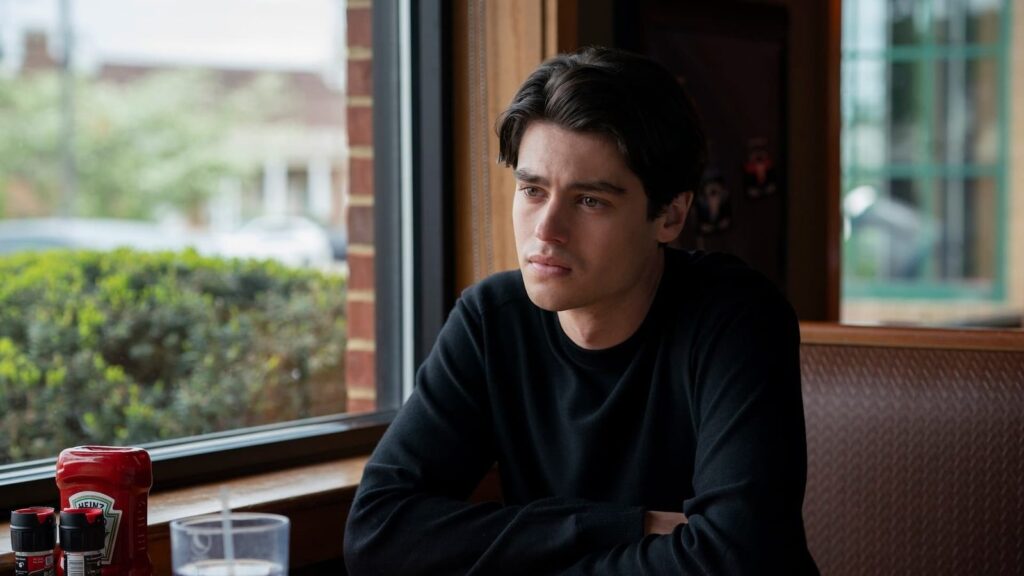
The romantic story of Aza and Davis resembles a typical fairy tale about a poor girl and a rich heir with a private jet. Felix Mallard tries, but his character is too perfect, too understanding — a cardboard prince from 2000s movies for a heroine who deserves a more dimensional partner.
But the friendship between Aza and Daisy is what makes it worth watching. Cree Cicchino creates a bright, energetic friend who writes Star Wars fanfiction, works at a children's entertainment center, and yet remains real, not just a function in the main character's plot. Their joint scenes in the car listening to Outkast, trips to Applebee's, and conversations about nothing — that's where the real heart of the film lies.
Turtles All the Way Down has become the highest-rated John Green adaptation among critics, and rightly so. Hannah Marks made a film that isn't ashamed of its nature but takes mental health seriously. Yes, the romantic and detective lines falter, the dialogue sometimes sounds too rehearsed, but when the film focuses on Aza's inner world — it works flawlessly. This is a movie for those who themselves struggle with anxiety disorders and will finally see something resembling their experience on screen, and for those who want to understand what it's like to live with OCD when your head turns into a labyrinth with no exit. Not a masterpiece, but an important statement.
Comments
0No comments yet.
Sign in to join the discussion.