

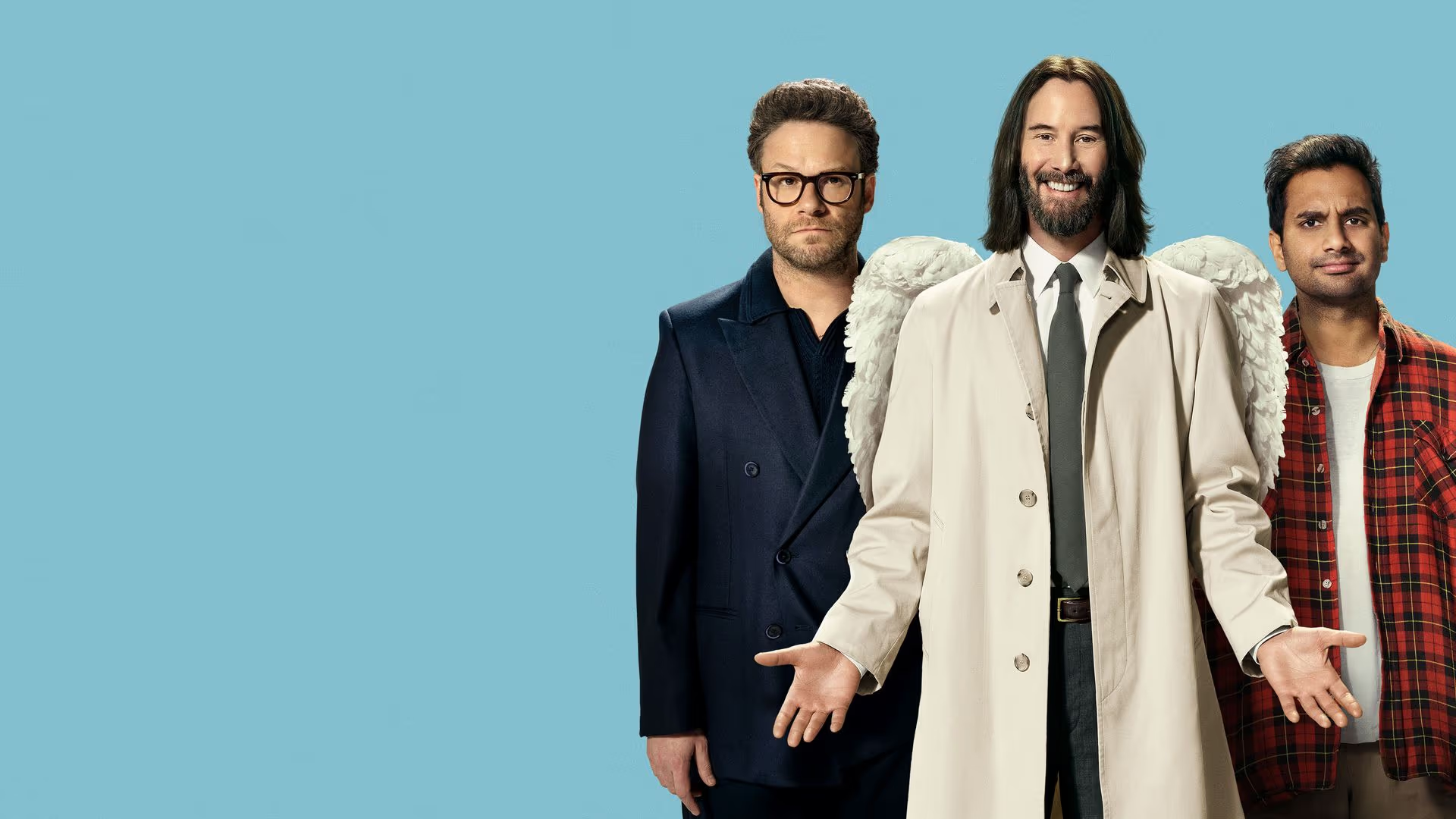
In honor of the release of the comedy 'The Luckiest Man in America,' where one of the main characters is an angel, we recall notable films and TV series about mythical celestial beings: from 'Constantine' to 'Supernatural.'
Keanu Reeves is once again playing in a story about angels — and that's a good reason to remember that celestial beings in cinema have long ceased to be exclusively chubby-cheeked cherubs with harps. In the recently debuted online comedy 'The Luckiest Man in America,' the actor portrays a clumsy heavenly messenger who tries to prove to a poor handyman that money doesn't solve problems by swapping his body with a rich man. Spoiler: the plan fails, and the angel himself loses his wings. It sounds like the perfect way to remind us that angelic themes in cinema always balance between the sublime and the absurd, between philosophy and farce.
'Constantine' (2005)
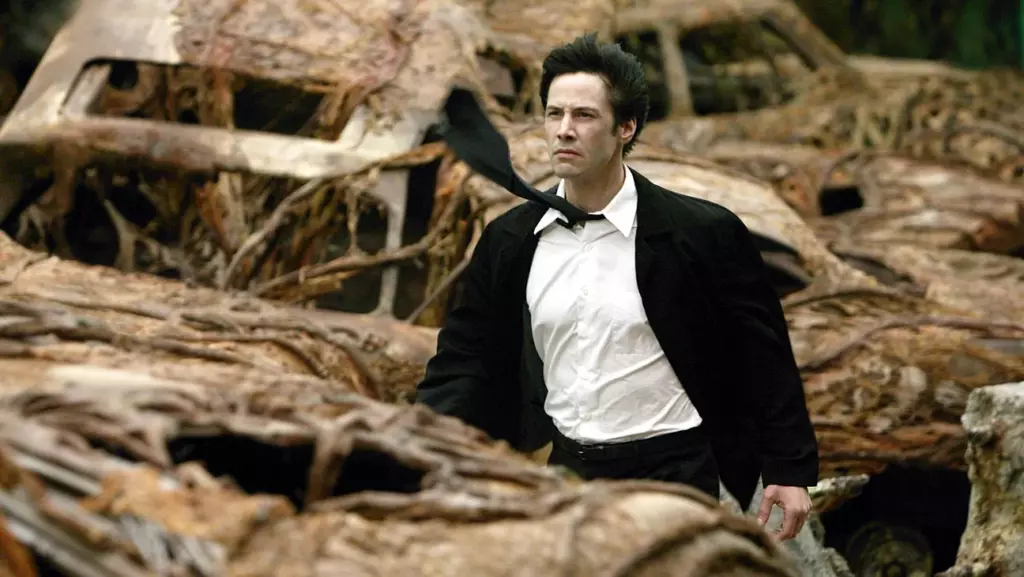
Before becoming a clumsy heavenly helper in 'The Luckiest Man in America,' Keanu Reeves had already dealt with angelic-demonic relationships in 'Constantine.' Here he plays the cynical exorcist John Constantine, who tries to earn his place in heaven by exorcising demons back to hell. When LAPD detective Angela Dodson asks him to investigate the mysterious death of her twin sister, Constantine finds himself drawn into a conspiracy that could lead to the apocalypse.
The film portrays Los Angeles as a theater of war between heaven and hell, where angels are as two-faced as demons. Tilda Swinton as the androgynous archangel Gabriel creates one of the most memorable portrayals of a heavenly messenger in cinema — cold, calculating, and frighteningly indifferent to human suffering.
In the end, we get an atmospheric noir with horror elements, where holy water is used as a weapon, and the concept of divine justice turns out to be quite relative.
'Dogma' (1999)
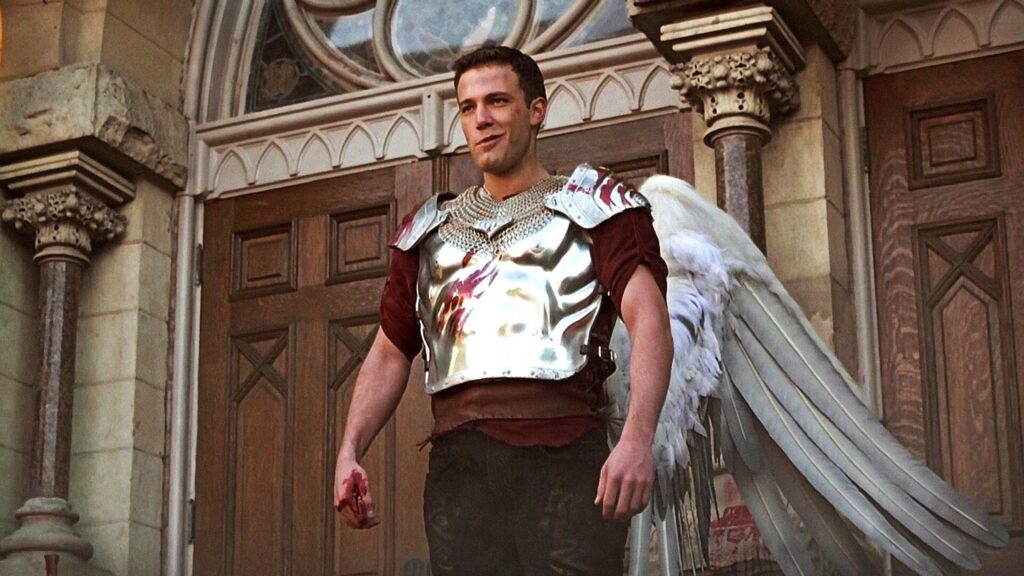
Kevin Smith decided that the best way to discuss Catholicism was to make a comedy about two fallen angels who find a loophole in church dogma. Bartleby and Loki, played by Ben Affleck and Matt Damon, discover they can return to heaven through a re-consecrated church in New Jersey. The catch? If they succeed, it will prove God wrong, and the entire universe will cease to exist.
To stop the apocalypse, they enlist an abortion clinic worker Bethany, prophets Jay and Silent Bob, the thirteenth apostle, and a stripper muse. The film simultaneously mocks organized religion and professes its love for it, turning theological debates into a witty adventure. Alan Rickman plays the sarcastic seraph Metatron, who materializes in the heroine's bedroom in a pillar of fire and then complains that people keep putting him out with a fire extinguisher.
This is that rare case where religious satire turns out to be both daring and surprisingly heartfelt.
'City of Angels' (1998)
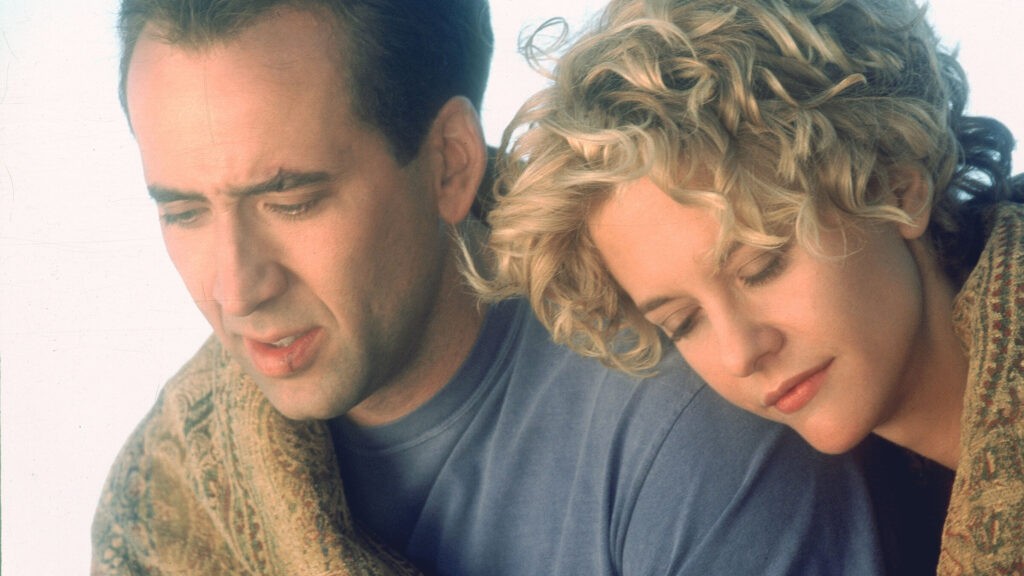
Nicolas Cage in a long black coat wanders through Los Angeles invisible to people, observing their lives and comforting the dying. The angel named Seth has been doing his job for millennia until he meets cardiothoracic surgeon Maggie, played by Meg Ryan — and she sees him. This encounter makes Seth wonder what it's like to have a physical body, to feel touch, to drink coffee, to eat pears.
A peculiar American remake of Wim Wenders' legendary 'Wings of Desire,' it turns a philosophical meditation into a melodrama, but does so with such visual elegance that it's hard to fault. Cage plays angelic innocence with surprising sincerity, turning Seth into a being who literally learns to be human. Dennis Franz as Maggie's patient adds an unexpected twist to the story, hinting that the path from heavenly to earthly is a two-way street.
The film asks an uncomfortable question: is eternity worth one moment of real life?
'Wings of Desire' (1987)
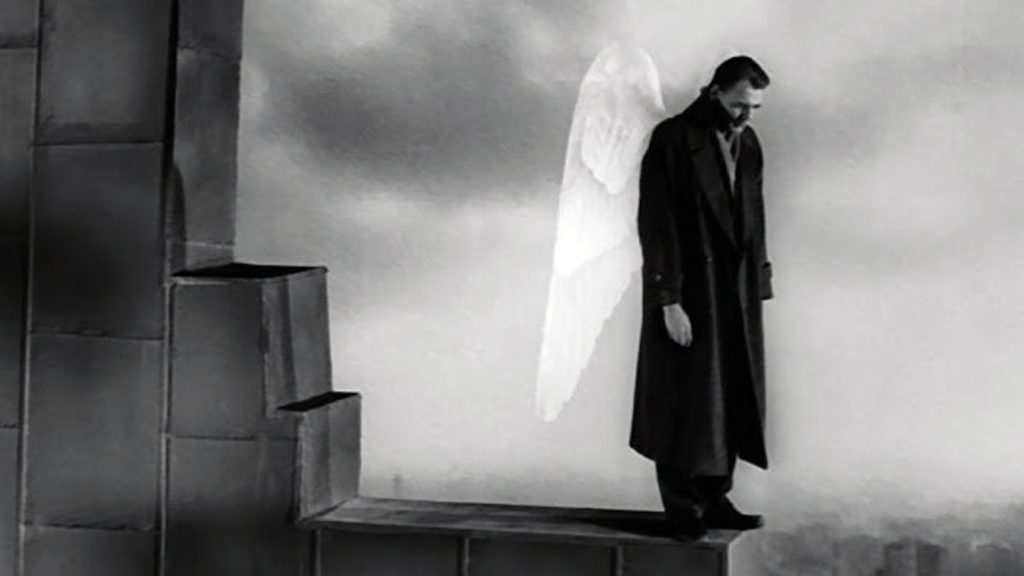
Wim Wenders created a poetic meditation on immortality, loneliness, and the beauty of the ordinary. Two angels, Damiel and Cassiel, glide through the wall-divided Berlin in long coats, listening to people's thoughts and offering invisible comfort. They cannot interfere, only observe — until Damiel falls in love with a trapeze artist Marion and decides to do the impossible: become mortal.
The film is shot on black-and-white film, symbolizing the angelic perception of the world, but when Damiel gains humanity, the image bursts into color. Peter Falk appears as himself and explains to the former angel the simple joys of earthly existence — the taste of coffee, the smell of cigarettes. And there are plenty of such creative and heartfelt solutions in the film.
This is one of those rare films where every frame can be printed and hung on the wall, and the philosophical reflections don't feel pretentious. The film won the Best Director award at Cannes and became a cult classic of arthouse cinema.
'The Family Man' (2000)
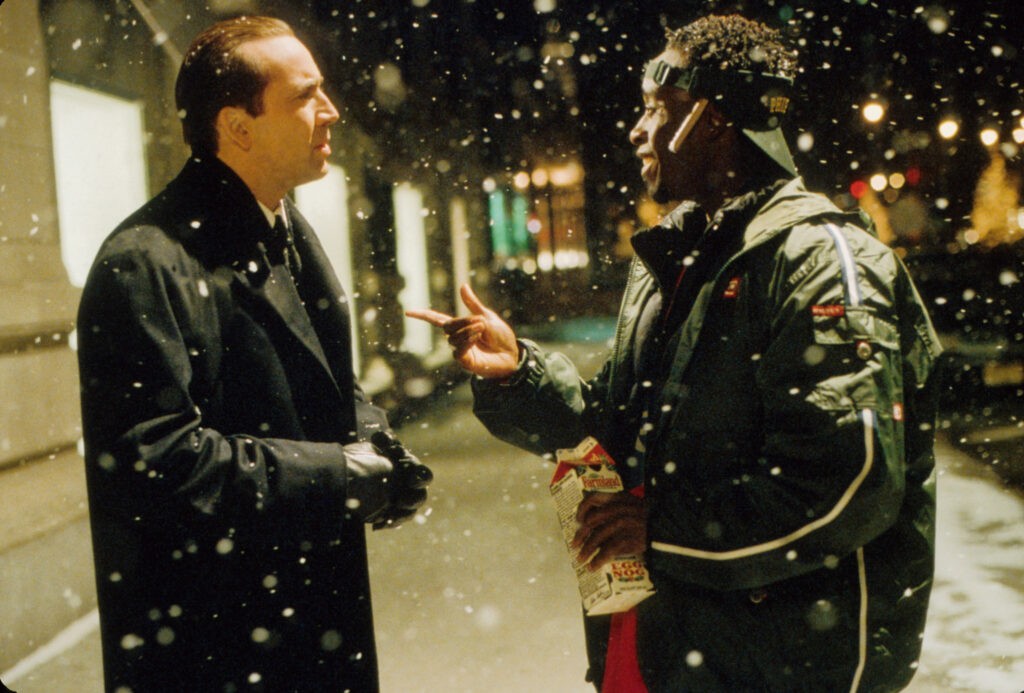
Nicolas Cage again plays with angels, but this time he doesn't turn into a mortal; he gets a lesson from them. Jack Campbell is a successful Wall Street businessman who has everything: money, career, penthouse. But one day he wakes up in an alternate reality where he is married to his former sweetheart, lives in the suburbs, sells tires, and raises two children. This is a 'glimpse' — a chance to see what his life could have been if he had made a different choice.
The film is a Christmas tale in the spirit of 'It's a Wonderful Life,' where an angel doesn't prevent suicide but shows that happiness isn't measured by a bank account. Cage masterfully plays the transformation of a cynical careerist into a person who discovers the value of simple joys — family dinners, children's hugs, true love. Don Cheadle as the mysterious intermediary adds magical realism to the story without descending into saccharine.
This is a warm, slightly sentimental, but surprisingly sincere story about how success and happiness are not always the same thing.
'Legion' (2010)
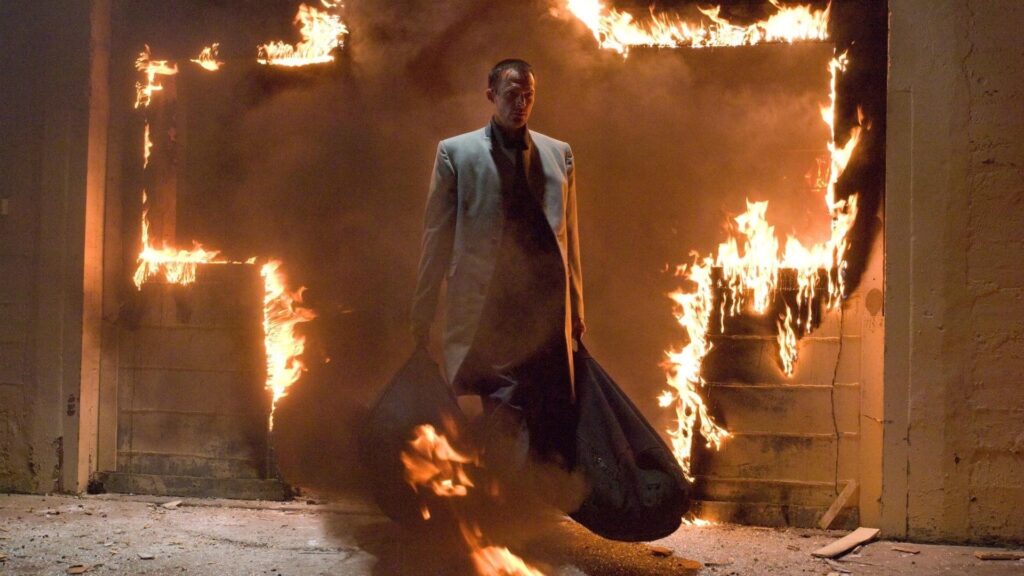
God has lost faith in humanity and decides to bring about the apocalypse. But the archangel Michael (Paul Bettany) refuses to carry out the order, loses his wings, and descends to Earth to protect a pregnant waitress whose child is humanity's last hope. The events unfold in a roadside diner in the desert, where a handful of people try to survive the onslaught of possessed creatures sent by heaven.
This is that rare film where angels are real warriors, armed to the teeth and ready to unleash bloody mayhem. Bettany plays the fallen angel as an action hero who traded divine obedience for human stubbornness. The film doesn't try to be philosophical — it's a hard-hitting action movie with horror elements.
If 'Constantine' is noir with angels, then 'Legion' is a siege in the spirit of John Carpenter, only instead of zombies, it's the heavenly host.
'Lucifer' (2016-2021)
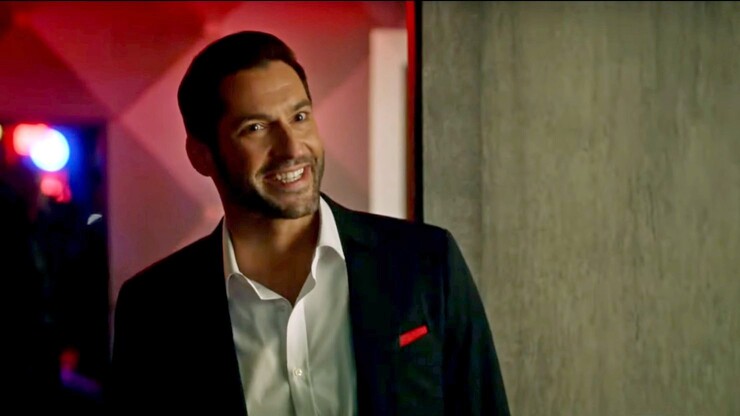
What if the Devil got tired of ruling hell, moved to Los Angeles, opened a nightclub, and became a police consultant? Tom Ellis as Lucifer Morningstar turns this absurd premise into a six-season odyssey about free will, family trauma, and redemption. Lucifer has a superpower — he can draw out people's hidden desires, making him an ideal detective (and a source of comedic moments).
The series is populated with a whole pantheon of angels: older brother Amenadiel, who initially tries to bring Lucifer back to hell, twin brother Michael with his own complexes, and many other winged relatives with divine powers and very human problems. Particularly good is D. B. Woodside as Amenadiel, who becomes the father of the first half-angel, half-human in history.
The show starts as a procedural in the style of 'monster of the week,' but gradually unfolds into a large-scale family drama about what it means to be worthy of love — even if you are literally the Lord of Hell.
'Good Omens' (2019-)
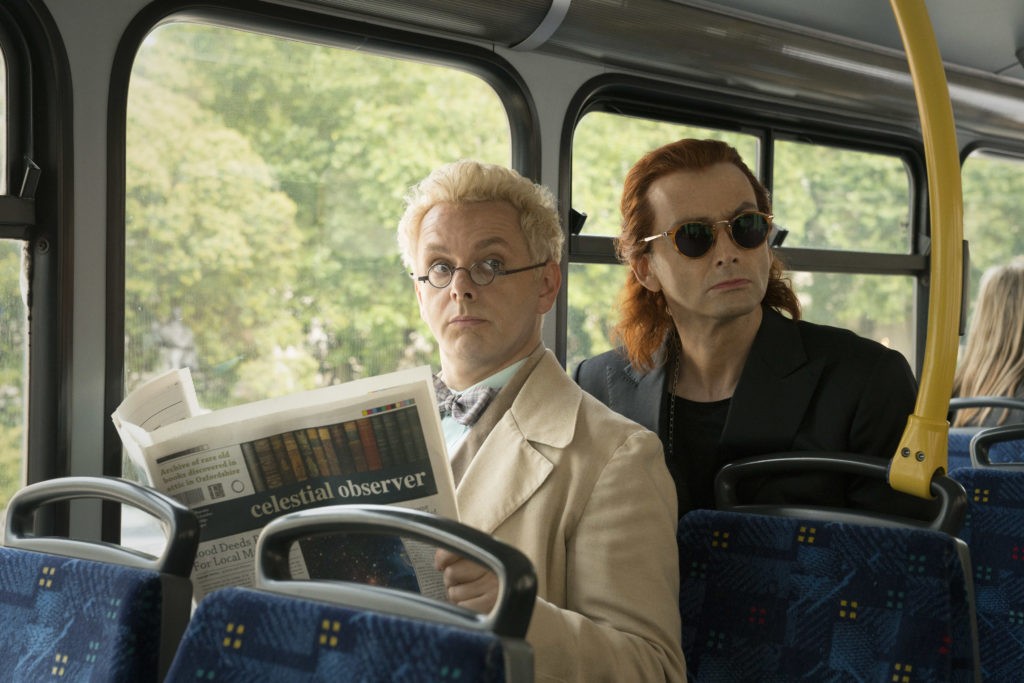
Neil Gaiman and Terry Pratchett presented the apocalypse as a bureaucratic mess, where an angel and a demon, too accustomed to earthly life, team up to prevent the end of the world. Aziraphale (Michael Sheen) is a pedantic angel and antique book dealer, while Crowley (David Tennant) is a hedonistic demon who loves fast cars. Over millennia, they have become friends, and when Armageddon begins due to a mix-up with the Antichrist baby, they decide that Earth is too good to destroy.
The series balances between satire on religious bureaucracy and a sincere story about friendship that matters more than orders from above (or below). The chemistry between Sheen and Tennant makes their duo the show's main asset — they argue about Queen's music, save the world, and demonstrate that morality doesn't depend on which side you're originally on.
Although the third season will consist of only one episode after the scandal with Gaiman, the first two seasons are a delightful mix of British humor and apocalyptic absurdity.
'Supernatural' (2005-2020)
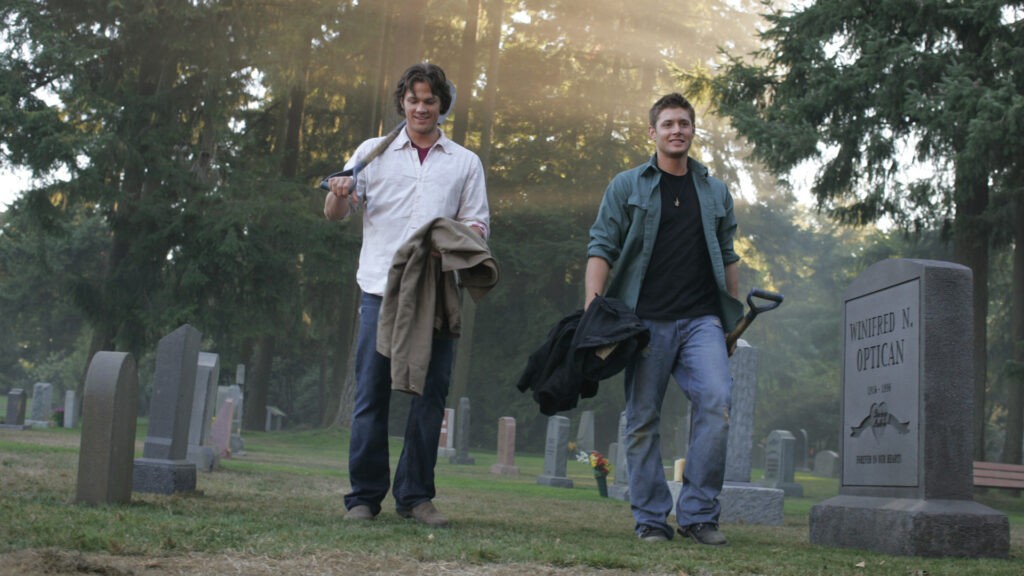
Over 15 seasons, the Winchester brothers killed so many monsters that encountering angels seemed inevitable. In the fourth season, Castiel (Misha Collins) appears — an angel who resurrects Dean from hell and becomes a constant companion to the brothers in their hunt for the supernatural. Initially, Castiel is a mysterious and powerful being in a rumpled trench coat, speaking in riddles, but over time he becomes almost human, learning about free will and friendship.
The series portrays angels not as benevolent protectors, but as soldiers of the heavenly army with their own intrigues, betrayals, and civil wars. Castiel fights demons, other angels, and even himself, gradually moving away from heavenly dogma. His arc — from a soulless executor of orders to a being capable of sacrifice for friends — is one of the best in the show.
If you're ready for a long-term relationship with a series, 'Supernatural' offers the most detailed exploration of angelic mythology on modern television.
'Angels in America' (2003)
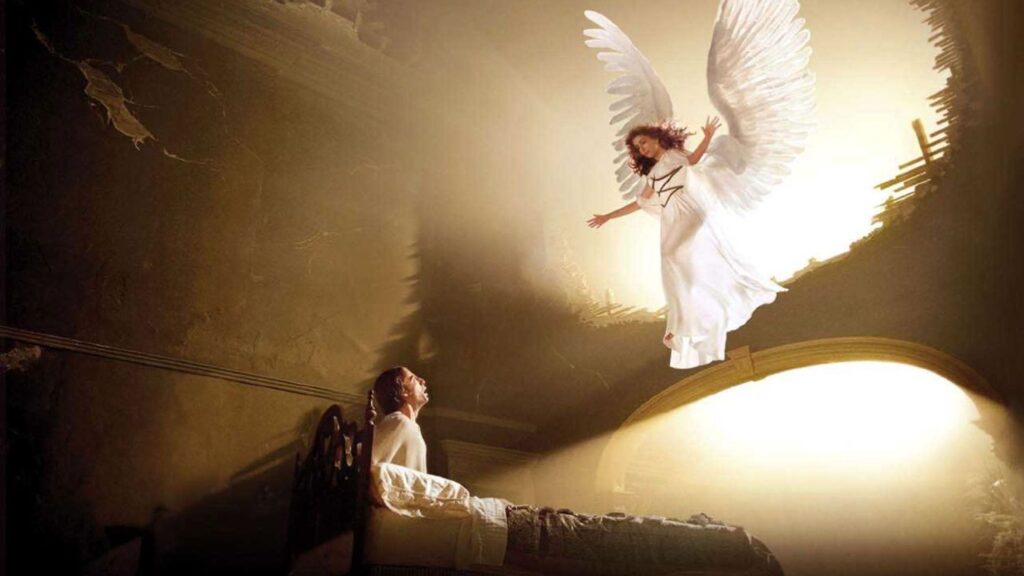
Mike Nichols directed a six-episode miniseries for HBO based on Tony Kushner's Pulitzer Prize-winning play, which became a television event and a cultural manifesto. The action takes place in New York City in 1985, at the peak of the AIDS epidemic and the conservative era of Reagan. At the center are several intertwined fates: gay antiques dealer Prior Walter falls ill with AIDS, his partner Louis abandons him out of fear; young Mormon lawyer Joe Pitt hides his homosexuality from his drug-addicted wife Harper; real historical figure Roy Cohn — an influential right-wing lawyer (mentor of young Trump) — dies of AIDS but refuses to acknowledge the diagnosis. Prior begins to be visited by a fiery angel, proclaiming him a prophet and informing him that God has left heaven.
'Angels in America' is an epic drama that uses fantastical elements to talk about real tragedies. Meryl Streep plays several roles, including Joe's mother, the ghost of Ethel Rosenberg, and one of the angel's manifestations. Al Pacino creates a terrifying portrait of the corrupt Roy Cohn — a man who used connections to obtain the experimental drug AZT, which was unavailable to most of the dying. Emma Thompson embodies the Angel of America — a majestic but weary being who begs Prior to stop human progress so that God will return to heaven. Prior refuses: he chooses life and struggle, despite illness and pain.
The series broke the record for the most Emmys for a miniseries (11 awards) and became the first show to win all major categories. But most importantly, it showed that television is capable of a large-scale statement about politics, faith, sexuality, and death without simplifications or compromises. It's a conversation about how society abandons its people, how power corrupts, and how hope survives even when angels command surrender.
From heavenly bureaucrats to fallen warriors, from romantic melodramas to bloody action films — angels in cinema turn out to be incredibly diverse. 'The Luckiest Man in America' by Aziz Ansari with the clumsy Keanu Reeves fits into this tradition, reminding us that even celestial beings can mess up. And perhaps that is their main appeal — they make mistakes, doubt, fall in love, and show that the path from the divine to the human is shorter than it seems.
Comments
0No comments yet.
Sign in to join the discussion.