
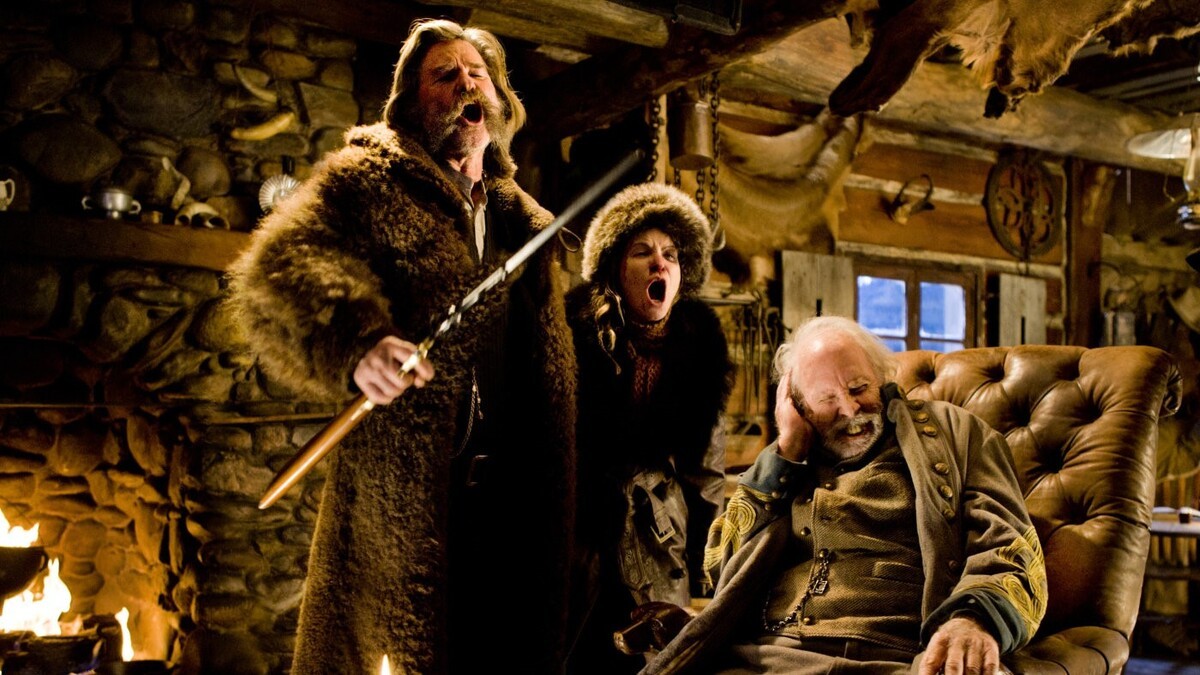
Quentin Tarantino's 'The Hateful Eight' celebrates its anniversary. In honor of this, we invite you to recall how the film was created, what difficulties it went through, and why it divided the director's fans into two camps.
After that, Tarantino fans expected 'The Hateful Eight' to achieve similar success. And the fact that the director once again decided to make a western, only this time not a hot and sultry one, but a snowy one that chills you to the bone, added to the interest. Despite the film containing the master's starter pack: dirt, blood, and dialogue, 'The Hateful Eight' turned out to be different. Not everyone expected to see a theater at a Tarantino film screening.
Classics from Robert Rodriguez, a three-time Oscar winner, a vampire ballerina, and an entire settlement of ghouls. We've put together a selection of dramas and horrors that, with their atmosphere,
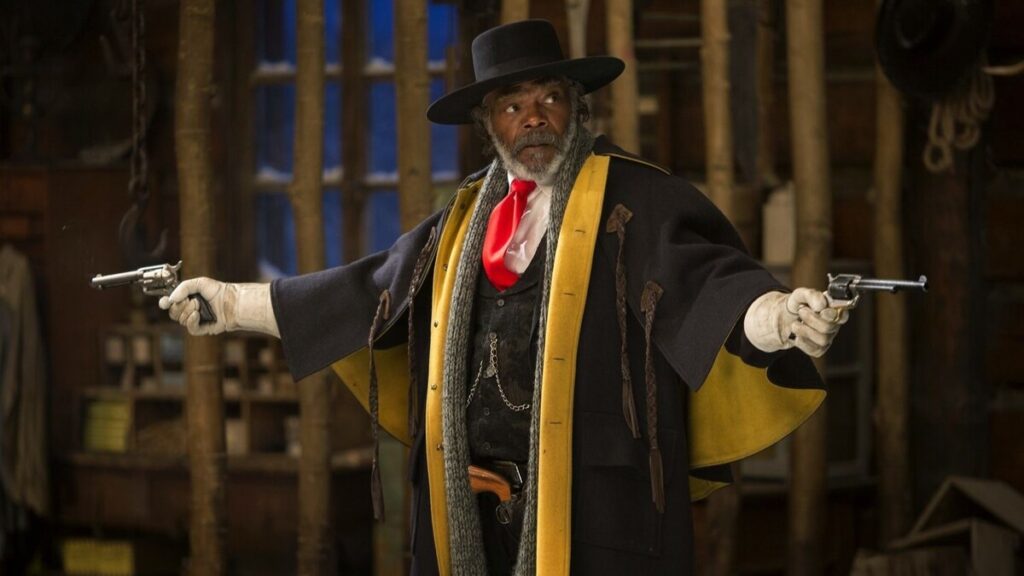
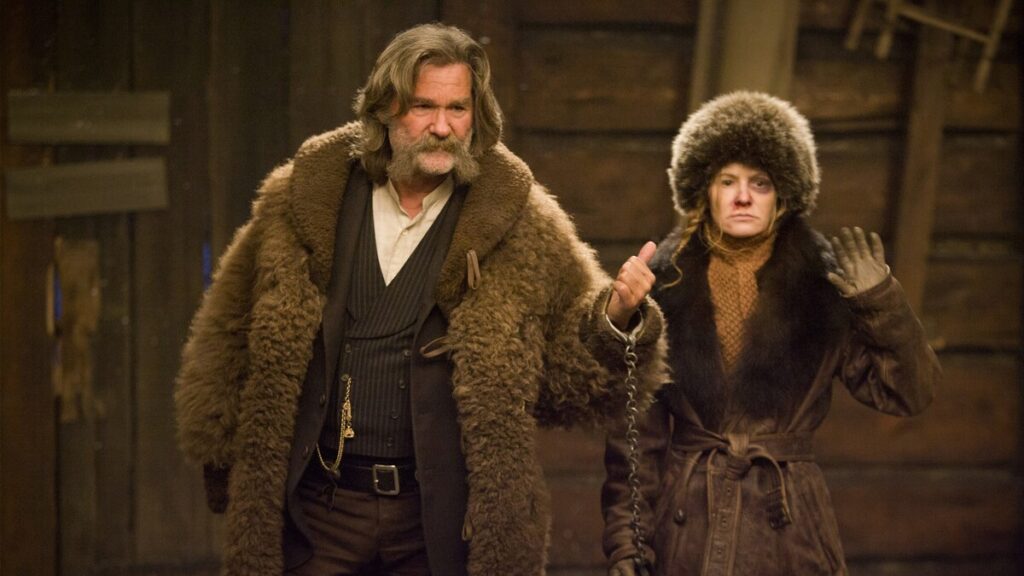
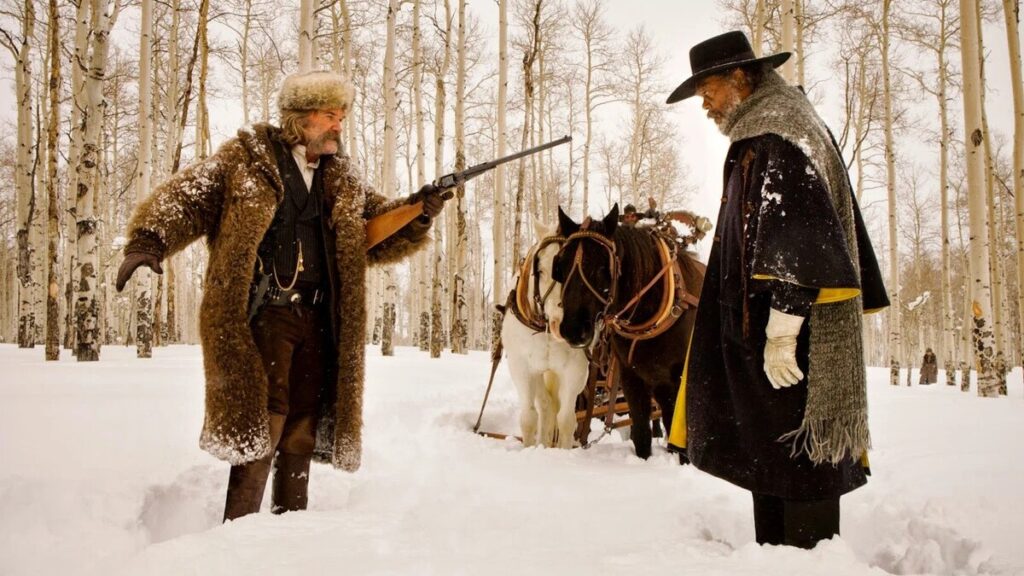
Open materialThe Civil War had been over for several years. In the snowy mountains of Wyoming, bounty hunter John Ruth (Kurt Russell) is transporting outlaw Daisy Domergue (Jennifer Jason Leigh) to Red Rock for execution. Along the way, they meet two others: a cutthroat and former Union Major Marquis Warren (Samuel L. Jackson) and the new sheriff of the town, Chris Mannix (Walton Goggins). All are heading to Red Rock. But a blizzard is on their heels, so the dubious quartet has to stop at Minnie's Haberdashery. Instead of the owner, they encounter strangers with whom they must wait out the storm and try not to kill each other (or murder each other?).
Creation, Difficulties, and More Difficulties
'The Hateful Eight' was announced in 2013. At that time, he stated that he would be making a western, but it would have nothing to do with his previous film 'Django Unchained'. A year later, the film got its title. The director had loved westerns since childhood, so inspiration came from sixties TV series: 'Bonanza', 'The Virginian', and 'The High Chaparral'.
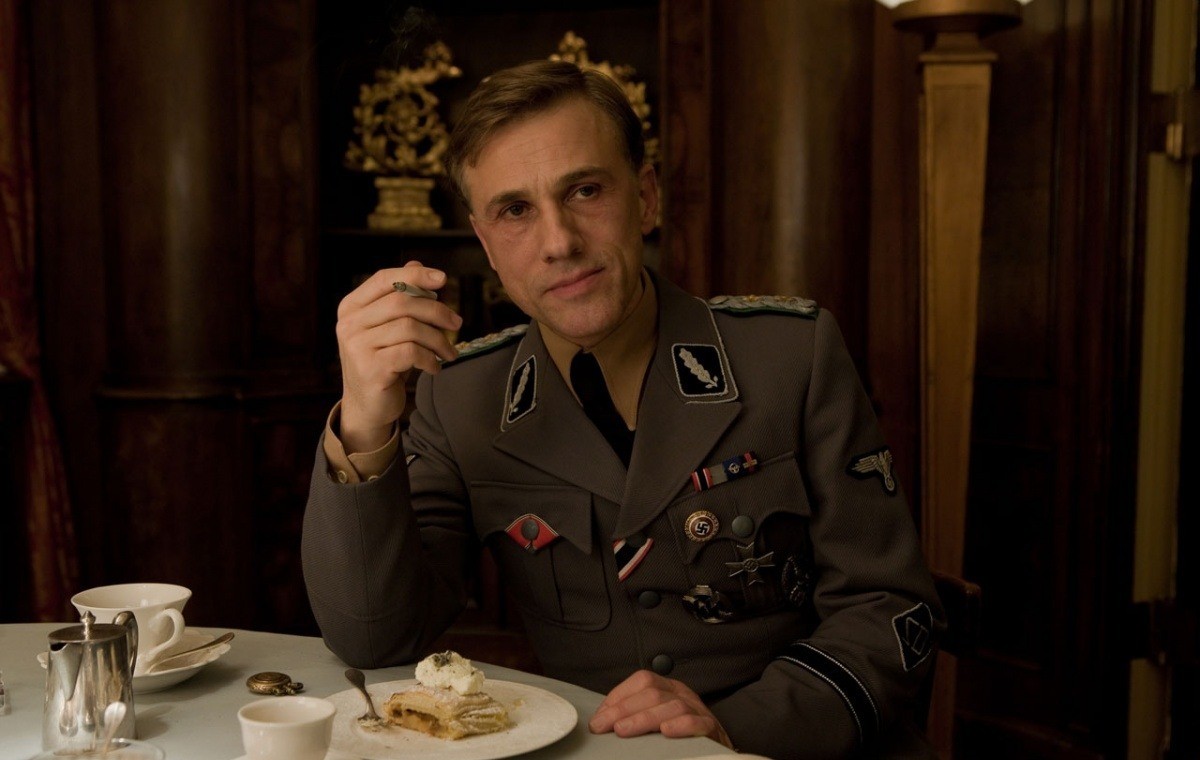
Twice a season in these series, there was an episode where a gang of criminals took the main characters hostage. They would come to the Ponderosa and take everyone hostage or go to Judge Garth's house... I don't like that storyline in a modern context, but I like it in westerns, where you have to go through half the series to figure out if they're good or bad, and they all have a revealed past. I thought: what if I made a movie with only these characters? ... Just a bunch of nasty guys in a room, and they all tell stories that may or may not be true. Put these guys in one room, have a blizzard outside, give them guns, and see what happens.
Shortly after the announcement, the script leaked online. Tarantino was so angry and disappointed that he planned to shut down the project at that stage. According to the director, only Michael Madsen, Tim Roth, and Bruce Dern had drafts. After that, the master filed a lawsuit against Gawker Media, which published an article with a direct link to the script of 'The Hateful Eight'. A little later, a cooled-down and calmed Tarantino held a public reading of the script, with Samuel L. Jackson, Kurt Russell, Tim Roth, Bruce Dern, and the rest of the cast. There, the director said he was ready to return to the project, and the audience in the hall was able to hear the second version of the script.
Main differences from the original version:
- Initially, the final shootout was simultaneous and chaotic, and the gang leader Jody was upstairs and actively participated in the ensuing melee.
- Major Warren died during the shooting, so Daisy's speech at the end was addressed to the only survivor, Mannix.
- 'Mexican Bob' was originally 'French Bob'.
But the problems didn't leave the filmmakers. The film's premiere was planned at the Pacific's Cinerama Theatre, where Tarantino went as a child. But shortly before the screening, the company forced the theater to cancel the contract with the director. On the scales were 'The Hateful Eight' and 'Rogue One: A Star Wars Story'. And if the theater hadn't refused Tarantino, it would have lost the screening of another installment of the sci-fi franchise at Christmas.
After the rejection, the director was angry and shared the disappointing news on Howard Stern's radio show. The story Tarantino told impressed the host, so during the broadcast, he addressed Walt Disney director Bob Iger:
Listen, Bob... I don't care about that theater. Quentin is a kid obsessed with all that 70-millimeter stuff that only he cares about. He just wants to show his movie there. You're sitting on top of the world, you have 'Star Wars', so is it that important to you? Do me a favor, Bobby... Be merciful. I just want Quentin to show his new movie there, the one he busted his ass for... It's Christmas, for God's sake.
The difficulties just wouldn't leave 'The Hateful Eight'. And a few days before the premiere, a promo copy of the film, intended for one of the heads of Alcon Entertainment, Andrew Kosove, leaked online. In the first day alone, it was downloaded more than half a million times.
It's easy to guess that all this left a mark on the box office. Worldwide, the film grossed about $156 million. That's far from a grand success, but considering all the factors, as well as the fact that the film was released simultaneously with 'The Revenant' (Alejandro González Iñárritu) and 'Rogue One: A Star Wars Story' (Gareth Edwards), such numbers couldn't help but please.
What Did the Film Turn Out Like?
'The Hateful Eight' is more like a play, where all events are tied to one location—Minnie's Haberdashery. And if you remove the first part of the film, where the characters travel to their destination, and exclude Marcus Warren's flashbacks about killing Sanford Smithers' son (Bruce Dern), the film becomes entirely a talky movie with elements of Tarantino's style. And this move didn't make 'The Hateful Eight' a 'bad' film; it just turned out to be not the most typical for the director and is more reminiscent of films from the peak of his career, such as 'Reservoir Dogs'.
Placing contradictory characters in one room and watching whether they can get out alive is an interesting idea. However, it could have been more effective if all the characters were more developed. We know little about the characters, but enough to create an image and understand what unpleasant company we'll be dealing with for the next three hours. But at the same time, not enough to empathize with anyone. And Tarantino's words that he gathered bright archetypes of westerns in one place don't really matter. It seems more like the director really wanted to but couldn't refine the idea to the required level.
When we see images on screen, whether it's a Mexican, an outlaw, or a bounty hunter, we expect corresponding behavior. For example, one of the characters is listed as a 'cowboy', but no specific, characteristic things happen for his image. Interesting patterns exist in the duo of John Ruth and his prisoner Daisy Domergue. It's simply amusing to watch their interaction. On one hand, they can look like friends, where one brings the other coffee and sings songs with a guitar, and on the other, Ruth furiously hits Domergue and spits in her face, reminding her of the hierarchy of their relationship.
Against the backdrop of this duo, the images of the criminals are also readable, though not as vividly. The characters of Samuel L. Jackson and Demian Bichir behave characteristically. There are caustic replies, daring outbursts, and so on. The same cannot be said, for example, about the characters of Tim Roth and Michael Madsen, who seem more like a backdrop for the main action. They are revealed a bit better towards the finale, but that's understandable. In the current picture, Sanford Smithers fits well among the archetypes that are hard to read. Although according to the plot, he is a backdrop. In a short time, the film manages to reveal his story and show the drama with his son. Because of this, all subsequent actions of the former general do not seem surprising.
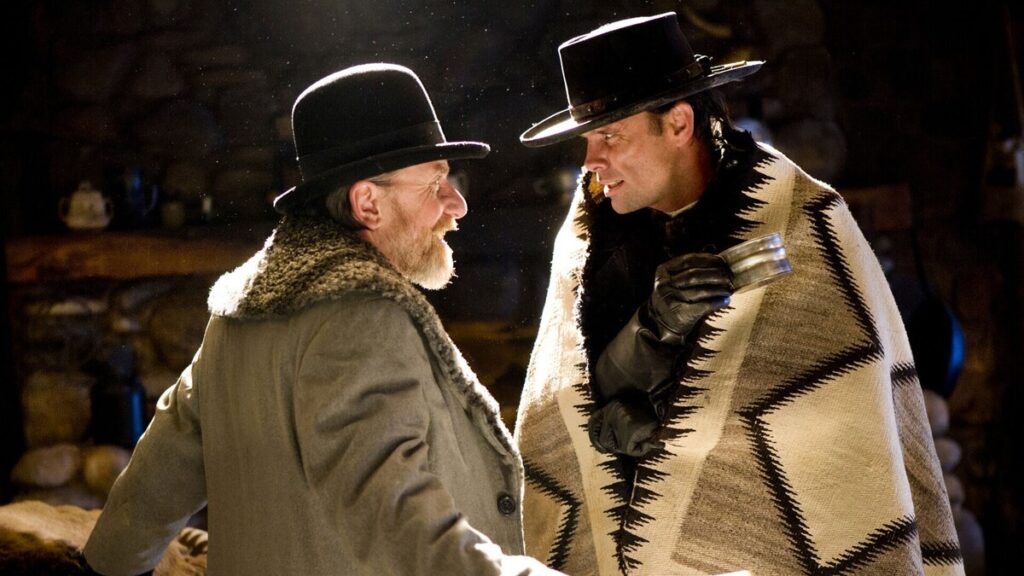
Despite this, 'The Hateful Eight' is incredibly beautiful and detailed, and the 70mm film shooting and soundtrack by Ennio Morricone only add to its charm. All the guns fire in the film. Scattered candies on the floor, a chair covered with a blanket, an unfinished chess game, and even a door that needs to be kicked open. In the finale, we get answers to all questions.
It's hard to say how good the ending turned out given the available inputs. We have all the signs of Tarantino: bloody vomit, a shootout, hanging, and dirt, but the feeling remains blurred. The entire film keeps the intrigue, and we do get the answer, but it seems not of the scale we expected. Simply put, after watching, there is a moral aftertaste—all the villains are punished. Literally all, and there were no 'good' ones.
But even if we combine everything said above, we cannot claim that 'The Hateful Eight' turned out bad. It turned out extremely colorful from a visual standpoint. Yes, sometimes it's unclear why such a large group of people is needed, yes, it's hard to experience special emotions except for the final shootout. But the film is still memorable, and not just because it's a Tarantino film. The snowy landscapes and the Civil War setting stick in your memory, and when you start playing Red Dead Redemption 2, you involuntarily remember 'The Hateful Eight'.
Comments
0No comments yet.
Sign in to join the discussion.