
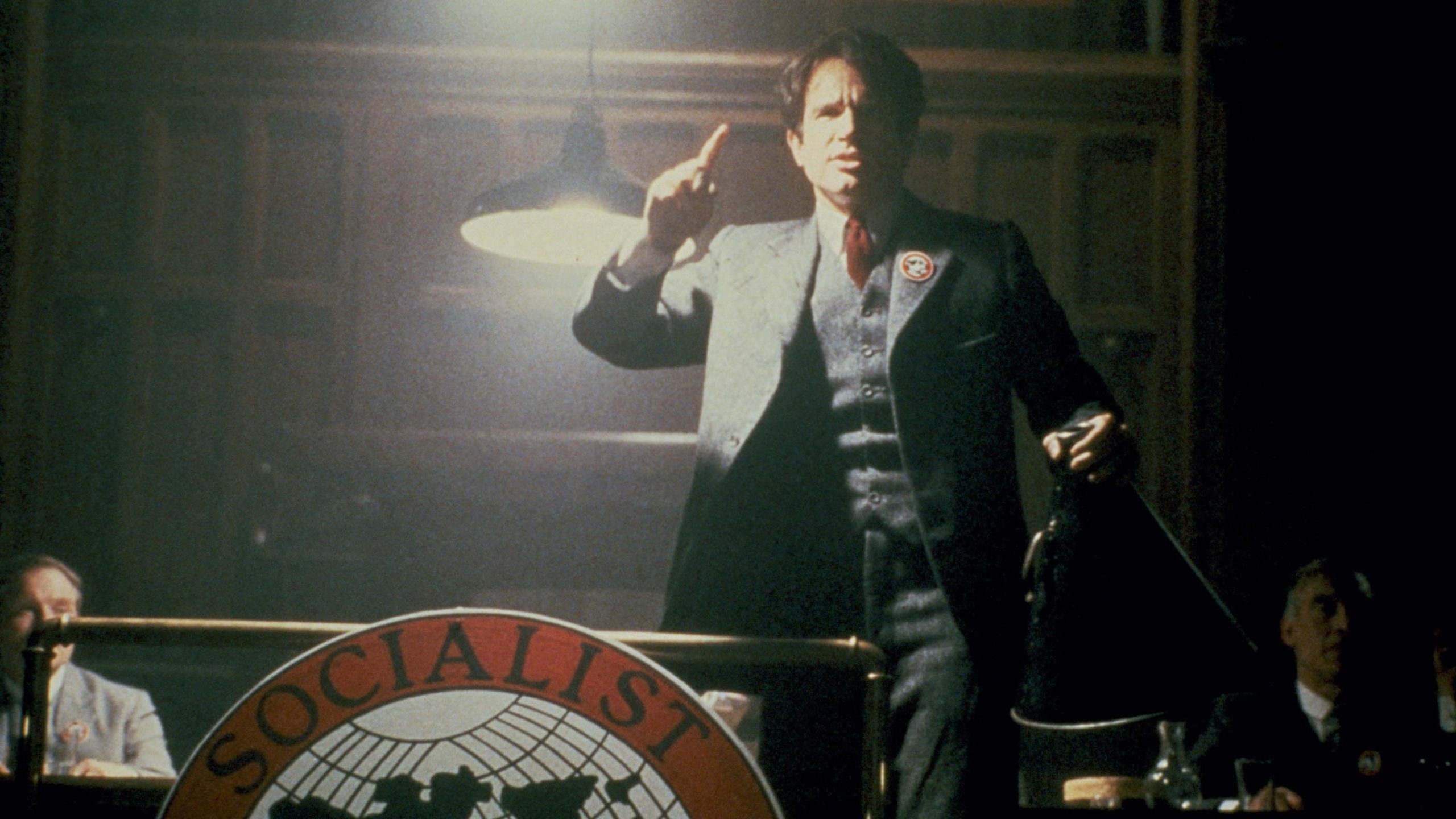
Have you already watched "Chronicles of the Russian Revolution"? Especially for you, the film "Reds", where the events of 1917 are shown through the eyes of a 100% American. But without cranberries and with a great influence on the further depiction...
Not long ago, the television broadcast of "Chronicles of the Russian Revolution" concluded. The magnum opus of the great Andrei Konchalovsky, spanning 16 hour-long episodes, attempted to cover the first 20 years of the history of the formation of the new Russia. And to show who are the heroes and who are the degenerates in this cauldron of political intrigue and ambition. But in the history of world cinema, there is another film that, in its scale of depicting the October Revolution, can offer considerable competition to the work of the Russian master.
That film is "Reds" by American actor and director Warren Beatty. This large-scale Hollywood epic won 3 Oscars in 1981 and beat out such authorities as Steven Spielberg and Louis Malle in the "Best Director" category. In this article, we tell how the idea for the film was born and what makes it truly revolutionary even for our time.
"Warren Reed"
1978 in American history was marked by the film "Heaven Can Wait". The dramedy about a restless soul in search of a fresh body was the first directorial experience of Hollywood star Warren Beatty. And quite successful. With a budget of 6 million, the film grossed almost 100 million in domestic release and won an Oscar in 3 categories.
After such stunning success, all doors were open, and Warren, a man of far-left views, decided to tell the true story of John Reed. A radical American journalist and close friend of Lenin. Dissatisfied with poverty and class inequality in his native USA, in 1917 he, together with his wife, famous New York activist Louise Bryant, goes to seek a better life in the USSR. But instead of a tour, he becomes a witness to the main Russian revolt of the 20th century. He will share his impressions of it in the diary-book "Ten Days That Shook the World".
Beatty read the original source and was very inspired by Reed's chronicles. So much so that initially he decided to invite the father of the Russian blockbuster Sergei Bondarchuk to the director's post. And for one of the main roles, Vladimir Vysotsky was courted. The main folk singer even recorded a video audition. But since the Cold War between the USSR and the USA was in full swing, co-production was not allowed to live. A year later, Bondarchuk would make his own two-part version of the October events called "Red Bells", which can be considered our response to the American's film.
The script was written fiercely, with great losses. Beatty was known in Hollywood circles for his ardent narcissism and control. While working on the drafts of "Reds", he tirelessly tormented Trevor Griffiths, the first co-writer of the film, with his Jesuit demands.
Before this, Griffiths had only worked in television and was known as an ardent Marxist. Locked in a hotel, they openly hated each other for 4 months. Sometimes the work on the text was no different from gladiatorial fights. Warren had previously driven co-authors to white heat, Kubrick-style, chiseling out the needed emotions, but this brought good results. Griffiths did not appreciate the draconian methods and got off the revolutionary train halfway.
Then Beatty called old acquaintances, the main shadow authors of Hollywood. The first was Robert Towne, one of the creators of "Chinatown", a recognized screenwriter, author of the final version of "Bonnie and Clyde", the film that launched Beatty onto the Hollywood firmament. The other turned out to be Elaine May, the 3rd woman in film history to join the Directors Guild of America. Such a powerful team was able to bring the text to its senses in a short time and give Beatty the opportunity to cast actors for the main roles.
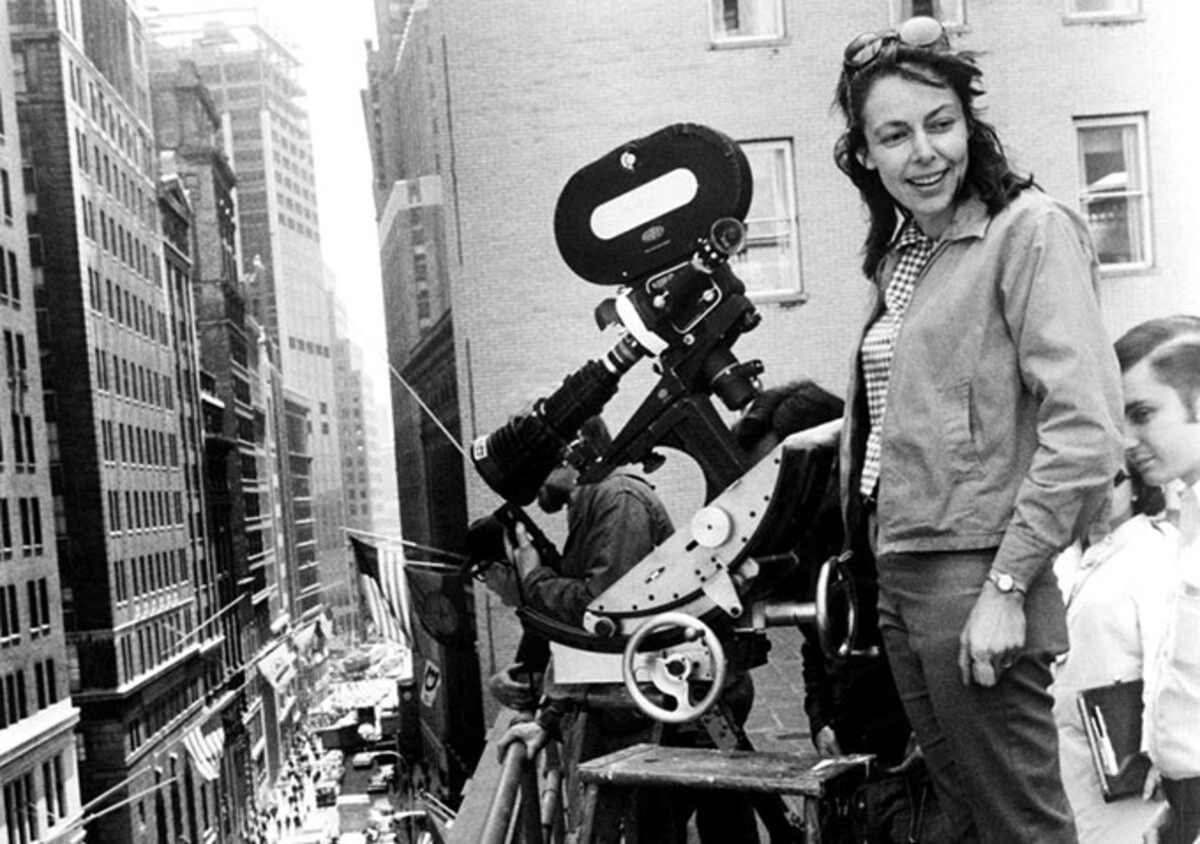
Elaine May was the first to refuse to play by the usual rules and paved the way for many modern female directors. About the author of only 4 films that once and for all changed the pre
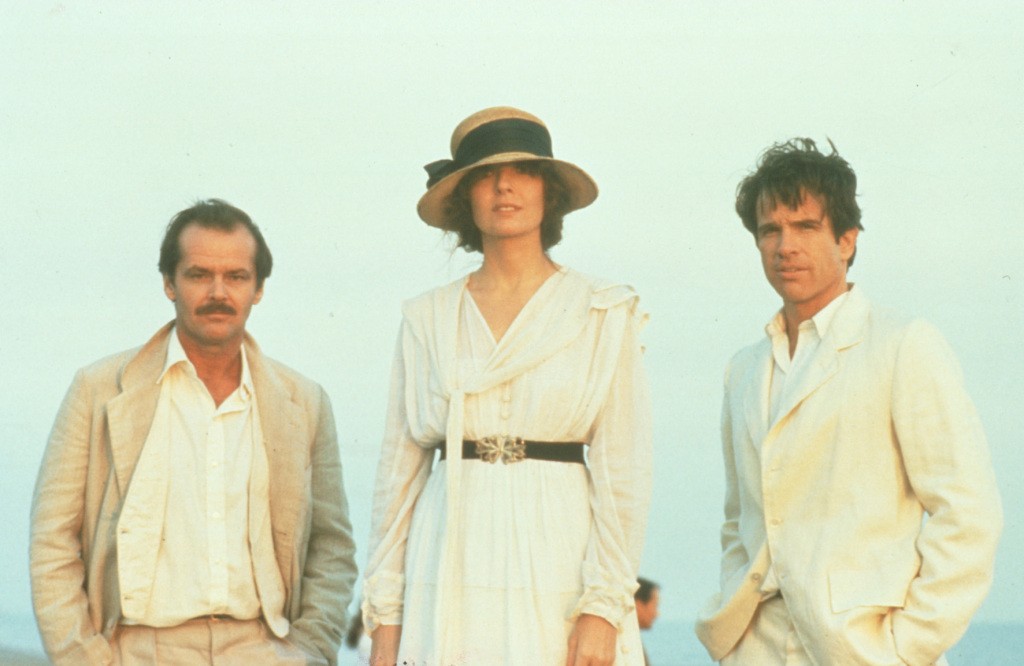
Open materialThe casting for the film was impressive. For the role of Louise Bryant, the director took his lady love of that time — Diane Keaton. He often practiced this. Warren believed that real-life relationships would help achieve the right degree of on-screen chemistry. And he was not mistaken. The role of a fiery and independent chronicler-communist in a soft cloche hat and with iron principles is considered the best role of the great actress.
The image of the main American playwright, Nobel laureate cynical and venomous Eugene O'Neill, and concurrently Louise's lover, was embodied by Jack Nicholson. He got into the film thanks to Beatty's deception. Initially, the main star of "New Hollywood" did not plan to act in "Reds". He had just finished the exhausting filming of "The Shining" and wanted to rest.
But Beatty uttered a cunning phrase that there is only one person in the world capable of taking a woman away from him. Nicholson took the bait and for the role of the author of "Desire Under the Elms" and "Long Day's Journey Into Night" earned praise not only from critics but also from the writer's own daughter. Oona O'Neill admitted in correspondence with the actor that thanks to Jack's performance, she fell in love again with her father, who had left the family when she was an infant.
Reed himself, the witness of the accursed days, was played by Beatty. In many interviews, he admitted that he was born for this role and always felt a spiritual closeness to the historical prototype. This is especially evident in his character. Being a popular actor, in 1972 he organized a presidential campaign for George McGovern and held concerts for four consecutive days in support of the alternative candidate to the warrior Nixon. Beatty often did not separate art from politics, just like his on-screen alter ego.
The supporting cast of the film is also not stingy with big names and impresses with historical accuracy and a sense of humor in choosing actors for the roles of real personalities. Reed's friend, Pete Van Wherry, the magazine editor, was played by megastar Gene Hackman. And the role of the founder of the first Communist Party of America, Louis Fraina, was played by Paul Sorvino. Kerensky, the chairman of the Provisional Government, was embodied by his own relative — grandson Oleg. The leader of the Comintern Zinoviev was played by the famous anti-communist writer Jerzy Kosiński.
Part of the extras in "Reds" were played by Russian actors. Dissatisfied with low pay, they decided to stage their own mini-revolt and even went on strike. To which Beatty began to lecture them on the economics of capitalist methods of using labor. This method became so legendary that it entered the top of the stupidest decisions in the history of world cinema.
The cinematographer of the film was Vittorio Storaro. Thanks to his camera, "Reds" looks like a film that could have been made by David Lean, the author of wide-screen epics and creator of such masterpieces as "Doctor Zhivago" and "Lawrence of Arabia". Specifically for the film, the master of color and faithful ally of Bernardo Bertolucci used a special technology — retaining silver in the celluloid. This reduces color saturation and increases image contrast. The image becomes colder and "dirtier". The picture becomes "grainy". This enhances the real drama of the events taking place.
Initially, "Reds" was planned to be filmed in the historical homeland. The director even came to the USSR, but the grand plans were not destined to come true. At the Museum of the Revolution, he asked an employee why there were no photographs of Trotsky. And at another meeting, he noted that the Bolsheviks had forcibly seized power. The Soviets did not approve of such "freedom of speech" and did not give permission to film.
Then the role of the Soviet Union was played by several countries at once. Finnish Helsinki perfectly depicted the brutal strikes of the October unrest. Spanish Seville became the cinematic embodiment of Azerbaijani Baku. London was entrusted with the main role — to play the Winter Palace.
The filming of the movie lasted a year. And the entire film crew felt the scale of Beatty's personality, who truly believed he was the reincarnation of John Reed. The cameras worked non-stop and sometimes even burned out. Absolutely everything was recorded. Each actor took from 20 to 80 takes. After such "modest" numbers, a joke even began to circulate in creative circles: "On average in Hollywood, directors do 40 takes. 1 — Eastwood, Beatty — 80".
When filming ended, it turned out that about 700,000 feet of film had been used. This almost equaled the expenses for filming "Apocalypse Now". Everyone predicted a grand failure for the film. These discouraging thoughts were also prompted by the film's budget, which rapidly grew to $33.5 million. That's half more than all the money spent on the first "Indiana Jones".
Beatty understood his unenviable position. So he decided to go all-in. And first of all, he showed "Reds" to Ronald Reagan. The sitting US president, an ardent conservative and anti-communist, watched the film and only slightly lamented the happy ending. What exactly the former movie cowboy did not like, Beatty did not clarify. The next day, the film was showered with rave reviews from major publications, and Roger Ebert called "Reds" "the 'Doctor Zhivago' of the thinking person, shown from the other side of the barricades".
"Faces of the Past"
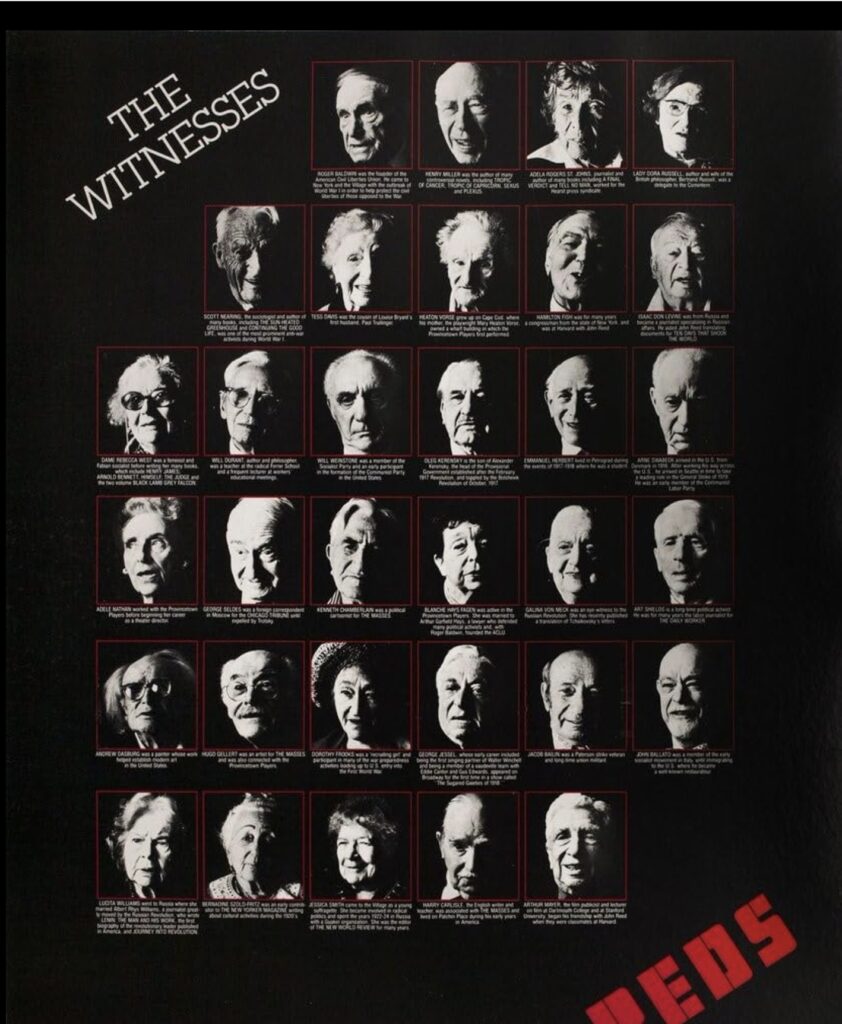
"Reds" is not only an epic biopic about people who sacredly believe in the benefits of change, but also a unique historical document. Throughout the three-hour runtime of the film, in addition to showing the fates of Reed and Bryant, consumed by the changes that demanded the hearts of peasants and workers, faces of people who actually witnessed those days of global transformation of a large country emerge from the dark frame.
Recordings of conversations with them were made even before the start of filming. These individuals are eternally living witnesses of the era, who can shed light on the real fate of Americans enchanted by the "red" ideas. Here are just a few of the observers of 1917:
Galina von Meck (1891–1985)
Russian writer and translator, emigrant and great-niece of Tchaikovsky. She studied at the Alexander Institute, which was under the patronage of the royal family. In pre-revolutionary St. Petersburg, she was known as a car enthusiast and racer. She was the first owner of a phaeton — the only American car in Russia at the beginning of the 20th century. In emigration, she wrote a memoir book "As I Remember Them". She did not particularly welcome the uprising of 1917. She compared these events to chaos and the death of the old world.
Dorothy Fruchs (1897–1997)
American lawyer, suffragist, and World War I veteran. She actively participated in the creation of veteran organizations. She was a direct witness to the brutal persecution of communist organizations in the US during the McCarthy era and the "witch hunt". She actively worked on the law on resolving labor disputes between workers and employers.
Roger Baldwin (1884–1981)
Famous writer and pacifist. One of the founders of the American Civil Liberties Union. Under the influence of anarchist Emma Goldman, he was a member of the international workers' organization "Industrial Workers of the World". The union advocated for the abolition of wage labor and full democracy in the workplace. In 1927, Baldwin personally came to the USSR and soon wrote a book "Freedom Under the Soviets". But after some time, he changed his views and in the 1940s was an active participant in communist purges in the US.
Scott Nearing (1883–1983)
Famous public radical and left-wing activist. Open socialist and communist. Ardent opponent of US militaristic policy in World War I. In 1925, he came to the Land of Soviets and later wrote the first book about the education system in the USSR. Supporter of the simple life method. Its essence is the rejection of the benefits of civilization and leaving megacities for the countryside to return to roots.
Henry Miller (1891–1980)
One of the most important and scandalous writers of the 20th century. In his books, he dissected the morals of Europe and America. He wrote the novels "Tropic of Cancer" and "Tropic of Capricorn". He was called congenial to Joyce for his innovation in the genre of semi-autobiographical novel. With his frankness and literary freedom, he inspired many famous authors, such as the outrageous Limonov or the beatnik Kerouac. Miller personally knew John Reed and cynically commented on his activities: "If a person sets the goal of changing the world, then either he has no problems of his own, or he does not want to pay attention to them."
"The Russians Are Coming"
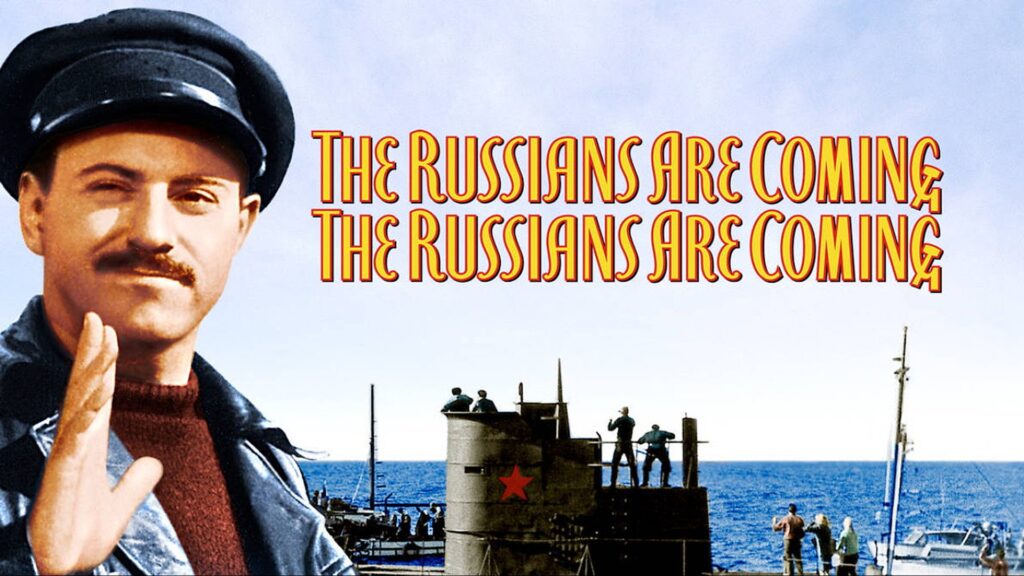
"Reds" was released at the height of the Cold War between the USSR and the USA. Throughout the history of this long-standing political confrontation, the image of communism, which the US feared already at the beginning of the 20th century, changed its appearance many times.
First, in the 50s, the "red" threat was represented by unfriendly and not very talkative aliens. They sought to enslave the world in the cult black-and-white science fiction horror film Don Siegel's "Invasion of the Body Snatchers".
Then the aliens were replaced by blatant propaganda under the telling title "Red Nightmare". According to the plot of the film, one day the horror of communism bursts into the life of an ordinary American family and changes their lives thoroughly: the eldest daughter goes to work in the fields, the younger children follow in the footsteps of Pavlik Morozov, the mother chooses the state over the family, and the head of the family is even shot for fighting against the state. Needless to say, the film was released with great support from the FBI?
Already in the mid-60s, the intensity of the struggle gradually subsided, and the Hollywood comedy "The Russians Are Coming! The Russians Are Coming!" appeared in cinemas. A Soviet submarine, led by Lieutenant Rozanov played by the incomparable tragicomic actor, star of the anti-war "Catch-22" Alan Arkin, unexpectedly ran aground off the coast of the USA. The crew of the ship tries to get moving again to avoid an international conflict. Russian sailors come ashore and try to find help from Americans. They fear the "strangers" and fall into wild panic. The eccentric military comedy by Norman Jewison wrapped the anxieties of Western citizens in a shell of humor and cooled the heat of political confrontation. At the end of the film, a humanistic phrase is even uttered: "I don't want to hate anymore."
But in the 80s, everything returned to square one. Americans welcomed a new leader in the person of Democrat Reagan. The former TV cowboy and chief persecutor of American communists in the 50s, by whose consent prominent filmmakers from Dalton Trumbo to Edward Dmytryk were put behind bars, began his reign.
It was in the 80s that Western cinema reached its peak in depicting Russians as real monsters. Illiterate barbarians with balalaikas at the ready and hugging a bear. Such a widespread cranberry is known to every post-Soviet person.
At this time, the cinematic apotheosis of many years of propaganda hits American screens — the famous "Red Heat" by Walter Hill with Arnold Schwarzenegger. The impenetrable "Mr. Universe" and "Conan the Barbarian" in a gray ushanka hat and strict pea coat smashes left and right all undesirables in the role of the "brave" policeman Ivan Danko. In broken Russian, he curses and gloomily says: "Hooligans". And the phrase "What are your proofs?" has gone down in history and become a cringe-meme for more than one generation of viewers.
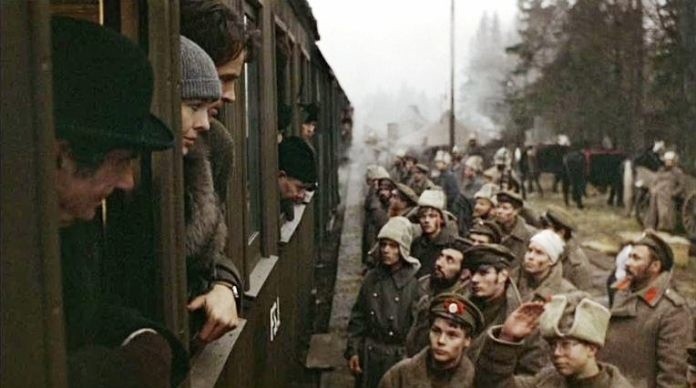
Surprisingly, "Reds" does not fall under the furious roller of political propaganda. The film depicts the Russian population not as a set of cliches and all sorts of stereotypes about the life of harsh men and women in grotesque headdresses, but as living people with their own joys and sufferings.
Ushankas with red stars and kosovorotkas are replaced by jackets, coats, hats, headscarves, and caps from the Civil War era. The work of the production designer can be safely applauded: historical accuracy is close to real newsreel footage.
Revolutionary Petrograd in Beatty's biopic is not just a snowy and cold city. Against the vocal salvos of "The Internationale", we are shown the everyday life of a somewhat gloomy but bright place due to political events. There is room here for both fiery speeches at a secret meeting and morning snowball fights before a walk. The shots of the northern city are not abundant with kitsch from the same "Doctor Zhivago", where the estate of one of the characters was crowned with seven domes. There are no notorious bells in every house either.
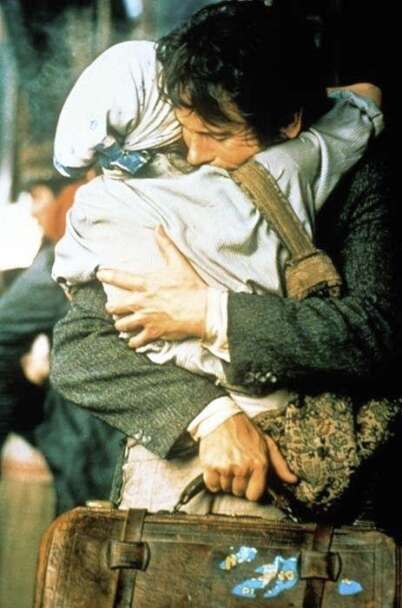
Beatty presents the very idea of the sacred revolt with taste. Reed and Bryant became infected with the "virus" of communism not out of the naivety of ideological tourists, but seriously believing in its viability and strength. From the first chance meeting, they plunged headlong into the "red" movement. They believed that this idea would give many Westerners freedom and save them from the militaristic bacillus.
At the same time, the film avoids reveling in the pathos of the "red" slogans. Closer to the end of the film, after an assassination attempt by the white movement on the agitprop train, John Reed runs in the dust after a rapidly retreating, almost Chapaev-style tachanka — the main symbol of the red movement. And the meeting with Louise at the station, where wives await the return of soldiers, even resembles the legendary scene from the great "The Cranes Are Flying" by Mikhail Kalatozov. Two illuminated faces on either side of an endless stream of human destinies, churned through the thresher of war.
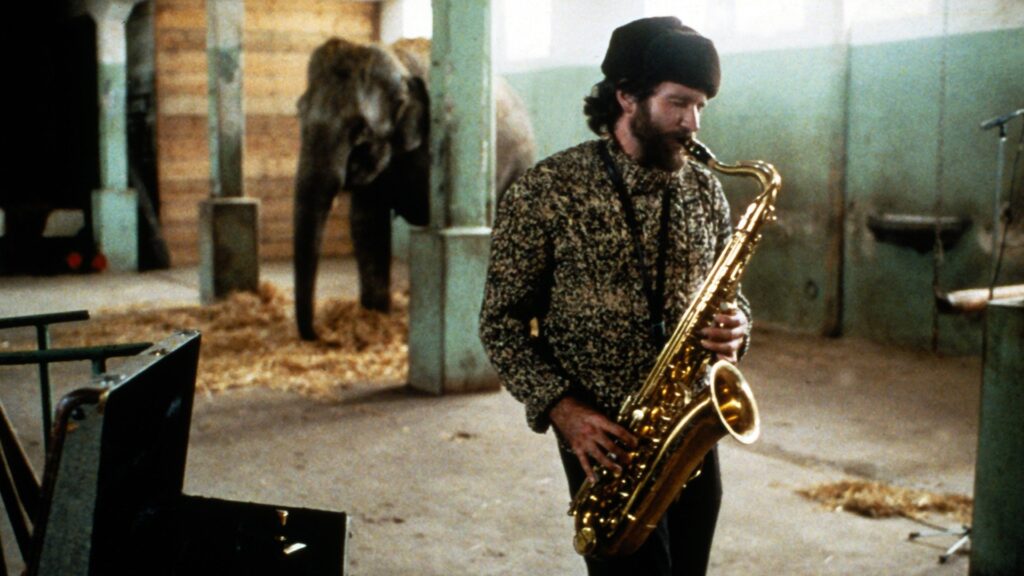
With its good portrayal of Russians, the film could well have influenced the further perception of our compatriots on screen. The first that comes to mind is "Moscow on the Hudson" by Paul Mazursky. Released 2 years after "Reds", the film about a Russian emigrant, a former saxophonist of the Moscow circus, presents Soviet life almost without propaganda tricks. The film was shot during a period of total shortage in the country. According to the director's idea, it was a satire on how America of the 80s saw the USSR. Therefore, it is not surprising to see on screen queues for toilet paper and shoes of the wrong size, and vodka as the main attribute of the "Soviet" kitchen.
But the devil is in the details, and behind these stereotypical elements, one can miss the main thing. The characters in the film speak pure Russian almost without an accent. Robin Williams is especially surprising. The inimitable tragicomic actor set out to learn Russian a year before the start of filming. For 5 hours a day, together with a tutor, they spent time studying it. As a result, in the film, his speech does not seem foreign, and it seems that such a lost bearded musician could easily be met on the street at that time.
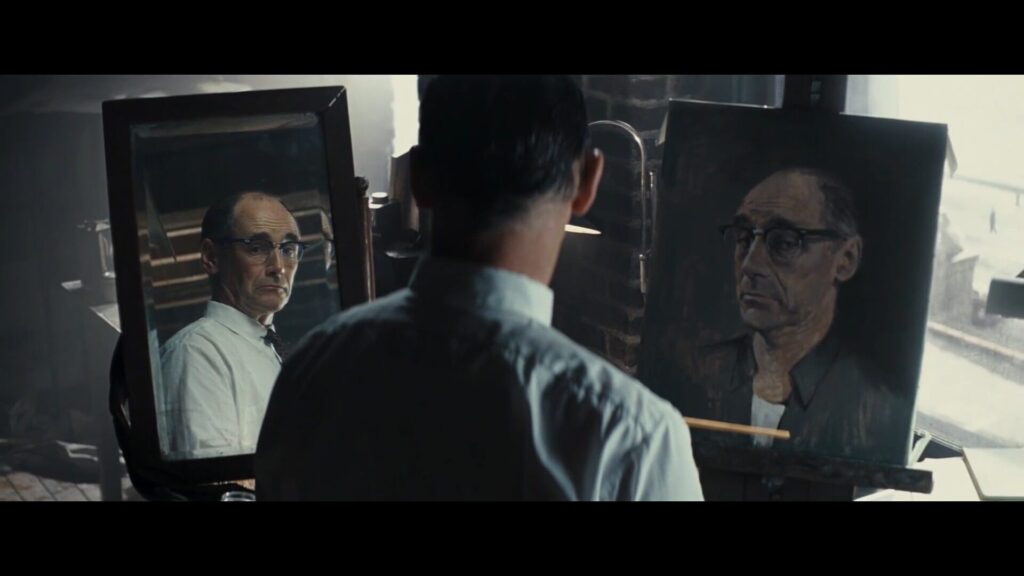
But the record for the positive portrayal of our compatriot in Western cinema can be considered the political thriller "Bridge of Spies" by Steven Spielberg. Somehow elusively similar to the cult "Dead Season" by Savva Kulish, the film by the Hollywood visionary does not skimp on shades of Russian.
The hero of the brilliant Mark Rylance, Soviet undercover agent Abel, behaves like a true stoic during interrogation before the court. He does not allow unnecessary emotions and is not afraid of terrible consequences for espionage. Spielberg portrays him as a man of duty and honor, who is always true to himself. Even in the most dangerous situations, he is cold-blooded and restrained. Such self-control evokes genuine respect even from ideological opponents. As they say: "He is Russian, and that explains a lot."
Comments
0No comments yet.
Sign in to join the discussion.