

On November 7, Netflix released the K-drama 'When You're Near' (As You Stood By), where the main heroine is surrounded by victims of domestic violence. The socially acute thriller raises an important issue that is acute not only in South Korea. We te...
As many remember, after the release, a K-drama boom occurred worldwide, as interest in South Korean series multiplied. Since then, 'tudum'-streaming (and not only) has been steadily ordering content from the Land of the Morning Calm. The service library is constantly being replenished, and although no one has yet achieved the success of the show about deadly games, the projects find their audience. By the way, 'When You're Near' (or 'You Are the Killer' in other translations) has already become popular in its niche.

Three years later, the long-awaited continuation of the sensational Korean series 'Squid Game' was released on Netflix. The first season left an indelible impression on viewers.
Open materialWhat's the Plot?
Cho Eun-soo (Jung So-ni) works as an assistant manager for special client services at a department store and strives for a promotion. Every day, important people come to the store, and the woman has to adapt to their quirks. For example, when an influential stranger from China (Lee Moo-saeng) 'borrowed' a collector's watch, she found him and politely but persistently asked him to return the item and buy the damaged strap, without escalating the situation. However, sometimes extraordinary situations throw Eun-soo off her work routine. First, there is an unexpected meeting with Noh Jin-pyo (Jang Seung-jo), the husband of her best friend, who is clearly hiding something. Then, there is the case of a major client's wife, on whose body the girl notices signs of horrific beatings. At first, she cautiously tries to help, but ultimately decides not to take risks and stays silent.
For the heroine, domestic violence is a powerful trigger, as she witnessed her mother (Kim Mi-kyung) being regularly beaten as a child. The girl often took her younger brother and hid with him in the closet until her father calmed down. And so, when she comes to her childhood home for her mother's birthday and stays overnight, Eun-soo discovers that her father has returned to his old ways. Angry and threatening her relative, the woman leaves, and on the way decides to visit her friend Cho Hee-soo (Lee Yoo-mi). To her horror, she finds that Jin-pyo is brutally beating his wife. At first, the girl does not intervene (it's not her first time), but after the tragic incident with the client's wife, Eun-soo suggests Hee-soo stop tolerating the tyranny and kill her husband.
He Beats Means He Loves
The K-drama, directed by Lee Jung-nim ('Evil Spirit', 'Very Important Person'), is based on the novel 'Naomi and Kanako' by writer Hideo Okuda. In 2016, the work was already adapted in its home country, Japan, but the eponymous adaptation did not achieve particular success. Almost ten years later, interest in the book resurfaced. It was slightly reworked, the events were moved to Korea, and the main characters' names were changed. The message and central theme, of course, remained unchanged.

'When You're Near' raises an incredibly important topic that needs to be discussed. And regardless of the country you live in. As one of the characters, Noh Jin-young (Lee Ho-jung), the aggressor's sister who works in the police, stated: 'In 90% of cases, the perpetrator of domestic violence goes unpunished.' The statistics, admittedly, are very sad. At first glance, you wouldn't say this is an acute problem for South Korea, but apparently, there is no place in the world where the topic of domestic abuse is irrelevant. That makes watching the series even more frightening, realizing the harsh truth.
In the Land of the Morning Calm, as is known, they love socially conscious cinema, and 'When You're Near' is a vivid example that perfectly confirms this thesis. Behind the facade of a brutal thriller, the creators have hidden burning questions that will force viewers to think for themselves. Where is the limit of human patience? When cornered, which choice is more correct: to die yourself or to kill the aggressor? The series does not give clear answers (and leaning towards one side is incorrect), but it does spark discussion.
Sometimes in such a conversation, it seems that the solution to the problem is obvious. Like, why not just leave the tyrant? However, the show perfectly demonstrates several reasons why victims do not break ties with the criminal. It's easy to say you need to pack your bags and slam the door, but in reality, there are always difficulties that are not easy to overcome. Here, I want to say that if someone suddenly relates to the problems of the main heroines of 'When You're Near', don't be afraid to talk about them. Just as you should not turn away from people who need help. Perhaps support and unity can save someone's life.
Why Women Kill
Both titles of the series have a dual connotation. On one hand, the phrase 'When You're Near' can be used in a romantic sense, evoking pleasant associations. On the other hand, it can symbolize the anxiety and fear that a victim of domestic violence experiences in the presence of their partner. By the same principle, the adaptation 'You Are the Killer' can be considered, because not only the main heroines can be considered killers, but also the people who torment their partners, thereby driving them to irreversible consequences.

If we set aside the discussion about the correctness of the friends' actions, we can say that the plan they devised was as good as it was bad. In a short period of time, they developed a cunning way to get rid of Jin-pyo, but it must be noted that at every stage, the girls were both catastrophically unlucky and lucky at the same time. Hee-soo and Eun-soo are constantly one step away from failure, which forces the heroines to repeatedly relive the horror of realizing what they have done, including terrible PTSD.
The first half of 'When You're Near' is rather annoying due to constant emotional swings, but it still remains plot-wise interesting. Each episode ends with a false cliffhanger that prompts you to start the next episode. After that, you will likely have to endure the creators' deception for the first ten minutes before you can get back into the story.

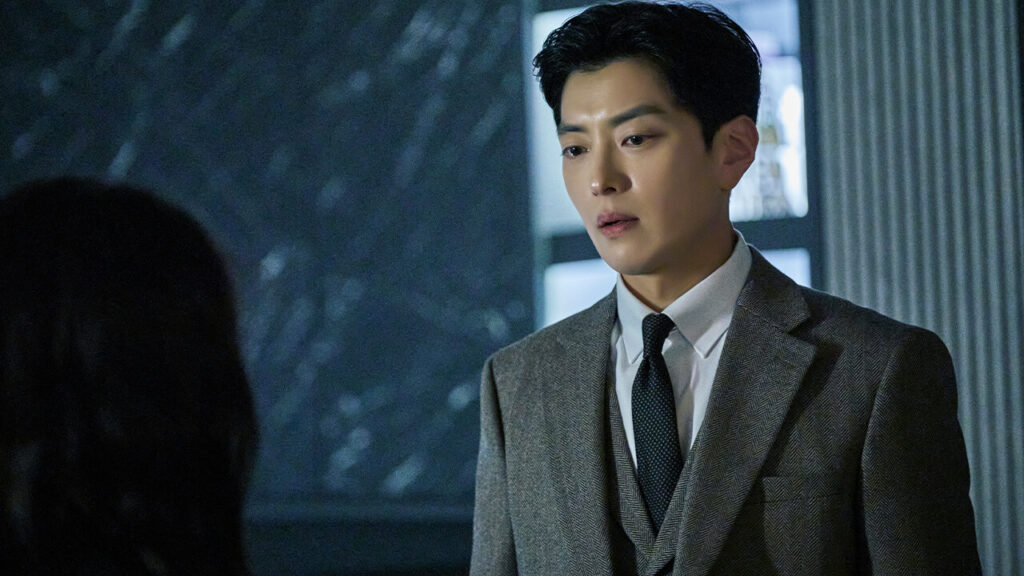
Everything changes in the second half, when actor Jang Seung-jo (I know it's hard to remember, so I'll clarify: he plays the tyrant husband) delivers an incredible performance. Throughout the series, the man manages to evoke a double hatred for his character. Without going into spoilers and plot details, it's worth noting that he perfectly embodied the role of a scumbag. Overall, the entire family of the character turns out to be hypocritical and disgusting. The mother lectures about women's rights but turns a blind eye to her son's actions, and his sister hints to the daughter-in-law that she should humbly accept her fate, because the law is not on her side.
'When You're Near' often goes into hyperbole. It's hard to believe that Eun-soo is surrounded everywhere by victims of severe beatings who are ready to voluntarily end their lives almost at the same time. Sometimes this absolutization leads to cringe, making you doubt the reality of certain situations. It's clear that this is done for drama around the main character's figure, to more clearly formulate her motivation for committing the crime, but the technique doesn't always work.
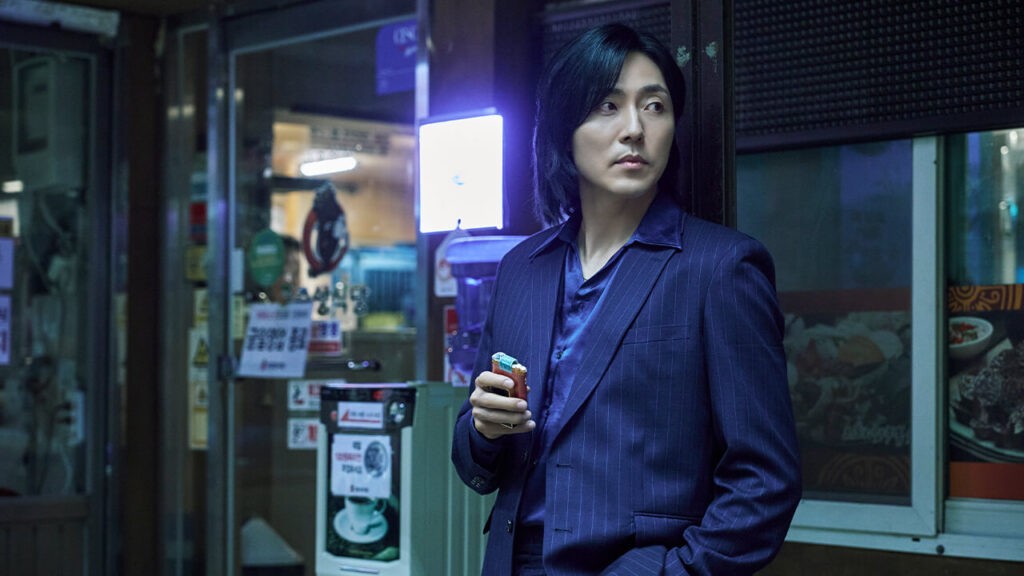
In the end, most of the characters are so annoying that almost all sympathy goes to Lee Moo-saeng. His perceptive and charismatic character stepped in to help the two women but was forced to constantly listen to their lies and try to reason with the friends. He became a catalyst for the idea (it was from his mouth that the phrase about victims of violence not being the ones who should die, but those who commit it, came) and, through his actions, sort of deals with the consequences of what was said. True, even his influence did not become an obstacle to female friendship and solidarity. It's good that in the end everything falls into place.
What's the Verdict?
'When You're Near' is an excellent K-drama that focuses attention on an important topic. Thanks to an engaging story, superb acting, and well-calibrated direction, the creators manage to talk about the essential and ask uncomfortable questions that few want to find answers to. Many real crimes do not leave the confines of an apartment because it's not customary to 'air dirty laundry' and it's not nice to meddle in other people's families. The show brilliantly demonstrates the consequences that patience and indifference can lead to. The spectacle, admittedly, is sad. It's cool that such works appear. It's a pity that they are relevant for the whole world.
By the way, subscribe to our Telegram channel 'After the Credits' (here's the link). There we post posters, trailers, and various interesting and fun news from the world of cinema.
Comments
0No comments yet.
Sign in to join the discussion.