

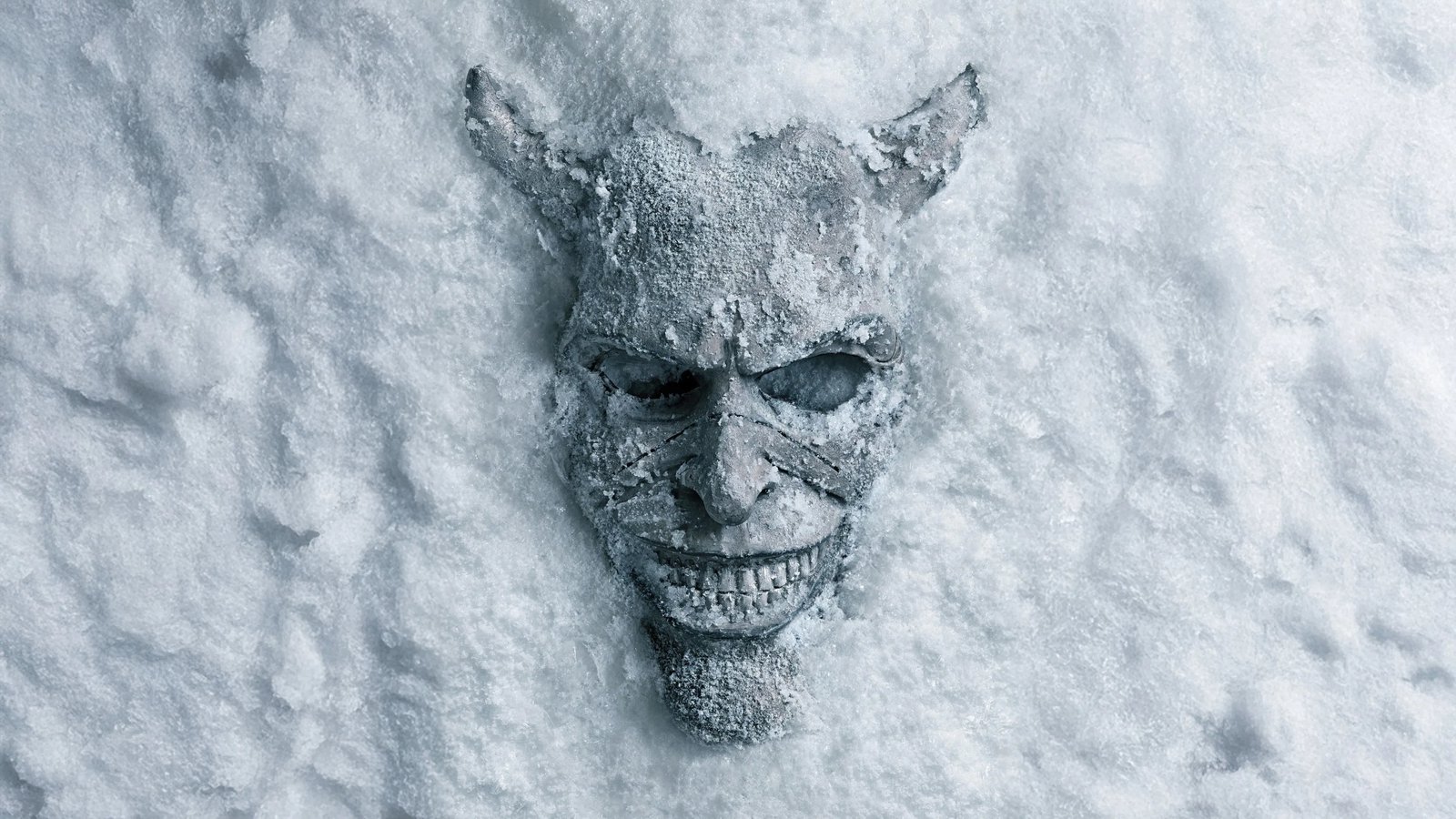
A new horror film by Scott Derrickson, “The Black Phone 2,” has been released online. What surprises does the new creation of the author of the cult “Sinister” hold, and has he been hit by a creative crisis? We figure it out in our review.
According to the plot of “The Black Phone 2”, an older Finney (Mason Thames) becomes a troubled teenager with PTSD. At the slightest provocation, he punches anyone who looks at him sideways; he doesn't talk to his father and periodically sees the sinister face of Grabber (Ethan Hawke) in a mask, who died at Finney's hands in the first part, in the dark bushes in front of the house. Having described the main character with such broad strokes, the sequel's plot quickly shifts focus to his younger sister Gwen (Madeleine McGraw), who is increasingly troubled by chilling visions of a certain children's camp in the mountains where horrific events once took place. All of this is somehow connected to the death of Finney and Gwen's mother, who worked there as a counselor in her youth.
In one vision, Gwen even managed to talk to her on the phone, but not the black one from the original, but a perfectly ordinary home phone. Unable to endure another night of sleepwalking around the neighborhood, the teenagers decide to visit the mysterious camp, especially since a counselor position has conveniently opened up there. However, upon arrival, it turns out the camp is empty: due to a snowstorm that cut off the road, the campers couldn't make it. Only a few people remain in the snow-covered cluster far from the nearest populated area: Finney, Gwen, their friend Ernesto (Miguel Cázares Mora), a couple of staff members, and a bearded director. And of course, the disembodied spirit of Grabber is lurking nearby, whose bloody path, as it turns out, once began right here.
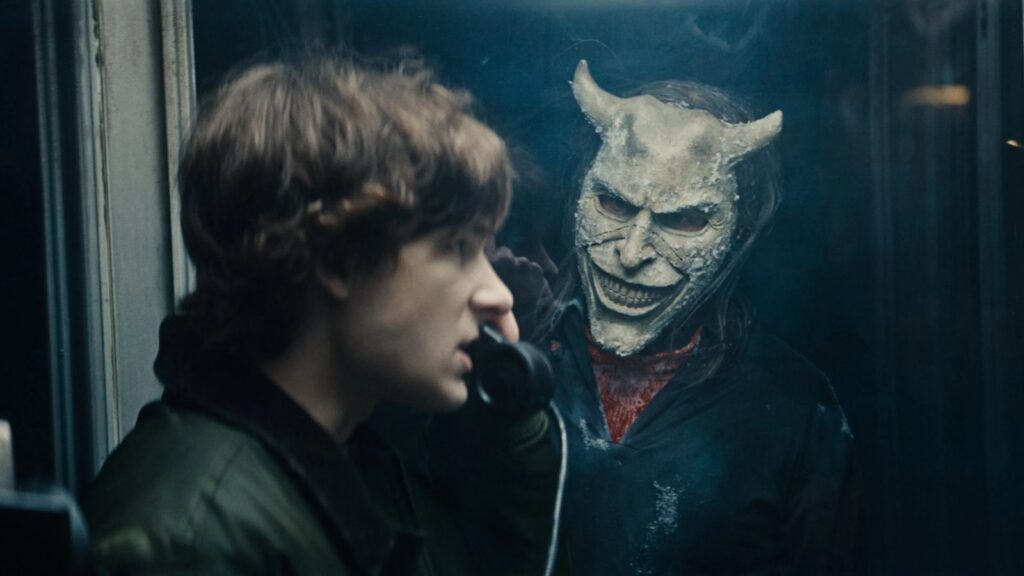
The sequel to the very solid, well-constructed, and surprisingly logical “The Black Phone” by Scott Derrickson (“Sinister”) turned out to be surprisingly colorless and egregiously formulaic. While the first “Phone” often employed psychological techniques and mostly just built tension to the point of teeth-grinding, remaining quite elegant in its plot twists and finale, the sequel suddenly plunges headlong into a primitive slasher, where Grabber (Ethan Hawke barely takes off his mask here, and if someone else had replaced him, no one would have noticed) returning from the underworld simply needs to hack up a group of people, without bothering with complex motivation or dark philosophy.
The overall embarrassment is compounded by scenes where the characters make strange decisions: they run around the area in a chorus looking for Grabber (all that's left is to shout “Yoo-hoo!”) or decide to clear the snow on the lake themselves to, in their own words, see the bodies of Grabber's victims under the thick ice. Such a voluntary cleanup might have been beneficial for the camp's grounds, but for the horror genre, it proved fatal. The last straw in this parade of absurdities is the final fight with Grabber, where adults and teenagers fight the disembodied spirit like mime clowns, grabbing air and tossing each other around.
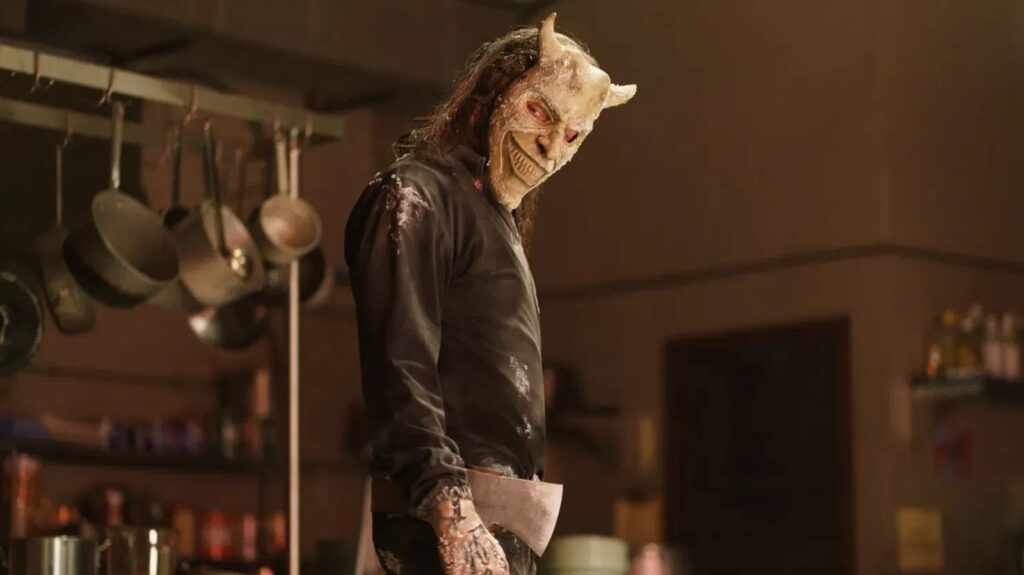
In some places, “The Black Phone 2” shows glimpses of authorial consciousness. But they mainly concern Derrickson's visionary eye. The snow here periodically turns a picturesque red, Grabber skates like Subzero from the original “The Running Man”; scalps are effectively ripped off, bones crack. The physical techniques work flawlessly. However, all these minor merits pale in comparison to the main flaw: “The Black Phone 2” is incapable of frightening. Derrickson essentially admits his own helplessness, ultimately deciding to simply quote the most terrifying scenes from his own hit “Sinister.” But repackaging them from found 8mm film into the mystical visions of the main character's sister. Even the soundtrack in places exactly matches the deeply ingrained video sequence.
Such a creative capitulation also severely impacted the initial drama of the collective coming-of-age of teenagers forced to help themselves due to complete neglect by adults. The director simply distances himself from this problem, preferring crude physiology, while the fragile mental constitution of the characters drowns in the bloody snow slush, depriving the story not only of development but also of a coherent ending. As a result, the plot stalls, and Ethan Hawke's sacrifice—hours of makeup and figure skating lessons—seems pointless. Derrickson stubbornly tries to call a number that has long been disconnected for non-payment. And predictably gets no answer.
Comments
0No comments yet.
Sign in to join the discussion.