
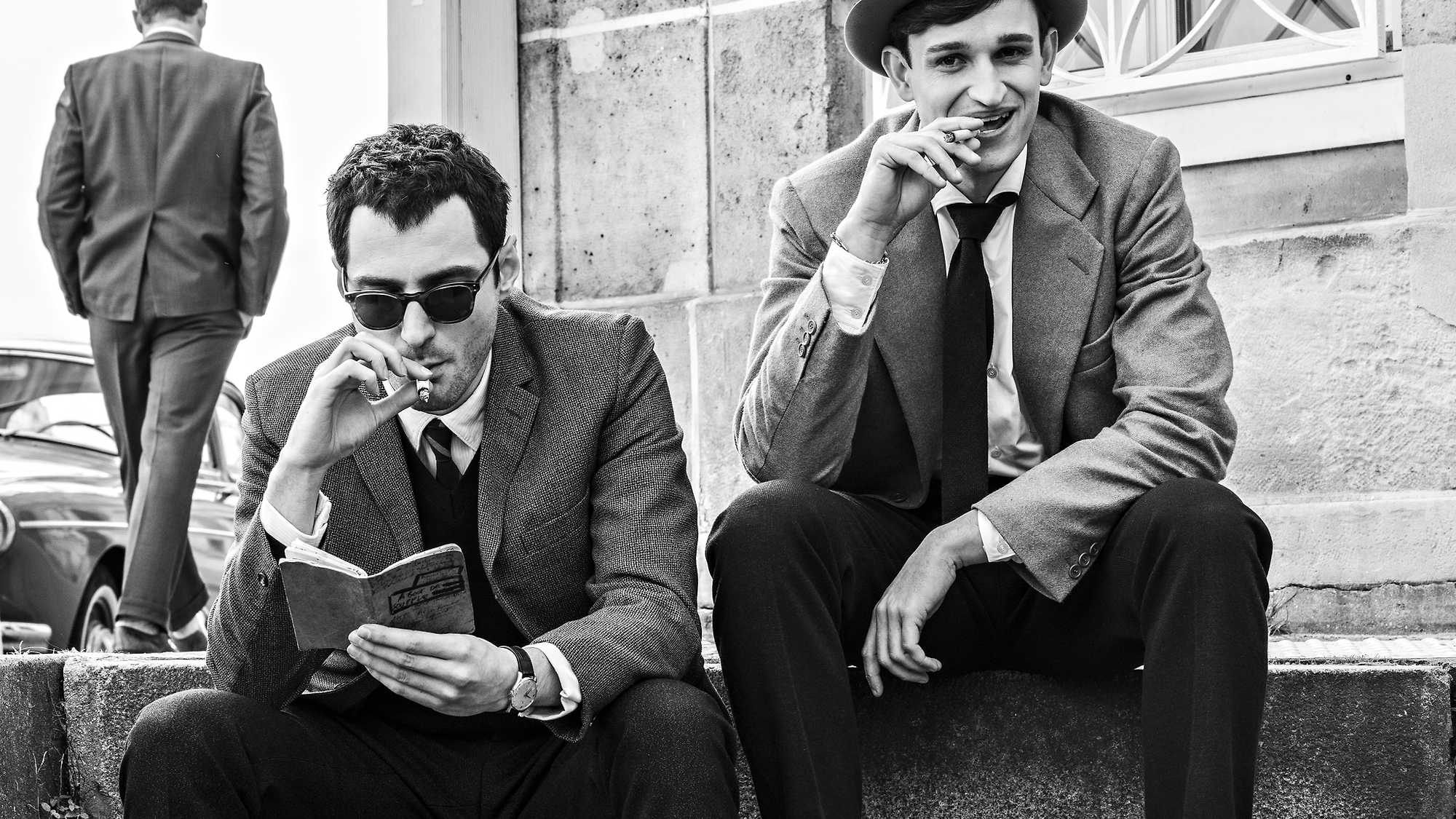
'Nouvelle Vague' disappeared almost as soon as it appeared in Russian theatrical release, which in no way reflects the quality and discussion potential of the film. About the aged Truffaut and the unbending Godard, about betrayal and complex love—rea...
Is the French New Wave a cultural-climatic phenomenon or an illustrated portrait novella? A man and a woman in a Buick convertible or the beautiful month of May? Little lovers or jewel collectors? Paris or Pointe-Courte? It seems that asking questions comes more naturally to the adopted children of Cahiers du cinéma than giving answers. Richard Linklater is not a French sixties filmmaker, so his 'Nouvelle Vague' (2025) does not welcome a question-and-answer format.
Not the best, not the most burning, but representative—this seems to be what the American director wanted to say in the context of the experimental 'Breathless' by Jean-Luc Godard (though these words belong to New Wave contemporary Luc Moullet). Linklater does not dispute, mock, or even explore, which leads to a compromise depiction of uncompromisingness. Godard considered himself an ethnologist in rectangular Wayfarer frames—so be it; called himself a new Jean Rouch—why not? An extroversive worrier?—great!
Linklater is ready to support Godard's artificial realism with all the force of his suspicious love for the New Wave, because it is Godard, in other words: Godard reflected the boundlessness of the astronomical calculation of an entire movement in his heart.
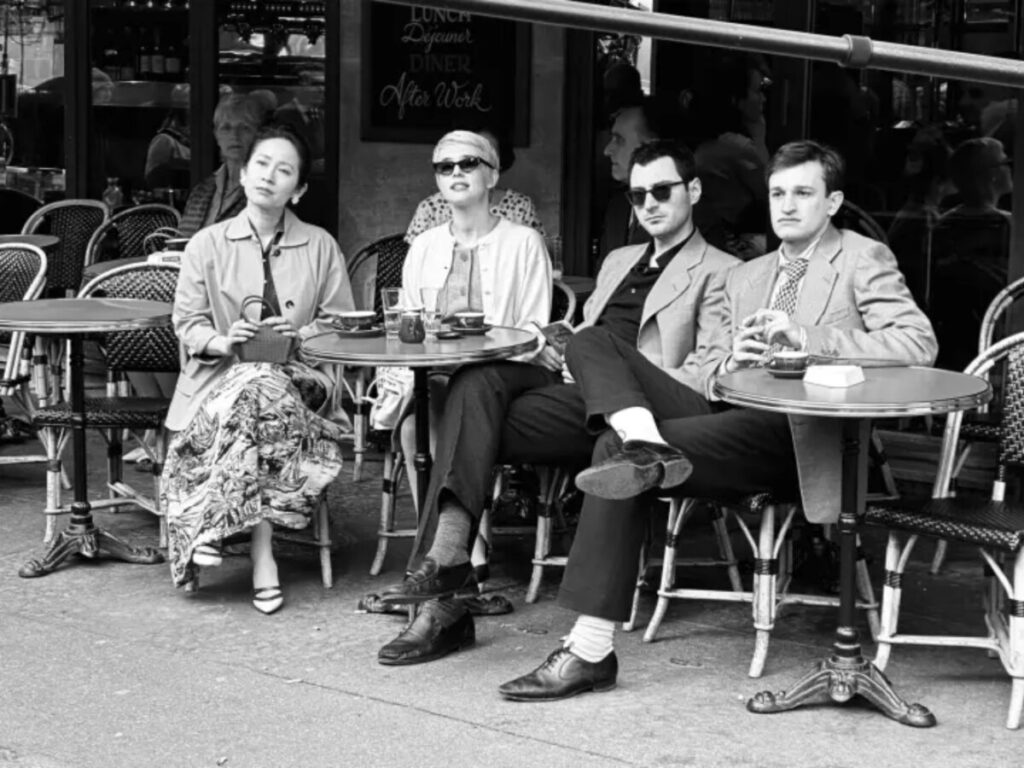
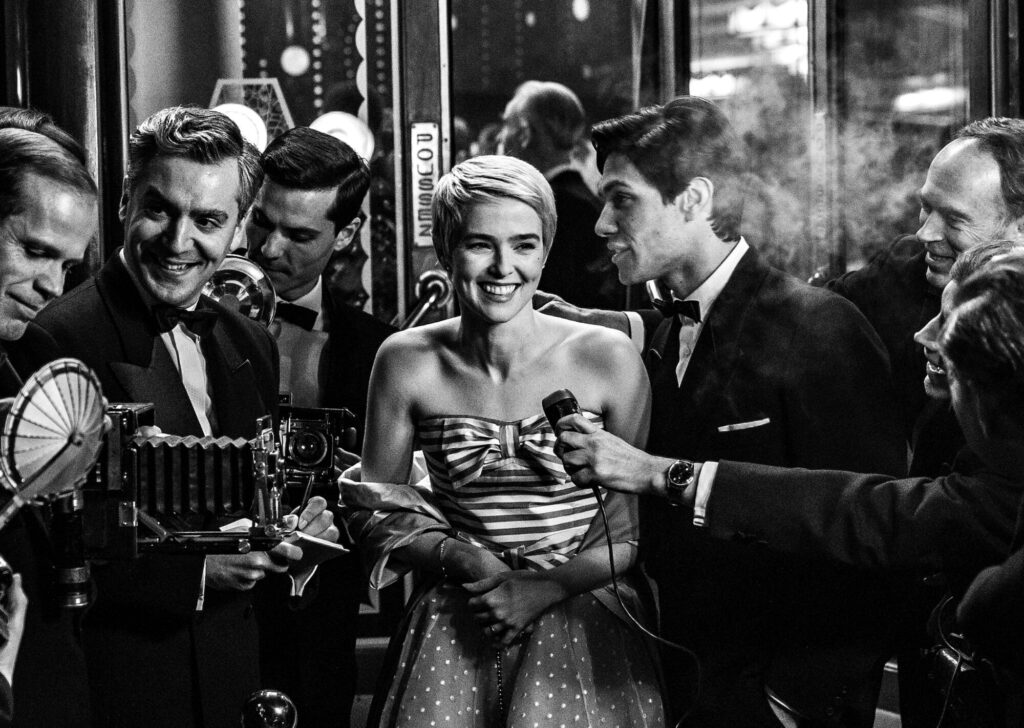
'Nouvelle Vague' flips through world film chronicles on the go, like Michel Poiccard flipping through a morning newspaper. Among the alphabetical nonsense and paper events, the inky names of Suzanne Schiffman, Claude Chabrol, Blanche Montel, Raoul Coutard, Juliette Gréco, Éric Rohmer emerge. Did Richard Linklater hope for a recognition effect? Hardly; rather, he demonstrated the reason for the emergence of the spirit of cinema in France.
However, among the furious film poems, Cannes applause, and youthful idols, Linklater's figure gets stuck in a disheveled and anxious position. While making a film about Godard, the director of 'Nouvelle Vague' surprisingly resembles François Truffaut for rather uncomfortable and symptomatic reasons.
The Mysterious Disappearance of the Revolution
The alleged author of the loose term 'cinéma de papa', a successful debutant and defender of the French Cinémathèque, Truffaut swore by revolution, confessed to avant-gardism, and promised to serve art even more fiercely than his colleagues did. But already in the noisy second half of the 60s, the director became bloated and drooped, and in the 70s he even took on projects worthy of those he ironically called 'daddies'.
The betrayal went unnoticed: as a border demarcator and peace disturber, Truffaut shut down the Cannes Festival in '68 so that no one would notice the obvious. His 'Stolen Kisses', dedicated to the martyr Henri Langlois, is an interior, shriveled, and tiny (though overall not bad) 'cinéma de papa'.
Screaming slogans, Jean-Pierre Léaud, Louis Malle, and Jean-Luc took the substitution for aesthetics, drowsiness for overexcitement, talk of revolution for revolution. Ultimately, this is how new cinephilia was born—the ugly twin brother of the feeling that united directors, critics, actors, and cinematographers in Cahiers du cinéma. Cinephilia was later successfully traded by worn-out brand directors, like , who made endless 'The Dreamers' and dressed up erotomaniacs and reluctant lovers in Gavroche costumes.
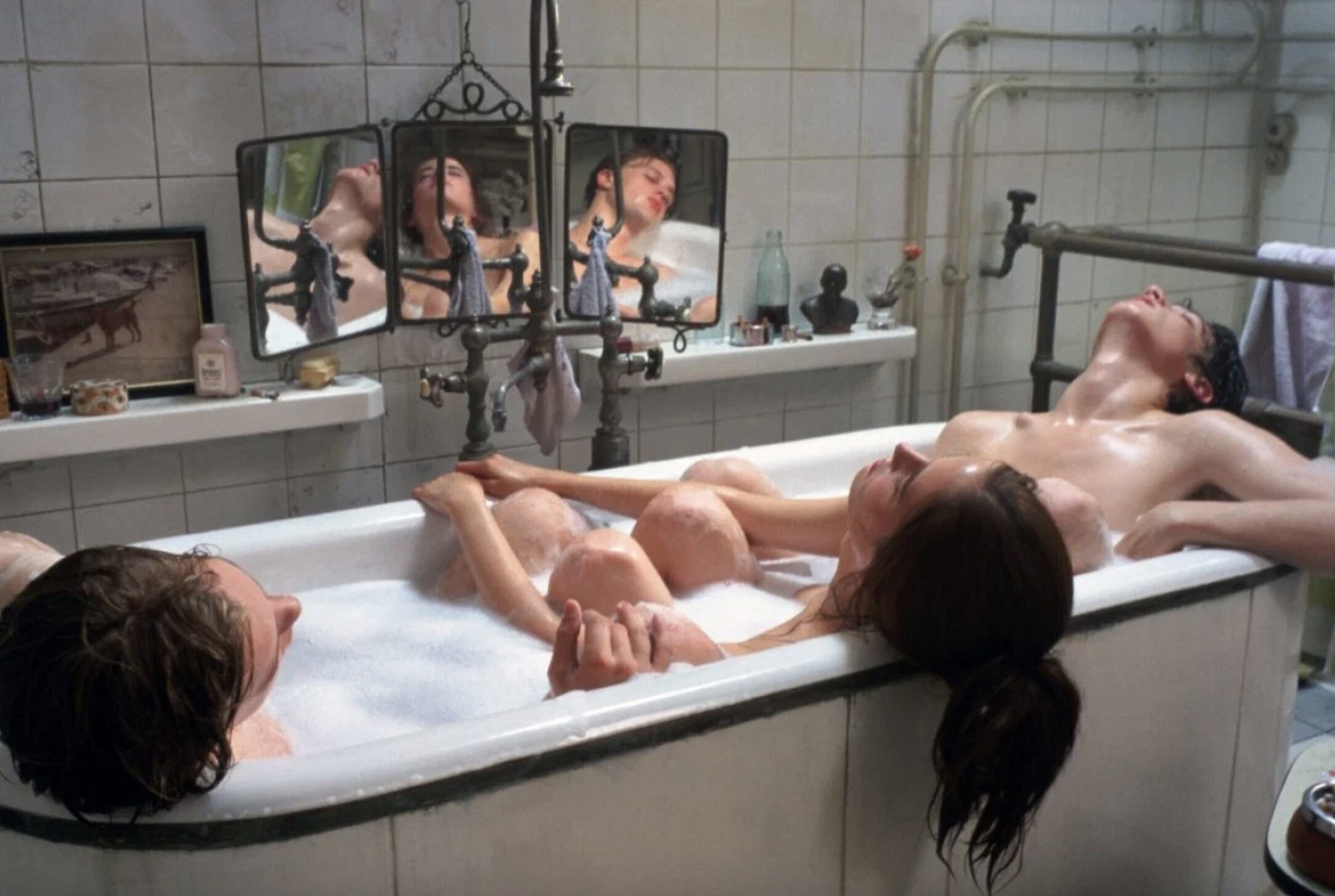
In theaters — 'The Last Emperor' by Bernardo Bertolucci. On this occasion, we recall five more films by one of the most famous Italian filmmakers.
Open material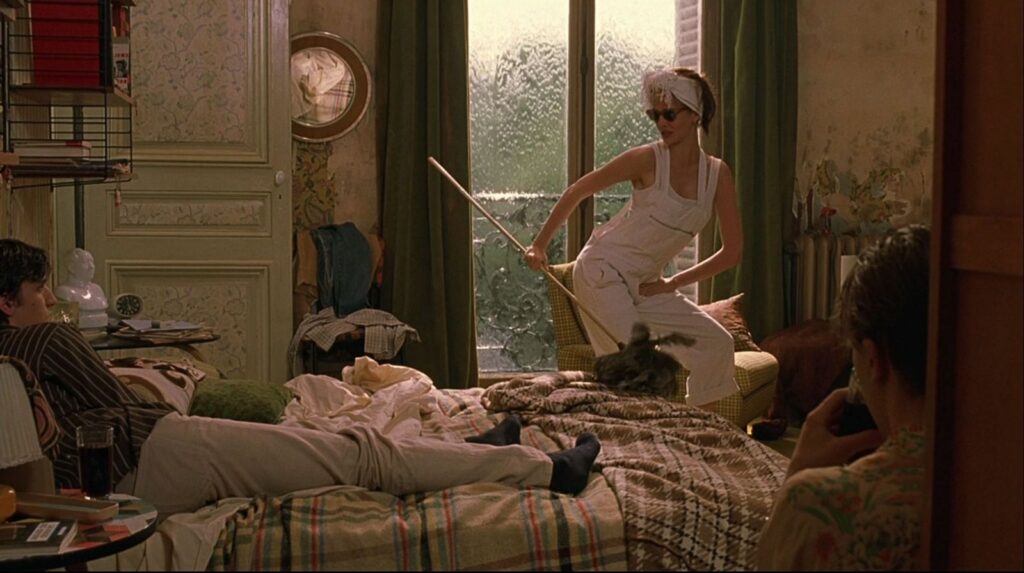
Young Godard on the Threshold of Immortality
Godard's films never pleased audiences all the time, but they pleased sometimes and by chance, which fully satisfied the author. Any experiment sooner or later ceases to delight 'generous' donors raised on the philosophy of results. Early viewers of the French Wave wanted to draw a final line under filmographies, thoughts, intentions, subjectivities, and thereby complete the creative project of an entire generation, but Jean-Luc, unlike Truffaut, continued what has no and cannot have an end. Red-zone reviews and dwindling budgets could not stop the raging experiment. Jean-Luc Godard's last film was 'The Image Book': a statement about war, terrorists, consumer society, and the life of cinema in the digital age.
Richard Linklater's last film is 'Nouvelle Vague', and before that—the intellectual melodrama 'Blue Moon', and a little earlier—the comedy about transformation 'Hit Man'. They are liked by audiences and critics; 'Nouvelle Vague' is liked a little more. The declaration of love for cinema, the authenticity of the portraits, the fascinating immersion into the working method of early Godard certainly deserve something that they want to deserve.
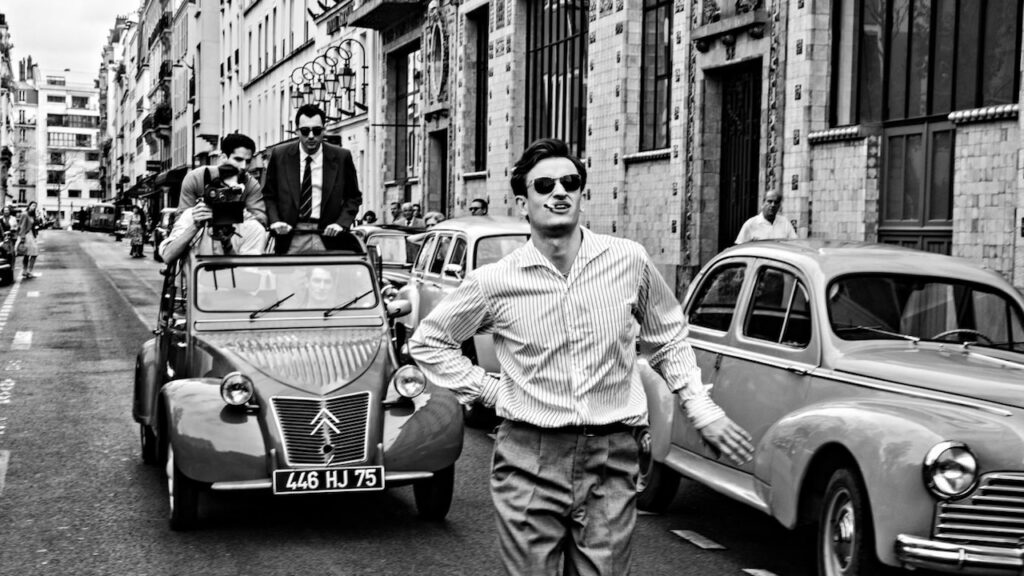
Richard Linklater is talented and precise, passionate and free, objective and universal, but for some reason he makes a film about Godard as if he were Truffaut, regretting the resignation of Henri Langlois. The American's first French project promised to be a milestone, a discernible virtue, but only received the desired stamp of 'cinephilia'.
It is important to understand that the quality of the complaints against Linklater already says a lot about his merits and forces one to recall the famous trilogy, 'Boyhood', 'Dazed and Confused'. Criticism of 'Nouvelle Vague' is not an accusation, but a desire to root for a rare and intelligent 'player' not only within the 'regular season' but also 'in the playoffs', because one falls in love not with stability, but with performance.
Comments
0No comments yet.
Sign in to join the discussion.