
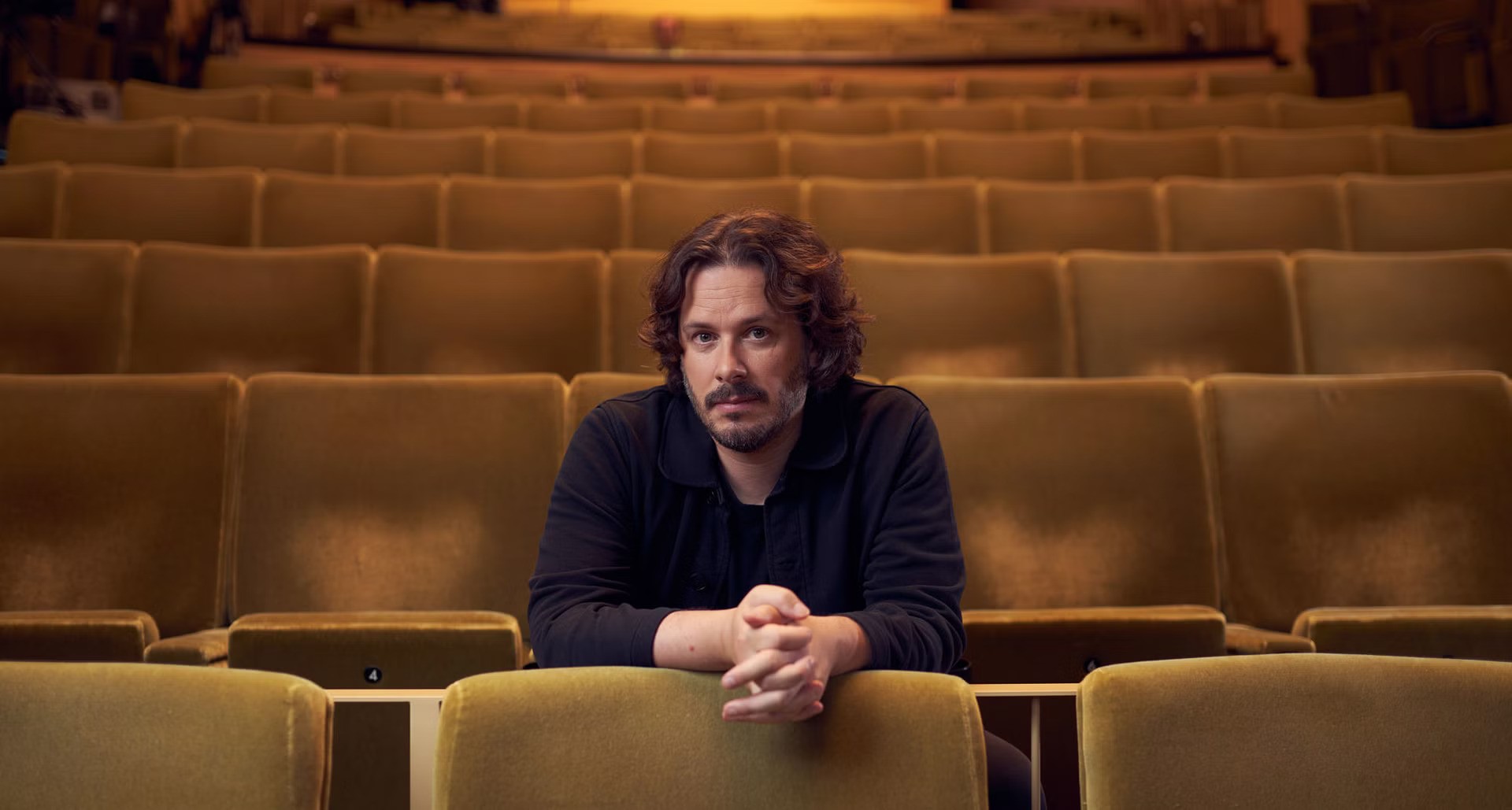
'The Running Man' is being released, directed by one of the best contemporary directors, and his name is Edgar Wright. In honor of this event, we recall his previous works—and try to rank them.
How was the top compiled? Through mass voting, of course! Due to differing ratings from participants, the final top remained unknown until the last moment. But what came out is what came out—and we like the result.
Unfortunately, there was no room in the Edgar Wright top for his early work 'A Fistful of Fingers', the documentary 'The Sparks Brothers', or even 'Last Night in Soho' (which greatly upset several of our authors). But the list was compiled with love and warmth, so enjoy!
5th Place — 'Baby Driver' (2017)
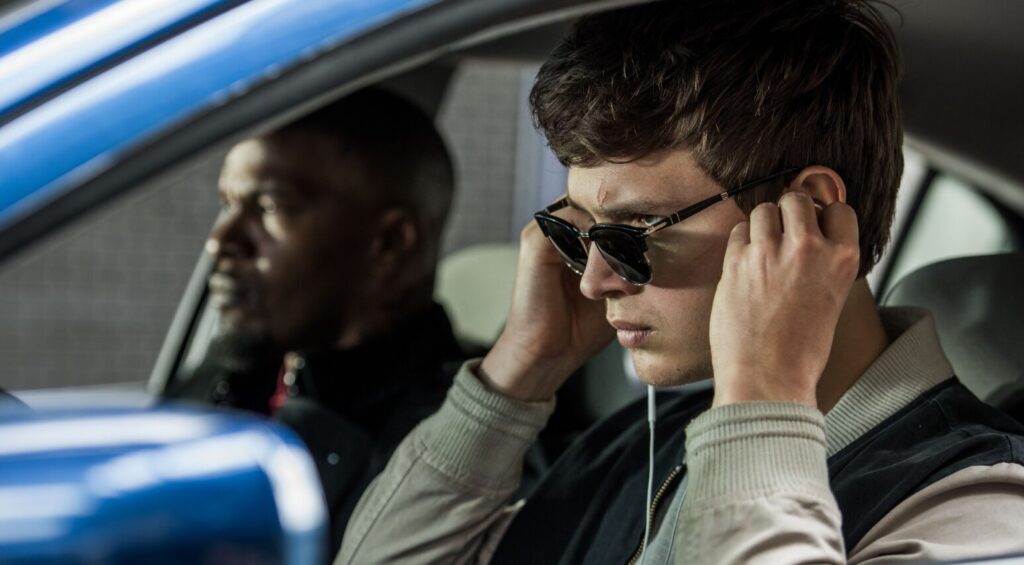
'Baby Driver' is a thrilling crime thriller that stands out with its unique style among all the director's works. Wright created a film where sound and editing work in sync with the characters' actions, especially the main character.
The film combines intense action scenes with light humor and touching moments. The music here is not just background but almost a 'character' that accompanies the characters' emotions and plot highlights, creating an atmosphere of drive and relentless time.
Viewers will surely remember Kevin Spacey as the influential crime leader. Lily James, who plays Baby's love interest, brings a romantic and bright note to the film, creating a contrast with the criminal backdrop. And Jamie Foxx impresses with his charisma and aggressive energy as the partner in heists. It's also worth noting the protagonist played by Ansel Elgort, who will definitely be remembered as another master of driving in cinema.
In addition to the dynamic plot and vivid characters, the film touches on themes of addiction, fighting personal demons, and hope for a new beginning. So 'Baby Driver' is simultaneously a spectacular, emotional, and stylish movie that leaves a strong impression and definitely deserves a spot in Wright's top films.
4th Place — 'Shaun of the Dead' (2004)
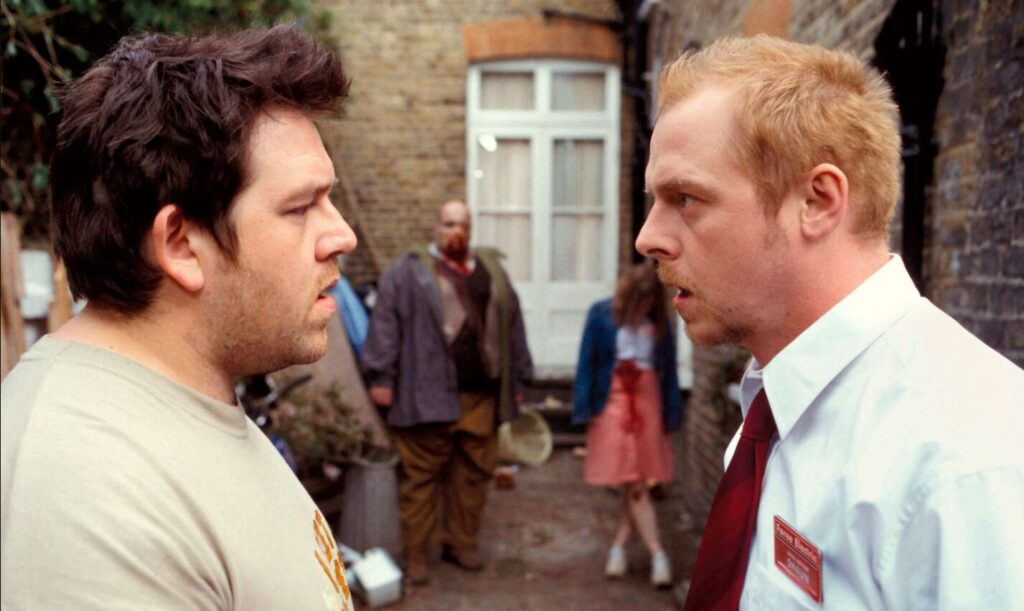
'Shaun of the Dead' is effectively Edgar Wright's feature-length debut and at the same time the quintessence of his directorial style: fast editing, signature zoom shots, attention to the smallest details, and a special flavor from the combination of dark humor and dynamics. The film became the first truly original comedic zombie horror of the new millennium, organically blending several genres. With the love of a true fan of this subgenre, Wright plays with plot tropes, forming a unique trilogy that combines everyday life and the extraordinary.
The main character is an ordinary man who has lost interest in life, but the zombie apocalypse becomes a catalyst for his internal transformation. Shaun struggles with the problems of 'adult' life against the backdrop of a walking dead invasion, which here are organically woven into British cultural and humorous fabric. The film serves as a metaphor for susceptibility to conformism, loss of connection with oneself, individuality, and literally life energy, telling a personal story of the hero's struggle with apathy and finding leadership in chaos.
The plot not only dilutes horror clichés but also richly develops them through a well-thought-out script and precise editing, which maintain the dynamics and emotional plausibility of the characters. Despite sometimes absurd situations, the characters resonate because they seem real: awkward, sincere, just like us.
Shaun's journey and that of his loved ones is not just a story of survival but also an attempt to regain a sense of normalcy and feel solid ground in an upside-down world (how relevant this is now). And, of course, it is a true cultural phenomenon that elevated British cinema to a new level. As part of the wave of revival of zombie horror, the film turned into a real ode to friendship and the fight against social anxieties, presented with unique humor and warmth. Its impeccable rhythm, heartfeltness, and fearless originality make each viewing fresh and engaging for many fans for over twenty years now.
3rd Place — 'Scott Pilgrim vs. the World' (2010)
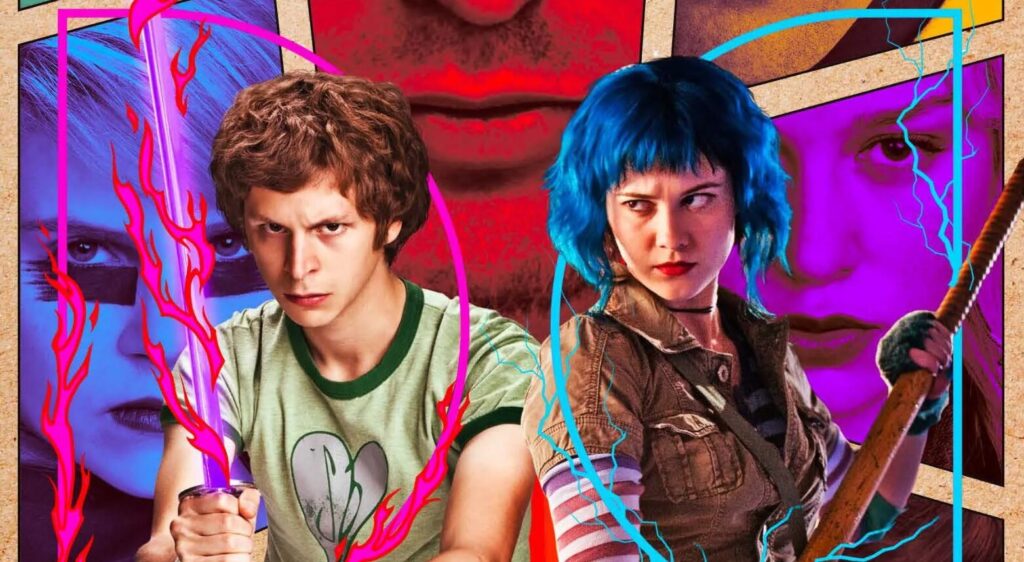
Edgar Wright is a director who works with relatively large budgets but always makes B-movies. His pervasive grindhouse style, throughout his career, has hidden for the viewer many 'dark valentines' and charming oddities, several apocalypses and rhythmically ordered love stories, a couple of short-haired comedians and tousled infants who benignly replace each other.
Wright's films are like a journey of a wild head from one goofy barber to another, where the main chair is reserved for 'Scott Pilgrim'—a free but slightly detached superheroics of the newest generation.
Digital acid brawls with ex-boyfriends and analog rehearsals of a youth rock band—it seems no one felt the change of eras as much as Edgar Wright, who created his myth about a girl with blue-pink hair and a guy with a guitar who doesn't care about anything except the most important thing.
2nd Place — 'The World's End' (2013)
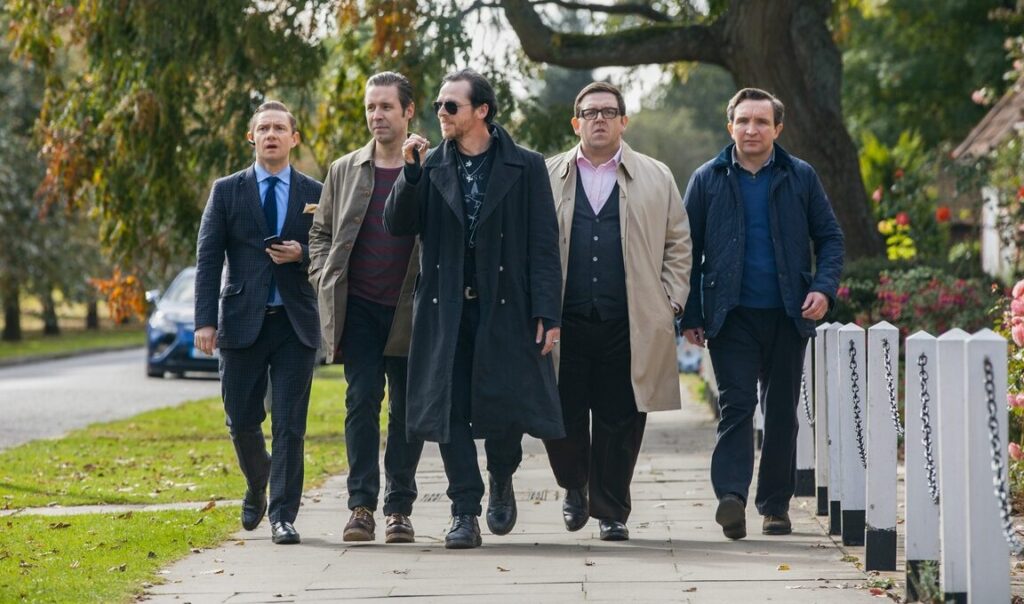
All renowned filmmakers can be roughly divided into those who primarily distinguished themselves as directors and those who excelled more as screenwriters. If we talk about Edgar Wright, he would definitely belong to the second category, and he reached the peak of his form as a playwright precisely in the final chapter of the 'Blood and Ice Cream' trilogy. Behind the external simplicity of the plot about five school friends who, after many years, decide to close the gestalt with an alcohol marathon, lies a mosaic of small details and foreshadowings.
For instance, the names and signs of each pub hint at the events that will unfold inside, and the entire present-day storyline throughout the heroes' journey reproduces the events of the 1992 binge. Wright had not been stingy with such techniques before and generously scattered 'Chekhov's guns' throughout the runtime, but in this film he definitely surpassed himself. Upon rewatch, when the resolution is already known, the viewer gets the opportunity to look at the story from a different angle, thanks to which many phrases casually thrown by characters in dialogues acquire new shades of meaning. The high 'rewatchability' of the film is perhaps the most eloquent indicator of the screenwriter's skill.
Moreover, one wants to return to 'The World's End' also because it is a fantastically sweet dramedy about belated growing up. The 'eternal partyer' Gary King embodies not only destructive nostalgia but also the fear of routine and the existential horror of aging. Unlike his friends, who have settled down and have stable incomes, Simon Pegg's character has achieved nothing in life. In Wright's films, the central place in the plot is always given to 'losers,' but Gary more than others resembles a real person—perhaps some acquaintance of yours or even yourself!
1st Place — 'Hot Fuzz' (2007)
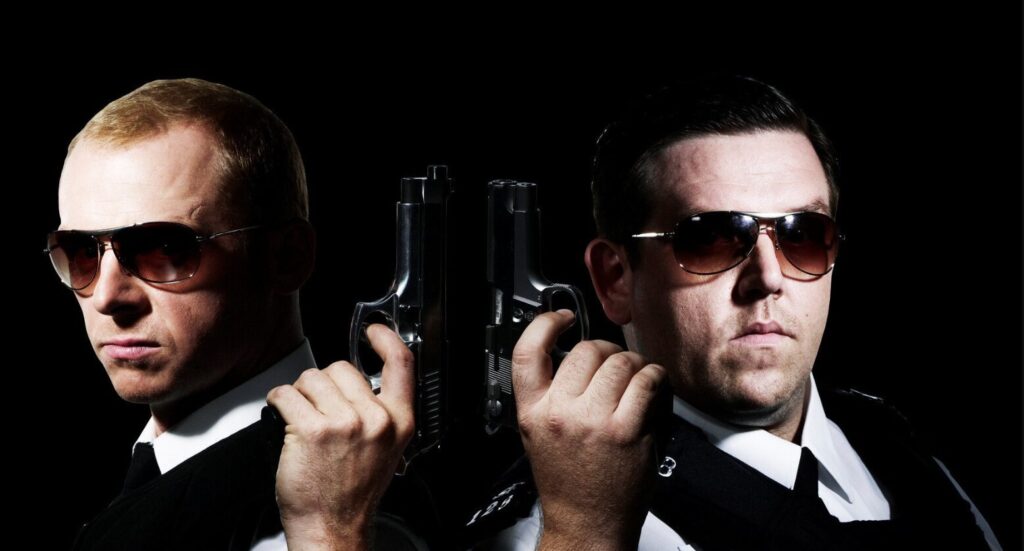
Edgar Wright's 'Hot Fuzz' is a rowdy and at the same time brilliant farce. A film that mocks all police action movies at once. Wright took everything we remember from 'Lethal Weapon', 'Point Break', and even 'Bad Boys'—shootouts, explosions, cool cops with a troubled past—and ground it all into absurdity. The result is not just a farce, but a very funny and clever chaos where every genre cliché is presented in the most comical light.
The best part here is the signature humor of the British jester, which he tries to deliver with a straight face, but that makes it even funnier. Making deeply national and sometimes even local humor understandable to absolutely anyone on the planet, you must agree, is a sign of great talent. In 'Hot Fuzz', Wright behaves like the perfect companion in a movie theater. He doesn't pretend to be a genius; he just sits in the chair and laughs along with everyone at the misadventures of two hapless police officers, sincerely inviting viewers to this fun ride.
Comments
0No comments yet.
Sign in to join the discussion.