

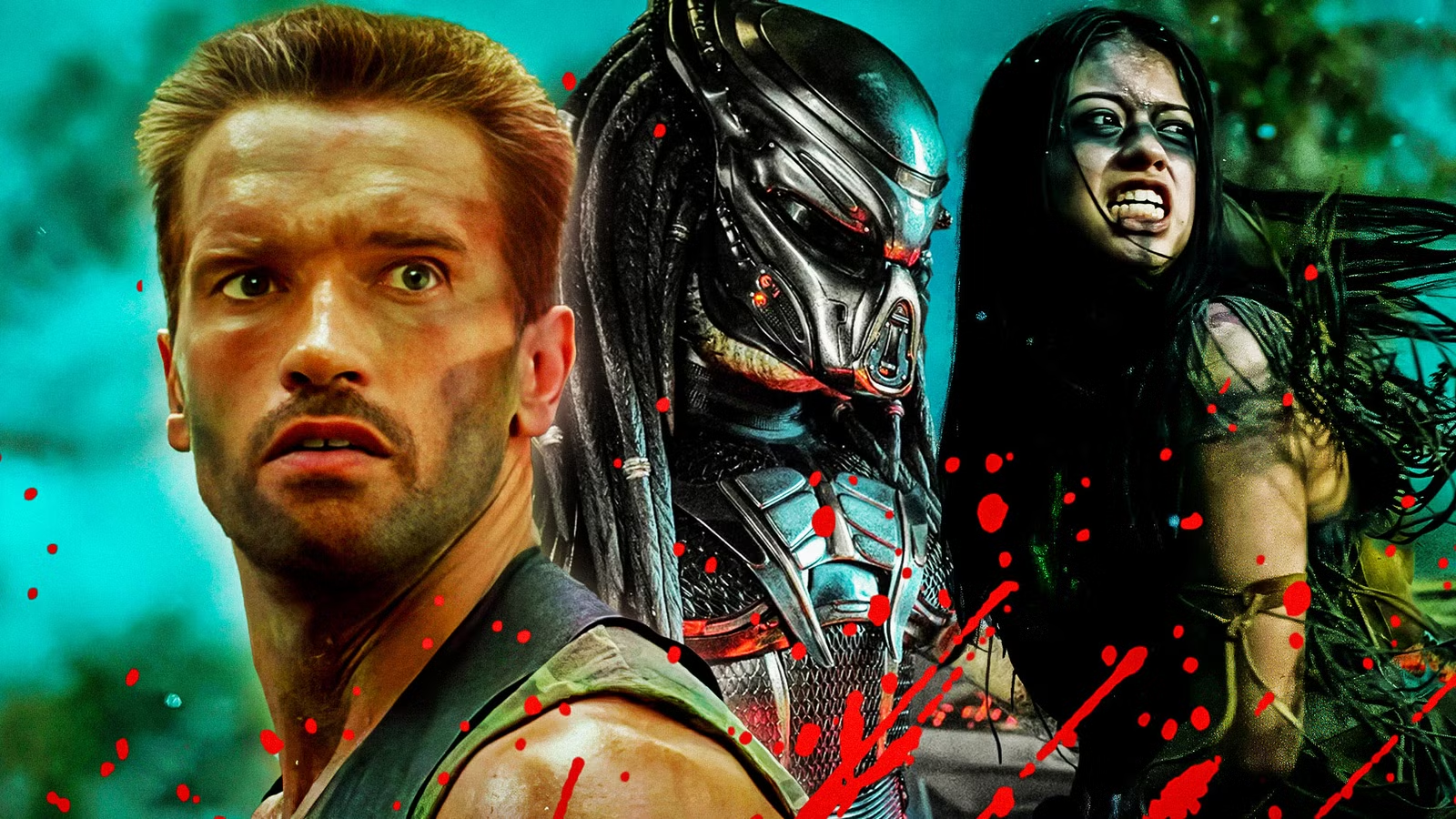
For almost 40 years, the Predator has continued its hunt: for the most worthy warriors and devoted viewers, time and again voting with dollars and rubles for the continuation of the bloody feast. We recall the entire franchise in honor of the release...
On November 7, 2025, the film "Predator: Planet of Death" was released worldwide, marking a new turn in the development of the popular franchise that has been delighting audiences for almost 40 years. Elle Fanning as a legless android teaming up with an alien hunter? A Predator as a protagonist rather than a villain? PG-13 instead of the traditional R-rating? Dan Trachtenberg, who already saved the series from oblivion with "Prey," turns everything upside down again. And this is a great reason to recall the entire journey of the Predator, which began back in 1987.
In this guide, we will talk about the franchise, its influence on pop culture, and each of the films and animated features in the chronological order of their events.
What the Predator Franchise Is About
At the core of the cinematic universe is the Yautja race, alien hunters for whom the pursuit of dangerous prey is not entertainment but a sacred ritual. These creatures travel the galaxy in search of worthy opponents, collecting trophies from defeated enemies—skulls, spines, weapons. Their code of honor forbids killing the unarmed and weak: a Predator will not touch an unarmed woman or a wounded man; it seeks a real challenge.
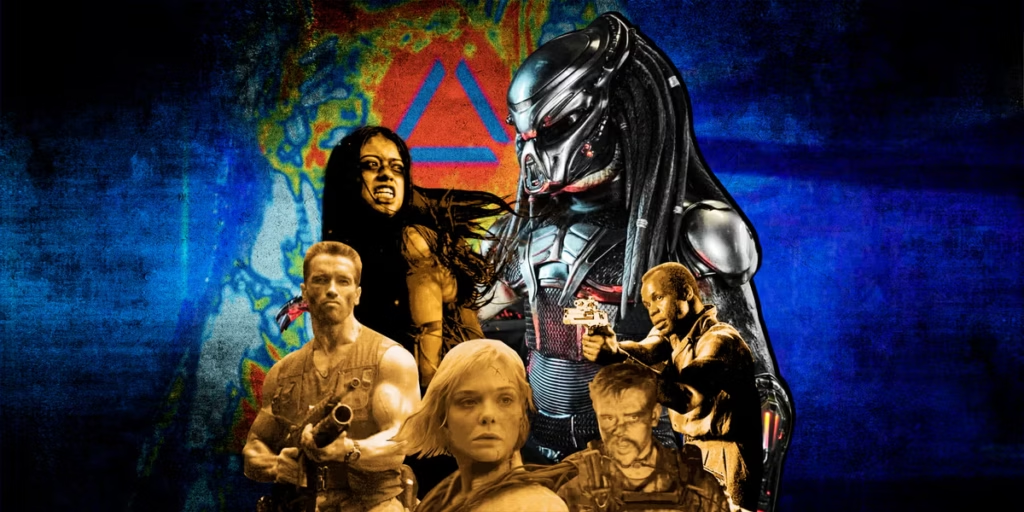
The franchise explores the idea that humanity, considering itself the apex of the food chain, suddenly becomes prey for beings that surpass us technologically and physically. But it is precisely the rejection of technology, a return to primitive survival instincts, that allows humans to win—this is the thought that permeates the original 1987 film.
The article contains spoilers for the films of the Predator cinematic universe
Influence on Pop Culture
John McTiernan's "Predator" became a box office hit with nearly $100 million on a $15 million budget and spawned a cultural phenomenon. The image of the alien hunter with dreadlocks, a plasma cannon on its shoulder, and the ability to camouflage spread into video games, comics, novels, and countless references in other media.
The brilliant monster design by Stan Winston, combining predatory biomechanics with elements of Native American culture and the samurai code of honor, proved so memorable that the Predator became an icon on par with the Alien. The phrase "Get to the chopper!" by Arnold Schwarzenegger turned into a meme, and the very idea of an invisible enemy hunting elite special forces spawned dozens of imitations. Over time, the perception of the character evolved: from a pure villain, the Yautja transformed into anti-heroes with their own moral code—which we see in the latest "Planet of Death."

Interestingly, the iconic appearance of the Predator with its characteristic mandibles came about by chance: James Cameron during a dinner with Winston casually remarked that he always wanted to see an alien with such anatomy—a type of creature not yet seen in cinema. Winston took the idea, and one of the most recognizable design elements of a sci-fi monster was born from that conversation. The master of special effects in the 1980s created a whole gallery of iconic creatures—the Terminator, the Alien Queen from "Aliens," and the Predator—effectively defining the look of fantasy cinema for the next decade.
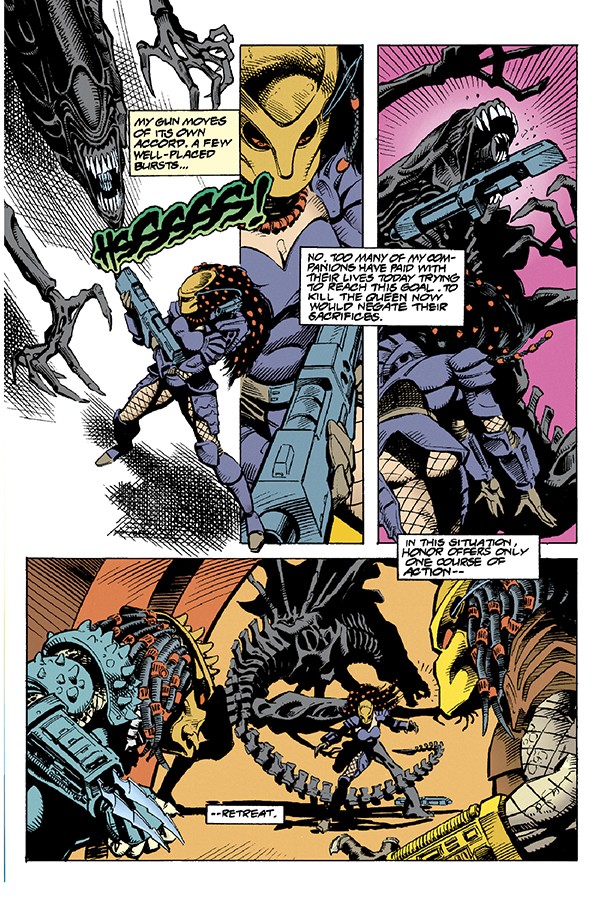
Dark Horse comics turned the franchise from a single film into a multimedia empire long before the Marvel cinematic universes appeared. As early as 1989, just two years after the original's premiere, the publisher released the first Predator comics, and in 1990 launched the Alien vs. Predator series—the concept was so successful that it lasted almost 30 years, until the rights moved to Marvel after Disney's purchase of Fox. These comics expanded the mythology, showed Yautja culture, their internal conflicts, and the centuries-old war with the Xenomorphs. Thanks to Dark Horse, crossovers with "Terminator," Batman, even the teenagers from Archie Comics appeared—an absurd but unexpectedly bloody parody.
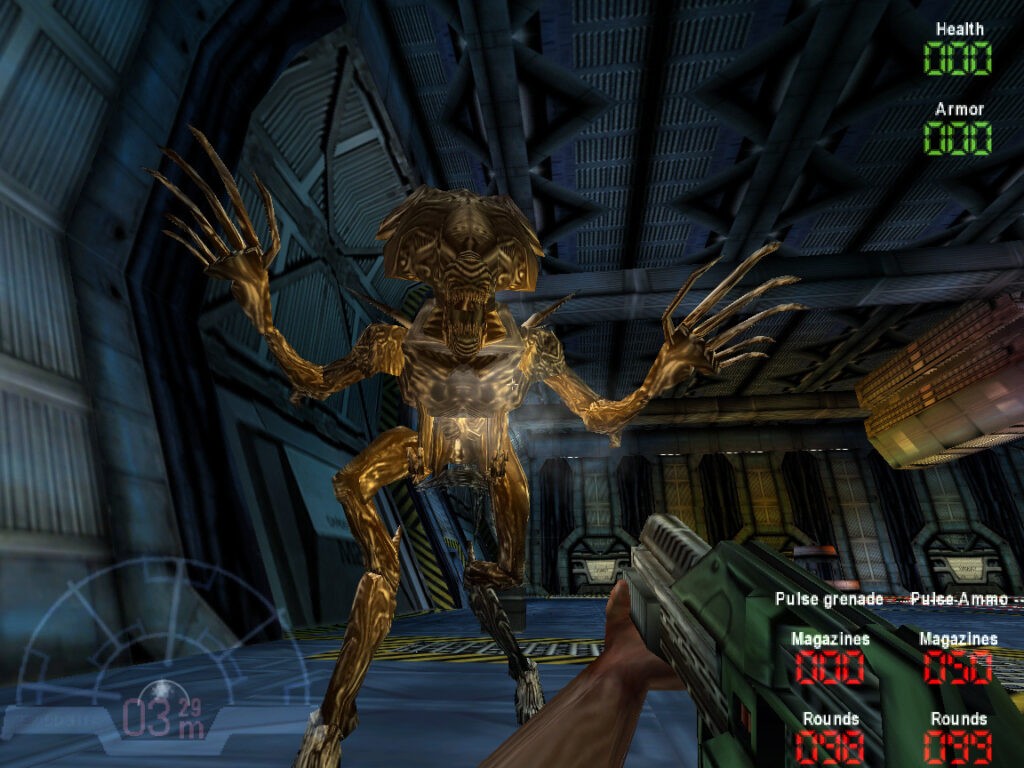
The AvP video games set the standard for multi-perspective storytelling long before it became mainstream. The 1999 PC game allowed players to complete campaigns as a Colonial Marine, a Xenomorph, or a Predator—three radically different gameplay systems, three philosophies of combat. Switching between races gave a sense of what it's like to be these creatures, not just fight against them. This mechanic influenced dozens of projects from survival horror to tactical shooters, offering a harsh, uncompromising view of conflict without moralizing.
In 2025, Marvel launched the series "Predator Kills the Marvel Universe," where the Predator King with vibranium from Wakanda turns Earth into a hunting preserve and begins collecting the skulls of Iron Man, Wolverine, and Spider-Man—the franchise continues to cross over with any universe it can reach.
All Films and Animated Features: Chronology of Stories
"Predator: Killer of Killers" (2025) — from 841 AD
Viking Age (841 AD)
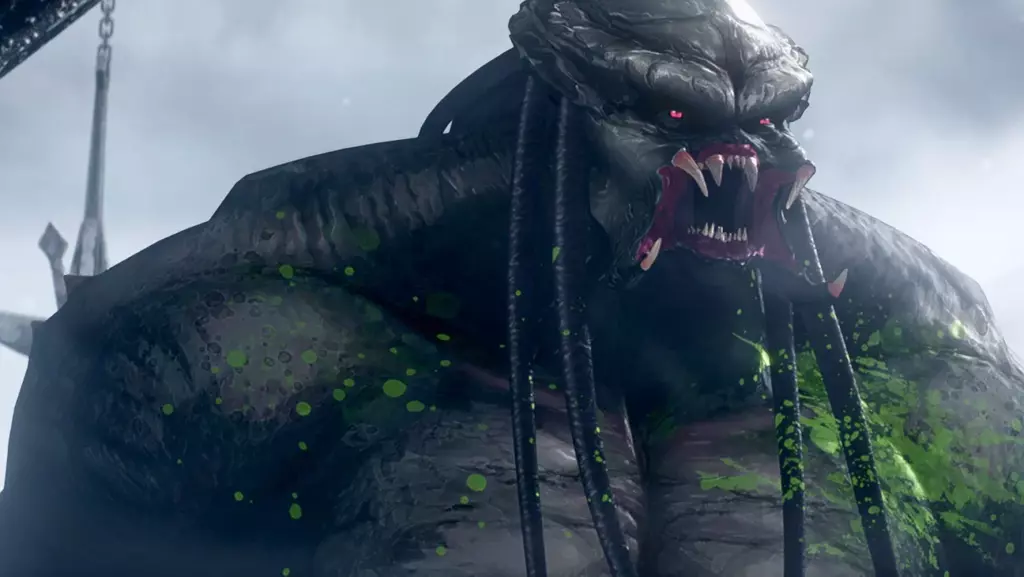
Chronologically, humanity's first encounter with the Predator occurred in 9th-century Scandinavia. The warrior woman Ursa leads her clan and her son Anders on a bloody revenge against the Krivich tribe, who killed her father. The Vikings call the suddenly appearing alien hunter "Grendel"—after the monster from "Beowulf," creating an elegant parallel between Norse mythology and cosmic horror.
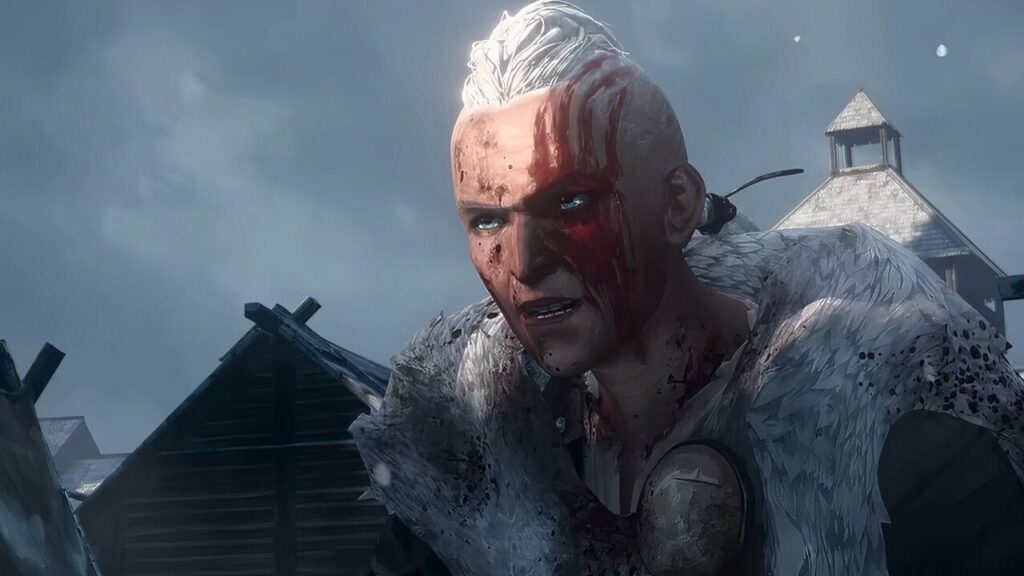
For the Yautja, Vikings are ideal prey: warriors unafraid of death, since all roads lead to Valhalla. Ursa confronts a creature that surpasses her technologically but not in spirit—she defeats the Predator by using its own weapon against it. After her victory, Ursa is abducted: the Yautja take those who manage to kill their kin, turning Predator killers into trophies in reverse.
Feudal Japan (1609)
Nearly eight centuries later, the Predator appears in Japan during the shogunate era. The ninja Kenji engages in a brutal fight with his samurai brother Kiyoshi for the right of inheritance, but their duel is interrupted by the alien hunter. The Yautja pursues Kenji through the castle, observing the fratricidal conflict as entertainment.

The brothers are forced to unite against the common enemy, using the Predator's technology—its mask and plasma weapon—to defeat it. In the finale, Kenji and Kiyoshi work together, cutting the alien down with swords. Like Ursa, the victorious ninja is abducted to participate in gladiatorial battles on the Yautja ship.
World War II (1942)
The third episode of the anthology moves the action to the skies during the Battle of the Atlantic. US Navy mechanic and pilot John J. Torres, along with his squadron, notices a high-tech ship that shoots down American fighters one by one.
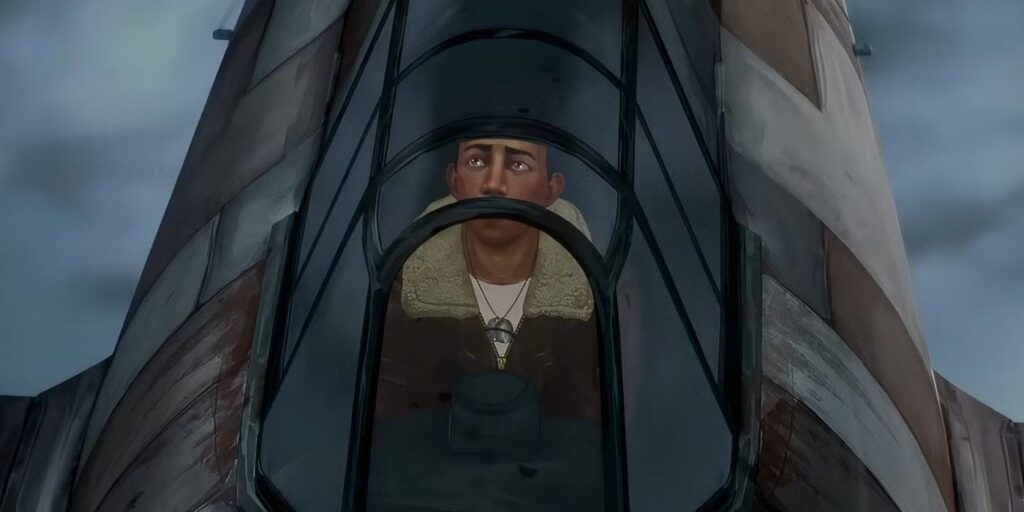
It turns out that at the helm of the alien vessel is a Predator, using aerial combat as hunting grounds. Torres and the surviving pilots use their wits, trapping the Yautja ship in the sky. The victorious Torres is also captured by the Predators and taken to their ship.
Gladiator Arena (Undetermined Time)
The final segment of the animated film unites all three protagonists. Ursa, Kenji, and Torres wake up on the Yautja ship and find themselves in a giant gladiator arena filled with Predator spectators. The Predator Warlord, nicknamed "King Grendel," appears and explains the rules through translation collars: the three humans must fight to the death, and the winner will earn the right to fight the Warlord himself.
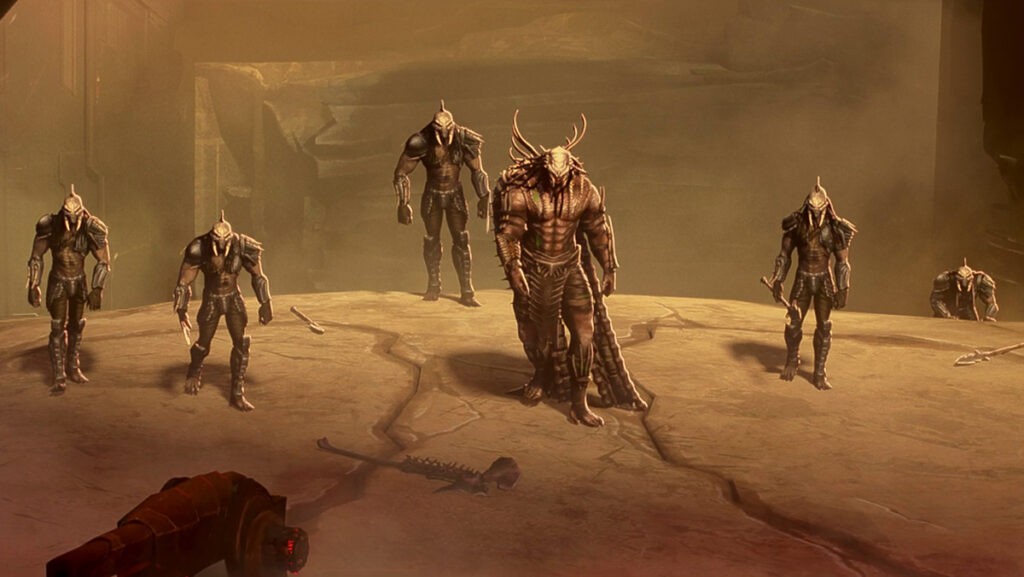
Each warrior is given a weapon from their era—an axe, a katana, a pistol—but instead of killing each other, the trio rebels. Kenji and Torres manage to escape, but Ursa sacrifices herself to give them a chance. In the final shots, animated cameos appear of Naru from "Prey," Mike Harrigan from "Predator 2," and Dutch from the original film—a hint that the Yautja have been collecting the strongest Predator killers from all eras for centuries.
received a phenomenal 95% on Rotten Tomatoes, surpassing the original with Schwarzenegger, and expanded the franchise's mythology by showing Yautja culture as a Roman model with gladiatorial battles.
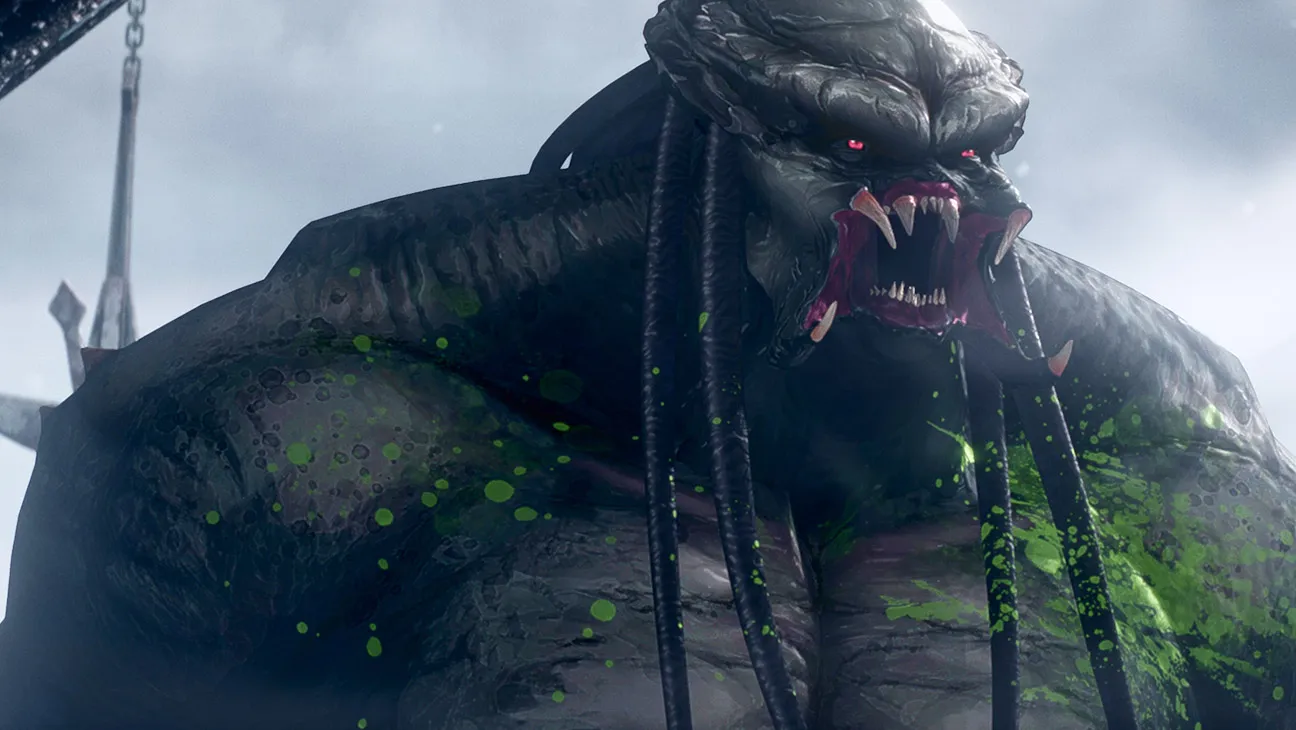
The animated blockbuster "Predator: Killer of Killers" has been released on Hulu, expanding the lore of the famous franchise and offering uncompromising non-stop action.
Open material"Prey" (2022) — 1719
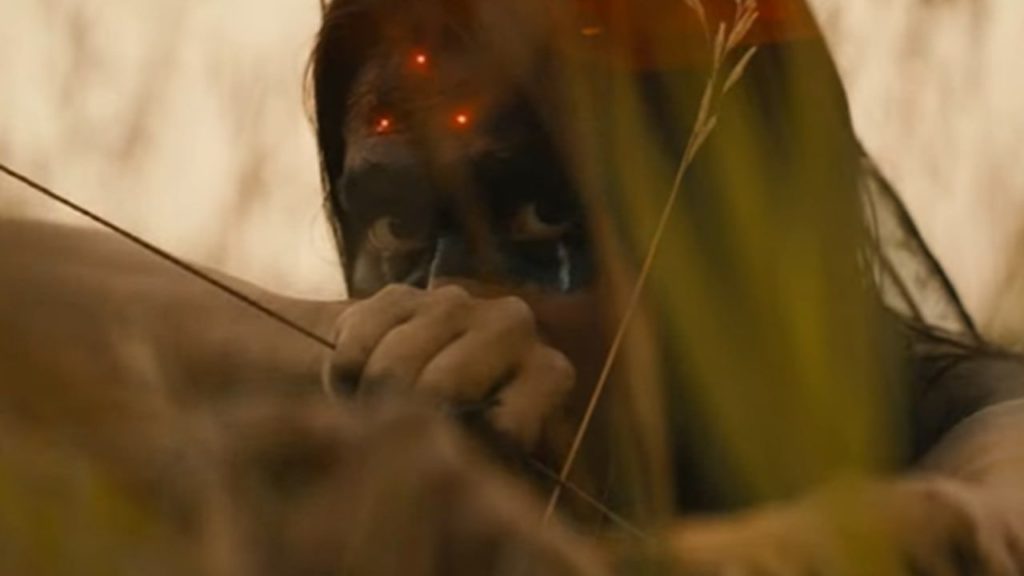
After the encounters with Ursa and Kenji from the animated film "Predator: Killer of Killers," but 268 years before the events of the original film, the Predator returns to Earth. Naru (Amber Midthunder), a young Comanche woman who dreams of becoming a great hunter, discovers that a creature from the skies is hunting her people.
The action takes place in the Great Northern Plains in September 1719, and Naru ultimately confronts not only the Predator but also French fur trappers, simultaneously proving to her brother Taabe and the entire tribe that a woman can be a warrior.

Director Dan Trachtenberg turned the prequel into a brutal and inventive survival horror set against picturesque locations and returned critical acclaim to the franchise, which it hadn't seen in decades. In the end credits of "Prey," images of several Yautja ships arriving on Earth flash—a hint that the Predators have returned to retrieve their kin's body and take revenge. Later, the director expanded on this idea in "Killer of Killers."
"Predator" (1987) — 1980s
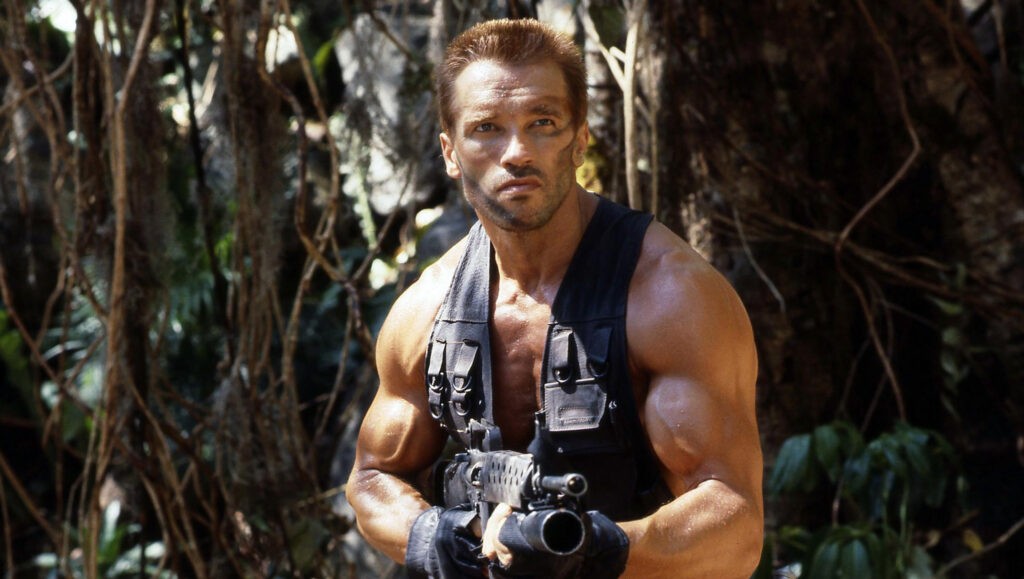
For audiences, it all began here. Major Alan "Dutch" Schaeffer (Arnold Schwarzenegger) and his team of elite special forces land in the jungles of Central America to rescue an important person supposedly captured by rebels. But the mission turns out to be a cover: their fellow soldier George Dillon (Carl Weathers) from the CIA manipulated them from the start.
When the team discovers the flayed bodies of "Green Berets" hanging high in the trees, it becomes clear: they are facing something beyond human understanding. One by one, the soldiers, considered the most dangerous men on the planet, die at the hands of an invisible hunter. The Predator plays with its prey, using cloaking technology and plasma weapons.
In the final confrontation, Dutch faces the alien alone, stripped of all modern weaponry and returning to primitive traps. The defeated Yautja, mimicking human laughter, activates its self-destruct—a final gesture of a warrior's pride, unwilling to become a trophy.
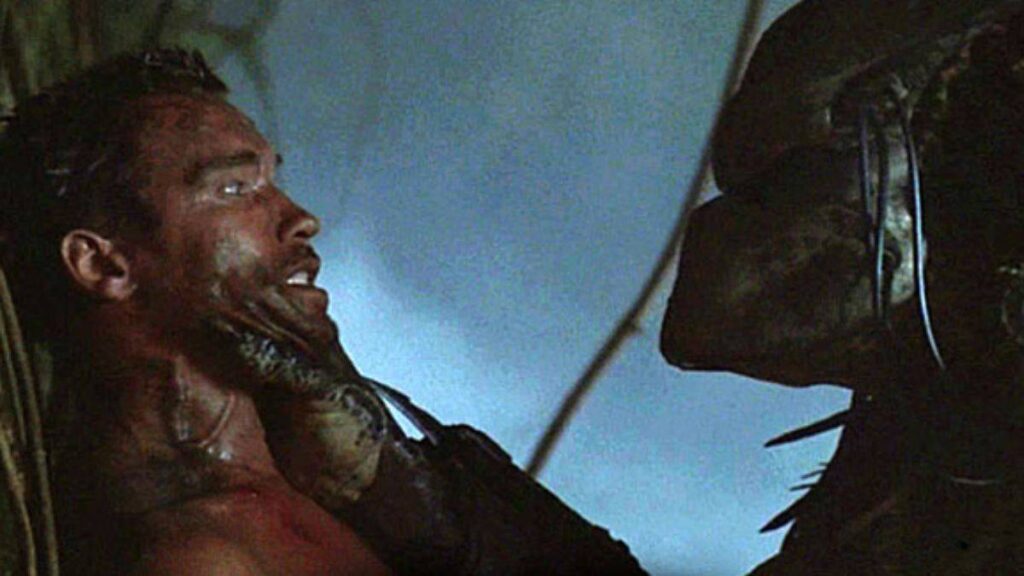
The film earned nearly $100 million on a budget of just $15 million and received an Oscar nomination for Stan Winston's special effects, turning Schwarzenegger into an action icon. The success is largely due to the mastery of director John McTiernan, who turned a simple story into a high-energy thriller with horror elements, where suspense outweighs gunfights. The director used the dense jungles of Central America as a natural backdrop for paranoia: long, lingering shots of empty branches force the viewer to peer into the greenery, trying to spot the hunter before the characters do.
McTiernan trusted the audience: when the Predator appears only through POV shots with the characteristic heartbeat of the scanner, tension builds naturally, without cheap jump scares. Even almost 40 years later, the final fight between Dutch and the alien remains a benchmark for 1980s action finales: perfectly paced, shot with surgical precision.
Critic Roger Ebert called "Predator" a model of the genre, where "strong and simple characters, excellent cinematography, and stunning special effects move at a breakneck pace." Empire magazine included the film in its list of the 500 greatest films of all time, and Alan Silvestri won a Saturn Award for the soundtrack, which became as iconic as the monster itself.
"Predator 2" (1990) — 1997
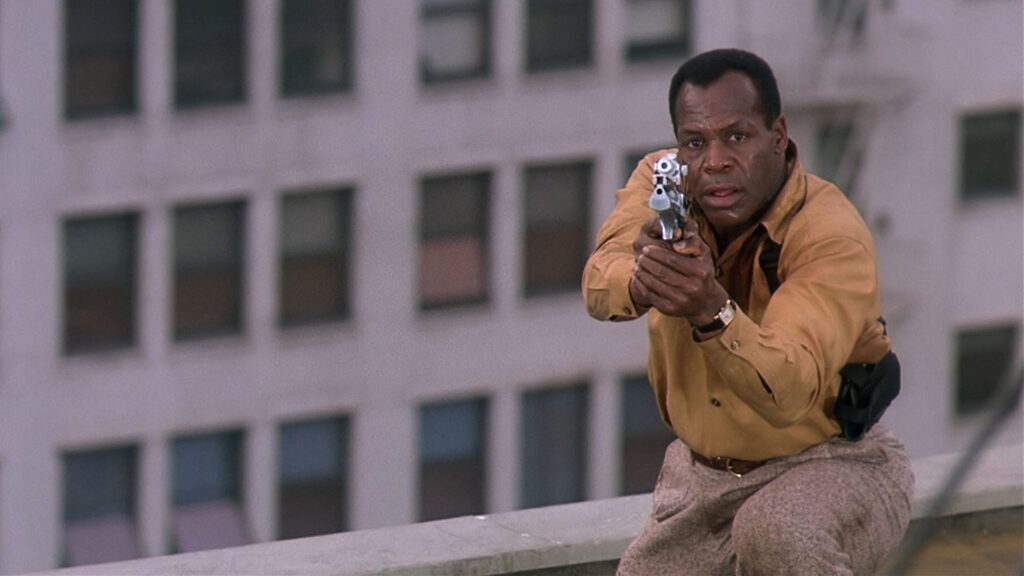
The action moves to the urban jungle of Los Angeles in the late 1990s, where amid a drug cartel war, a new Predator appears, nicknamed by fans as the "City Hunter." Police Lieutenant Mike Harrigan (Danny Glover) investigates a series of brutal murders, gradually realizing he is dealing with something not human. The film shows that the Yautja hunt on Earth regularly, choosing places with high levels of violence and conflict—ideal hunting grounds where gang and police wars create a constant stream of worthy prey.
Director Stephen Hopkins had a budget of $30 million—double that of the original—and created a visually impressive futuristic Los Angeles with neon lighting, noir-style sets, and memorable scenes: from the flickering massacre in the subway to the fight in the slaughterhouse. The urban environment allowed for varied action: the Predator hunts on skyscraper rooftops, in the subway, on streets filled with armed gangsters—this is no longer about primitive survival in the jungle. Danny Glover, replacing the reluctant Schwarzenegger (Arnie didn't like the urban setting), created a charismatic but completely different hero—not an elite special forces soldier, but a simple cop from the streets.
A cult moment was the scene in the Yautja ship's trophy room, where Harrigan discovers a wall of skulls—among them a clearly recognizable Xenomorph skull from the "Alien" franchise. This Easter egg kickstarted the Alien vs. Predator crossover universe long before the eponymous films and confirmed that both franchises exist in the same world. The film expanded Yautja mythology, showing their code of honor in more detail: the Predator spares pregnant police officer Leona, refusing to kill a defenseless life—a moment some critics saw as inappropriate, while others viewed as important character development.

However, the sequel was a critical and commercial failure, grossing only $57 million against a $30 million budget—by classic formula, a loss. The 36% rating on Rotten Tomatoes with the verdict "the thrill of the hunt is gone in this tired sequel" reflects the main problem: the lack of suspense and atmosphere that made the original a masterpiece. Hopkins bet on constant action and shootouts instead of slow-building paranoia, turning "Predator" into a standard 1990s action movie with clichéd characters and excessive violence for violence's sake.
Critics noted the overload of tropes: immortal clownish gangsters from 1970s films, absurdly dressed as punks; police who can't hit a target at point-blank range; stereotypical partners for Harrigan (a joker-pervert, a tough woman, a good guy who dies first). The Predator itself lost its mystery and became too reckless: whereas in the original it methodically stalked its prey, here the Yautja bursts into a subway car full of armed passengers just because it can—as if becoming addicted to Los Angeles's violence. The failure of "Predator 2" closed the door to direct sequels for 14 years, although over time the film gained cult status among franchise fans who appreciate its bold change of setting and contribution to the lore.
"Alien vs. Predator" (2004) — 2004
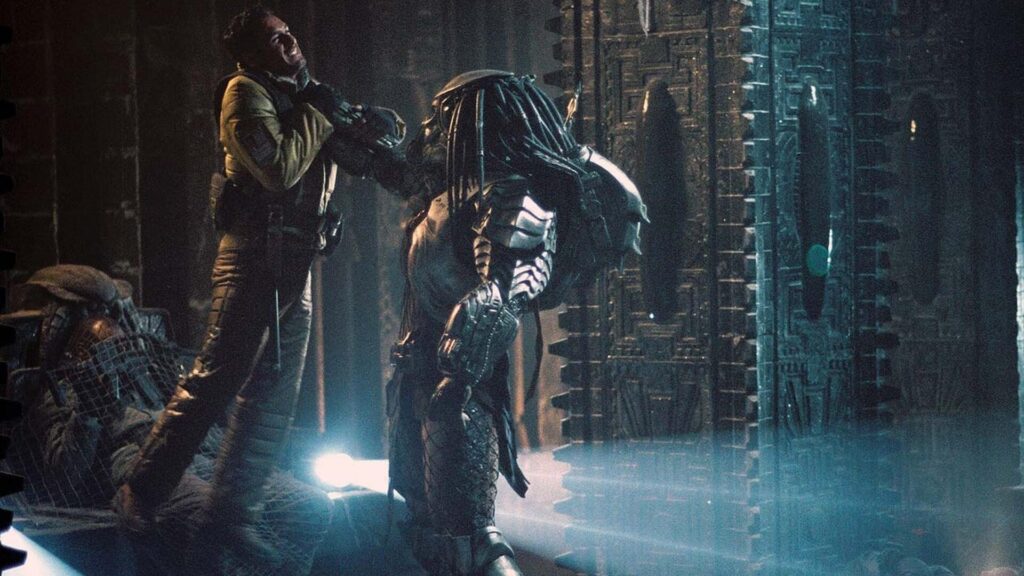
The franchise crosses over with another iconic series when tycoon Charles Bishop Weyland (ancestor of Carter Burke from "Aliens") discovers a heat signature under the Antarctic ice, emanating from a pyramid built 2,000 feet below the surface. Archaeologist Sebastian (Raoul Bova) realizes in horror that the structure combines elements of Aztec, Egyptian, and Cambodian architecture, as if all these civilizations learned from a single source—and this could be the oldest pyramid on Earth.
It turns out that the Yautja have used Earth for centuries as a training ground for young hunters: every 100 years they arrived on the planet to perform a rite of passage. The Predators awakened the Alien Queen from cryogenic sleep, she laid eggs, facehuggers implanted embryos into sacrificial humans—creating "ideal prey" for young Yautja. Ancient civilizations worshipped the Predators as gods, not understanding that they were simply using our planet for their rituals and taught humans to build pyramids solely for their own purposes—creating temples of death where they could hunt for centuries.
The pyramid is designed as a giant trap with constantly shifting walls, isolating participants in sacrificial chambers filled with human skeletons with torn chest cavities. If the young Yautja failed, they activated a self-destruct, wiping themselves and the Aliens off the face of the Earth—this is how the ancient civilization that built this pyramid disappeared. Weyland's expedition (Lance Henriksen) finds itself caught between two fires: three young Predators (Scar, Celtic, and Chopper) arrive for trophies, Xenomorphs multiply in the corridors, and humans are merely expendable material for incubation.
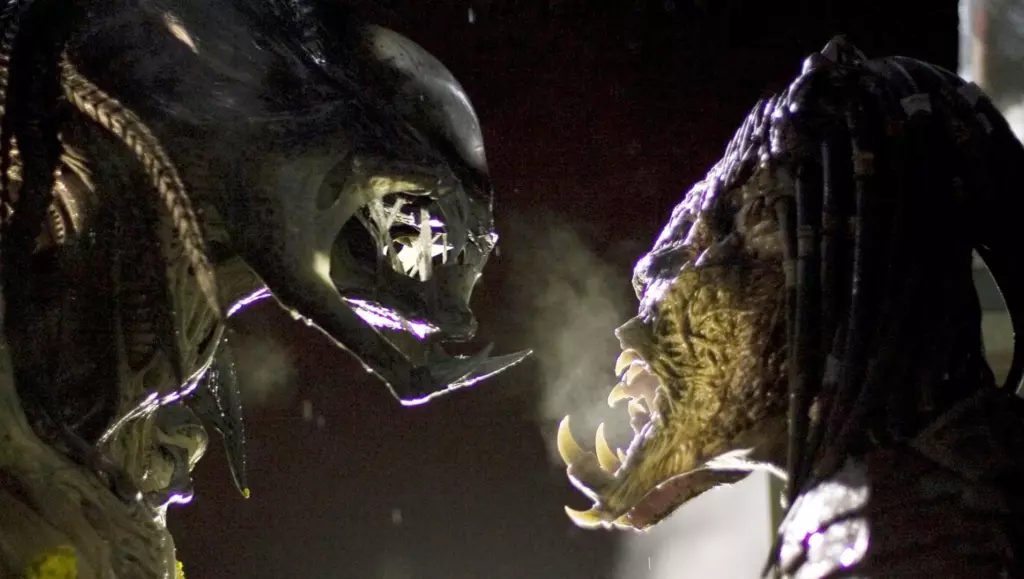
Director Paul W.S. Anderson had a budget of $60 million and grossed $172 million at the box office—one of the highest-grossing films in the combined franchise. On its opening weekend in the US, the film earned $38 million from 3,395 screens, instantly becoming number one at the box office. Nevertheless, critics panned the film: 21% on Rotten Tomatoes and accusations that "the thrill of the hunt is gone in this toothless crossover."
The main complaint is the PG-13 rating instead of the traditional R, which deprived the battles of the blood and brutality that fans love both franchises for. Anderson bet on special effects and sets in the style of adventure films but forgot about suspense and horror. The characters are vague and stupid, the script is predictable down to the smallest detail, and most of the time people wander aimlessly through dark corridors until they start getting killed. The action scenes are too fast and chaotic in constant darkness, losing spectacle.
But for the franchises, the crossover proved fateful: it saved the Predator from oblivion after the failure of "Predator 2," but finally buried the Alien as a serious sci-fi horror, turning the Xenomorphs into cannon fodder for the Yautja. However, the film expanded the mythology of both universes, establishing a connection between the Weyland-Yutani corporation and the Predators, which continues to develop up to "Planet of Death" in 2025.
"Aliens vs. Predator: Requiem" (2007) — 2004
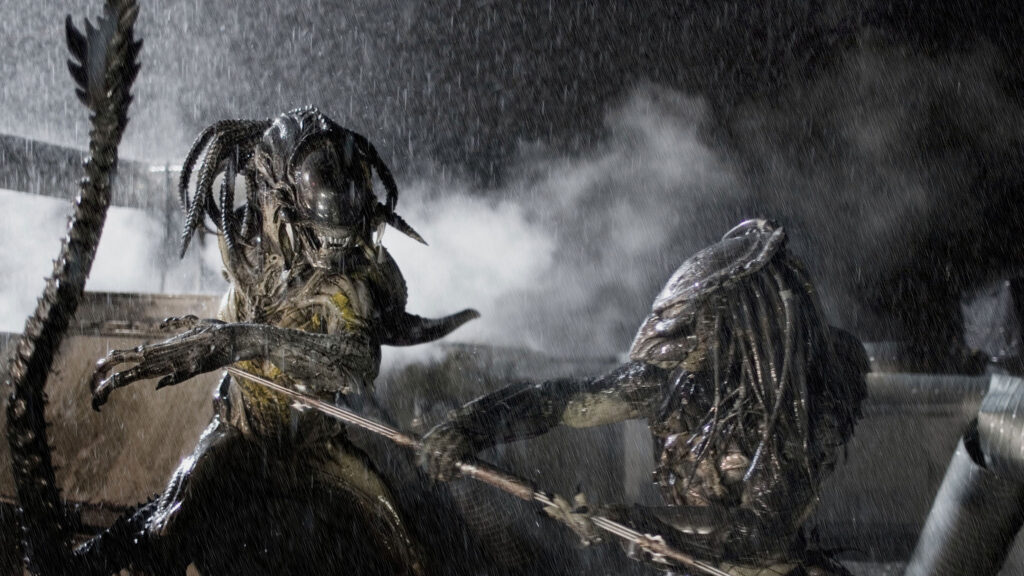
The action takes place immediately after the events of the first film, when the Yautja ship leaves Antarctica with Scar's body on board. But from the chest of the dead Predator bursts an Alien—a hybrid of two species, dubbed the Predalien, with characteristic dreadlocks and Yautja mandibles. The creature instantly grows into an adult and wreaks havoc on the ship: one of the Predators, in desperation, opens fire with plasma cannons on the hull, causing a crash in the woods near the small town of Gunnison, Colorado.
The last surviving Yautja manages to send a distress signal to its home planet before dying at the hands of the Predalien. The response comes from Wolf—a veteran loner, an elite hunter with centuries of experience. His mission is cleanup—he is tasked with destroying all Xenomorphs, the Predalien, and any traces of alien presence on Earth, including witnesses. Wolf dissolves the bodies of the dead with acid, blows up the ship, and methodically hunts down the escaped facehuggers, which have already implanted embryos into a father and son and homeless people in the city sewers.
The Predalien gained the ability for direct implantation: it bites into the throats of victims, bypassing the egg and facehugger stage, which accelerates reproduction exponentially. A particularly disgusting scene shows the hybrid attacking pregnant women in a hospital, using them as incubators for multiple Aliens simultaneously—a moment so brutal that critics called it "the most disgusting in franchise history." The town of Gunnison quickly turns into a war zone: Aliens multiply in the sewers and attack residents, Wolf mercilessly kills anyone who witnessed the events, and the residents—ex-convict Dallas (Steven Pasquale), his brother Ricky (Johnny Lewis), and mother Kelly (Reiko Aylesworth) returning from Iraq—try to survive between two fires.
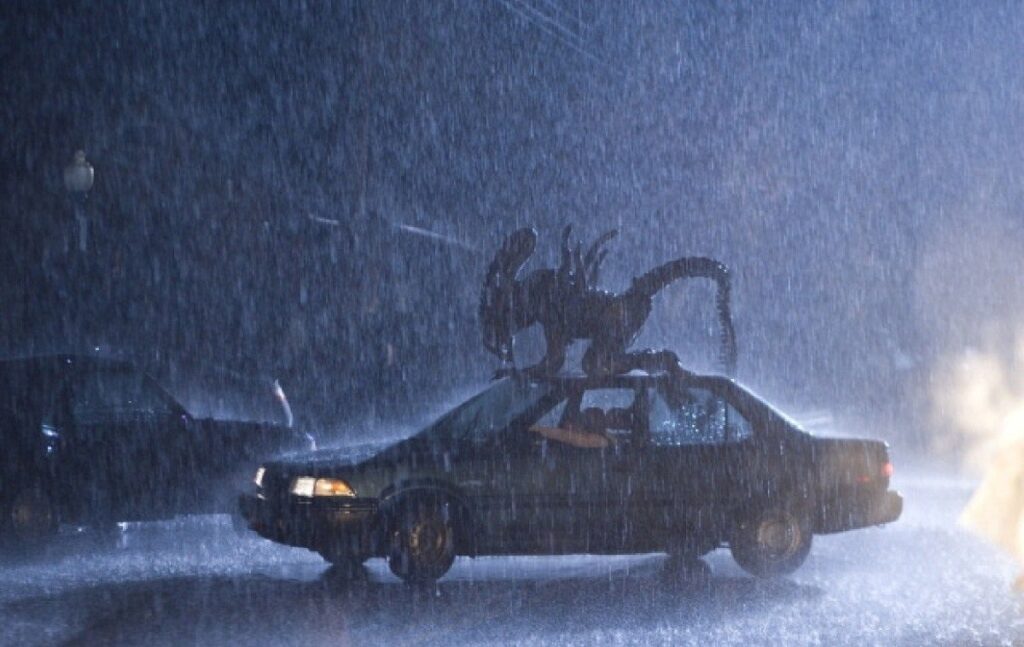
The Colorado National Guard arrives on the scene but is instantly wiped out by the Xenomorphs. The final battle takes place on the roof of the hospital: Wolf and the Predalien fight hand-to-hand, inflicting fatal wounds on each other. At that moment, the US government, realizing the scale of the threat, launches a nuclear strike on Gunnison, wiping the town off the face of the Earth along with all survivors, the Predator, and the Aliens. Dallas, Ricky, and Kelly manage to evacuate by helicopter with Wolf's plasma cannon, which the military confiscates for study—a hint at how Yautja technology will fall into the hands of the Weyland-Yutani corporation.
The film had a budget of $40 million and grossed $130 million—formally a profit, but the critical drubbing was even worse than the first film: only 12% on Rotten Tomatoes, the lowest rating in both franchises. The main problem is the abysmal lighting: the Strauss brothers, debutant directors with experience in special effects, shot the film in such pitch darkness that the viewer cannot see what is happening on screen most of the time. Action scenes drown in darkness, Wolf's battles with the Aliens become an indistinguishable mess.
Added to this is a silly script with cardboard characters from cheap horror films: high school romance, ex-convict hero, simpleton sheriff—tropes that died back in the 1990s. The actors are terrible, the plot predictable, and the town of Gunnison is a completely unsuitable location for a confrontation of cosmic predators. Even Predator fans, who appreciated Wolf as the best Yautja in cinema for his lethality, admit: saving this failure was impossible. "Requiem" buried the crossover franchise, forcing filmmakers to return to separate projects.
"Predators" (2010) — 2010
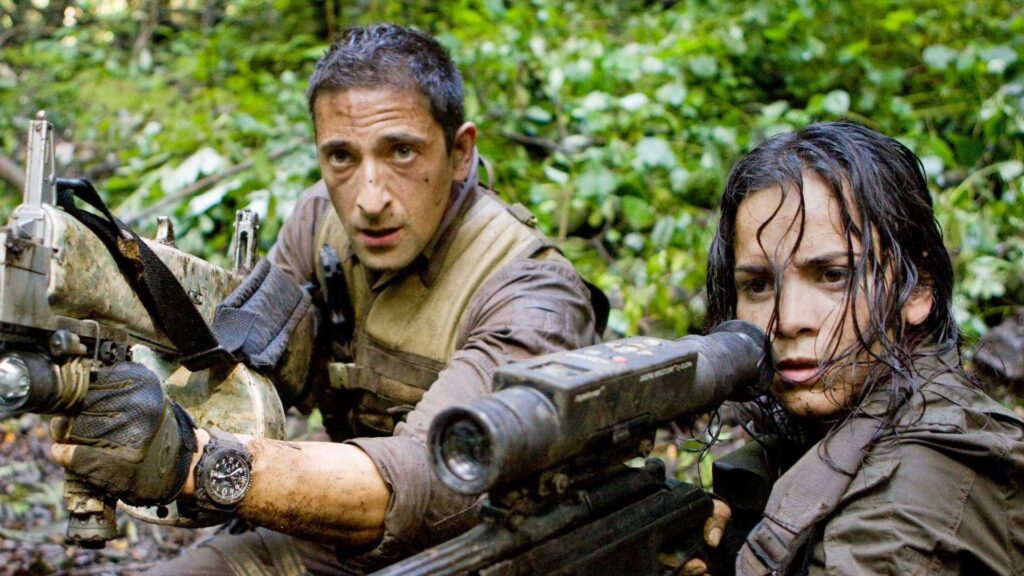
A group of eight people—hardened killers, soldiers, and criminals from around the world—awaken in free fall over unfamiliar jungles. Among them are mercenary Royce (Adrien Brody), Israeli Defense Forces sniper Isabelle (Alice Braga), Yakuza Hanzo (Louis Ozawa), Russian GRU special forces soldier Nikolai (Oleg Taktarov), Mexican Los Zetas cartel member Cuchillo (Danny Trejo), convicted rapist Stans (Walton Goggins), RUF fighter from Africa Mombasa (Mahershala Ali), and doctor Edwin (Topher Grace).
Gradually, they realize the horrifying truth: they have been abducted and taken to an alien planet turned into a Predator hunting preserve. The planet is designed as a giant training ground, mimicking various Earth ecosystems—dense jungles, rocky cliffs, open clearings, poisonous plants, and hostile fauna. Isabelle is the first to identify the Predators: she heard about the 1987 Guatemalan incident where Dutch's squad encountered an alien hunter and understands who they are dealing with.
Royce quickly takes on the role of leader, figuring out the pattern: they are all predators in human form, killers and warriors chosen by the Yautja as the most dangerous game on Earth. The title "Predators" is a play on words, referring both to the alien hunters and to the humans themselves. The group is pursued by a trio of Super Predators—a new breed of Yautja, larger, more aggressive, and bloodthirsty than the classic representatives of the race. They have abandoned the code of honor of traditional hunters, killing for pleasure rather than ritual, which has caused a centuries-old blood feud between the clans.
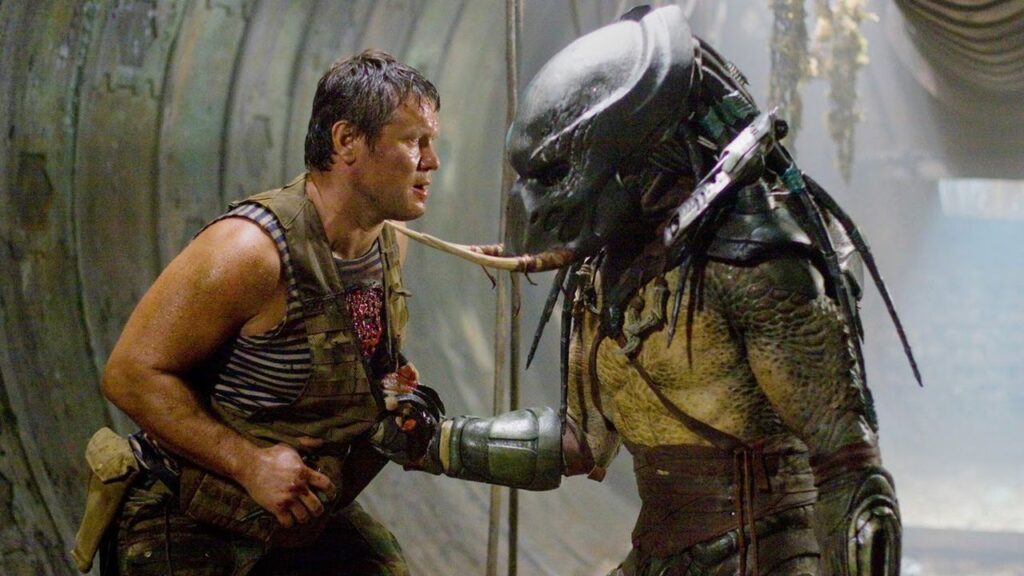
In an abandoned drilling rig, the group meets Noland (Laurence Fishburne)—a US Air Cavalry soldier who has survived on the planet for seven seasons (i.e., at least since 2003). Noland has become a paranoid hermit, learning to survive through cunning: he steals Predator technology from fallen hunters, camouflages himself with their mud, hides in a booby-trapped shelter, and wages guerrilla warfare. Fishburne appears unexpectedly, wearing a Predator mask, and explains the mechanics of the preserve: season after season, the Yautja bring in "fresh meat"—the most dangerous prey from across the galaxy—hunt and kill them in strict order.
But paranoia takes its toll: Noland tries to kill the group to take their weapons and dies at the hands of the survivors. His appearance shows the psychological cost of long-term survival on the planet—even a successful hunter like Noland cannot escape, only delay death. The film also reveals that not only Super Predators hunt on the preserve: traditional Yautja also use the planet, and some arrive specifically to kill the renegade mutants.
A shocking twist occurs in the finale: Edwin, who seemed the weakest link in the group, turns out to be a psychopathic serial killer, chosen by the Predators not for combat skills but for his twisted killer instincts. He poisons Isabelle with a paralyzing toxin, planning to leave her as bait for the Yautja. Royce returns to save the sniper, sets traps, and engages in a final battle with the last Super Predator—the Berserker. After a brutal hand-to-hand fight using fire, knives, and homemade explosives, Royce decapitates the alien with its own blade.
The film ends on a somber note: bloodied Royce and Isabelle look at the sky, where new parachutes appear—the hunt continues, and they are stuck on this planet forever. Director Nimród Antal, with producer Robert Rodriguez, had a budget of $40 million and grossed $127 million worldwide. Critics received the film with cautious positivity: 65% on Rotten Tomatoes with the verdict "after a string of inferior sequels, this bloody reboot returns the franchise to its testosterone-fueled roots."
Brody is unexpectedly convincing as a brutal mercenary, although many viewers find it hard to accept a dramatic actor in such an action role. Oleg Taktarov as Russian special forces soldier Nikolai is likable, and Danny Trejo, unfortunately, gets a cameo role and dies too soon. The main problem with the film is again cardboard characters you don't care about and a predictable script with clichéd dialogue. The film is completely disposable, yet it holds a solid place in the franchise, leaving many sequels far behind.
"The Predator" (2018) — 2018
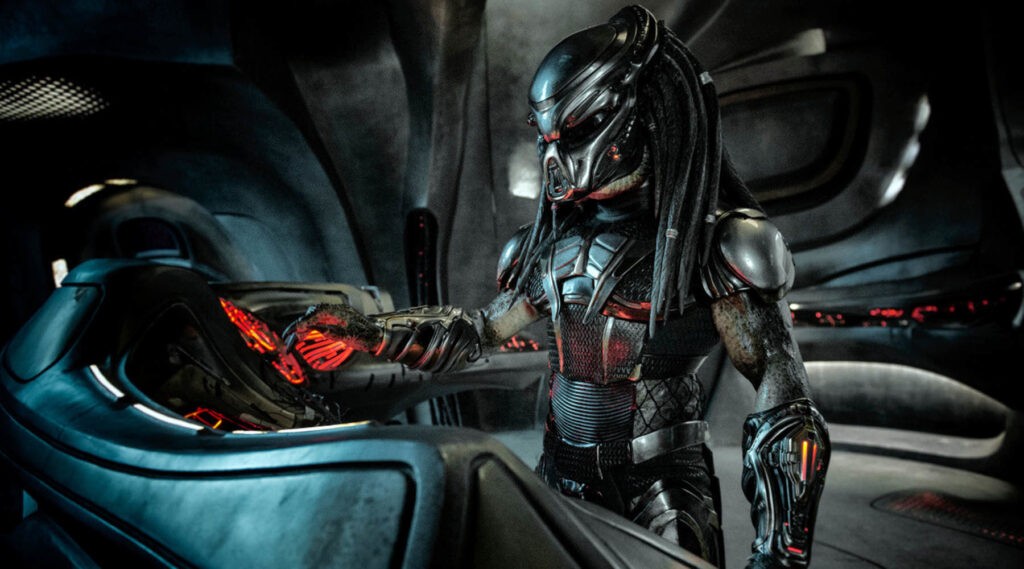
US Army Ranger sniper Quinn McKenna (Boyd Holbrook), during a hostage rescue operation in Mexico, accidentally witnesses the crash of a Predator spacecraft. McKenna has a brief skirmish with the alien, stuns it with an explosion, and steals parts of its technology—a helmet and a wrist device—sending them to his email as proof of extraterrestrial life. But due to unpaid bills, the package is redirected to his ex-wife Emily's house, where the alien equipment is found by their autistic son Rory (Jacob Tremblay).
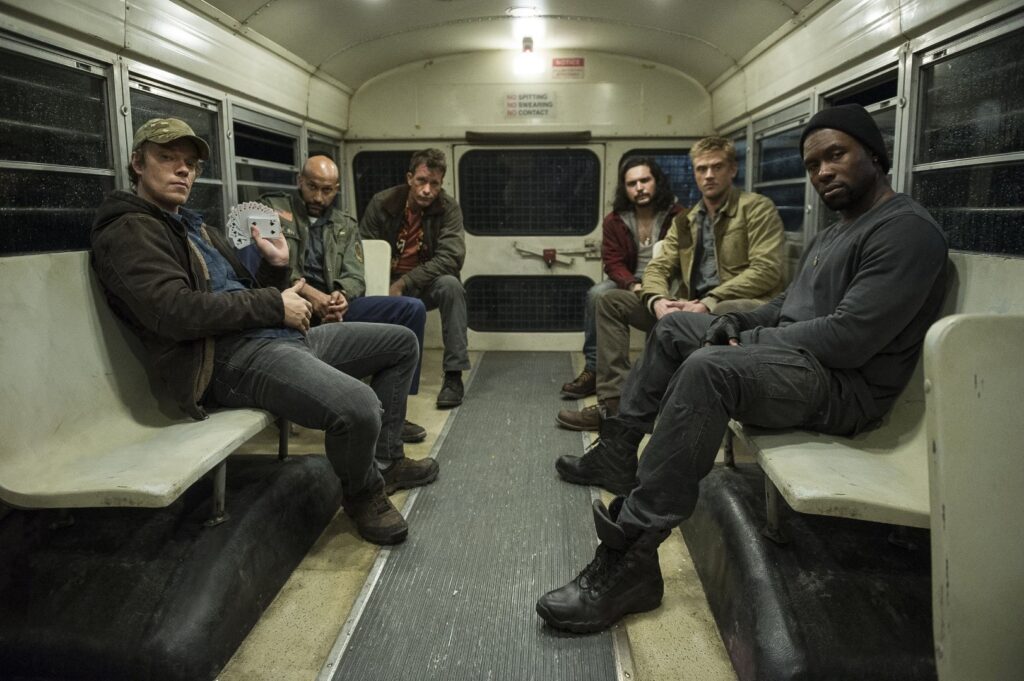
Government agent Will Traeger (Sterling K. Brown) from the secret unit "Project Stargazer" arrests McKenna and sends him on a bus transporting military personnel with psychological trauma—a group of hardened loonies dubbed "the Loonies" or "Team B." Among them are former Marine Gaylord Nebraska (Trevante Rhodes), soldier with Tourette's syndrome Thomas Baxley aka Baxster (Thomas Jane), supposedly special forces veteran Coyote (Keegan-Michael Key), and Lynch (Alfie Allen). Meanwhile, Traeger brings evolutionary biologist Casey Brackett (Olivia Munn) to a secret facility to study a captured Predator.
While Rory accidentally activates the stolen equipment at home, the Predator in the lab awakens and goes on a bloody rampage. In an iconic scene, it catches Casey naked in the decontamination shower but does not harm her—following the Yautja code of honor, it does not kill the unarmed. The scientist joins the escaped Loonies, who have hijacked the bus, and McKenna's group heads to the sniper's ex-wife's house, where he left the stolen Predator gear.
But a second threat appears—the Upgrade Predator, also known as the Ultimate Predator, standing about 3.3 meters tall and weighing around 320 kg. This hybrid creature's DNA combines genetic material from many deadly species from different planets, including human. It turns out that the Yautja have been hunting on Earth for decades not only for honor but also for DNA collection—their trophies in the form of skulls and spines are needed to extract genetic material from the spinal cord.
The first Predator—the Fugitive—came to Earth to deliver humanity a weapon capable of defending against its own kind. But it is pursued by the Upgrade Predator, sent by a clan practicing hybridization—a faction of Yautja who consider genetic enhancement the next stage of evolution. Traditional Predators despise hybrids for abandoning the code of honor, but the hybridizers are nearly unstoppable: the Upgrade is impervious to conventional weapons, can breathe on Earth without a bio-helmet, has built-in thermal vision, and can strengthen its skin, turning it into armor.
The sinister truth is revealed: the Predators have increased their visits to Earth because humanity is doomed to extinction due to climate change in the coming generations. The Yautja are rushing to collect as much strong human DNA as possible before the species disappears, after which they plan to take over the planet for themselves. The Upgrade Predator kidnaps Rory, seeing in his autism the next step of human evolution—enhanced cognitive abilities without emotional limitations, ideal for hybridization.
In the final battle, the Loonies and Casey confront the Upgrade Predator in a bloody massacre. Director Shane Black, who played the bespectacled Hawkins in the original 1987 "Predator," turned the franchise into a genre hybrid of comedy, action, and horror with trademark witty dialogue. Characters rib each other, crack crude jokes, and the entire film balances between a serious action movie and an outright trash spectacle.
The film had a budget of $88 million and grossed $160 million worldwide—formally a profit, but again a critical drubbing: only 34% on Rotten Tomatoes. The main problem is genre confusion: Shane Black (who acted in the very first Predator film) couldn't decide whether he was making a comedy, horror, or action movie, resulting in an awkward mix where jokes undercut tension and attempts at horror drown in absurdity. The script is full of holes: the son accidentally blows up the neighbors' house with plasma weapons without consequences, the Predator easily escapes from a supposedly ultra-secure lab, autism is presented as a superpower.
Black's humor sometimes works: the scene introducing the Loonies is wonderful and very funny, the dialogue is frank and straightforward, like in "The Nice Guys." But the characters lack screen time for empathy—the viewer doesn't have time to bond with the heroes before they start getting killed. By the middle of the film, Black himself destroys what worked: he dispatches likable characters without regret, turning the picture into a traveling circus with horses and clowns.
Action scenes are catastrophically few—only four battle moments, the rest of the time is taken up by talk and jokes. Olivia Munn was deprived of a proper character introduction due to a cut scene. The finale, hinting at a sequel—a "Predator-killer suit" for humans—only drew laughter from audiences, not anticipation.
The film expanded the franchise's mythology, revealing the true reason for the Predators' hunt (DNA collection) and showing the split between traditionalists and hybridizers. But the execution was so clumsy that "The Predator" (2018) became the worst solo film in the franchise, even surpassing the failed "Predator 2" of 1990. Shane Black, who dreamed of reviving the series, left fans only a couple of good jokes and the bitterness of disappointment.
"Predator: Planet of Death" (2025) — Far Future
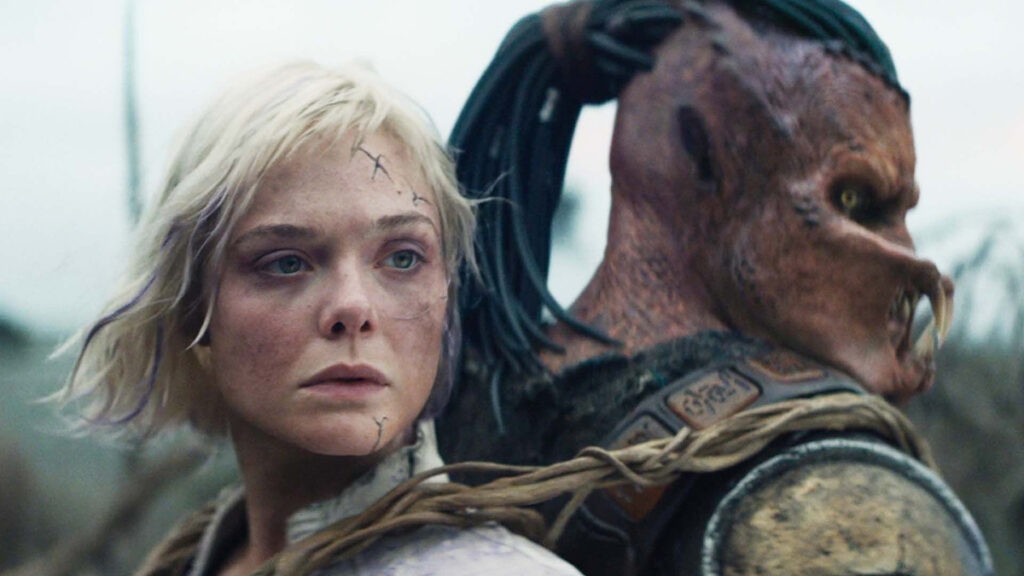
Dan Trachtenberg again flips the formula: for the first time, the full-fledged protagonist is a Predator himself—a young Yautja named Dek (Dimitrius Colomatangi), contemptuously called a "blood outcast" by his kin due to his small size. To prove his worth and restore his honor, he sets off for Calisk—the most dangerous planet in the galaxy.
There, Dek meets an unexpected ally—a damaged android named Tia from the megacorporation Weyland-Yutani (yes, the same one from the "Alien" films). Elle Fanning plays the legless synthetic, whom the Predator takes as a partner in the face of a common enemy—the deadly inhabitants of the planet.
The film debuted with 85% from critics and 96% from audiences on Rotten Tomatoes and became the first in the main series with a PG-13 rating—a risky decision that, judging by reviews, paid off. Critics note that watching a Predator protagonist fighting for survival is unusual, but that is precisely what makes "Planet of Death" a fresh take on a franchise that had grown quite stale.
The Predator universe has come a long way from the jungles of Central America to distant worlds of the future, constantly rethinking who is the hunter and who is the prey. And the success of "Planet of Death" is an indicator that the Yautja will continue to hunt for many years to come, each time finding new prey and fresh fans for the long-running series.
Comments
0No comments yet.
Sign in to join the discussion.