

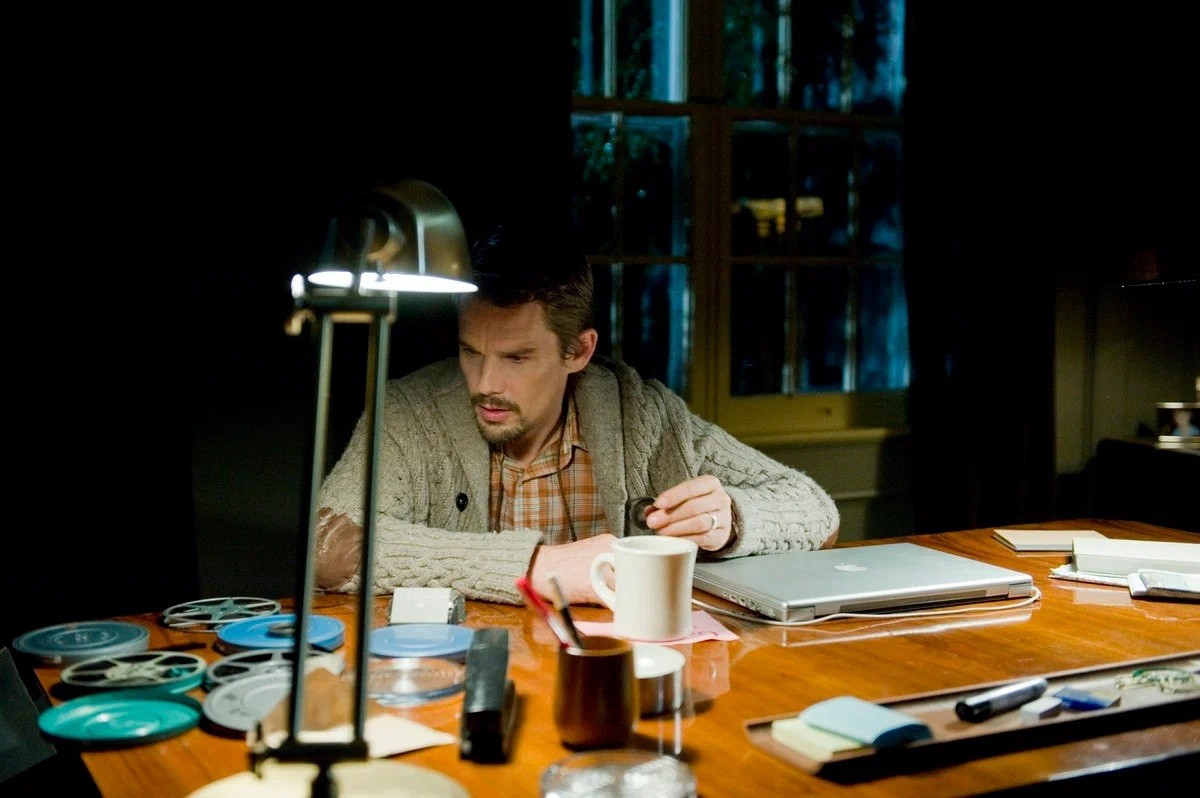
According to the latest study by the British project Science of Scare, Scott Derrickson's film 'Sinister' has been named 'the scariest film of all time.' Is this true, and what is the horror film by the director of 'The Black Phone' really about? We...
Scott Derrickson's horror film Sinister has resurfaced in the information space. The formal reason for this was likely the director's new film The Black Phone 2, released worldwide in September. This, in turn, sparked renewed interest in the horror-maker's previous works, among which Sinister shines the brightest. At the time of its release (2012), only James Wan's Insidious could compete with Derrickson's film. The American director's work had already been recognized as "the scariest horror movie," but now this title has been cemented by specialists from the British project Science of Scare.
They conducted a study and found that Sinister can cause tachycardia in viewers and hastily declared the horror film a genre standard. Classics like The Shining, The Exorcist, or Rosemary's Baby were left behind, but the British preferred not to think about that. New times demand new benchmarks. However, it cannot be denied: Derrickson's work truly reaches the darkest corners of the human psyche. What is the secret of its impact?
Derrickson's Path to Horror
By the time he worked on Sinister, Derrickson had already proven his ability to truly scare audiences. His The Exorcism of Emily Rose became, if not a definitive film about possession, then a very notable one. The film's rating still stands above some of its genre peers. Then came the sci-fi film The Day the Earth Stood Still starring Keanu Reeves. The film wasn't exactly bad, but it seemed as if the director was holding back his full talent, clearly waiting for a better moment. And a little later, that moment came.
One day, Derrickson was having a drink with film critic and screenwriter C. Robert Cargill, who casually mentioned that he had been tormented by nightmares after watching Gore Verbinski's The Ring, where a curse was transmitted through a videotape, and that it would be a good idea to bring those experiences to the screen. Derrickson, who had been desperately searching for an original idea for his new film, latched onto Cargill's story, and together they began to figure out how to bring the project to fruition, including the script and financing. Once the main issues were resolved, the director immersed himself in the work with relish, clearly intending to create, if not a masterpiece, then at least a solid film he wouldn't be ashamed of. Then the project was picked up by the well-known Jason Blum with his nose for commercial success, and things seemed to go smoothly.
The Genius of Limitations
However, the film's budget was more than modest—only three million dollars. Blum couldn't (or didn't want to) secure more. But, as often happens in cinema, limitations only benefited the film. Derrickson, creatively unconstrained, had the opportunity to carefully calibrate every frame and spend every dollar wisely. He confined almost all the action to one space, that Kafkaesque house from which there seems to be no escape. This deliberate claustrophobia creates a persistent feeling of hopelessness in the viewer. The viewer, like the horror's characters, finds themselves trapped.
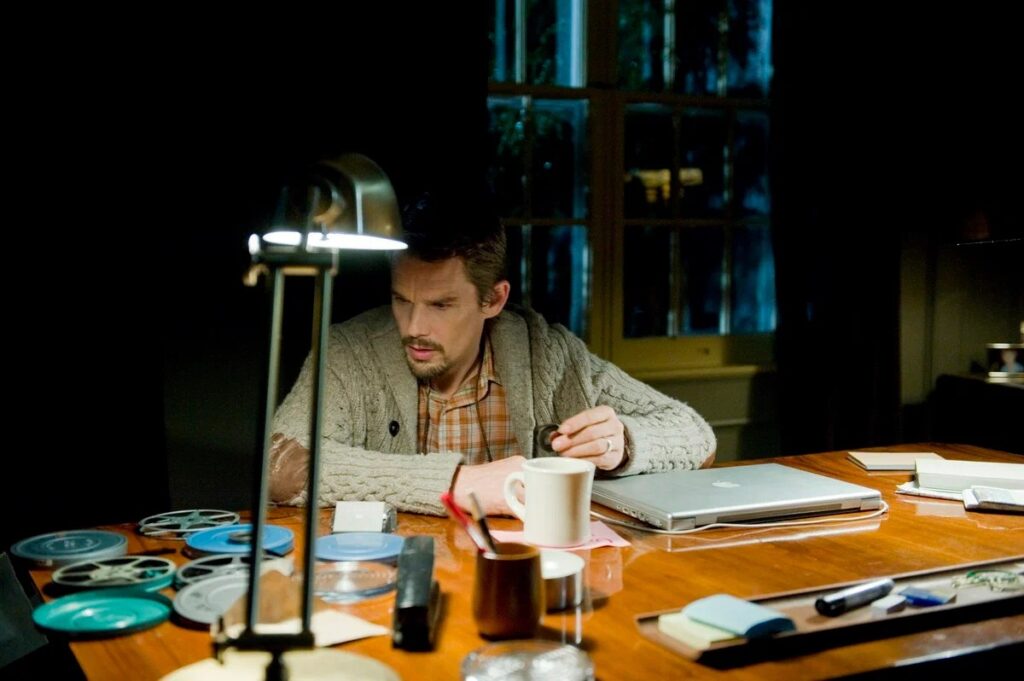
Filming took only 23 days, and the main technical challenge was working with an 8mm camera. It was used to shoot those terrifying home movies that the main character watches. By the way, Derrickson struggled for a long time to find the right actor for the role of the writer. It was important for the director that the character, despite all his flaws and obvious obsession, be likable to the audience. In the end, only Ethan Hawke demonstrated this complex type: a charming but rapidly self-destructive person. And, as you might guess, Derrickson recognized this and cast the actor in the role.
What Makes the Plot Gripping?
Simplicity and conciseness of a well-written novel. Writer Ellison Oswalt, once a bestselling author but now nearly forgotten, moves with his family into a house where a brutal family murder occurred a year ago. He hides this from his wife and children, hoping to write a new book that will restore his fame. In the attic, he finds a box of films depicting brutal murders. From that moment, his life turns into a nightmare.
Derrickson's Ingenuity: Why It Works
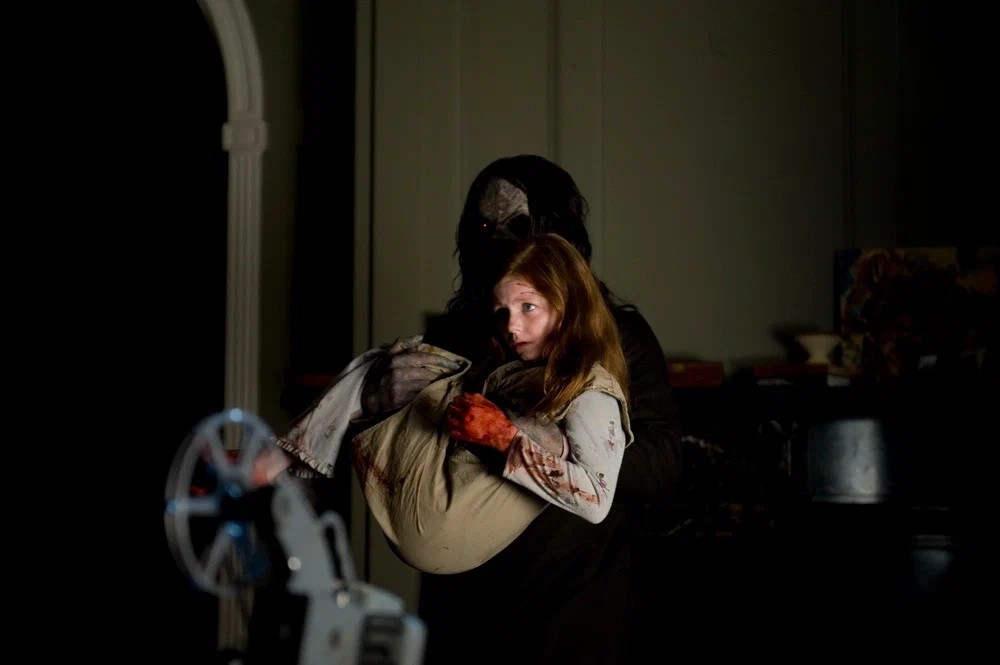
Derrickson didn't reinvent the wheel, but brilliantly combined proven techniques. The film's roots clearly lie in Joel Schumacher's 8MM (1999) starring Nicolas Cage. Remember the detective going mad from constantly watching a found film of violent crimes? It truly evokes a chilling horror. But Derrickson goes further, adding a supernatural element: the ancient demon Bughuul, who feeds on children's souls.
The second important source is Stephen King's The Shining. Here too, there is a writer in creative crisis, an isolated location, and a slow descent into madness. But there is a crucial difference: his hero is not a victim of circumstances, but an obsessed participant in his own downfall. Special attention should be paid to the sound design: the unsettling soundtrack, creaks, and rustles create incredible tension even in relatively calm scenes.
What Is 'Sinister' Really About?
The most obvious metaphor, also mentioned by Derrickson himself, is the destructive power of work obsession. Ellison is a writer once blinded by the rays of success, but now he finds himself in the shadow of oblivion. Desperately trying to regain his former significance, he knowingly brings his family to a house where a terrible crime occurred, seeing in this tragedy only a chance for his triumphant return. His selfish thirst for recognition blinds him and makes him the main catalyst for the impending nightmare.
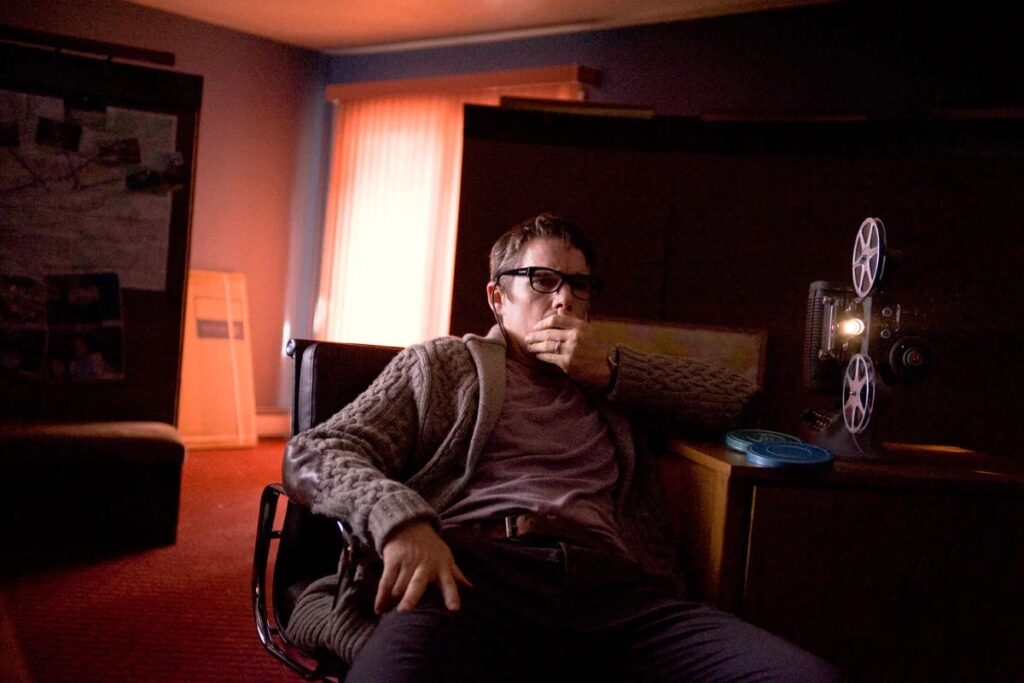
The second, and less obvious, metaphor is the tragedy of an alcoholic. Ellison gradually becomes an alcoholic and doesn't notice it, and alcohol is a demon that slowly enters the house and fills all the space around, poisoning the lives of his family. Bughuul is not just a shadow on the wall, but a mystical embodiment of Ellison's weakness, sitting first in the attic of his house and then in his mind. The film's ending indirectly hints at this. The writer is killed by his own children, i.e., his own future. Thus, alcoholism kills the future. We see how Ellison, trying to regain fame, loses everything: his sanity, his family, and ultimately his life. His alcoholism is not a random detail but an important part of his character, showing how a person himself destroys his defense in the face of evil.
Why 'Sinister' Stays in Memory
Perhaps Sinister is not the scariest film in history, but its inventive combination of psychological tension, supernatural horror, and understanding of human nature guarantees it a place in the pantheon of great horrors. The influence of Sinister is also evidenced by the fact that its title is still attached to horror films that have nothing to do with the original. That is, the film has become synonymous with genuine horror and carries corresponding associations. And Derrickson proved that even with a minimal budget and one main location, you can create a story that will scare viewers for years after watching.
Comments
0No comments yet.
Sign in to join the discussion.