
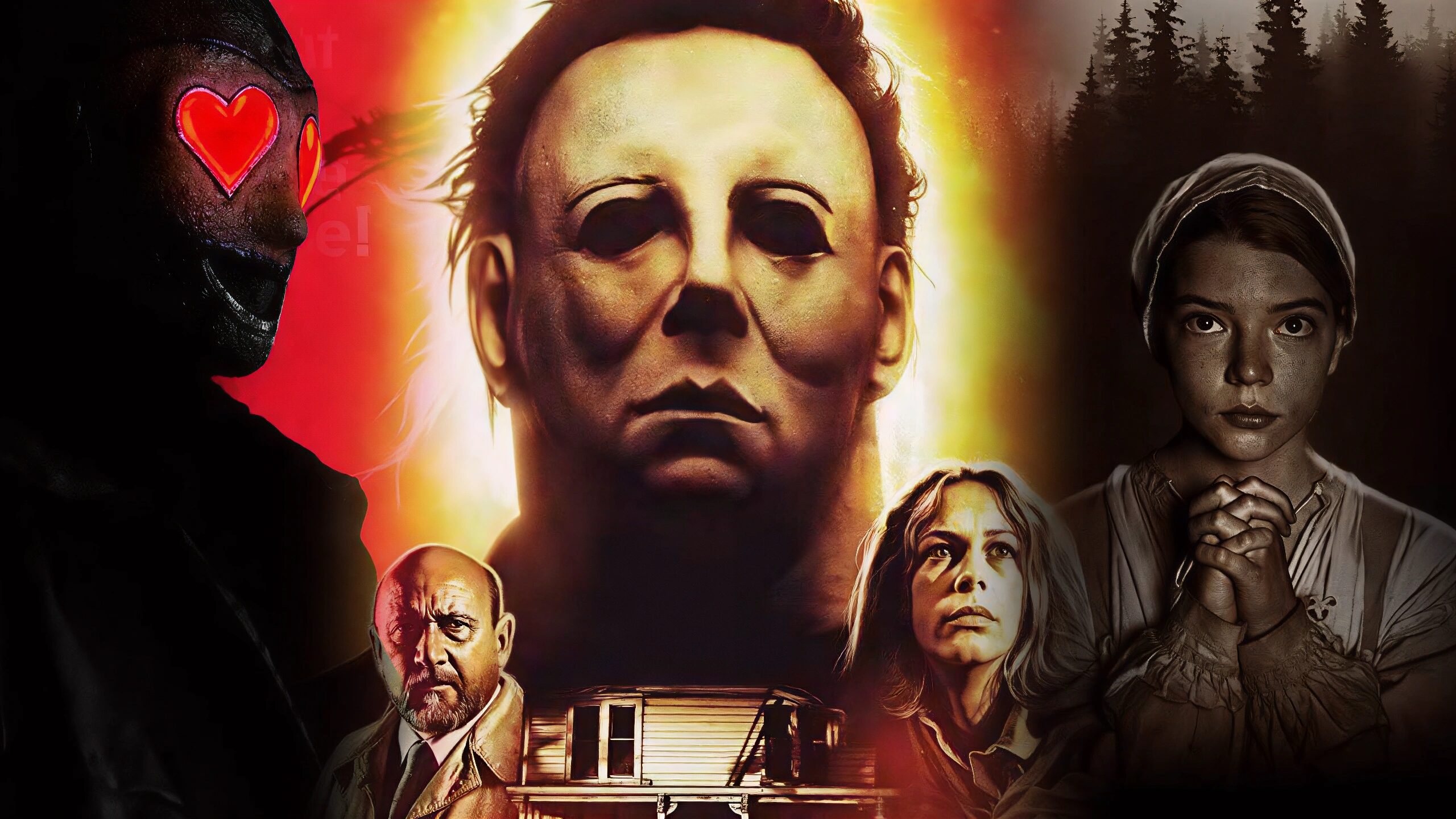
Halloween without horror is like pizza without cheese. Pointless and boring. We've broken down the main horror subgenres and picked one representative each—so you can find your perfect viewing solution for the holiday. Slashers? Got them. Psychologic...
From zombie apocalypses to psychological thrillers, from slashers with masked maniacs to atmospheric gothic parables, the horror film genre has become a multi-faced monster capable of scaring even the most seasoned viewer.
The editorial team of "After Credits" decided to guide you through the main branches of horror, so that everyone can find their ideal way to be scared this Halloween. Because it's one thing to scream at jump scares in "Final Destination," and quite another to slowly sink into the sticky atmosphere of folk horror.
Found Footage — "Paranormal Activity: Ghost House"
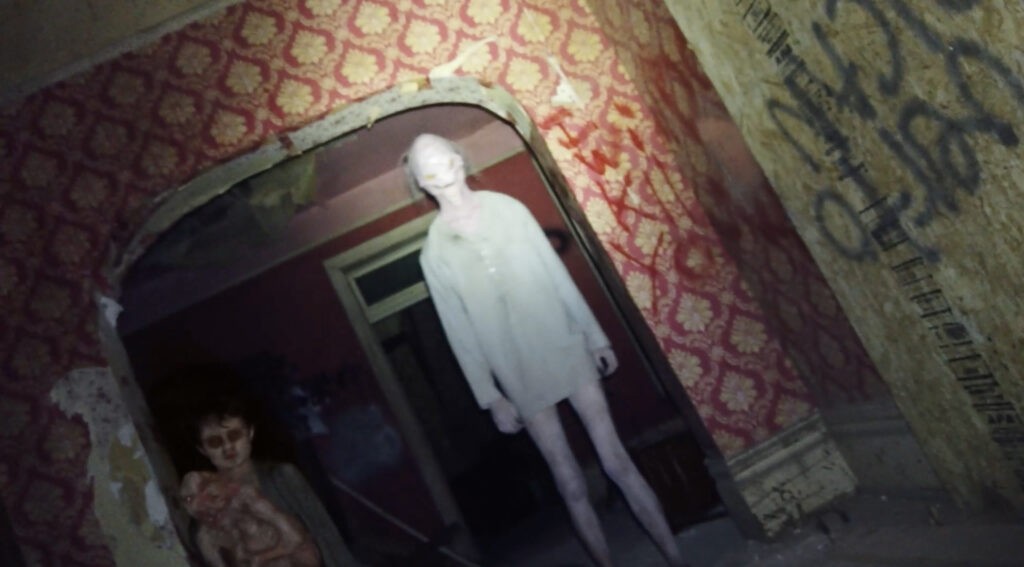
Found footage is a pseudo-documentary horror genre where the story is presented as accidentally discovered video material shot by the characters themselves. The main features of the genre are "amateur footage" with an illusion of reality; sparse editing of scenes and often a horror lurking off-screen, the outlines of which the viewer must imagine.
Despite the fact that the genre itself has long been torn to shreds (many years have passed since "The Blair Witch Project" appeared), among its representatives you can occasionally find real gems. Such as "Paranormal Activity: Ghost House." Behind the bland localization (the film actually has a more expressive title "Deadly Stream") lies a lively, funny, and at times quite creepy horror comedy about a failed video blogger who goes to an abandoned haunted house hoping to regain the trust of his subscribers after a major scandal. It's not hard to guess where the film draws its inspiration, but add to that the physical effects seemingly from Sam Raimi himself, a venomous sense of humor worthy of the Zucker brothers, and you're guaranteed a great evening with friends.
"Paranormal Activity: Ghost House" is an exemplary representative of the genre, never deviating from the core idea. But the filmmakers managed to find fresh, untrodden artistic techniques within its seemingly exhausted formula.
Sci-Fi Horror — "Event Horizon"
The sci-fi horror subgenre, as you might guess, combines horror and science fiction. It dissects the fear of the unknown, often arising from scientific achievements, technological development, or contact with extraterrestrial forces. Moreover, the monster here can be not only zombies, viruses, or aliens, but also humans themselves with their endless curiosity. Ultimately, we are frightened by the idea that progress can turn into a nightmare, and that, for example, distant space can be our grave, not our salvation.
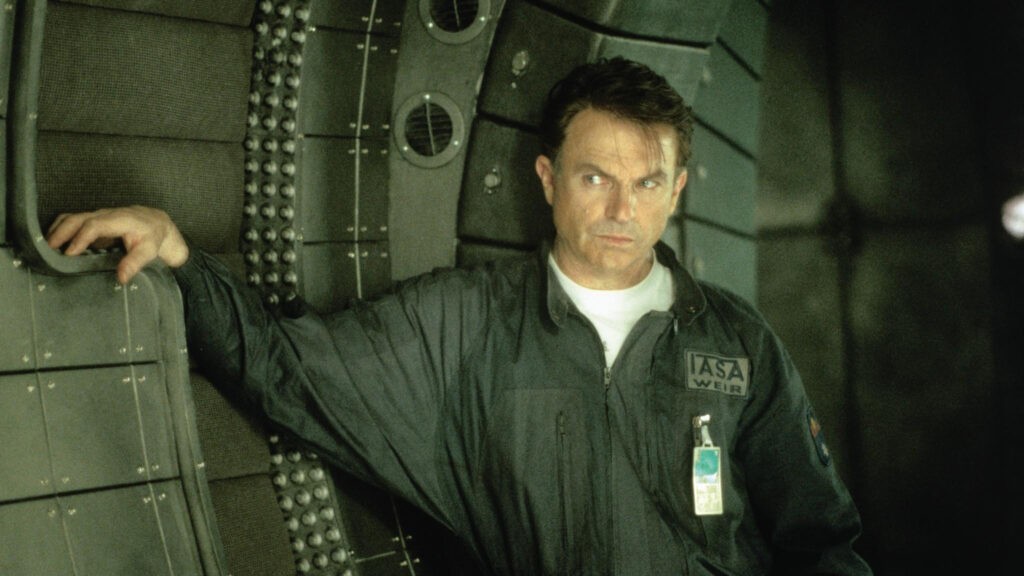
"Event Horizon" is an example of one of the most popular directions in sci-fi horror (cosmic horror) and at the same time one of the early works of Paul W. S. Anderson before the long era of "Resident Evil." The film is interesting for several reasons. First, it's real proof that Anderson can make great sci-fi. It remains a mystery why he forgot how to do it. Second, in the film, space turns from a symbol of progress and boundless scientific possibilities into a place of nightmare and madness. This is especially important considering the film was made in 1997, when science was still the main salvation for many. Third, the film also has room for something otherworldly: it collides with science, and the film becomes, in a sense, a conversation about faith and inner demons.
All this is embellished by the claustrophobic atmosphere of the spaceship, decent special effects for the time, and a "survival game" format where Sam Neill runs not from dinosaurs but from an alien something, and Laurence Fishburne chooses the red pill.
Giallo — "What Have They Done to Solange?"
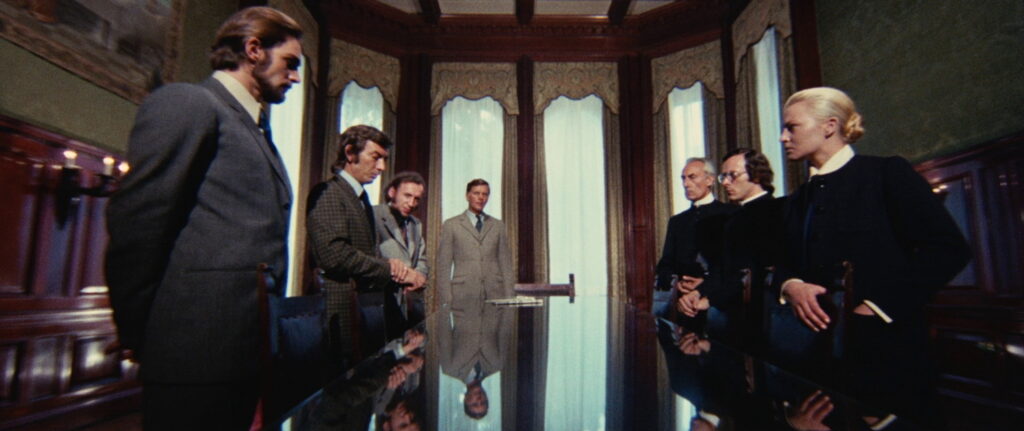
Giallo (from Italian for "yellow," named after the bright covers of detective novels), along with other representatives of Italian genre cinema, is a superficial phenomenon. The razor-sharp deserts of spaghetti westerns do not belong to its breed, nor does eurospy—exploitation spy knockoffs by southern Europeans. And giallo is neither an American slasher nor a companion to German krimi, but that doesn't stop the genre from expressing itself through a number of characteristic features.
"What Have They Done to Solange?" directed by erotomaniac Massimo Dallamano immediately displays its yellow stamps, never deceiving the viewer's expectations. The story of missing students and the amorous professor's struggles in the snare of others' suspicions echoes through the walls of the college, which serves as a haven for young girls and intellectuals—the main characters of almost any giallo film.
The film's technical arsenal also allows it to look characteristic, flashy, in keeping with the time and country of production. The abundance of subjective shots, stencil-like on-screen nudity, and irritating music is not accidental but a consistent submission to a world of cruel conventions that almost managed to reach the modern viewer. In 2016, Nicolas Winding Refn planned to direct a remake of Dallamano's film, but the reboot never got its deserved chance.
Gothic Horror — "Crimson Peak"
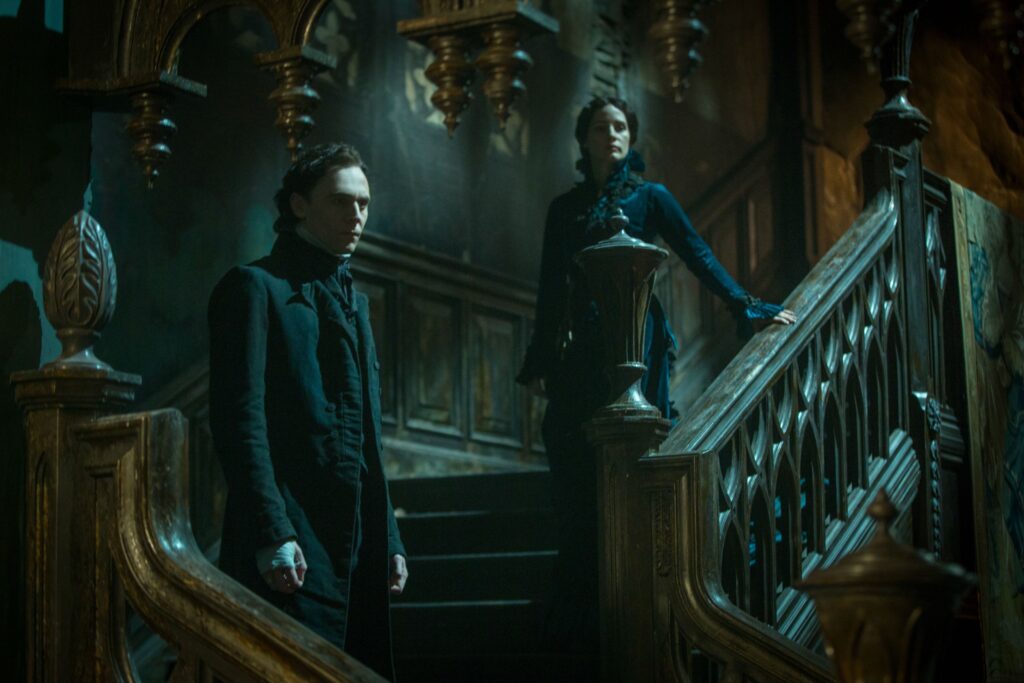
Gothic horror is a genre where fear is born not from unexpected monster jumps around the corner, but from an oppressive atmosphere where every creaky floorboard, every shadow in the corridor, and every whisper of the wind seems like a harbinger of something terrible. These are stories about ancient mansions with secrets buried deeper than their foundations, about family curses passed down through generations, and about the boundary between the living and the dead that turns out to be thinner than it seems.
The film "Crimson Peak" by director Guillermo del Toro is an ideal example of gothic horror, where the fusion of visual style, plot, and deep symbols creates a unique atmosphere. The action takes place in a gloomy Victorian mansion on a hilltop, surrounded by legends and soaked in blood-red clay that itself seems to carry threat and horror. The story is saturated with classic gothic motifs—ghosts, sinister secrets, the struggle between life and death, love and betrayal. The main character, Edith Cushing, encounters mysterious visions and dangers in this house. The film maintains tension and reveals dark family secrets, which aligns with the traditions of the gothic novel.
The main character confronts shadows of the past and ancestral curses that unfold through love, betrayal, and violence—these are the themes traditionally at the heart of the gothic novel and horror. At the same time, the director offers not only a frightening story but also a deep psychological analysis, where love appears as an exciting and destructive force capable of awakening hidden fears and passions in a person. The visual style of the film is striking in its detail—from lavishly decorated interiors to carefully selected costumes that enhance immersion in the era and remind us that gothic lives in every detail. Symbols play an important role—blood, red clay, the desolation of the house serve as allegories of fear, death, and suppressed emotions.
Monster Horror — "The Thing"
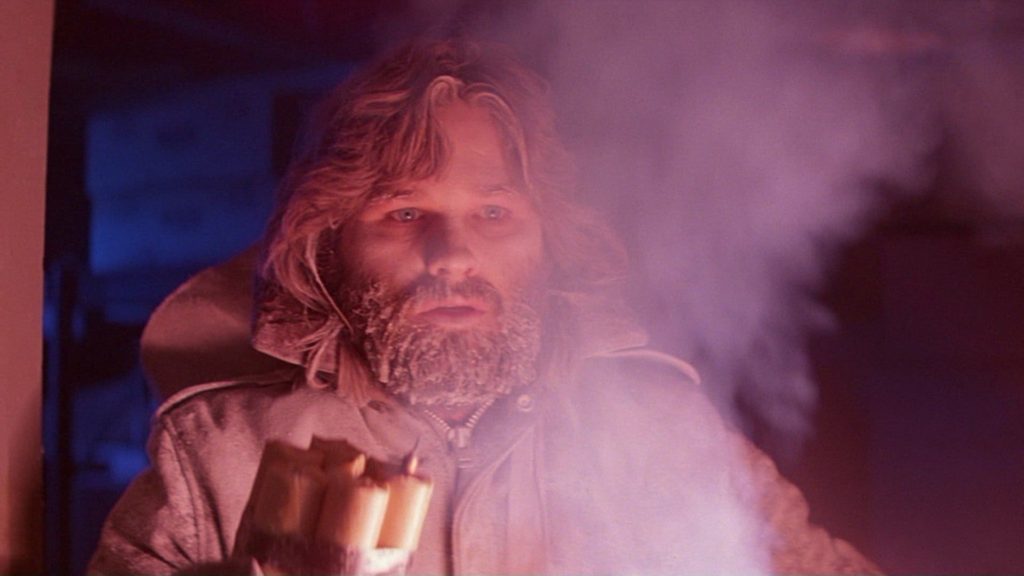
Monster horror is one of the simplest yet most terrifying subgenres of horror films. Films of this direction, as a rule, do not pretend to philosophical depth and rely on the easiest ways to scare the viewer. Because in recent years we have all witnessed such a phenomenon as post-horror with its complex dramaturgy, subtle psychologism, and abundance of metaphors, trivial plots about the confrontation between man and some nasty freak are now perceived as nothing more than low-grade entertainment. Despite the fact that today this subgenre is firmly entrenched in the "B" category, it has not always been synonymous with second-rate trash, and a vivid example of this is "The Thing" by John Carpenter.
The film tells the story of American polar explorers who decide to take in a dog, ignoring clear hints from their Norwegian colleagues not to do so. Soon it turns out that they have taken in not a harmless Alaskan malamute, but an extremely aggressive alien shapeshifter, after which chaos and an atmosphere of mistrust reign at the station. Since the antagonist here can take the form of any living creature, the film quickly transforms into a clever psychological thriller. But the main reason we love Carpenter's timeless classic is, of course, the unforgettable episodes with a touch of top-notch body horror, where the alien guest turns the scientists' bodies into bloody pulp.
However, the now cult horror film bombed at the box office and received mixed reviews from the press. Interestingly, in 1982, the film was criticized precisely for what we now praise it for—its hyper-realistic practical effects, intricate plot, gloominess, and open ending, which, if you think about it, is absolutely authentic and logical for a story about a monster with the abilities described above. At the time, even the legendary Ennio Morricone received a nomination for the "Golden Raspberry." 33 years later, the injustice was finally corrected when he won an Oscar and a Golden Globe for the soundtrack to Quentin Tarantino's "The Hateful Eight," created based on the unused music from "The Thing."
Religious Horror — "The Sentinel"
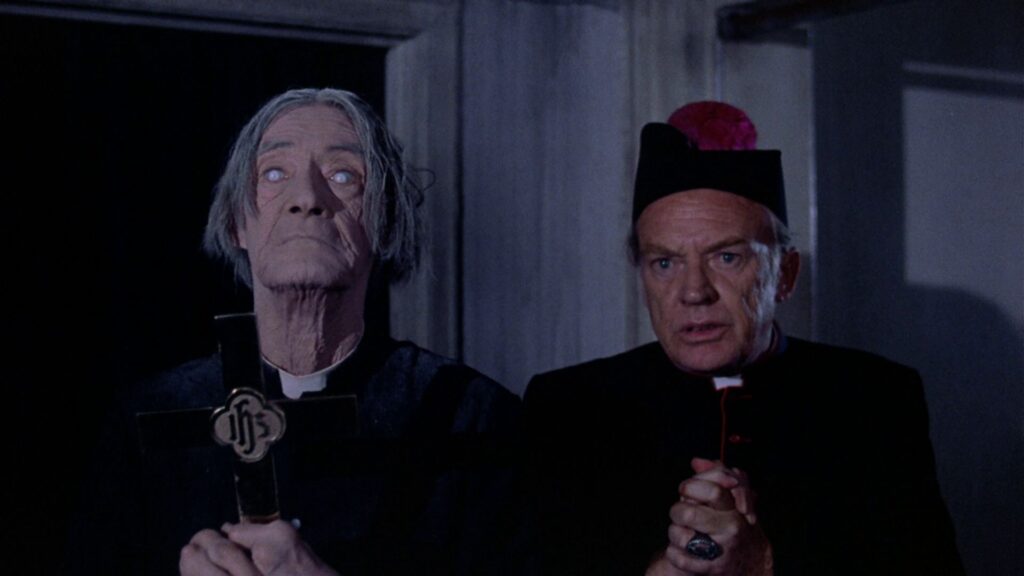
In the Western tradition, religious horror most often means Christian horror. Or even Catholic horror. This is probably explained by the fact that Latin is a very cinematic language, although the reasons, of course, are usually found deeper: the distance that in Catholicism separates the believer from the object of his faith is filled with a whole spectrum of various manifestations of the sacred.
In cinema, we rarely but occasionally encounter angels ("Constantine," for example), more often demons, and even more often their leader. God, as a rule, remains off-screen, and the central intrigue is whether He is interested in what is happening and what He thinks about it. The last question for almost all heroes of the genre is formulated in the spirit of "why me?" Since religious horror is extremely conservative, it's better not to know the answer to the second question: the quality of most films in the genre is such that only God can forgive them. The best examples, however, belong to the most respected part of the horror canon. These are rare horror films that can be classic rather than just cult. "The Sentinel" by director Michael Winner could claim both statuses if it were a bit more popular.
A sad model (Cristina Raines) moves into the apartment building of her dreams—historic architecture, seemingly decent neighbors, convenient location. As is usual in films about neighbors, the house turns out to be hell. The religious component of the film is that this hell is quite literal. Unlike "smart" films on the same topic, "The Sentinel" takes not by intrigue regarding divine will, but by the physicality of what is happening—the creepy antics of the neighbors, the lavish celebration of a cat's birthday, the creepy lawyer boyfriend, the beautiful house, the unbearable screams, the demons from hell. Everything is so excessive that when watching, you realize that such nonsense only happens in life.
Comedy Horror — "Heart Eyes"
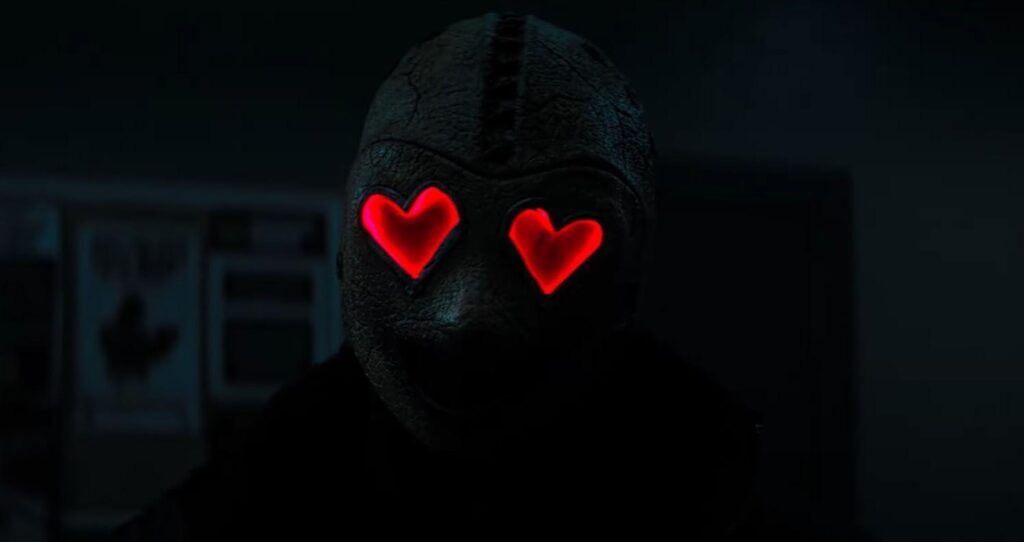
Horror and comedy have long lived hand in hand. They seem to evoke completely different emotions in the viewer, so what do they have in common? Well, a lot. Horror works by the same rules as comedy. There is a setup, there is a punchline. When a comedian leads up to a joke, they also build up the atmosphere so that the joke lands—how is that different from the buildup to a sudden jump scare on screen? Moreover, many good horror film directors come to the genre precisely from comedy. Jordan Peele, John Krasinski—even the notorious Kevin Smith, when he tries.
As a concrete example (and a recommendation for an evening viewing), let's mention the wonderful comedic actor Josh Ruben. In 2025, he unexpectedly delivered a very good parody-comedy (without overdoing it) horror film "Heart Eyes," which simultaneously mocks the established tropes of the genre and is a completely independent film. At the same time, all its homages are very well read, and one would not dare call them plagiarism.
On one hand, we have a very classic slasher; on the other hand, it's interesting to watch the development of the main characters' relationship, the mystery of the killer's identity is engaging, and the well-placed jokes help defuse the atmosphere without sacrificing the scary moments. If you haven't seen it yet, be sure to check it out.
Slasher — "Halloween"
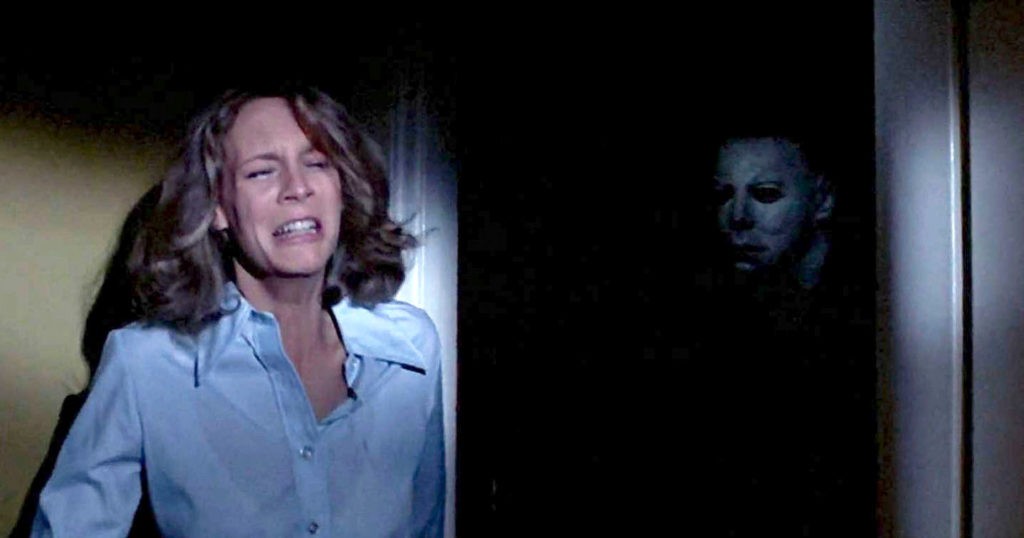
A subgenre of horror films in which the main villain, a psychopathic killer, often in a mask or with supernatural abilities, pursues and brutally murders a group of people. This is, of course, about slashers. This genre reached its peak of popularity in 1974–1984. Famous representatives include "The Texas Chain Saw Massacre," "Friday the 13th," "A Nightmare on Elm Street," "Scream," and "I Know What You Did Last Summer." But among the famous names of horror villains, Michael Myers stands out. He is the embodiment of evil that surrounds us. He pursues his victims without explaining reasons. His motivation remains a mystery, which makes him even more frightening.
"Halloween" became the first hit that set the trend for slashers. The film did not create the subgenre, but it brought together ideas and presented them in the most interesting form for the mass audience. The film begins with legendary musical titles that the director wrote himself (by the way, John Carpenter worked on the project in four capacities). The frightening atmosphere, the view from the killer's eyes—viewers are forced to try on an uncomfortable guise. The breathing of the maniac is heard off-screen. Point lighting and cinematography create an atmosphere of anxiety. The combination of sound, simple script, and acting—each component works towards the necessary result.
By tying the film to a specific date, the creators seem to grant the film immortality. None of the representatives of the genre have been able to tie themselves so firmly to another similar holiday as "Halloween."
Folk Horror — "The Witch"
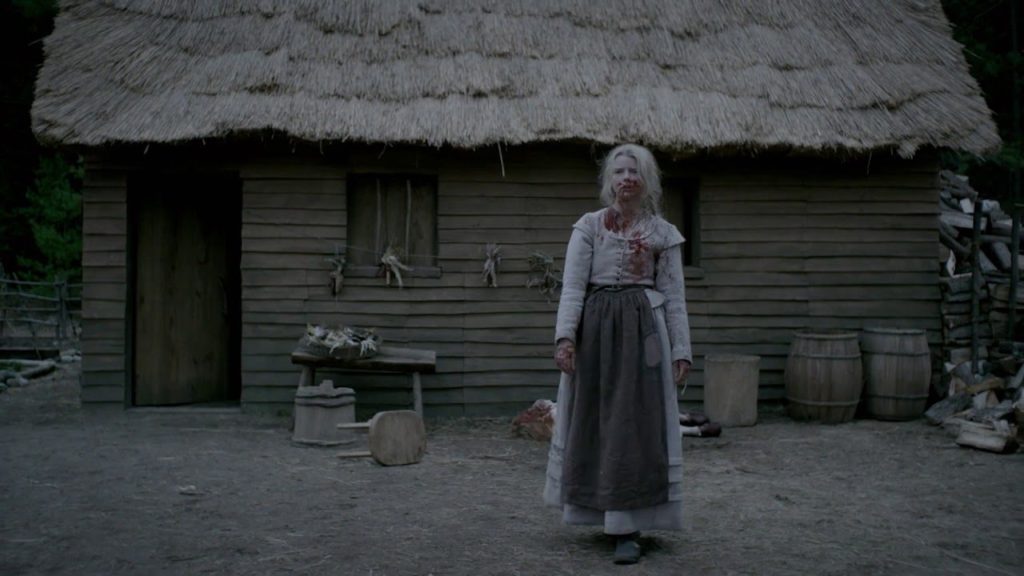
Folk horror is a genre where horror grows from the earth itself, from the ancient roots of paganism and forgotten rituals that the modern world thought were long buried. These are stories about isolated villages where time seems to have stood still, and locals preserve traditions frightening in their archaism and cruelty. Here, nature ceases to be just a backdrop and turns into a living, pagan force: forests hide ancient gods, fields remember bloody sacrifices, and folk songs sound like incantations.
Released ten years ago, "The Witch" by Robert Eggers quickly gained cult status and became an important cultural phenomenon. The themes of religious repression and female power helped reveal that side of the genre that rarely reached the mass audience. A true immersion into a tangible nightmare that does not try to aestheticize evil but shows it as an inevitable, almost grandiose phenomenon, affecting directly the senses and mind.
The plot revolves around a family of 17th-century Puritans who find themselves isolated and experience a chain of tragedies. The world of the film is both familiar and alien: supernatural Christianity without the usual attributes of modernity, full of uncompromising faith. It is dominated by dualism: good and evil have no shades, and the fears of hell and submission to God drive the characters from one spiritual pole to another. They find themselves on the verge of physical and spiritual exhaustion, divided between harsh religious dogmas and the natural need for self-expression. The film does not tell a classic story of fighting demons—this forest is not a source of evil, but a symbol of unattainable control over both nature and the main character. This is one of the best examples of deep work with the heritage of folk folklore, intertwined with personal tragedy and global social issues.
Psychological Horror — "The Shining"
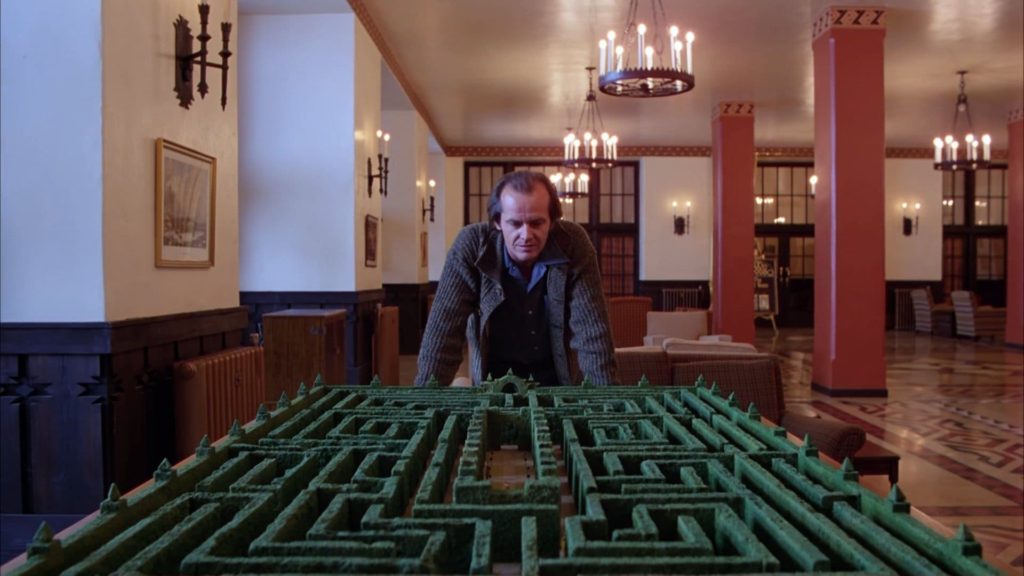
Psychological horror is a genre where the real monster lives not around the corner, but inside the human psyche, in its dark corners where it is scary to look even for oneself. These are stories about the disintegration of personality, about the boundary between reality and madness that blurs with each scene, forcing the viewer to doubt what is happening on the screen and what is only in the character's head. Here, horror is born from isolation, paranoia, repressed traumas, and suppressed desires that break out in the most frightening forms.
"The Shining" by Stanley Kubrick is a benchmark example of psychological horror, where the Overlook Hotel becomes a trap not only for the body but also for the mind. Jack Torrance arrives at an isolated mountain hotel as a winter caretaker with his wife Wendy and son Danny, hoping to find peace and inspiration for writing. But the hotel, saturated with a history of violence and death, begins to awaken Jack's hidden demons—alcoholism, aggression, unfulfilled ambitions. Gradually, it becomes impossible to understand where reality ends and madness begins: are they ghosts of the hotel's past or hallucinations of a disintegrating psyche? Kubrick masterfully plays with this uncertainty, creating an atmosphere of growing horror through symmetrical, almost hypnotic shots, endless corridors, and eerie silence broken only by the echo of footsteps.
The film explores themes of isolation, domestic violence, and self-destruction, showing how confined space and loneliness can turn a person into a monster. Danny possesses "the shining"—an extrasensory ability to see the hotel's past and future, making him a witness to the nightmare unfolding before his eyes. Famous scenes—the twins in the corridor, the bloody waterfall from the elevator, "REDRUM" on the door, Jack's meeting with bartender Lloyd—have become some of the most iconic images in horror history.
Comments
0No comments yet.
Sign in to join the discussion.