

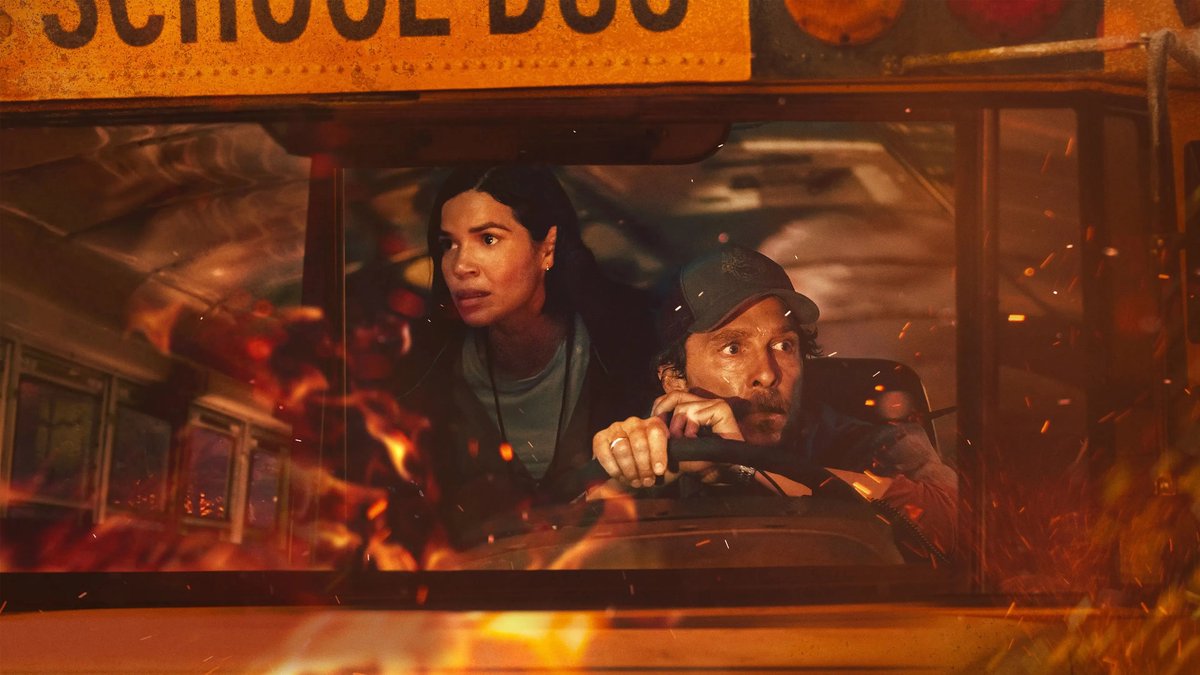
Apple TV+ has released the disaster film “School Bus,” where Matthew McConaughey plays a selfless bus driver saving a school class from a wildfire. Why the film about dangerous adventures looks more like a benefit performance by the Texas actor — in...
Lone-wolf driver Kevin McKay (Matthew McConaughey) cruises around a small California town in a school bus and is going through a tough time. Behind him is a painful divorce from a wife he seems to have never stopped loving, a return to the town he once fled in search of a better life; and at home, a sick mother whose treatment costs a pretty penny, and a teenage son who doesn’t hide his hostility toward a father desperately trying to earn some money and give his child something better than Kevin himself got at his age. The reasons for the teenager’s behavior are delicately left off-screen, but apparently Kevin really did mess up somewhere, because he periodically gets an earful from his wife, who lives in another city.
In this gloomy mood, Kevin starts another work shift, not suspecting how drastically it will change his life. The radio announcer anxiously reports that California is having a dry summer and counts the days without rain, while near the town a short circuit occurs on a local power line, causing a terrible fire that shook America in 2018. The fire spreads very quickly, and soon an evacuation order is issued. Kevin, who was rushing to his suddenly ill son, decides to answer the dispatcher’s call for a driver to save 22 children from the middle school. The flames were already rapidly approaching the building.
Director of the amnesiac spy Jason Bourne trilogy Paul Greengrass returns after a five-year hiatus and seems to still be in great shape. The ready-made script of the 2018 fire disaster and the Californians who heroically fought it was practically begging to be put on screen, and Greengrass, with his passion for documentary-style depiction, jittery editing, and shaky handheld camera, could have been its ideal executor. In places, these hopes were justified. The director built the atmosphere, as they say: smoky, hot, the camera either breathes down your neck, runs ahead, or gets stuck between the flames. Smoke stings the eyes, ash falls on the lens. As they say: “All the money is on the screen.” But then some difficulties arise.
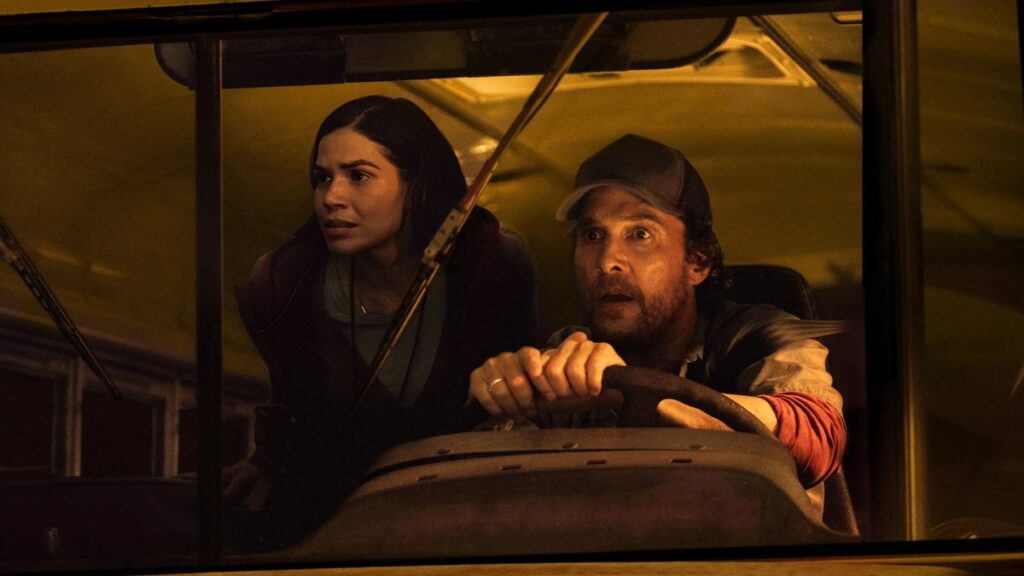
A film that could have taken a place of honor among its genre brethren turned out to be surprisingly one-sided, despite Greengrass’s attempt to give the story of saving children depth through the volume of the main characters: and actress America Ferrera, playing a selfless and dedicated teacher. Greengrass oscillates between pseudo-documentary and standard Hollywood gloss, periodically forgetting to return to the characters who need to justify their screen time and move the story forward. As a result, the director doesn’t really have time for either, constantly leaving a feeling of incompleteness.
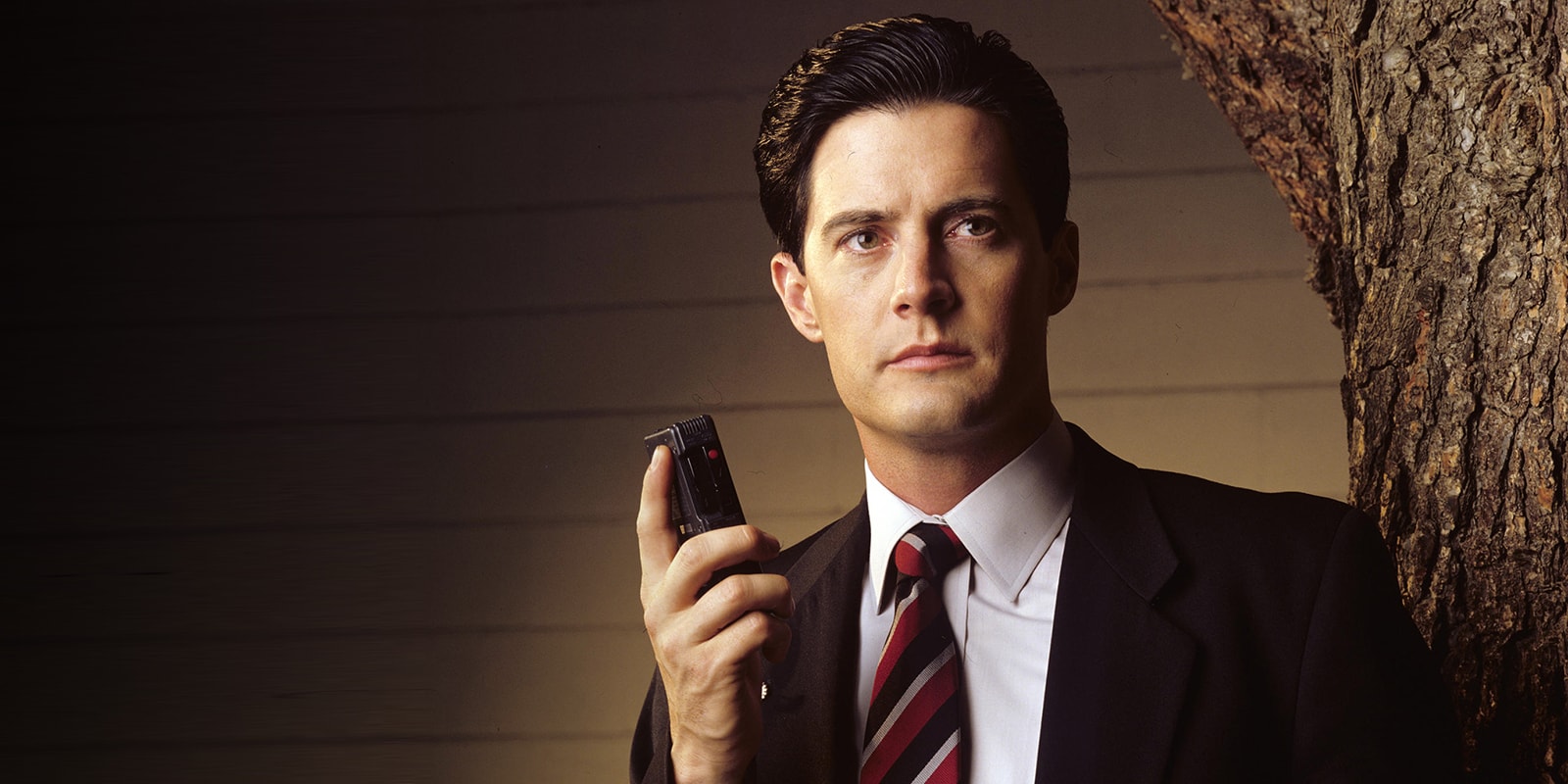
“Twin Peaks” became a milestone in television history and spawned many fans and followers among filmmakers.
Open materialBut even in these circumstances, McConaughey delivers the basics: he cries bitterly the way only he can, rarely smiles (but that smile is unforgettable), tells the story of his life with his trademark Texas accent, but more often just stares into the smoke and ash with an intense look, turning on the “anxiety” option. More often it resembles a benefit performance by an actor who has monopolized the entire space of the film. The star center of gravity he creates rocks the bus from side to side, not allowing it to move forward properly.
Such a burden entirely affects the miraculous rescue scene in the film, which looks unexpectedly forced. The final episode just preceded the moment when McConaughey and Ferrera decided to confess to each other, and it seems Greengrass was much more comfortable there. But how to get the bus out of the fire-engulfed forest, he apparently never figured out, and at the last moment he did it with such haste, as if he was rushing to the next project.
The production line of firefighters and rescuers is mostly limited to one location — and in such a film, it’s frankly unexpected: the screen mainly shows the command center with the fire chief giving short orders. The action scenes in “School Bus” are also not all good. They can be counted on one hand, but even they are shot with some caution, as if Greengrass was afraid of repeating himself. The bus drives through the burning forest, but the viewer doesn’t reflexively clutch their heart: the danger exists as a beautiful but artificial backdrop in a theater and doesn’t feel like an immediate threat. And in such a genre film, you want more and juicier adventures, but Greengrass ignores these hints.
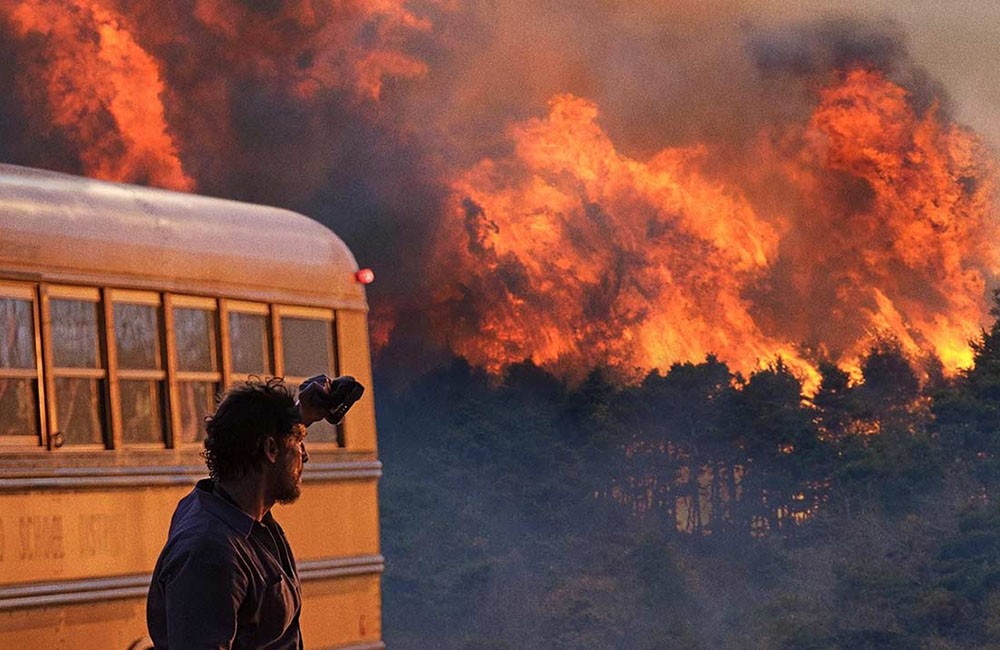
In the end, “School Bus” is a typical case where all the components seem to be in place: a real story (described in the book Paradise: One Town's Struggle to Survive an American Wildfire), big-name producers (Jamie Lee Curtis and Jason Blum), a director with a unique style, and a top-tier star. But the whole doesn’t come together. Greengrass wants a documentary drama, a Hollywood epic, a psychological portrait, and a memorial film. As a result, he doesn’t fully travel any of these routes, getting stuck somewhere in the middle of the road.
Comments
0No comments yet.
Sign in to join the discussion.