
A new work by Paul Thomas Anderson, 'The Battle of the Battle', has been released in foreign distribution, which many critics and viewers have already elevated to the rank of 'future classic'. About the sharpness of meanings, the director's skill, an...
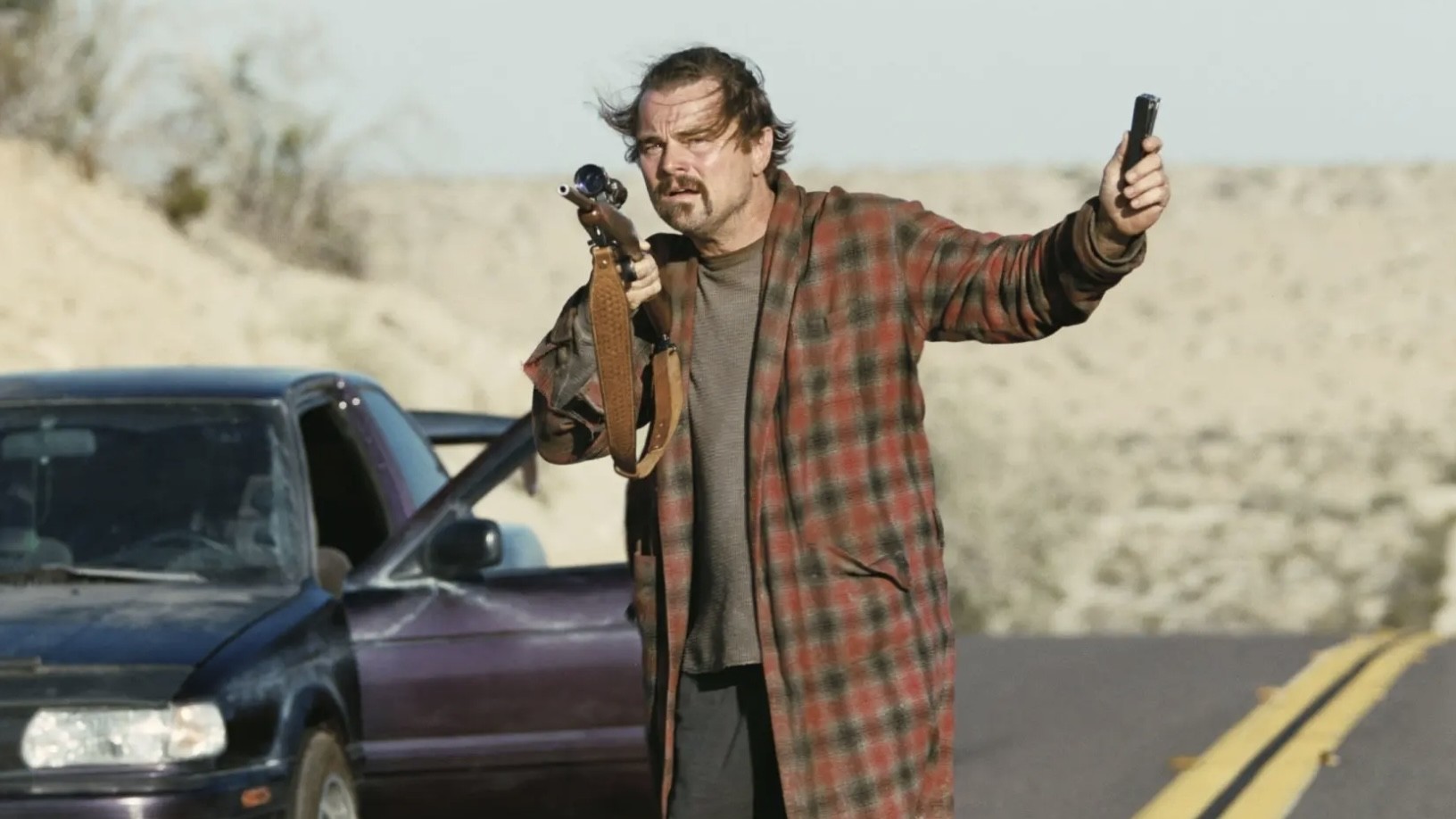
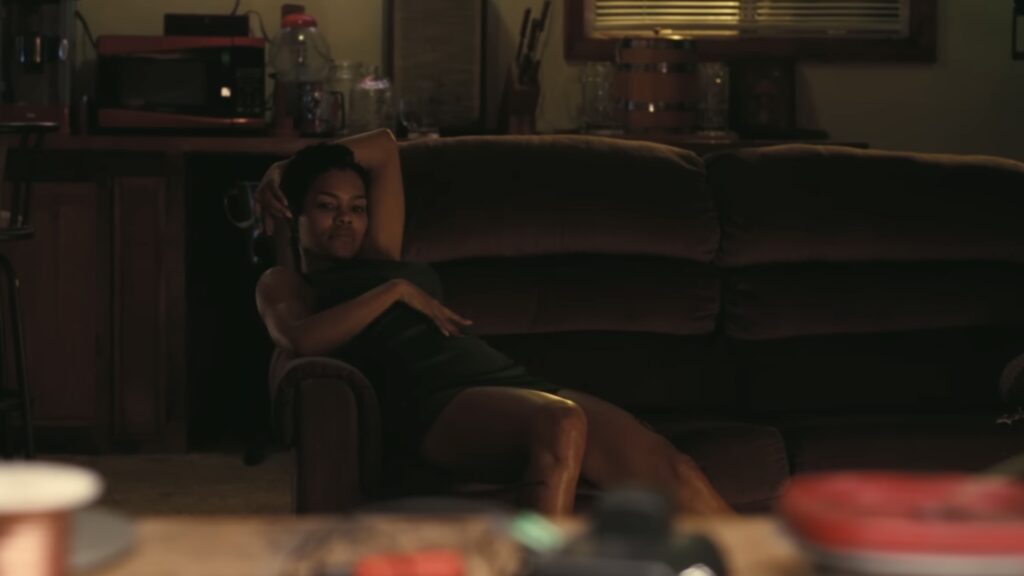
According to the plot of the film 'The Battle of the Battle', Bob Ferguson (Leonardo DiCaprio) was a member of the terrorist organization French-75 in his youth and was known as 'Pat from the Ghetto'. Together with his wife Perfidia (Teyana Taylor), he engaged in subversive activities against the government and big business, dreaming of overthrowing capitalism. After the birth of his daughter, he lost interest in the revolutionary struggle, while his wife, on the contrary, threw herself into it headlong and almost ended up behind bars. The girl was saved by Colonel Steve Lockjo (Sean Penn), with whom she had a secret affair behind her husband's back.
Bob Ferguson, along with his daughter, was forced to lie low in the small town of Barton Cross. However, 16 years later, when the former rebel had completely forgotten all the slogans and codes, the ghosts of the past make themselves known again.
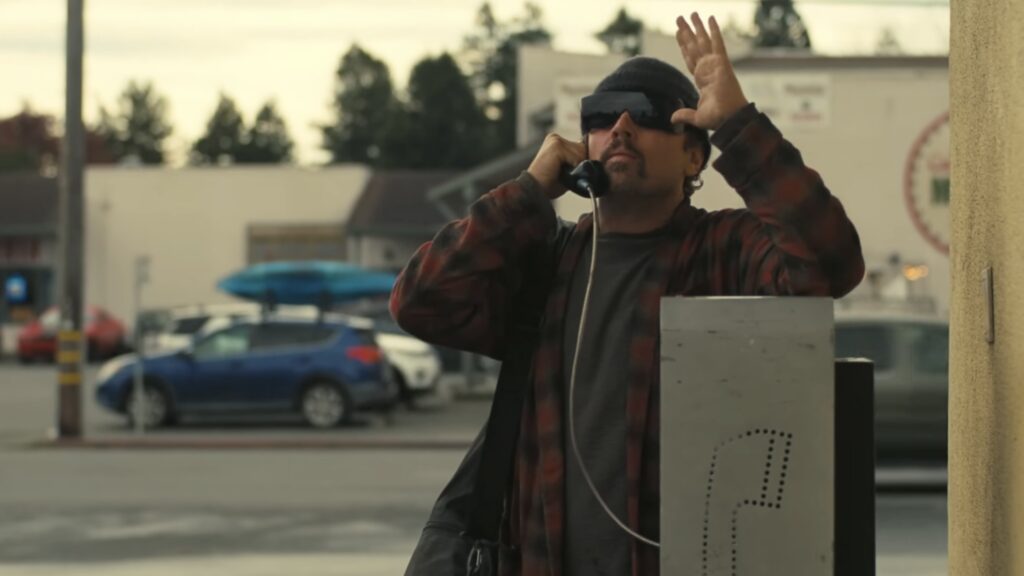
Perhaps it was to be expected that something like 'The Battle of the Battle' would eventually erupt. Over the past thirty years, he has meticulously and systematically dissected everything on which American identity is based: extreme individualism, toxic masculinity, Puritan ideals, false prophets (appearing three times in his films), and immense ambitions, the foundation of which is the myth of conquering the frontier. Even in such a seemingly straightforward nostalgic rom-com as 'Licorice Pizza', the socio-political context still shows through. Only 'Phantom Thread' stands out: in this costume drama shot in the English manner, the director practiced the beautiful.
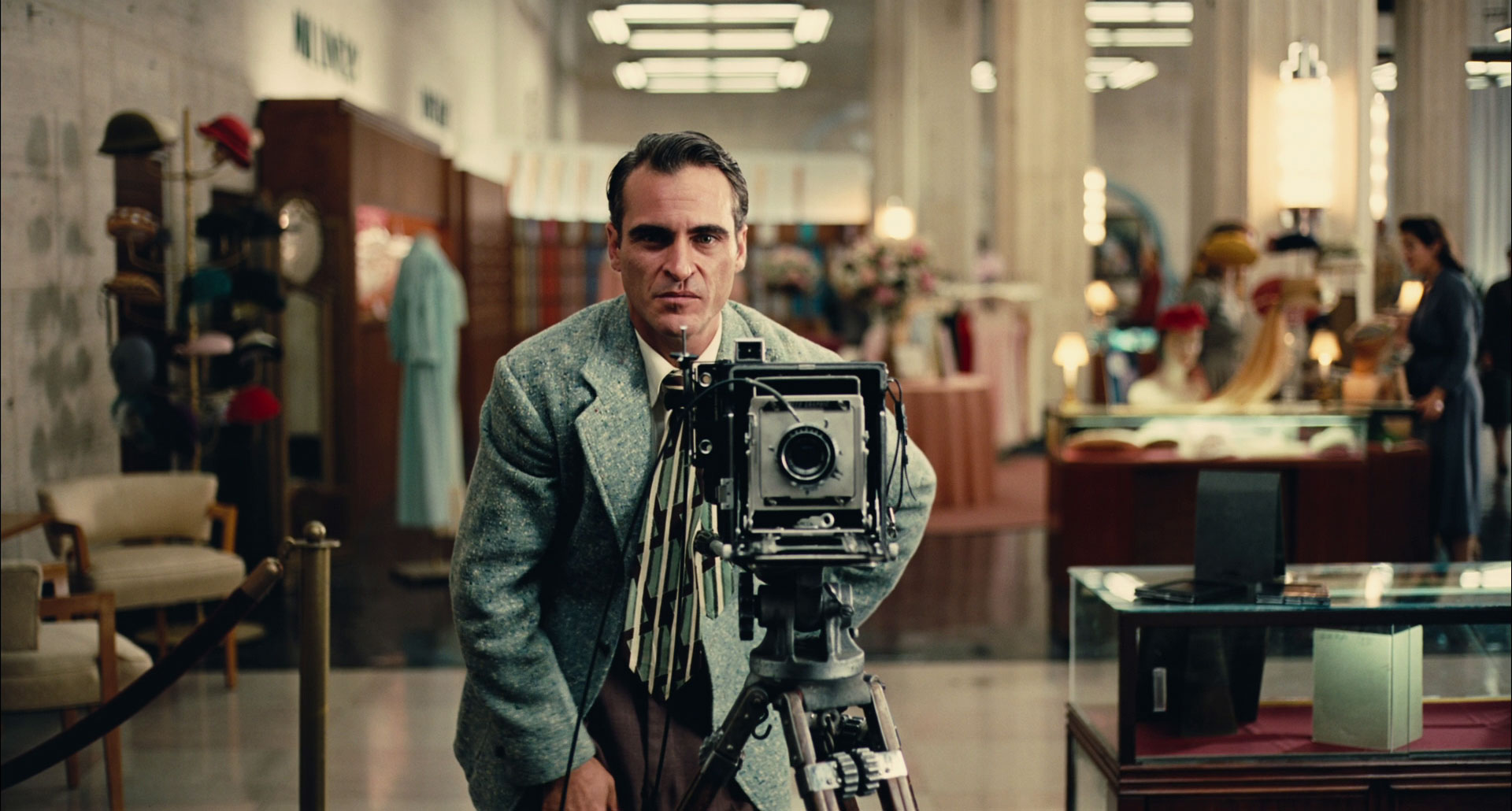
A hippie detective investigates the disappearance of his ex, an alcoholic with PTSD turns to faith, a neurotic finds love, and a prospector finds oil. All of Paul Thomas Anderson's films – from worst to best
Open materialHowever, 'The Battle of the Battle' is a film of a completely different caliber: excessive, thunderous, wild, but in the most frightening way rhyming with the current American (and not only) reality. If the director's previous works needed to steep before achieving cult status, the new film already has every chance of joining the golden fund. To be honest, PTA has never been so straightforward and categorical. Apparently, dire times force even the most delicate artists to express themselves more clearly, without omissions, ambiguities, or resorting to Aesopian language.
Formally, the film is based on the postmodern novel 'Vineland' by Thomas Pynchon. The director noticeably updated the story, bringing it closer to the current moment. The main characters of the book were hippie counterculturalists who founded the People's Republic of Rock and Roll on a college campus in the 1960s, and 14 years later witnessed the war on drugs. In the film, the events of the prologue apparently unfold after the 'Great Recession'. However, the left-wing radical group 'French-75', which includes the characters of DiCaprio and Taylor, looks somewhat out of place for the 21st century and much more resembles the 'Black Panthers' and similar parties than the movements of the 'Occupy Wall Street' era.
But after the time jump, PTA quite accurately depicts modern US realities. The Reagan-era DEA (Drug Enforcement Administration) from Pynchon's novel has been replaced by a new three-letter acronym — MKU. And although no such agency exists, its depiction on screen clearly references ICE (U.S. Immigration and Customs Enforcement), which during Trump's second term became the largest law enforcement agency in American history.
It's hard to say whether Anderson has the gift of foresight or wrote the script by intuition, but given the current situation, his film looks and feels like a manifesto. Two days before the film's release, Trump designated the 'Antifa' movement as a terrorist organization, and after the release, he ordered the Secretary of War (as the head of the Pentagon is now officially called) to send the National Guard to Portland and Oregon to suppress protests.
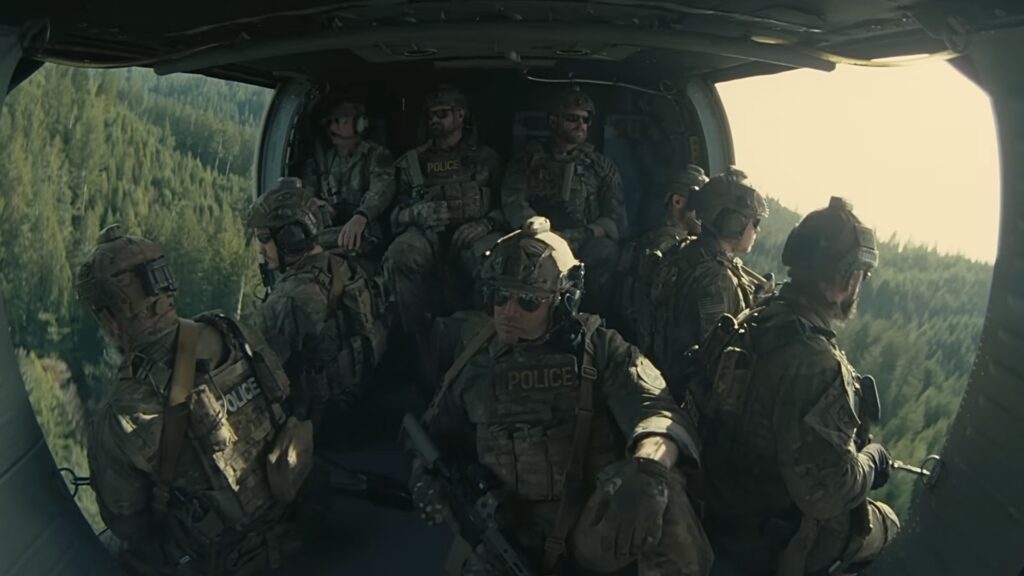
In short, it's hard to imagine a more topical film for the American audience than 'The Battle of the Battle', which automatically makes it a likely favorite in the upcoming awards season. At least, we cannot allow one of the greatest living directors to once again break his anti-record for the number of lost Oscar nominations. Let's hope that the members of the film academy think the same way.
Despite the film being extremely relevant, which is not very characteristic of the sensitive and retrospective Anderson, it still touches upon matters of days long past. For example, DiCaprio's character, during his visit to the school where his daughter studies, notices portraits of the Founding Fathers and presidents on the wall and asks the teacher if she tells the children that these 'cool guys' were slave owners and committed war crimes.
In another scene, a contact of the underground organization, responding to Bob's threats to find him, sneers that he is somewhere between the stolen land of the Wabanaki and the stolen land of the Chumash, that is, between the state of Maine (East Coast) and California (West Coast). And there are plenty of such references to American history, full of dark spots, in the film. What is most paradoxical, in terms of genre, 'The Battle...' gravitates towards a western: a small border town, chases and shootouts against the backdrop of deserted prairies, a lone hero with cowboy mustache, and the eternal motif of the clash between law and lawlessness. True, the audience's sympathies this time will definitely not be on the side of the law enforcers.
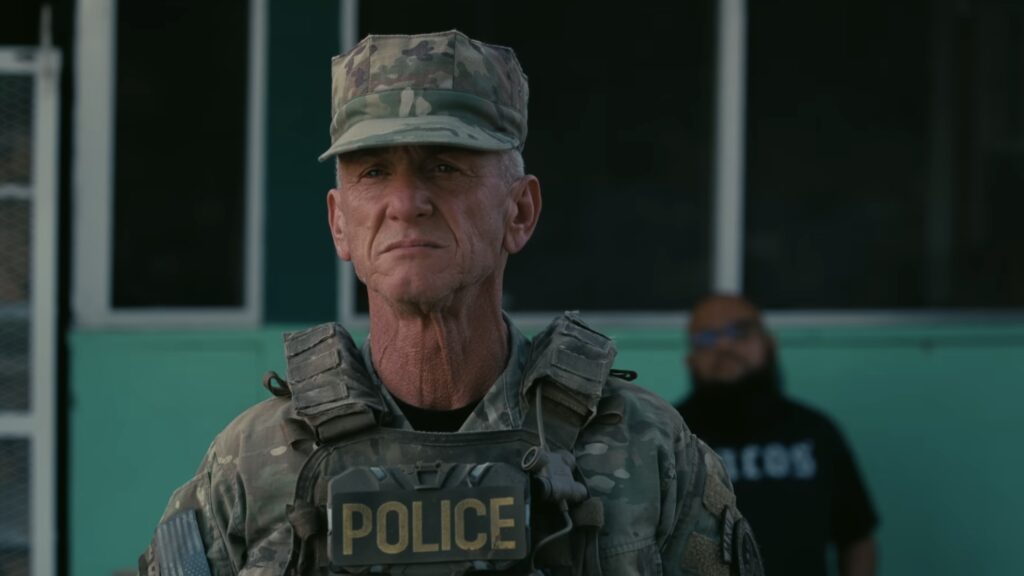
The role of the local 'sheriff' who raided Buckton Cross is given here to Sean Penn's character. In the guise of a cruel colonel with a constantly angry expression, the actor looks extremely authentic, albeit sometimes caricatured. Steve Lockjo is a maximally repulsive antagonist, and you don't want to empathize with him at all, but at the same time he is quite textured and complex to evoke conflicting feelings. His obsession with Perfidia borders on masochism, a sexual deviation that is sometimes inherent in people endowed with power. He is so vulnerable and pathetic that a sharp remark about heeled boots can drive him out of his mind.
His opponent Bob Ferguson is also far from an ideal hero. The helpless and clumsy ex-revolutionary proves throughout the film that the winged expression 'talent cannot be drunk away' does not apply to him. As a father who raised his daughter alone, he certainly endears himself, but only until the viewer realizes that he is also a lousy parent. Nevertheless, DiCaprio, who after 'Once Upon a Time in Hollywood' has already gotten used to playing comedic men in crisis, delivers not only a very funny but also a very touching performance here.
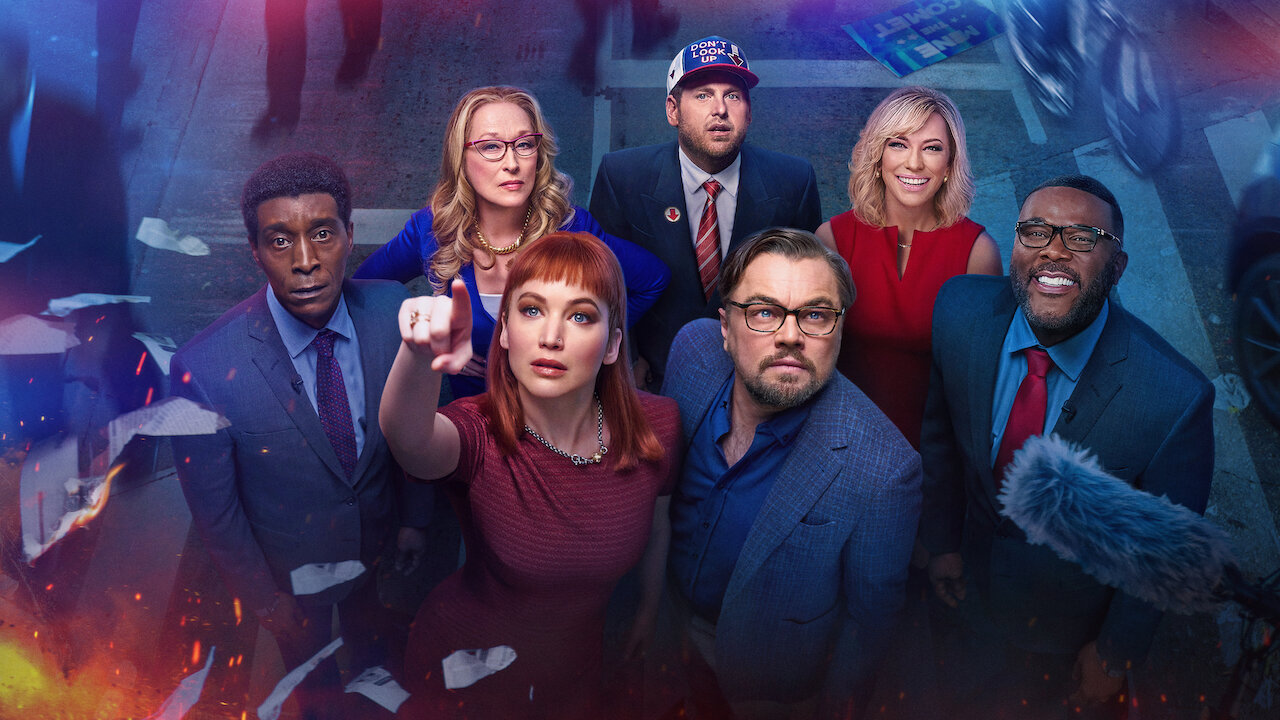
On December 24, Netflix premiered Adam McKay's new comedy 'Don't Look Up' with a star-studded cast. Opinions about the film were divided, but it definitely has
Open material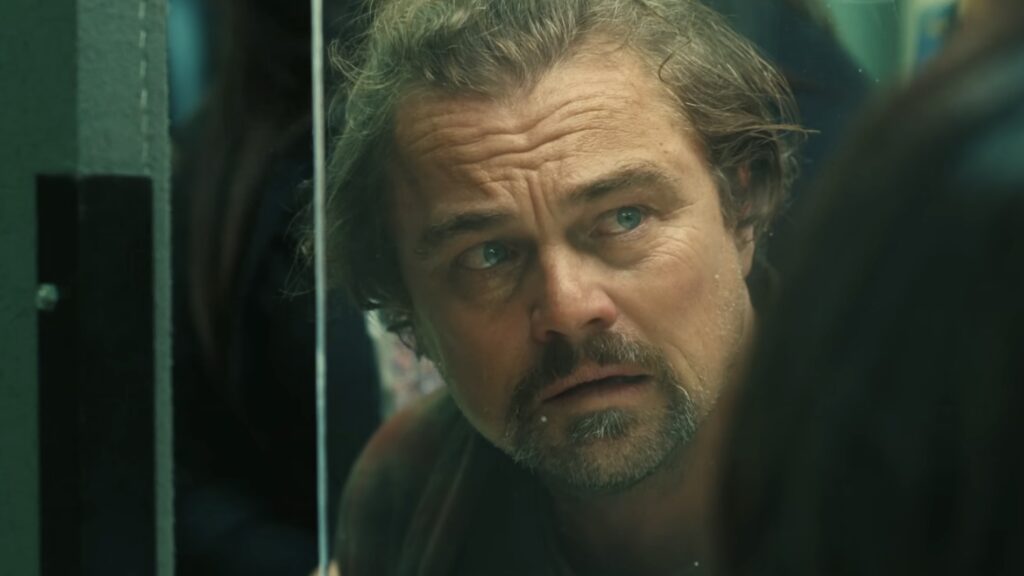
But, as Teyana Taylor's character rightly noted, fragile male ego does not need revolution. It is no coincidence that this epic begins and ends with female characters on screen. However, if in the debate between Willa (Chase Infinity) and Bob the viewer will take the side of the former, then in the dispute between Perfidia and her more far-sighted husband, he will inevitably support the latter. Despite all the attractiveness of the image of a rebel with steel balls, it is hard to forgive her irresponsibility, which ultimately leads to betrayal. Interestingly, in another work by Paul Thomas Anderson — the neo-noir 'Inherent Vice', based on the same Pynchon's novel — there is also a character symbolizing the betrayal of counterculture (a police informant played by Owen Wilson).
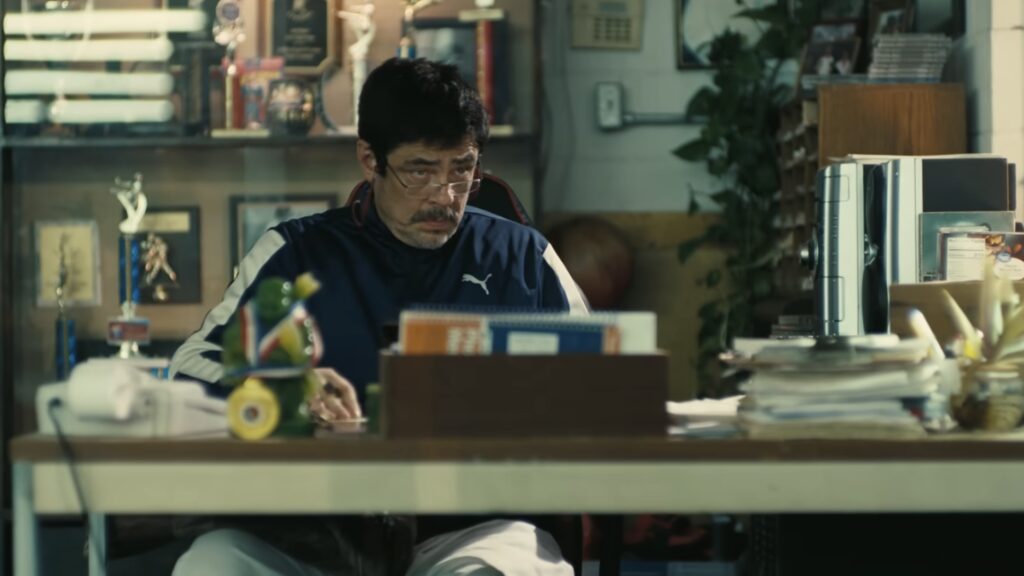
In the supporting cast of 'The Battle...', the imperturbable charismatic Benicio Del Toro shines as a martial arts master, whom Ferguson calls 'sensei' with a fawning intonation. His character, who patronizes the local Mexican community, compares himself to Harriet Tubman, the famous black abolitionist who fought for the abolition of slavery. He repeatedly helps the protagonist, pulling him out of scrapes or simply charging him with motivation. And he is assisted by other migrants, whose souls Lockjo's soldiers have come for.
Gradually, various forces get involved in the Barton Cross mess, including the order of revolutionary nuns 'Sisters of the Brave Beaver' and the neo-Nazi 'Christmas Adventure Club'. Revealing all the cards would only spoil it! This, as they say, must be seen with your own eyes! Closer to the denouement, what happens on screen becomes so absurd that no frogs from 'Magnolia' even come close. And how organically the paranoid soundtrack by Jonny Greenwood sounds in all this bacchanalia! The lead guitarist from Radiohead has written music for all of Anderson's films since 2009, but now, it seems, he has surpassed himself from the time of 'There Will Be Blood'. The same can be said about the director.
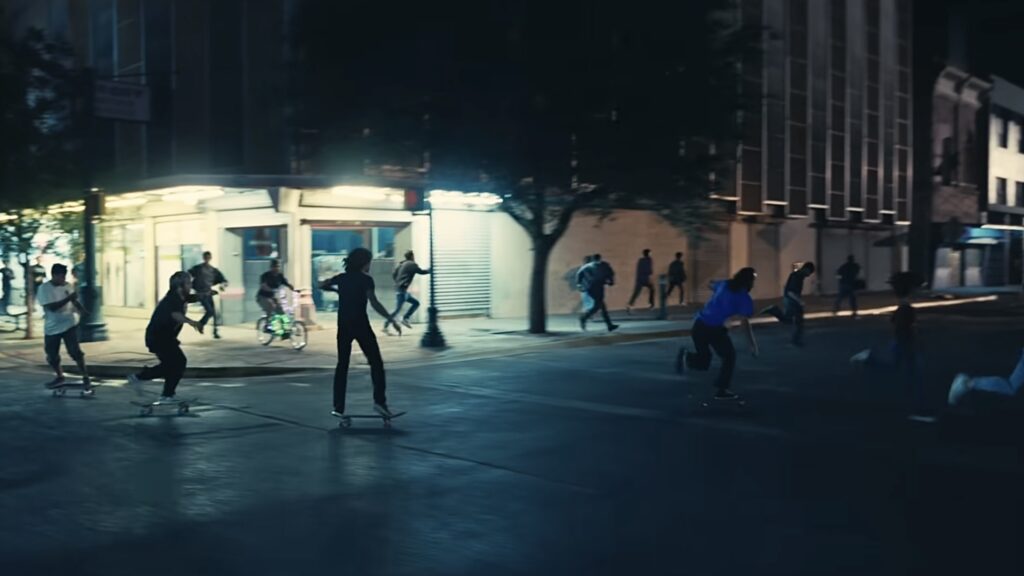
Whether to hang a sign on 'The Battle of the Battle' reading 'best film of the year/decade' is a matter of taste, but it is already clear that in the future, film scholars will dissect it piece by piece as the brightest monument of the era, and future generations of directors and screenwriters will draw inspiration from it, just as current ones draw inspiration from the masterpieces of Kubrick and Scorsese. The potential box office failure is, of course, disappointing, but no less so than the fact that in our lifetime the film has turned out to be too topical, and it will be called such anywhere in the world.
Paul Thomas Anderson made 'The Battle...' clearly not for money or recognition. The enthusiasm with which he looks at the younger generation, frankly, inspires optimism and gives hope for a better future for all of us. I want to believe that he, as a father of four children, knows what he is talking about, because he made this film primarily for them!
Comments
0No comments yet.
Sign in to join the discussion.