
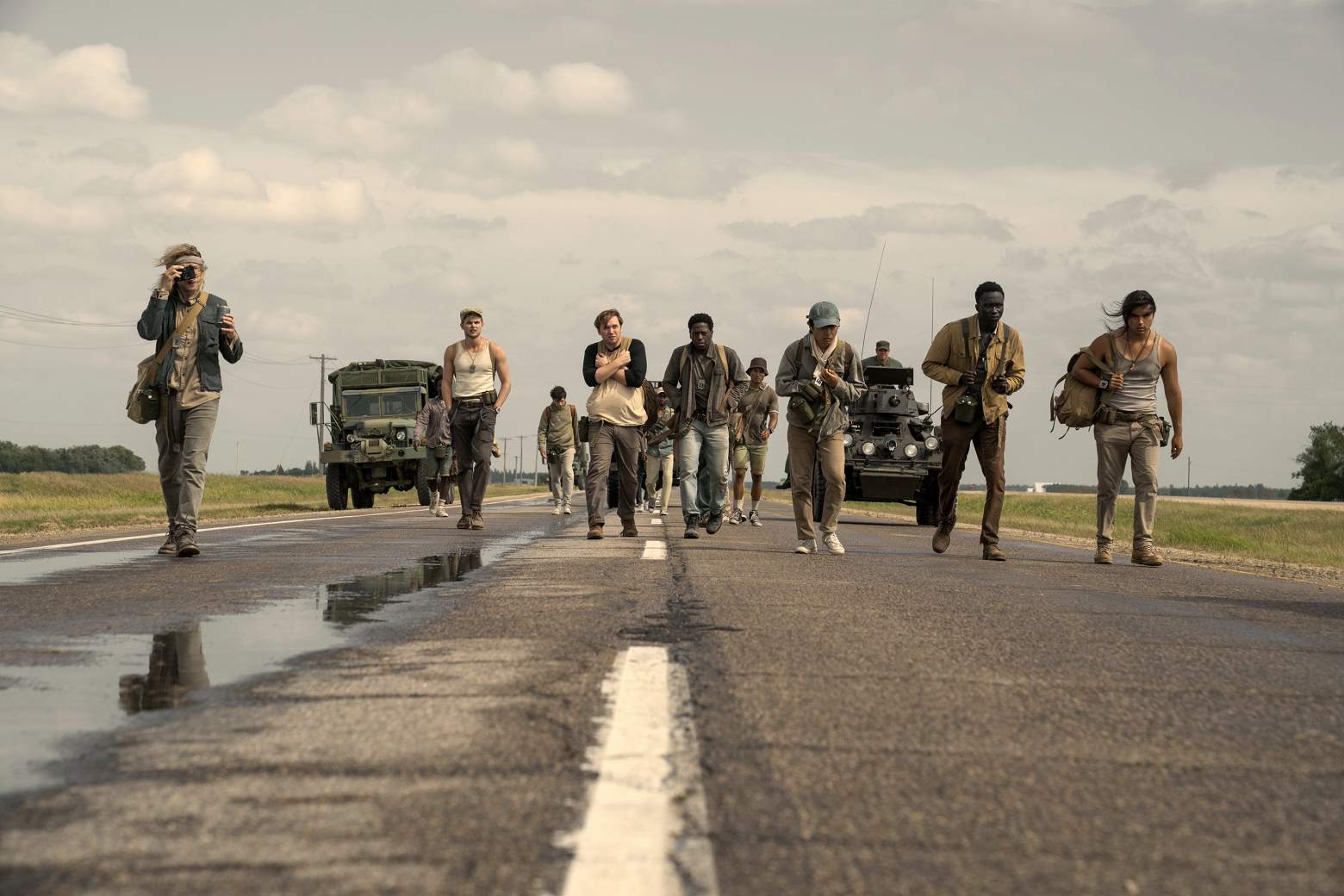
The Russian release features 'The Long Walk', an adaptation of Stephen King's cult dystopian novel published under the pseudonym Richard Bachman. Read our review to find out if you should see the new film.
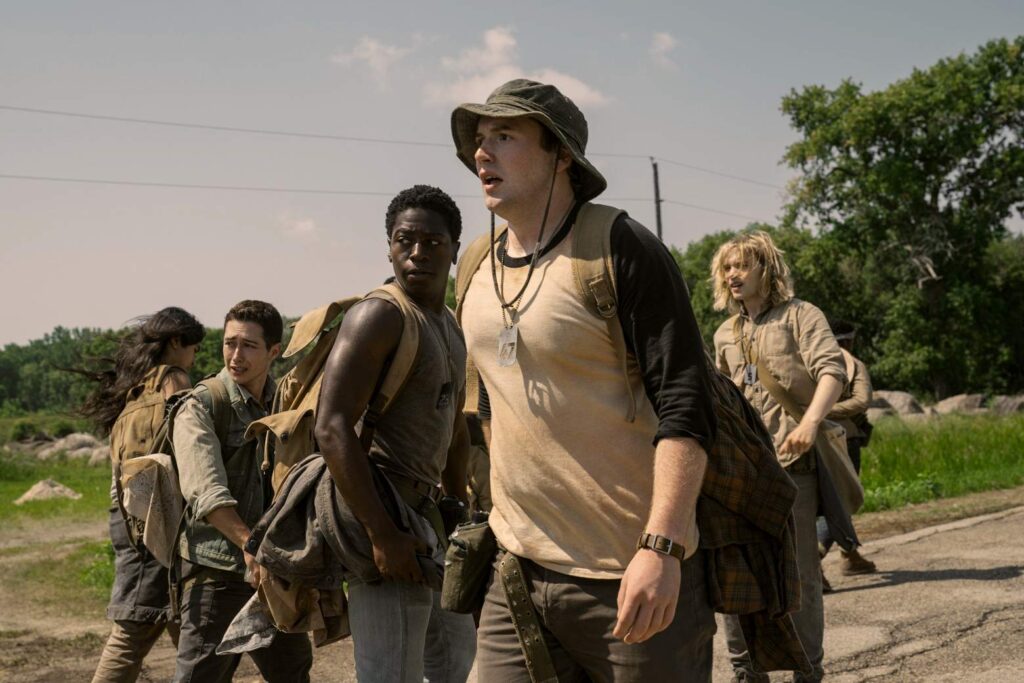
In the near future, a totalitarian regime has been established in the United States, suppressing any dissent, and the population lives in extreme poverty. To boost patriotic spirit, an annual competition called 'The Long Walk' is held, in which fifty young people participate. According to the rules, participants must walk no slower than three miles per hour and not stray from the path. After receiving three warnings, the athlete is eliminated—they are physically removed by the military escorting the column. The survivor receives a cash prize and the fulfillment of any wish. This time, among the participants is Ray Garraty (Cooper Hoffman), representing Maine, but he has no interest in the reward.
All works in the 'battle royale' genre essentially have the same structure. The strong point of such plots is the selling high-concept, where characters are forced to participate in an extreme game until only one remains alive. Along with this, films with such a premise have a significant drawback: they fail to impress a seasoned viewer. In most cases, there is no intrigue about who will reach the finish line and who will be eliminated first.
Moreover, in all these stories about the poor competing among themselves for the amusement of the powerful and the plebs languishing in illusions, a similar anti-system message is always evident. And although it can be called eternally relevant, it becomes truly topical only when the reality around you begins to resemble life in one of Panem's districts. And if the filmmakers are not lacking in the ability to competently convey their thoughts (and even better if they have an excellent source material), then predictability will not cause irritation.
In this sense, 'The Long Walk' by Francis Lawrence is not only a well-crafted thriller but also a brilliant example of a timely statement on pressing issues. Despite the original novel being published only in 1979, the author completed work on it in the second half of the 1960s, at the height of the infamous Vietnam campaign. At that time, 19-year-old freshman Stephen King was tormented by thoughts about the fate of his peers sent to serve in distant Indochina. These experiences led him to write his debut book.
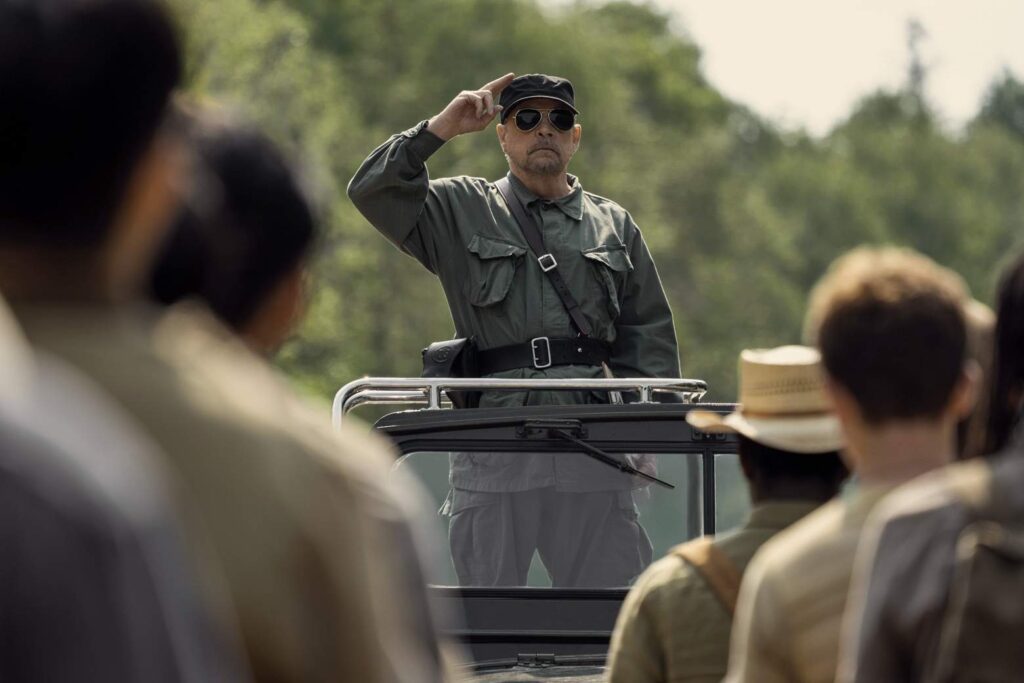
The allegory of the draft was as elegant as it was easily readable: 100 randomly selected boys, each wearing an aluminum tag with a serial number, become participants in a competition where any violation of the rules, such as leaving the course (read: desertion), is punishable by immediate execution. Meanwhile, the Major, played in the adaptation by an unusually infernal Mark Hamill, always looks cheerful, manages to sleep, and even take a shower. Now, when the value of human life worldwide has again dropped to a historical low, such allegorical imagery should certainly resonate with the spirit of the times (upd: the film 'The Long Walk' crashed and burned at the US box office).
When transferring the text to the big screen, the number of walkers was halved, some storylines were cut, and the characters lost some depth. A clear example is the difference in Garraty's motivation in the novel and the film. While in the book the protagonist was primarily driven by an irresistible and irrational desire to join the column, in the adaptation he is motivated solely by revenge. To be fair, in this particular case, changing the internal incentive benefited the story: Ray became more understandable and deserving of sympathy in the eyes of the audience.
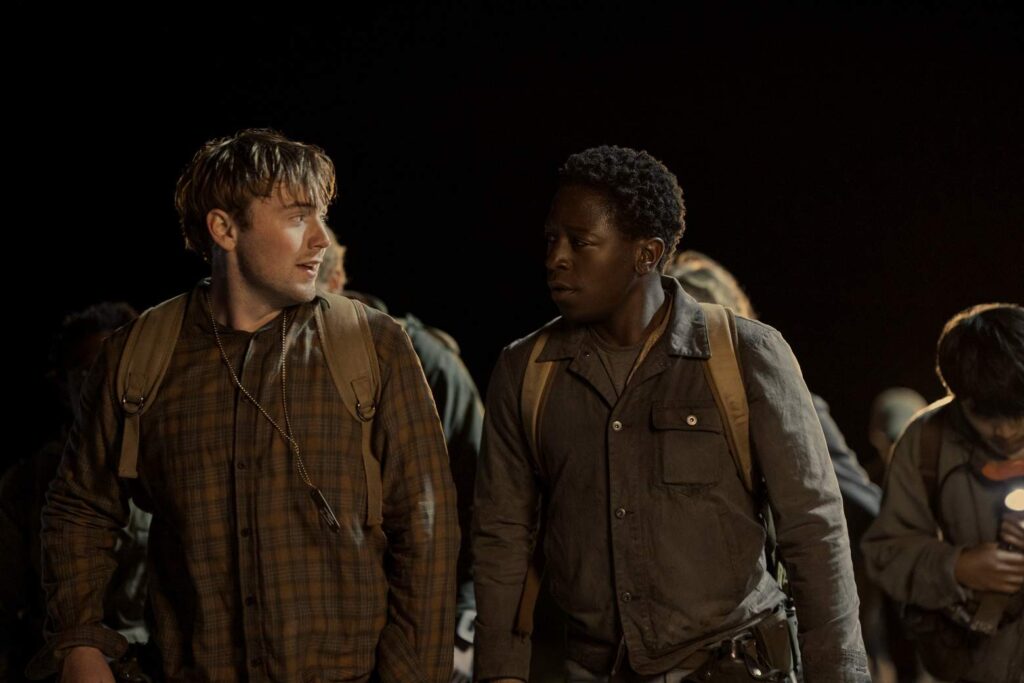
The image of the protagonist's best friend also underwent a radical transformation. In King's work, Peter McVries was a cynical pessimist with suicidal tendencies, while in Mollner and Lawrence's version, he turned into a poetic lover of life, capable of seeing light at the end of the tunnel. In this regard, one cannot fail to note another impressive performance by David Jonsson (). In the film, it is McVries, not the vengeance-obsessed Garraty, who serves as the main moral compass. He is kind even to the family of onlookers gathered at the roadside to watch the march of the doomed.

'Alien: Romulus' is a real gift and attraction for all fans of the franchise. The film successfully combines nostalgia and modern horror elements, creating a tense and atmospheric
Open materialSpeaking of viewers: the adaptation has almost no crowd scenes with masses of spectators. This is explained by the fact that technology has advanced since the novel's publication, and in the world of 'The Long Walk', there is no need to personally attend this marathon. According to the plot, the walkers' route passes through the protagonist's hometown, but until then, no one cares except Ray's mother. Now every American has the opportunity to watch the live broadcast from home. It would be even more authentic if it were broadcast from the air.
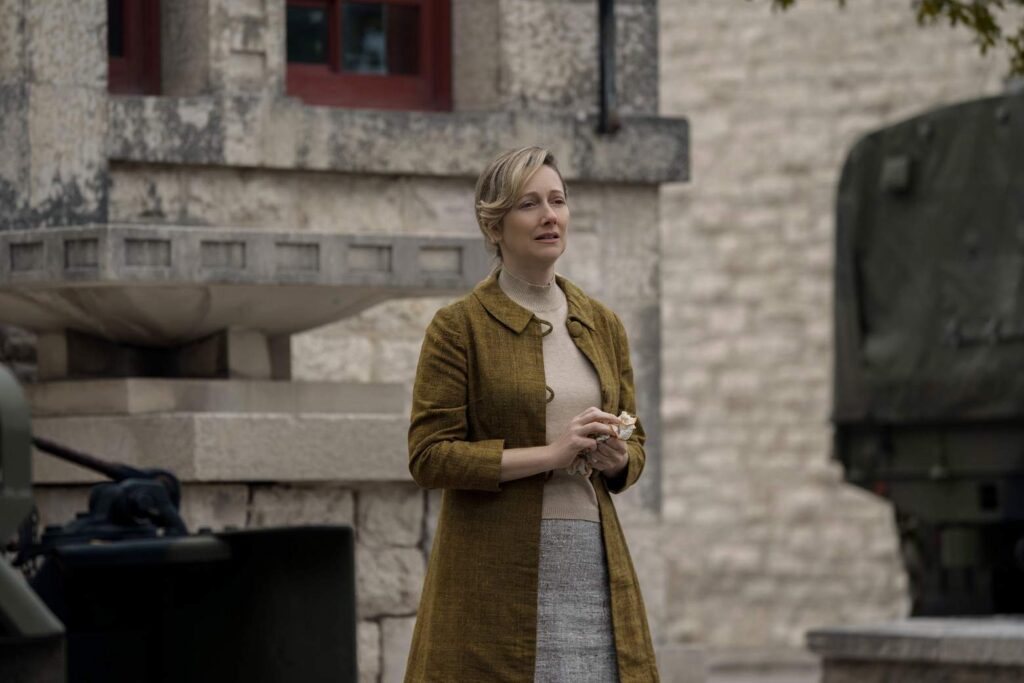
In fact, Lawrence's decision to avoid scenes with large numbers of extras was absolutely correct, and not only because the book version of the quest would look overly theatrical in today's reality. Throughout the film, it never really shows how ordinary people react to this deadly marathon, except for a couple of random passersby with phlegmatic faces and one girl with a placard.
If the filmmakers had strictly followed the source material, the focus would have shifted slightly from the participants' suffering to criticism of the media normalizing violence on air and consumers of such snuff content. The ethical question, worn thin, of whether the audience is to blame for the continuation of the massacre is touched upon reluctantly in the film. Especially since the root of all evil lies elsewhere. The wise beyond his years McVries cuts off this discussion by retorting that people are not to blame for being taught to think that way. But most importantly, the correctly placed accents strengthened the main idea and positively affected the dynamics.
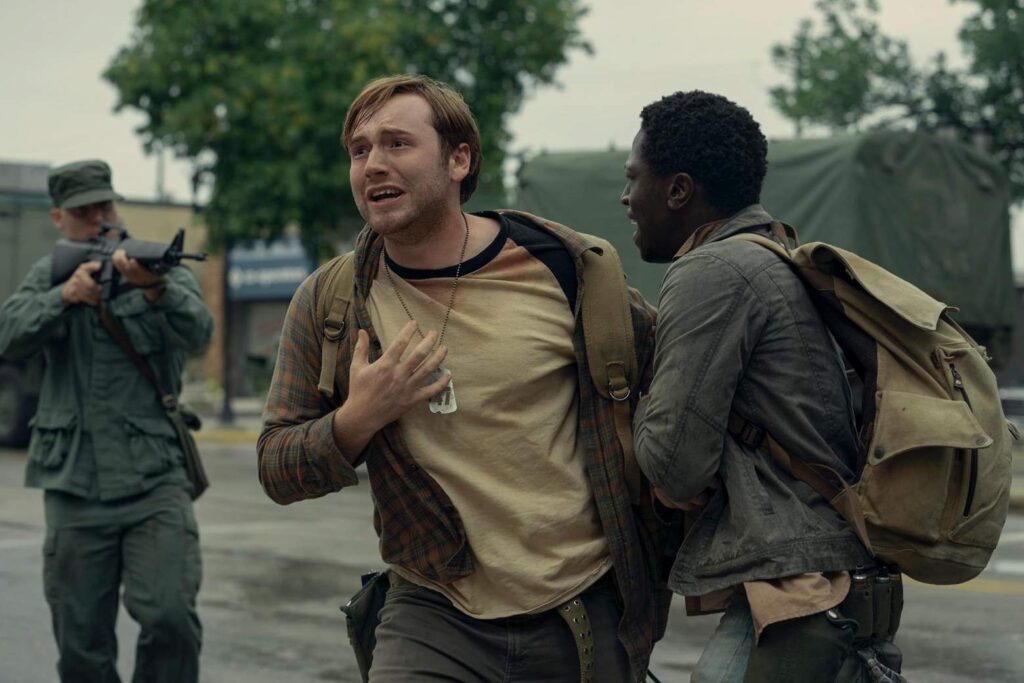
In 'The Long Walk', there is almost nothing superfluous: the dialogues reveal the characters' personalities well and serve as a key to understanding the film, and although the machine-gun bursts inevitably become routine, each new repetition deafens no less than the first time. Despite the fact that the final three can be easily identified already at the roll call, the denouement still shocks you. JT Mollner decided to end the story differently, and this is probably the best alternative ending among film adaptations of Stephen King's books since Frank Darabont's 'The Mist'.
Unlike the novel, where the last walker continued to follow a mysterious dark figure (a subtle allegory for PTSD), in the adaptation this silhouette is absent, but the winner, who made a choice (the fairness of which is eloquently indicated by the audience's reaction), still decides to go on, because, as we remember, there is no finish line in this race. And there are no winners either.
Comments
0No comments yet.
Sign in to join the discussion.