
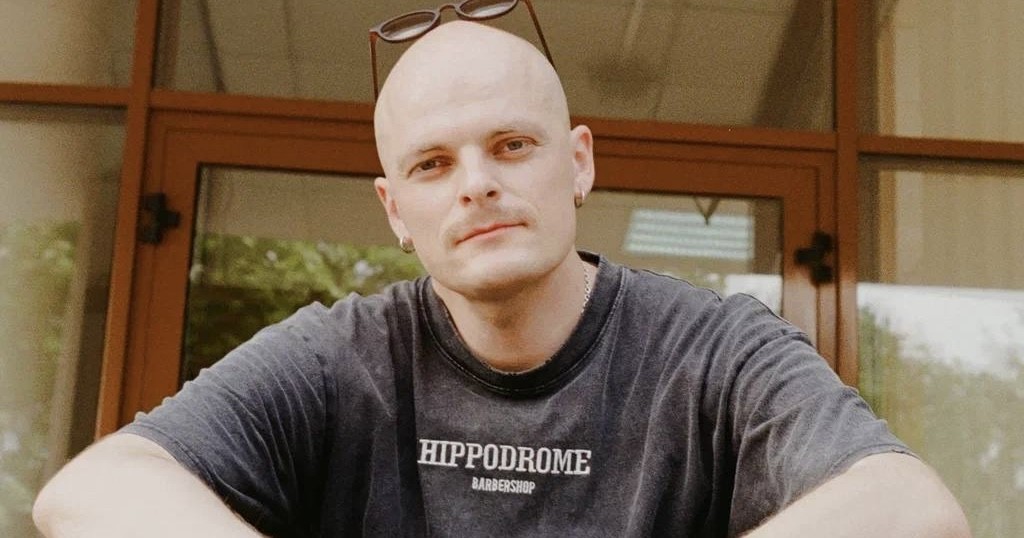
The comedy sci-fi series 'Barankins and the Stones of Power' is now available on the Kinopoisk online cinema. We spoke with Alexander Mizev, who plays the main antagonist of the show, about what it's like to act in a comedy genre, what he would spend...
In 'Barankins' you played the main villain Velimir, who hunts for magic stones. How are you similar and how are you different?
We have similar hairstyles, they are almost identical. That actually makes me very happy (smiles). But seriously, it's hard for me to answer that question right now.
– You mostly play negative characters. How do you feel about that?
I disagree with that statement. I don't only play negative characters. For example, one of my recent works is the series 'Natalie and Alexander', where I played Nicholas I. I don't consider that a negative character.
Also in the series 'Other People's Money' I played the friend of the main character, whose name is Donkey. His biography is not filled with smoothness and virtues. Nevertheless, I don't consider him negative either. I tried to make him some kind of tender good-natured adventurer. I don't know if it worked or not, but I tried very hard.
I feel good about the fact that I sometimes play negative characters. I would even say naturally. Because without them it's hard to understand what is positive in our lives. Bad and good only appear in contrast to each other. Each of them on its own is somehow flat.
It seems to me that with my negative roles I complement the palette of one or another cinematic refinement.
– As they say, without darkness there is no light.
Exactly. Yes, it might be cliché, but I really think so.
– You often say that you love playing everyday drama, where a person goes through a certain path and at the end understands something about themselves, but comedy is harder for you. Tell me, how does Velimir live within the framework of comedy? How is it for you?
The most difficult task for me in the role of Velimir is to maintain this negativity in the comedy genre. The viewer will be able to judge whether I succeeded or not. It was quite hard to understand where to turn on anti-charm and everyday realism with its harshness and negativity.
On the other hand, the directors and partners on set helped me find that edge of how to present such a character. Even during filming, I kept searching: how here, and how there, not to mention the preparation for the filming process.
I built this line from the first to the last episode so that in the very finale, everyday realism would hit. So that it would set the viewer up for the fact that we are still telling this story seriously, that my character is really worried about something, that he is not just pretending to be some formidable stone hunter. That behind this hunt for stones there is some important subtext, including for my character.
I think the viewer will understand Velimir's main motive. The character certainly changes from episode to episode, depending on what happens. From each new episode we learn what really drives him, why he needs the stones so badly.
– What were you able to give Velimir? What trait of your character did you bring to this character? And how did that help you play him?
I consider myself a romantic person, so I brought some note of romance. And here it was also quite difficult for me to do this, because the production process is sometimes very unpredictable. So sometimes I had to argue with colleagues and insist on some scenes, while others had to be supplemented to reveal my character from a romantic side as well.
You know, it seemed to me then and still seems now that without this romantic note, it would be hard for viewers to empathize with Velimir. That's why I added that trait of romanticism to him.
– And what exactly does this romance consist of? What did you do?
I tried to say that every evil actually needs love (smiles). As an evil character, I tried to be understandable in the process. I'm curious myself whether it worked or not. Together with the viewer, I follow the new episodes and see what and how we managed to show. It needs to be done in a way that is also fun – not boring, but funny. It's important not to lose the genre.
– Tell me, what is there in Velimir that you yourself do not accept? Some character traits that are not inherent to you?
I don't like ultimate harshness. It seems to me that any person can have various traits under certain circumstances. A person can be completely cruel; you just need to put them in certain circumstances. The other thing is that I try to avoid such circumstances, while Velimir in this case goes into them deliberately. But again, he has his own motive, so I don't judge him. I feel sorry for him.
– What attracted you to this project?
I really wanted to try myself in a new genre. In this kind of comedy, the text is written very, so to speak, convexly. It's a way of talking to the viewer. Honestly, such things scared me and still scare me.
What exactly scares me? I'm afraid that it might look unserious, in a bad sense. And this unseriousness borders on being completely unnecessary. And I'm quite afraid to do unnecessary things, to do something just for the sake of it. I was afraid that the project would be another 'just because'. And I wouldn't want that. And it seems to me that something worked out. But we need to see the result.
– As a viewer, I want to get to know Velimir better. In the first four episodes, unfortunately, he has little screen time. Such negative characters are interesting precisely because they show their dark side and are not ashamed of it. And we all have that side. Velimir possesses the stone of immortality. Do you think humanity needs immortality?
I think it is not needed (smiles).
– Why?
A person needs boundaries. You shouldn't perceive limitation as something bad. Value is born in limitation. At the same time, you shouldn't overdo it. Any excess stifles life. But, as they say, a drop of poison can make a person recover. Essentially, death is a drop of poison in human existence. As scary and terrifying as it is to admit, death is necessary for us. Even thinking about it is scary.
I don't want to romanticize and glorify death. I just think that the more often we think about it, the fuller life becomes. It's like a deadline in a project – you can postpone it indefinitely. But when you have a deadline in the literal and figurative sense, especially when you feel it and something depends on it, you start to savor life more intensely. Then life appears, and all thoughts about meaninglessness disappear. Because there is a limit. In this sense, death as a limit is a good thing.
– I think I agree. Like many people, I rarely think about death. It seems like you have an eternity ahead, why think about it. Aren't you afraid of death?
I am afraid. I don't fully understand what it is. All my reasoning is a bit of self-deception. I think about it, but this uncertainty scares me just as much. It especially starts to scare me when it manifests. For example, you get sick, you have a temperature of forty. At that moment, you're not in the mood for romance at all; you just want it to be over as soon as possible.
Also, when close or important people pass away, you also think: what if I'm next? It's so disarming and sometimes it completely kills all enthusiasm, and sometimes it tones you up.
I have an absolutely flexible attitude towards it. Today it charges me and pushes me forward, tomorrow – on the contrary, it dampens and extinguishes, and I have to crawl out of that feeling.
– I understand that you don't want to become immortal. But if such an opportunity existed – what would you spend eternity on?
If some vampire flew to me right now – Edward Cullen, for example – and bit me on the neck without asking, presented me with a fait accompli: 'Well, that's it, dude, that's the deal (laughs). Nothing personal, I was just hungry. It's not my fault I wanted to eat.' What would I spend my time on?
I would go through Maslow's pyramid and just satisfy all my materialistic earthly desires in about two or three years. Try all the food, travel everywhere I could. I would literally try all facets of emotional sensations.
Then I would lock myself in some Lenin Library and read all the books, if such an opportunity existed. I'm sure my way of thinking after reading books and gaining such experience would change radically. That would probably take about three hundred years.
And what would I do then? Maybe fly into space. Continue to expand physical boundaries, explore some cosmic space: the universe, the metaverse, something else. Study books on building spaceships, Einstein's theory of relativity, and create some huge spacecraft. Traverse infinity, looking somewhere in the outer world for that inner end, that inner finale of life.
– That's an unexpected ending to your answer – I somehow thought you would be looking for life beyond Earth, neighbors in the universe.
As Freud said – it's Eros and Thanatos. Even if we are immortal, we unconsciously strive for death. And in me, too, the thought moves in that direction.
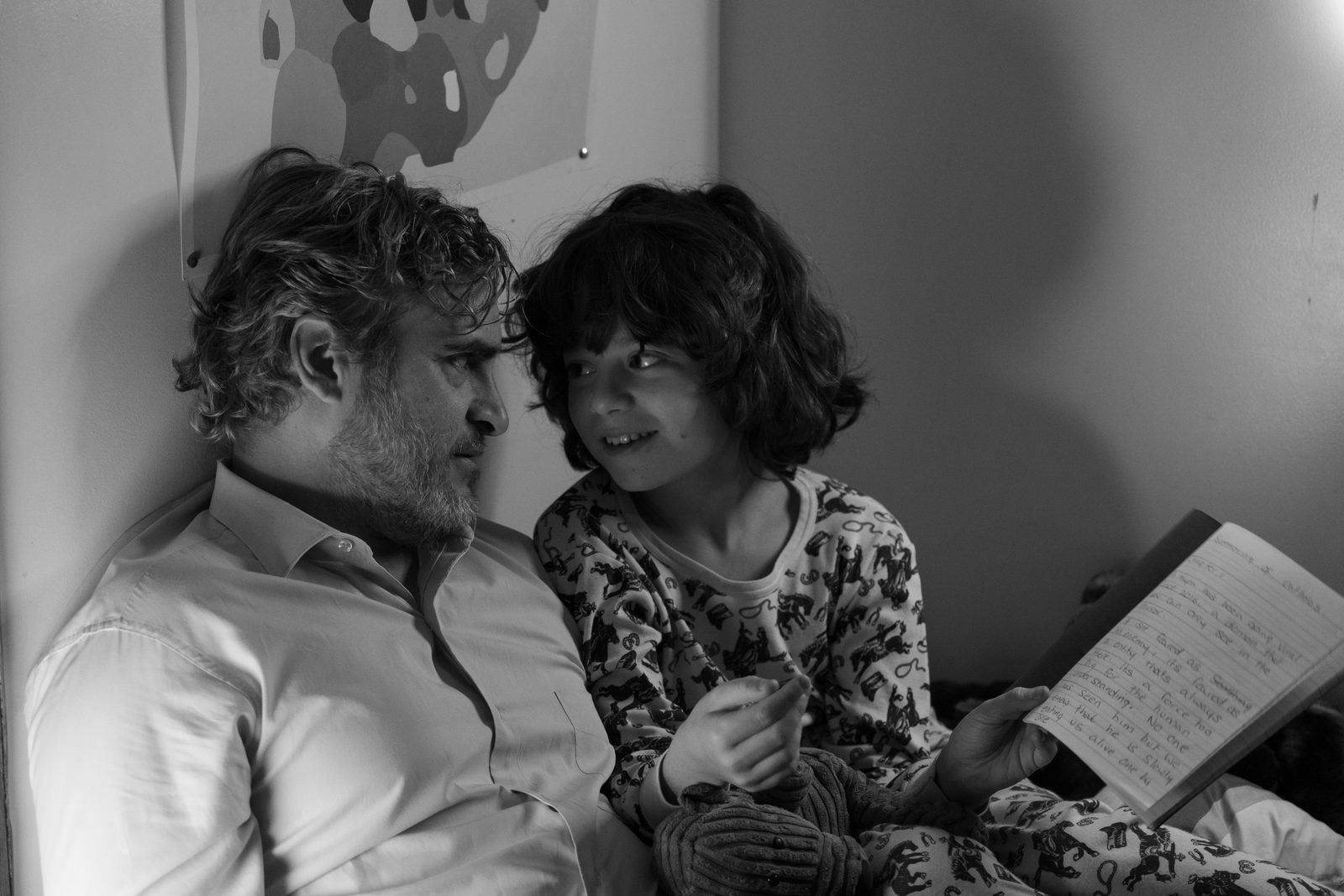
Yes, it's one of my favorite films.
– Mine too. In that film, the girl says in an interview that if she had a superpower, she wouldn't use it. I'm very close to that approach, and you too, as I understand. Why? Please tell me.
Do you mean the conversation with the girls in another interview about superpowers not being needed?
– Yes.
It's all temptation. I'm close to the philosophy of not limiting inner desires, because I feel how they sometimes want to break out. On the other hand, I want to control everything. When these desires get out of control, they begin to destroy the fragile balance I've been striving for all my life.
I ate two ice cream cones before our meeting. Just because they were in my fridge, and there was no particular reason to limit myself. Why? Well, I can afford it. And here there are two options: either train my will, strain myself and say: no, stop, two ice creams is too much, or just eat both. That's an extra internal conflict that I don't need.
The same with a superpower: when you don't have it, you don't even think about it. And there's no extra internal struggle. You can just go make yourself some oatmeal with banana. Any superpower can quickly become boring and turn into routine. You then have to solve additional dilemmas. You want to simplify everything. Because simplicity is genius, I think. It's an extra kick in the ass that I wouldn't want to have. That's the whole reason.
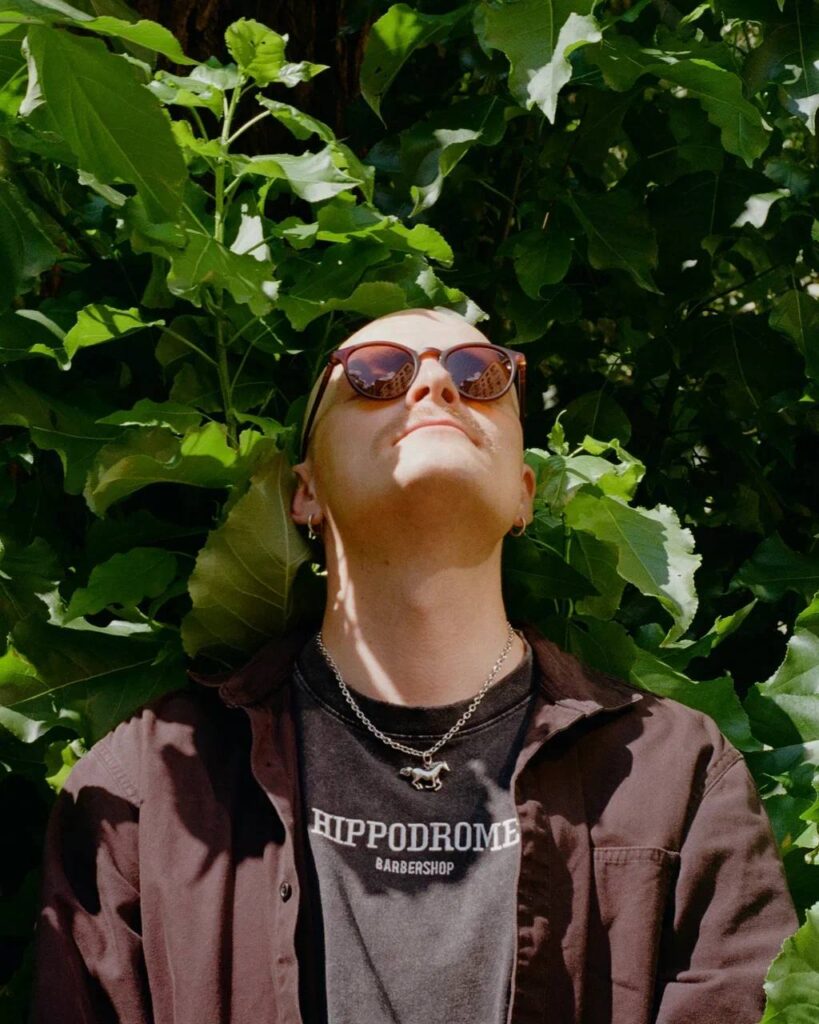
– Which character, not counting Nikolai Stavrogin from 'Demons', still surprises you and makes you reconsider your own views on life and profession?
I think Walter from the series 'Kill Rita'. If we talk about views on life, Walter for me is hyperbolized adventurism. I also have that adventurous part in me, but Walter's is multiplied by a hundred. In that sense, the character helped me reflect: what if this adventurism is turned up to large scales? During the acting, it was interesting for me to look at the world and circumstances through his eyes.
And as for the influence on the filming process and understanding something new about it – it's working with Masha Agranovich, whom I constantly mention in all interviews. The adventurism inherent in all the artists of the 'Kill Rita' project gave rise to some wonderful things: joint search for locations, other things, a high degree of integration into film production. The latter surprised me the most: how much can be done together.
Often everyone is responsible for their own little patch, their own garden. That's not bad. Everyone has their own area of responsibility. But for me, a new side of film production opened up when a small group of ideologically charged people gathers, and everyone does everything, while being responsible and respectful to each other. In the end, it all leads to greater efficiency.
– In an interview with Sobaka, after which it's impossible not to fall in love with you as an actor and a person, you said that on the set of Masha Agranovich you are responsible for the buzz. And what are you like in life and off the set?
I exist in energy-saving mode off the set. Although, I'm lying a little to both you and myself. Only the last couple of months have been quite calm. I opened my own barbershop – I thought I should do something else in my free time.
What does that indicate? Hardly energy-saving mode, because energy is not saved, as we could find out through empirical and experimental means (laughs).
What I like about cinema is that you can walk your cocky part in all its glory. In everyday life, I sometimes feel sad that for walking that part you might be judged, so I watch it more closely. I wish I didn't have to watch it so closely. There's nothing bad about it, it's just super active, bright. And people might judge you for being bright or something. It doesn't bother me much, but I'd be lying if I said that judgment and sidelong glances don't affect me at all.
It's like with a superpower – I just don't manifest it, I don't say I have it, so as not to waste mental resources on processing the consequences of that ability.
– A wise and rational approach. I know you've tried many professions to, so to speak, better understand acting. You mentioned the barbershop, and before that you wanted to write scripts. How is the scriptwriting going? Have you come up with an idea or story that grabbed you?
In parallel, there are some notes, and they are still being written. Writing scripts is not a priority for me. Less time is devoted to it than before, but some processes are still ongoing.
– How long have you been working as a barber? What does it give you?
I've been cutting people's hair for six months now. Firstly, it gives me a huge amount of creative fuel. I learn many stories from the people I work with. For example, a person worked in a morgue for 12 years. There was also a survey engineer, an architect, a triathlete, a racer, a horse rider. You hear so many stories there (smiles).
I communicate with these people and draw things for myself: their habits, what they think about, how their daily life is structured. I just ask them questions, and I'm genuinely interested in how their lives are arranged. It's not like I'm specifically fishing for stories, no. In this way, I acquire additional knowledge that can be brought into some role.
– How long do you plan to cut people's hair?
I don't plan to stop yet. There's no need. I currently have a moderate filming workload and a lot of free time. I prefer to spend it on haircuts and organizing processes. As long as I have that opportunity, I'll do it. Anything can happen in life. If I start to dislike it, I'll do something else.
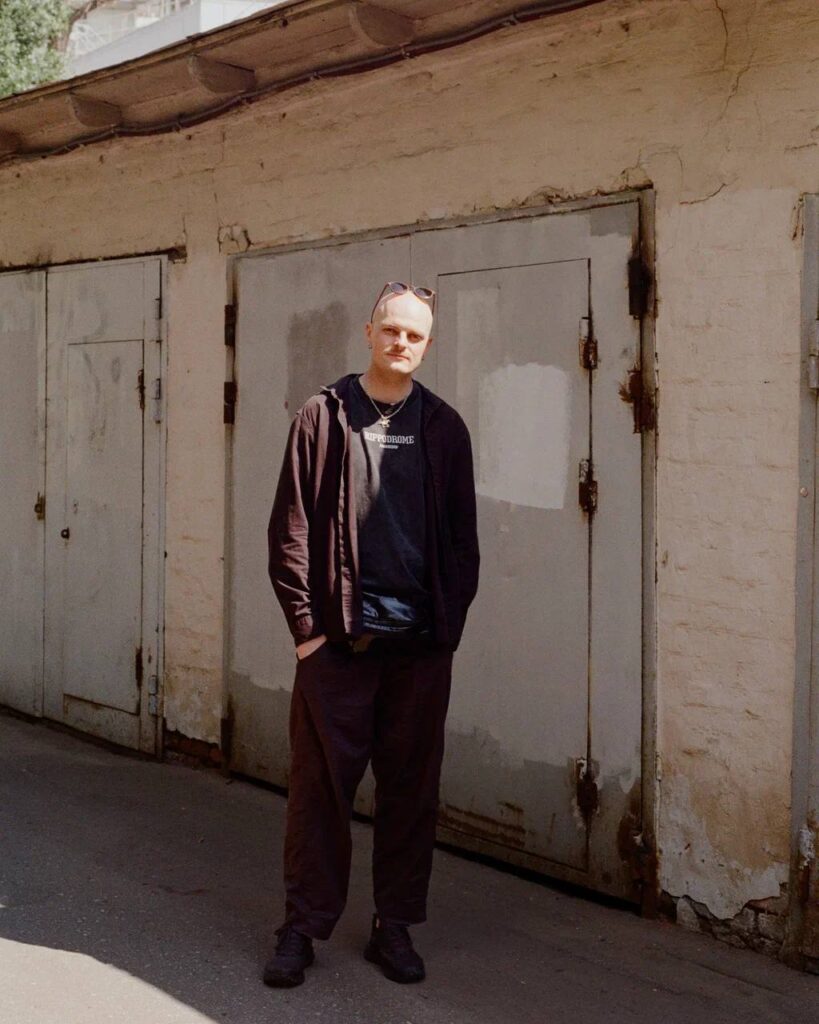
– What does 'success' mean to you in your profession and in life?
When you can approach the mirror, calmly look at yourself and say: 'I have everything. And what I have makes me happy.' Success is not something static, but dynamic.
Today, for example, I'm upset and, unfortunately, I don't consider myself successful. How it will be in the evening – I don't know. Maybe in the evening I will become a successful person. Something will change in my worldview, and I will feel successful.
Maybe this state, which will come to me tonight, will last six months or a year, or maybe 10 or 20 years. It's a very fickle thing. Today success is there, tomorrow it's not.
It depends on the individual person. Also, we often perceive success as some kind of social accolade. For me, it's closer to the feeling of happiness. You are healthy, you have some money, you have a job that brings you joy, you have plans. I think that's already success.
– And how did you imagine success at the beginning of your career?
For me, success at the beginning of my career was measured by the amount of money, work, and followers on social media.
Only over time did I come to the current understanding of what it really is.
– In one interview you said that you initially chose the acting profession out of selfish interests and that you later paid dearly for it. Would you share that story?
The most important and hardest payment is the mental anguish that comes later. In short, it becomes very upsetting that you wasted time on the wrong things and were focused on what wasn't truly valuable.
Now I perceive it as a certain stage in life, a step that I've crossed, and apparently I needed it for some reason. I think it was precisely to come, after time and experience, to the understanding I have now.
I remember that period when I wanted fame and money not with bitterness, but with joy. It was a great time (laughs). Now, of course, everything has changed. So there's no particular story. I just worried a lot about it.
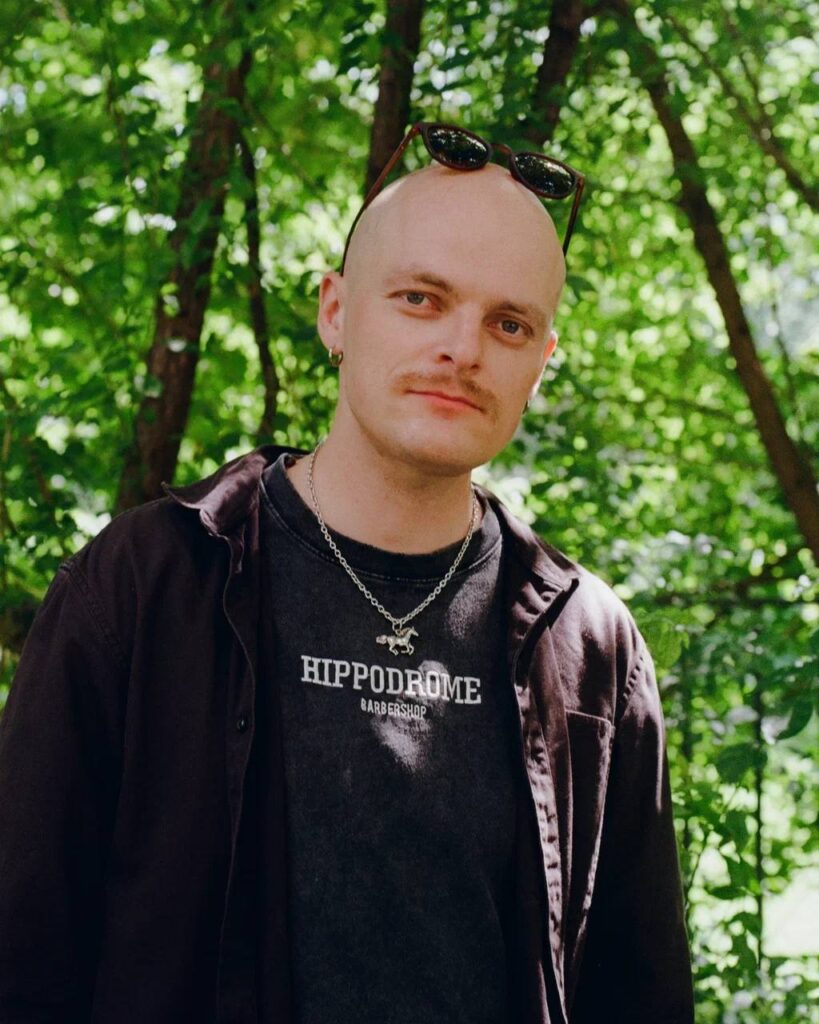
– What are the most unexpected or paradoxical things you have learned about yourself through acting?
The most important and only discovery I made is that a person is a spectrum, not a set of qualities or anything else. I stopped dividing everything into good and bad. There is nothing good, nothing bad either. Everything is as it is. Everything is needed for something.
That's the philosophy I developed thanks to acting.
Sometimes it's not easy, because you want to determine and divide everything. But you have to live with the fact that everything is different. You just need to choose a certain angle, and everything will fall into place.
In the social structure, society requires division. It seems to me that even biologically, our organism and body are inclined to this. Nature is arranged so that the day is divided into day and night, and our circadian rhythms are built from that.
Plus, a static system is easier to manage than a dynamic one. That's what I struggle with. I have a small business, six people under my command. On one hand, I sometimes think: 'Oh, how hard it is for me, Lord.' On the other hand, I ask myself: how do people who manage huge corporations or countries cope? What's going on in their heads, how do they deal with it, and so on.
Such examples once again lead me to the thought about the Christian 'judge not'. Do not judge, because you yourself have not been in that situation. Once you are in it, you will gain a sensory understanding.
– What would you say to yourself now, at the beginning of your acting career?
I would say: 'What a wimp you are!' (laughs). When I was younger, I was a more desperate person than I am now. But I can understand my younger self. Everything has its time.
The stunts I pulled 5-10-15 years ago were appropriate for my age at the time. I understand and accept all the complaints of my younger self. At the same time, as an older and older (smiles), I demand from my younger self respect for what is happening now, because it also has its reasons.
So yes, I would say: 'What are you afraid of? Just do it! Come on, get it together!' And I in the present would answer: 'Damn, bro, I can't, I don't have the resource. I'm already tired. Look what's going on, it's crazy!' 'I don't care at all, do whatever you want!' I would give some motivational speech (laughs).
Comments
0No comments yet.
Sign in to join the discussion.