
Zach Cregger's film "Weapons" has hit digital platforms, and now the most talked-about horror of recent times can be watched at home. The director, who scared audiences with "Barbarian," once again plays with expectations, offering not a straightforw...
"Weapons" is not the kind of movie where you close your laptop or turn off the TV and go to sleep peacefully. After the final credits, there are only more questions, and the urge to discuss what you've seen lingers for a long time. That's why the film instantly moved from the category of "horror for an evening" to the ranks of movies that people argue about, build theories around, and search for Easter eggs. Let's try to make sense of what we saw and understand the hidden meanings of Cregger's work.
Warning: This article contains spoilers for the plot of the film "Weapons"
What Happened in Maybrook
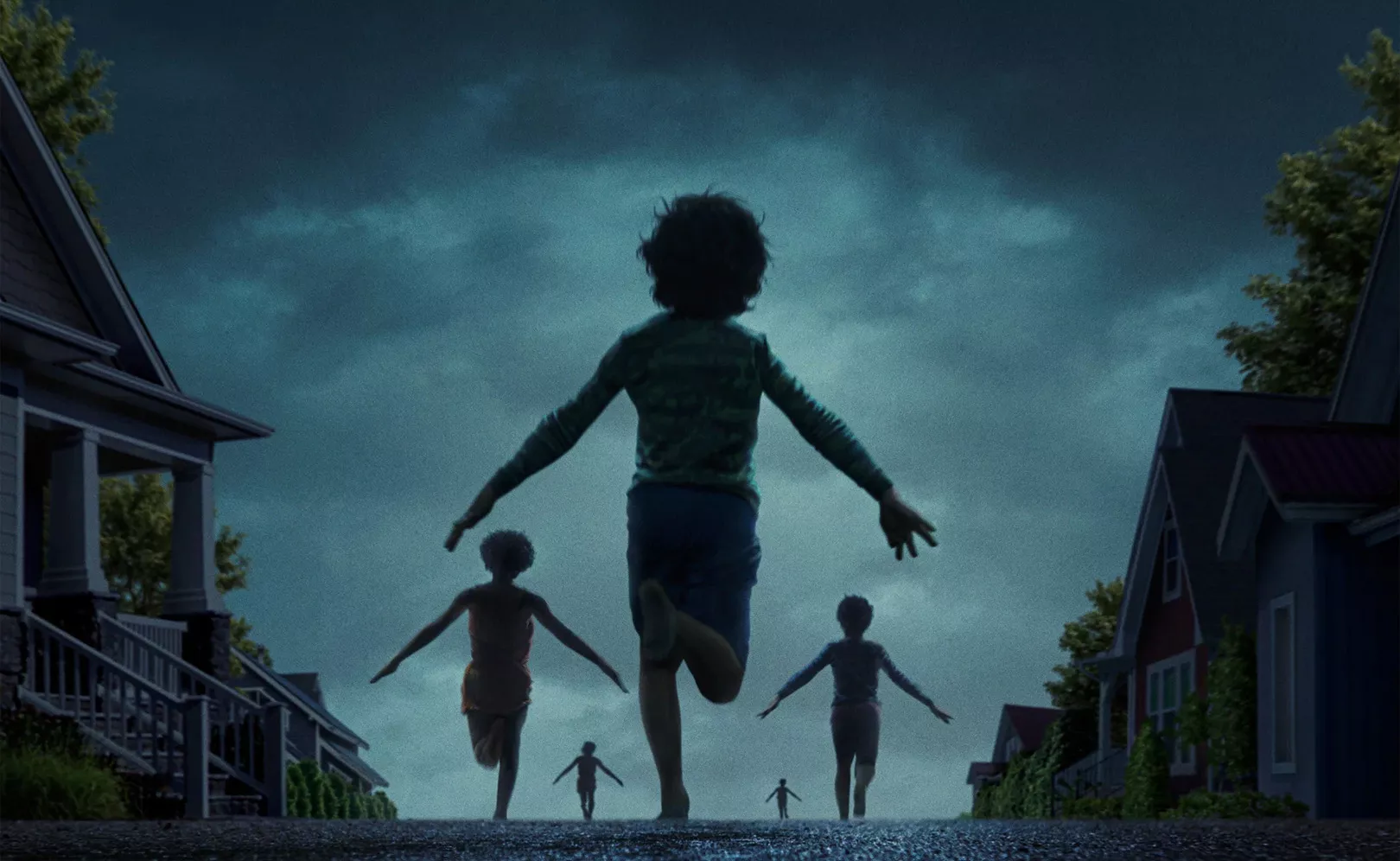
The film begins with a shocking event: at 2:17 AM, all the children from Mrs. Gandy's class, except for one boy named Alex, inexplicably disappear from their homes. It's not a kidnapping—they simply run off into nowhere, as if of their own free will.
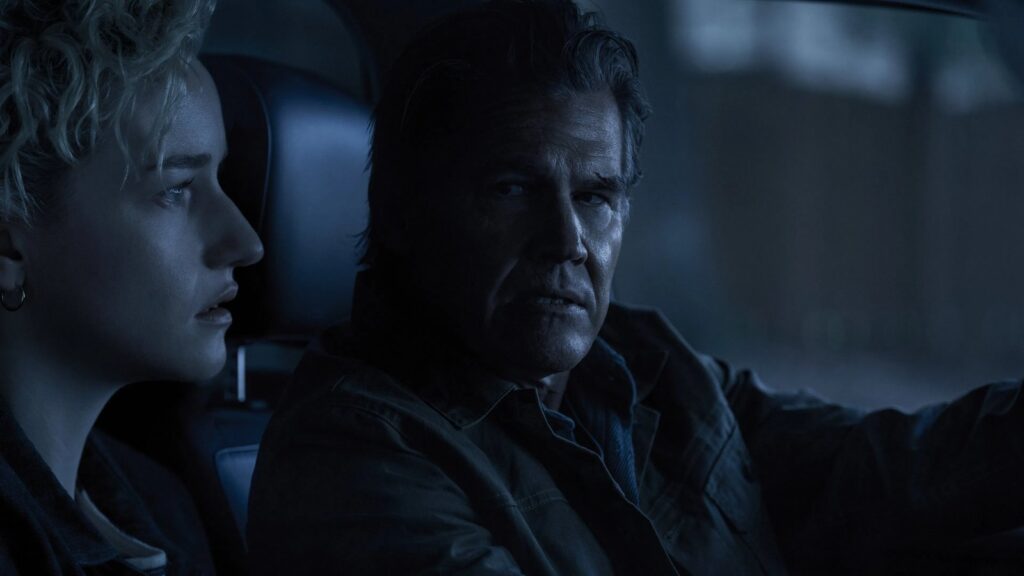
Such a hook instantly grabs your attention. The story is then told through the lens of different characters: teacher Justine Gandy, police officer Paul, father of one of the missing children Archer, school principal Marcus, and small-time criminal James. Each of them confronts the chaos, trying to make sense of what's happening. And the deeper we delve into their stories, the clearer it becomes that the center of the nightmare is Alex's house, or more precisely, his mysterious Aunt Gladys.
Aunt Gladys—Not a Witch, but a Metaphor for Grief
As in any good horror, "Weapons" has a central antagonist, and that is Aunt Gladys. Initially, she appears as a frail old woman, but it quickly becomes clear that behind this mask hides something far more sinister.
Gladys is not a typical witch from fairy tales. She is more like a parasite that feeds on the life force of others. The witch infiltrates Alex's parents' home, using their compassion, and turns them into mindless slaves. This is not magic in the usual sense, but rather psychological abuse based on fear and manipulation. She forces Alex to collect personal belongings of his classmates in order to summon them to her at 2:17 AM, turning the children into her "weapons" to maintain unnatural youth.
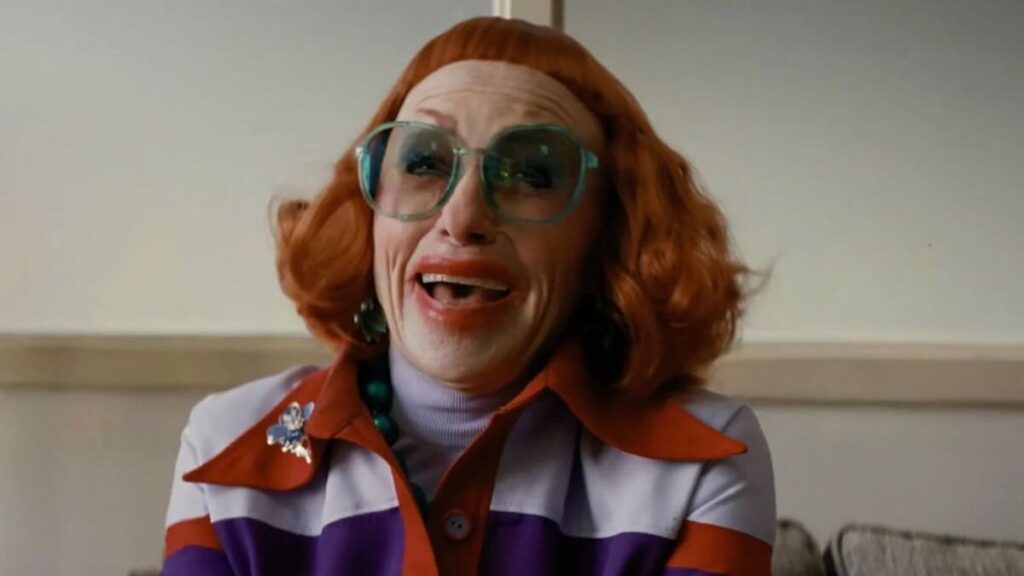
Zach Cregger claims that "Weapons" is his personal attempt to make sense of losing a close friend and cope with grief. In this context, Gladys can be interpreted as the embodiment of trauma, grief, and addiction, which drain people and turn them into lifeless shells. She is a symbol of how pain and fear can strip a person of their will and make them a tool in someone else's hands.
"Weapons": Ambiguous Interpretations and Wild Fan Theories
"Weapons" has spawned many interpretations and theories among viewers. And although Zach Cregger himself insists on the personal nature of the film, refusing direct social commentary, that doesn't stop fans from finding new meanings in it. Let's break down the most popular ones:
1. Allegory of School Shootings
Despite the director's denials, many have seen in "Weapons" a direct metaphor for school shootings and violence. The disappearance of children at 2:17 AM, the image of a giant rifle hovering over Alex's house in Archer's prophetic dream, and of course, the film's title itself—"Weapons"—all suggest how innocent children can become victims or, even worse, instruments in the hands of evil.
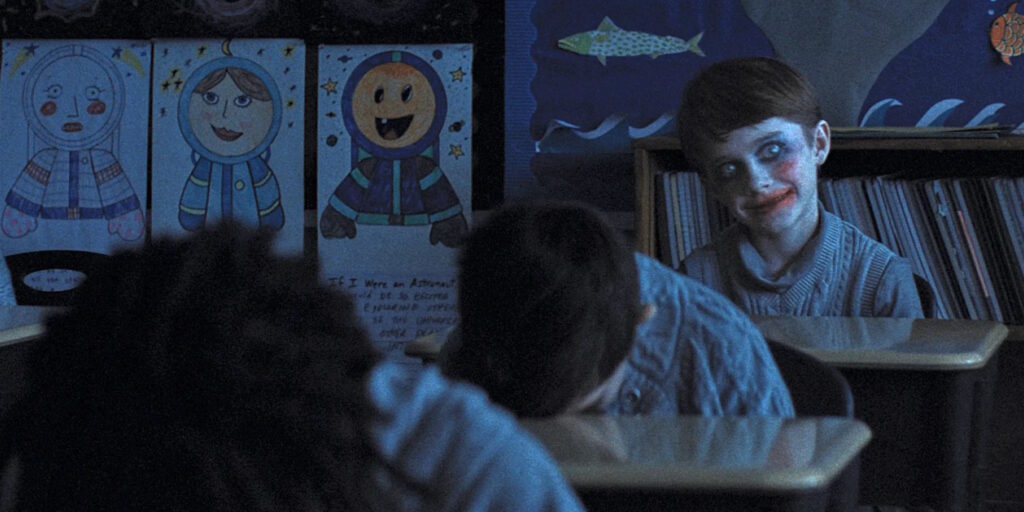
This interpretation is particularly strong given that the film begins with the mass disappearance of children from a classroom, which for American viewers may be directly linked to school tragedies.
2. The Pied Piper Tale
One theory compares the plot of "Weapons" to the legend of the Pied Piper of Hamelin.
In that story, the Pied Piper leads children out of town by playing his flute. In "Weapons," Aunt Gladys, like the Pied Piper, summons the children to her at 2:17 AM, using their personal belongings and a creepy blood ritual. This theory emphasizes the theme of manipulation and loss of will, where the children, as if hypnotized, follow their kidnapper. It adds a mystical, almost fairy-tale quality to the film, but with a very dark undertone.
3. Trauma, Grief, and Addiction
As mentioned, Cregger himself said that the film was his way of coping with a personal tragedy. In this light, "Weapons" can be seen as an allegory for grief, trauma, and addiction.
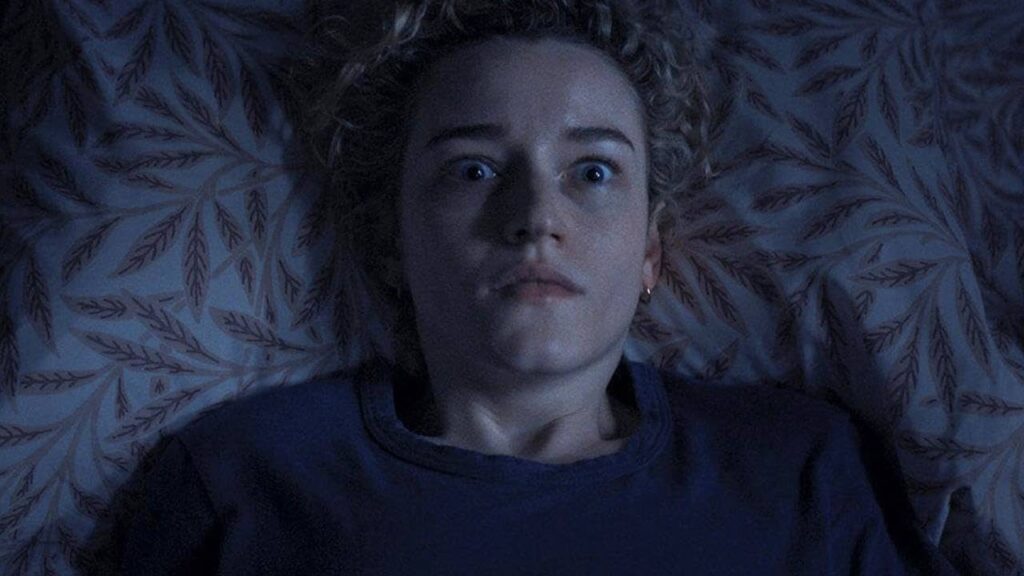
Gladys feeds on the life force of others—she sucks the life out of people, turning them into mindless zombies, which accurately reflects how grief or addiction can consume a person, stripping them of their individuality and ability to resist. Alex's parents, turned into mindless slaves, are a vivid example of this.
4. Gladys's Brooch—A Floral Indicator of Power
A theory for the most attentive: some fans have noticed that throughout the film, Aunt Gladys wears different floral brooches. And it seems this is not just a wardrobe element. There is a theory that the brooch reflects her power level: when Gladys is weakened or ill, the flower is closed; when she is at her peak, it is fully open; and when she needs "nourishment," the flower is half-open.
This adds another layer to the film's mystique and invites viewers to look more closely at details that may reveal hidden meanings.
5. 2:17
At first glance, it's simple: the children leave the house exactly at 2:17, and in the dream with the floating rifle, this time appears on a digital display, as if hinting at some fateful starting point.
But if you dig deeper, several interpretations emerge:
- Class ratio: 2 represents the two "survivors" (Justine and Alex), 17 is the number of missing children.
- Reference to King's "The Shining." The director admits he chose 2:17 because of a subconscious connection to Room 217—the site of key horror in King's novel, which in Kubrick's film was transformed into 237.
- In the rifle scene, the time 2:17 looks like an "ammo counter"—since children and parents become a kind of "ammunition" for the witch, integrated into the mechanism of her magic. Viewers note that it is at this moment they turn into "weapons."
- Some interpretations link 2:17 to a quote from Matthew 2:17, referencing Jeremiah's prophecy about a mother mourning the loss of her children—an ironic parallel to the film's theme.
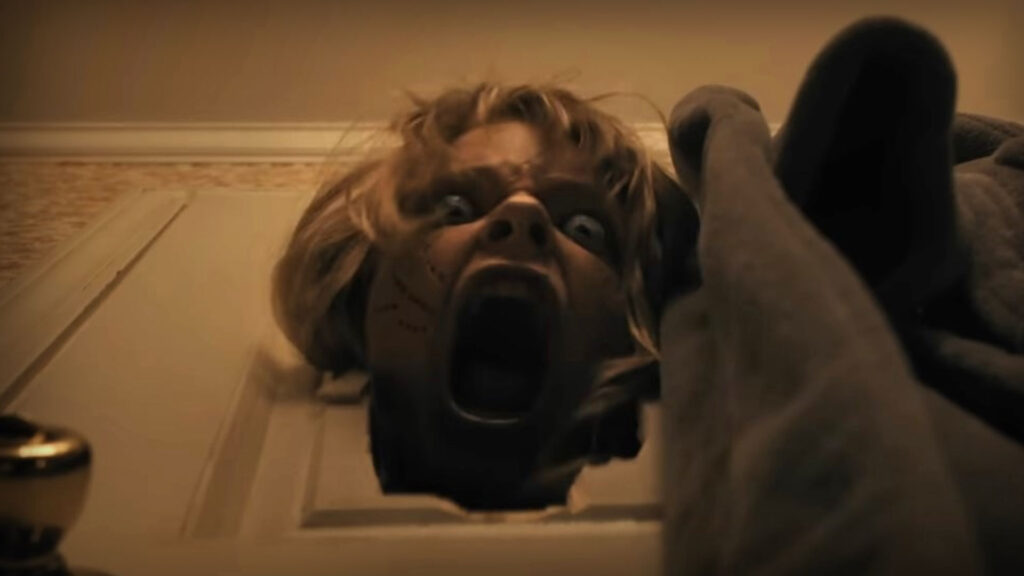
Speaking of the film's structure, it is divided into chapters, each lasting about 12–15 minutes and focusing on a different character. Although the director did not deliberately align the time segments to exactly 12 minutes, the rhythm is intentionally maintained to create the feeling that the chapters form that same "magical" combination in a mirror reflection.
6. Connection to "Barbarian"
This is an intriguing puzzle thrown in by the director himself, casually mentioning details noticeable only to the most observant viewers.
On the eve of the release of "Weapons," the creators launched the site "Maybrook News"—a portal dedicated to the disappearance of 17 children from the town of Maybrook. And here's where the mysticism begins: among the news on the site, an article titled "Underground Prison Discovered in Rental Home" surfaced, referencing the events of—the sinister basement where the heroine Tess survived.
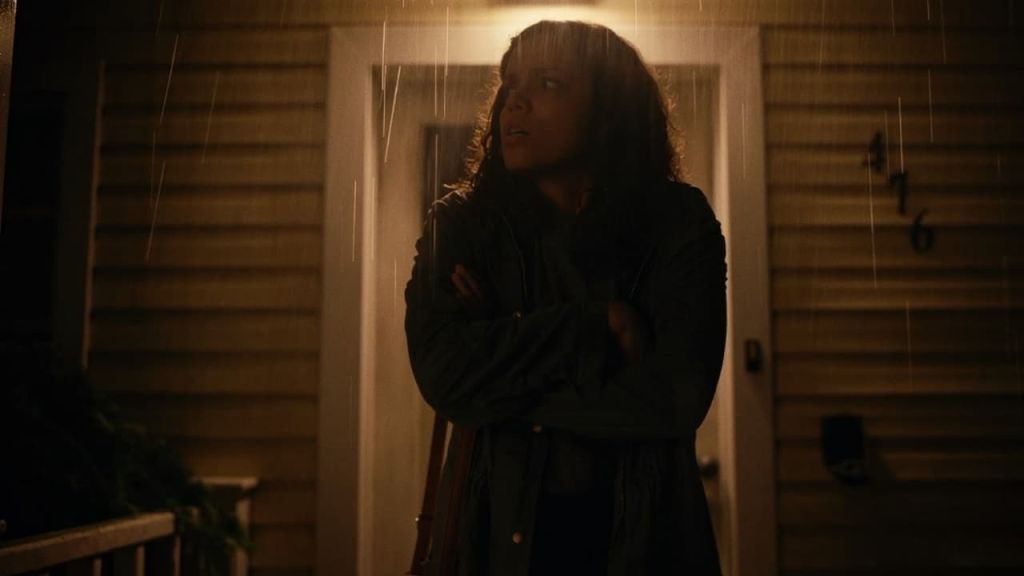
The online release of "Barbarian" – a maximally lively, terrifying, and at the same time funny film from sitcom director Zach Cregger. About why this horror will be in the TOP-3
Open material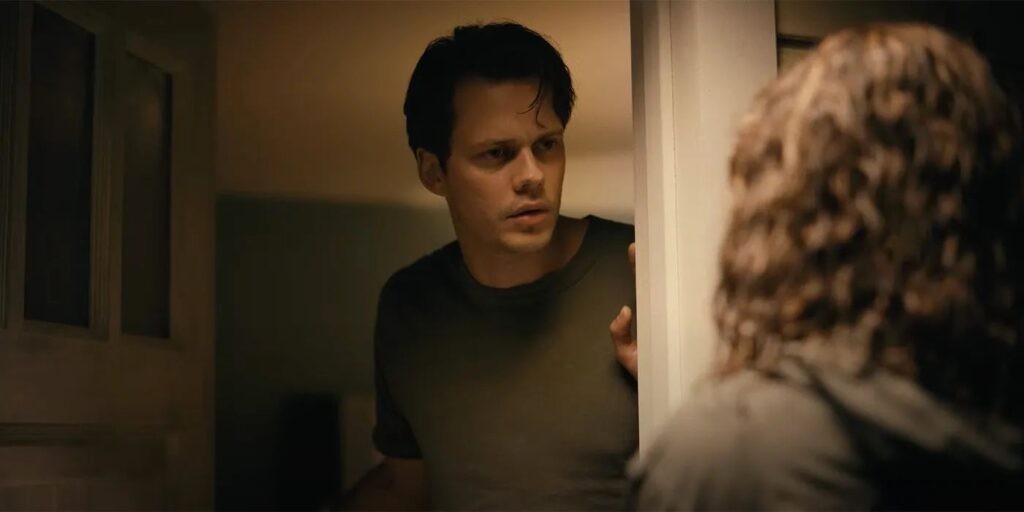
Moreover, in the plot of "Barbarian," the town of Maybrook is mentioned, and one of the characters is Marcus, who calls Tess. In "Weapons," a character with the same name is played by Benedict Wong, and fans complicate the puzzle: perhaps Marcus is not just an ex-boyfriend, but a potential employer of Tess or even the same colleague involved in the Maybrook events.
If the theory is to be believed, Tess could have worked as a teacher in that very class that disappeared—meaning both stories take place in the same unsettling universe, where underground horrors are tightly intertwined with urban legends.
7. Internal Parasitization
Internal parasitization is a motif that permeates every layer of "Weapons." The parents behave as if they are being infected at night by an unknown fungus, cordyceps, and the external changes are merely echoes of something worse inside.
In one dialogue, there are hints of parasites, and there are even scenes where parents mechanically repeat the same phrases, like puppets under hypnosis.
The author's irony is obvious: it's not just about physical infection, but about how fear, hysteria, and collective madness penetrate minds, turning loved ones into strangers.
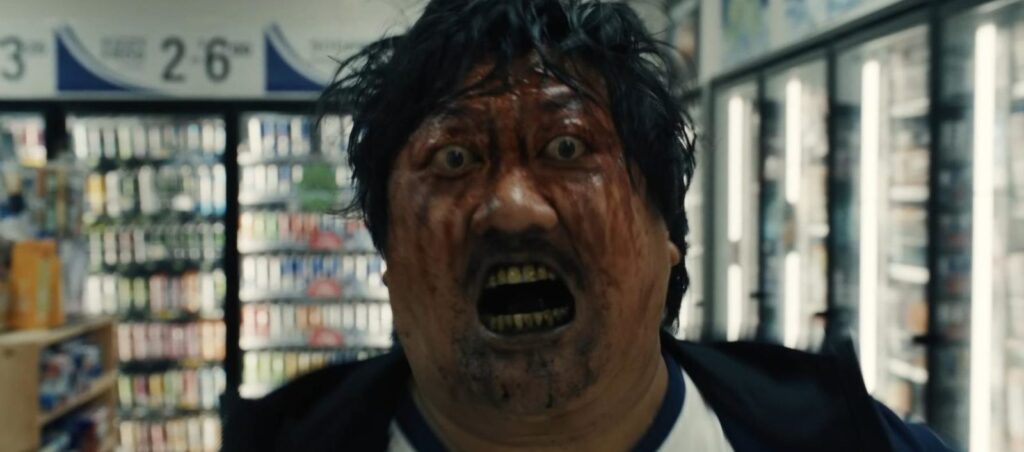
The metaphor of cordyceps—a reference to the famous fungus that changes the behavior of ants and parasitizes their bodies—here becomes an image of modern society: loss of control, infection by ideas, and destruction of family ties.
A Finale That Leaves Questions
The film ends with a relative happy ending. Alex, using Gladys's magic against her, turns her classmates on the witch, and they tear her apart. It's a gruesome yet ironic scene where victims become executioners. However, the victory comes at a high cost: Alex's parents never recover, and many of the children remain traumatized and unable to speak. Alex goes to live with a "good aunt," but the scars of what happened will stay with him forever.
Zach Cregger seems open to continuing the story. He mentioned that he has ideas for expanding this universe but does not plan to work on a sequel anytime soon. And that is probably for the best. "Weapons" is a complete story that leaves the viewer with a sense of unease and many questions that have no simple answers. It is this ambiguity, this openness to interpretation, that makes the film so powerful and memorable. It does not provide ready-made solutions but forces us to think about the nature of evil, trauma, and human vulnerability.
Why "Weapons" Resonates
"Weapons" is a deep exploration of the human psyche, fears, and how we cope with trauma. Zach Cregger, without giving direct answers, creates a space for reflection where each viewer can find their own meanings and allegories. Whether it's a metaphor for social issues, personal grief, or simply a creepy fairy tale about a witch, "Weapons" leaves a long aftertaste and a desire to rewatch the film to find new details and interpretations. And that, you'll agree, is worth a lot. So, if you haven't seen "Weapons" yet, be sure to watch it. And be prepared that after the final credits, the film will not let you go for a long time.
Comments
0No comments yet.
Sign in to join the discussion.