
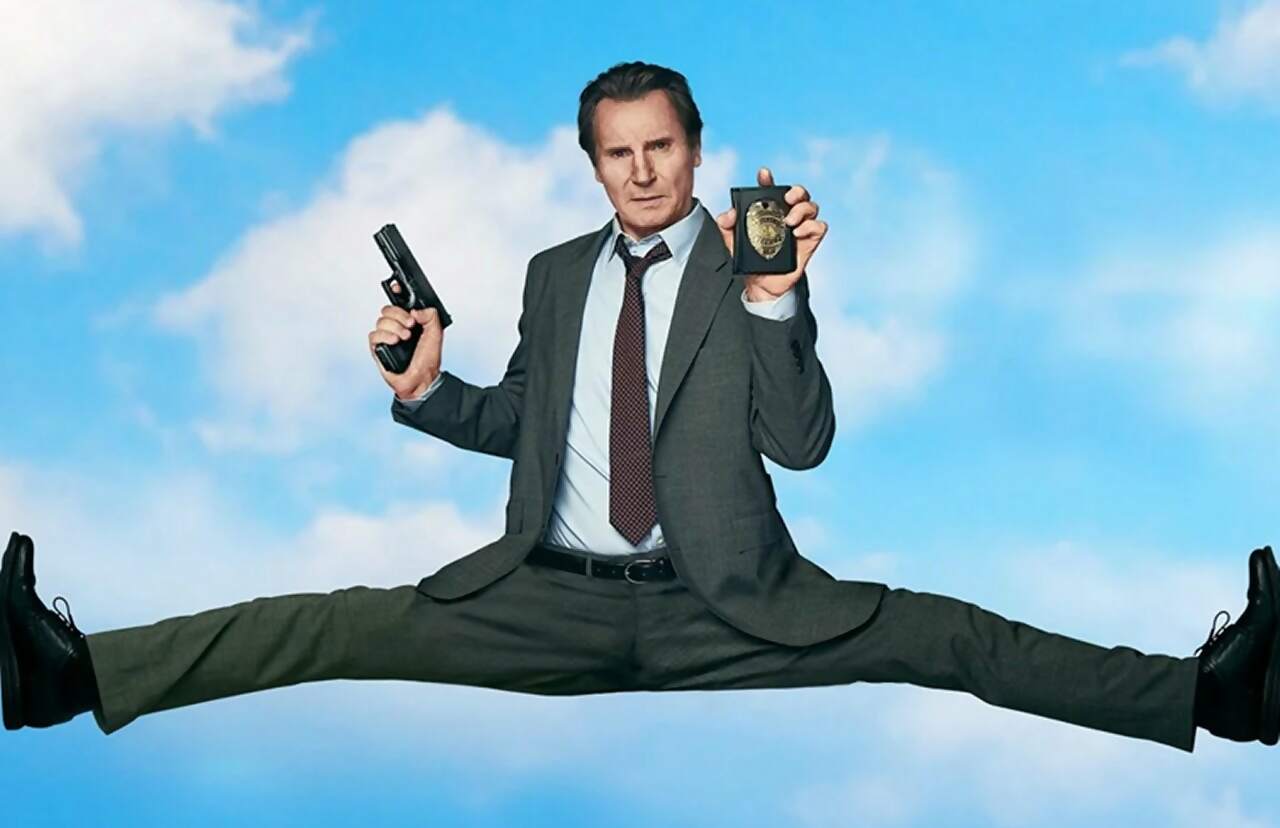
Having thundered in cinemas, the action-packed police comedy by Akiva Schaffer 'The Naked Gun' has finally been released on digital platforms. We tell how the sequel turned into a reboot and why the new film was ashamed of its status.
Once upon a time, cinema desperately wanted law enforcement officers on screen to have more interesting lives than in drunken metropolises and mysterious single-story suburbia. 'Bullitt', 'Dirty Harry', 'Miami Vice', 'Lethal Weapon', 'RoboCop' – guys (much less often girls) with metal badges took over the box office and became new stars of both American and European cinema and television, provoking the emergence of successful subgenres (e.g., Polar in France or Poliziotteschi in Italy).
All of them were (un)lucky that the star of a talented trio consisting of the Zucker brothers and Jim Abrahams (the ZAZ collective) was rising nearby – the team had just made the parody disaster film 'Airplane!' and was already bird-like reaching for the most brilliant and noticeable – police cinema. Their 'The Naked Gun' is not so much a cause as a consequence of the emergence of comedic satire on caps, rubber batons, and six-shooter Colts.
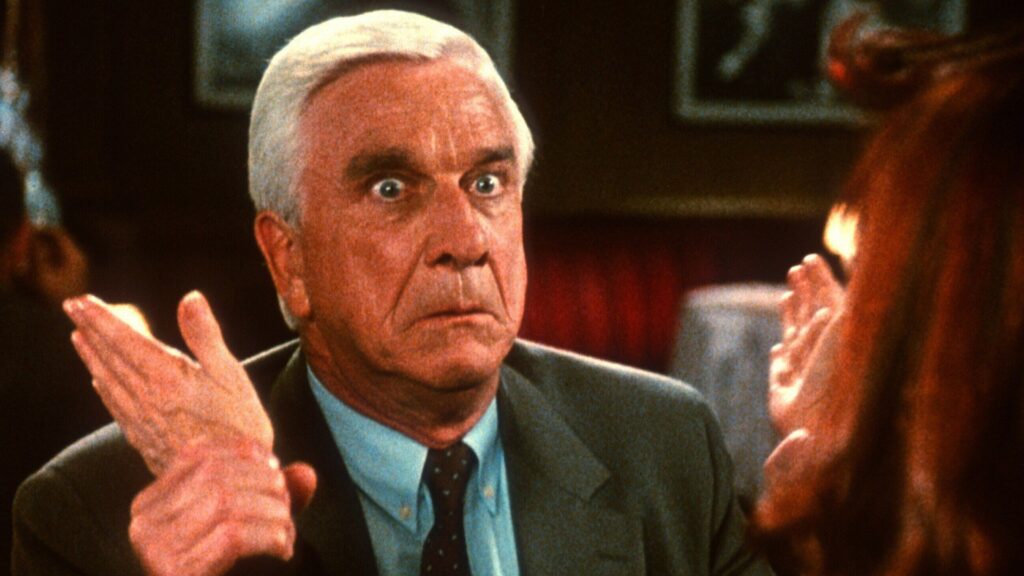
It is easy to notice the striking differences between the detective from the 70s, the leaden Frank Bullitt, and the hyperactive joker Martin Riggs from the 80s. Reality changed, and cinema changed accordingly. The New Hollywood could afford brutal sentimentality for a handful of dollars, but the blockbuster era could not. Thus 'The Naked Gun' was born: the younger son who, according to fairy tale canon, must be a fool (or even a moron).
The 1988 'The Naked Gun' has exactly two virtues – Leslie Nielsen, playing Frank Drebin, and the synonymous rampant stupidity. The same can be said about the two sequels, proving that the franchise was never known for subtlety and gentlemanly techniques (it doesn't need them). 'The Naked Gun' is a completely politically incorrect film, a child of a long-gone reality, a product of an extinct cinematic language.
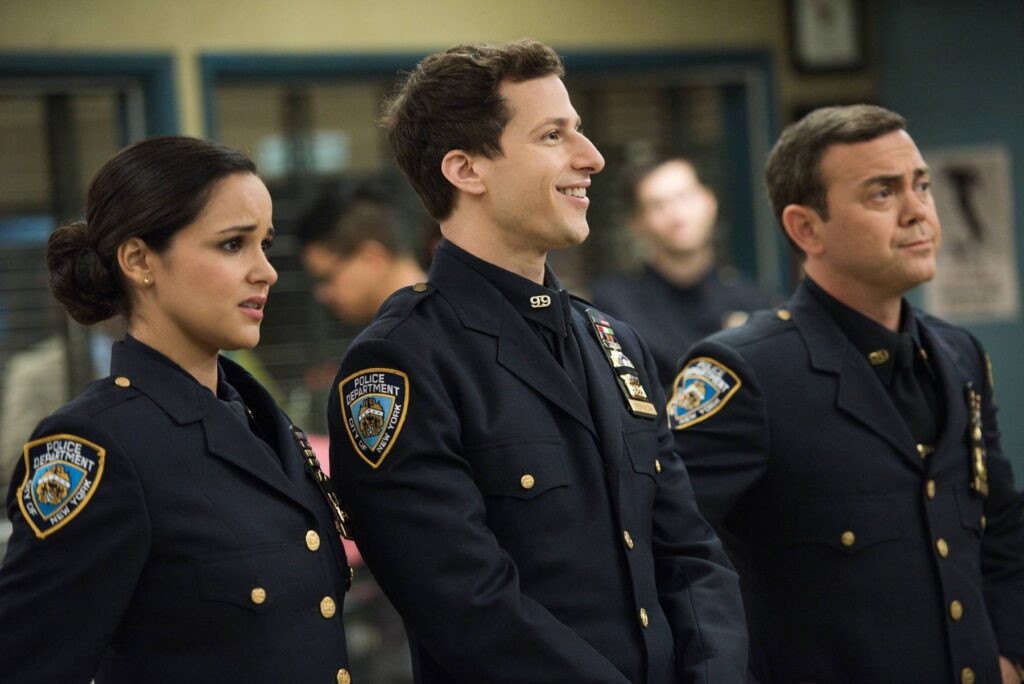
The popular and beloved sitcom 'Brooklyn Nine-Nine', the ethical great-grandson of 'The Naked Gun', was canceled in 2021 after the death of George Perry Floyd under the boot of an American law enforcement officer, which clearly signaled the imminent death of not just specific police genres – the very topic and the eye-catching image were tabooed. But 2025 arrives, and police cinema gets a new defender.
Liam Neeson, as a rule, exploited genres, but never saved them. That makes it even funnier: the star of second-tier action movies voluntarily agrees to a deal with his own seriousness, as other famous Hollywood 'bricks' did in their time – Jason Statham, Kurt Russell, or Jean-Claude Van Damme. But can his appearance in the 2025 'The Naked Gun' be called a salvation?
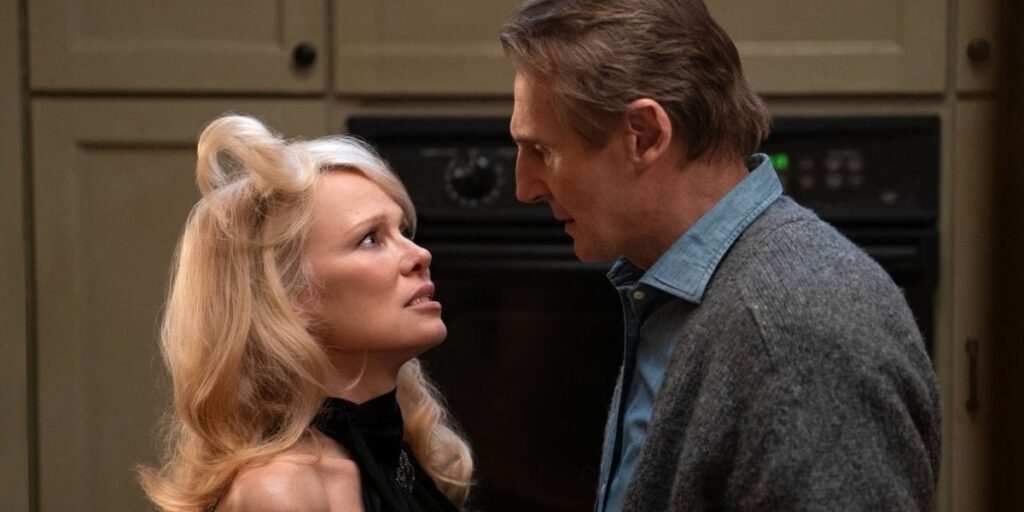
Talented comedian and film director Akiva Schaffer stepped back and fully relied on his title performers. The on-screen pair of Liam Neeson and Pamela Anderson is the best part of the film, overshadowing the original duo of Leslie Nielsen and Priscilla Presley. The romance of the latter was not shy about its courtly nature, within which all roles were predetermined: Nielsen had to be a knight, and Presley a damsel in distress. For Neeson and Anderson, there are no such significant restrictions, and therefore their union looks more complete.
However, actors do not always walk in ensembles, and on the direct distance of a solo race, Drebin Jr. loses to the elder. It is easier to be born a comedian than to become one, so everything that comes so easily to Leslie Nielsen (penguin walk, unintentional cruelty, sexual obsession) painfully sticks in Liam Neeson, who has to play a moron and constantly look back at his dramatic potential, and this is a case where the part reflects the whole.
The original 'The Naked Gun' existed not only in its filmic incarnation: the Zuckers and Abrahams created not a product, but a social commentary. In other words, the 1988 film maintained a tendency to be greater than the sum of its elements, to be part of a global narrative and remain a living matter of reality. It appeared in response to the popularity of the police film, to curb its onslaught and demonstrate the effectiveness of soft power. That is why Drebin Sr. gave birth to Drebin Jr. and many other cinematic offspring.
The 2025 'The Naked Gun', on the contrary, failed to become a response, but looped a reactionary return to the past. The new film reacts to the original as an irritant, as a horse reacts to a cabman's whip. That is why it is impossible to perceive Liam Neeson's adventures as a continuation: it is a frightened remake.
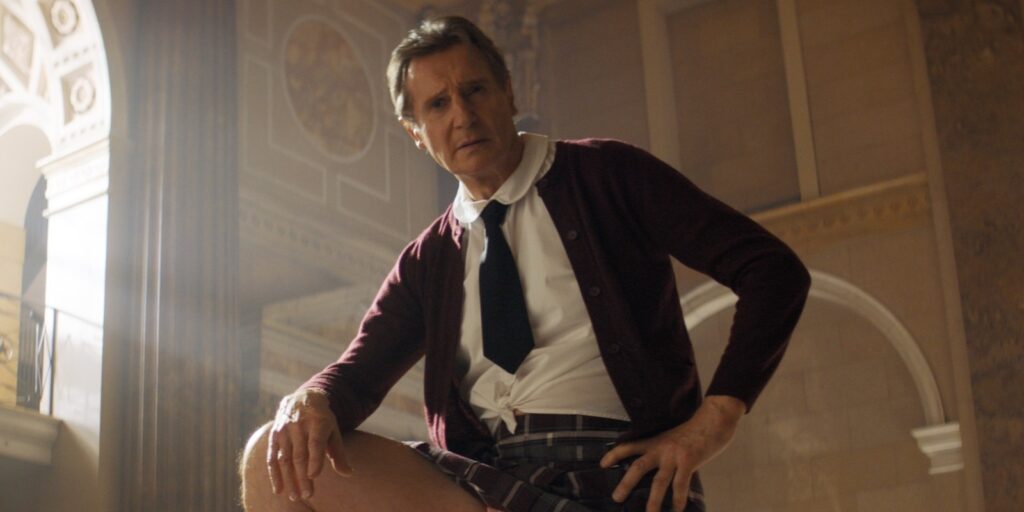
Akiva Schaffer, of course, modernized the conflict by making a fat reference to Elon Musk, but structurally his work shamelessly duplicates the ZAZ collective's film. The mysterious murder, the meeting with a fatal beauty, and the hero's first encounter with the villain are blatantly borrowed from the past. Even the final confrontation takes place at a sporting event, only the sport has changed (not baseball, but mixed martial arts fights).
A scattering of funny gags, wonderful musical finds, and idiotic script guns packed into an hour-and-a-half runtime – this is an excellent deal for the viewer and at least one pleasant evening in the company of old-school cinema. It's a pity that Akiva Schaffer's 'The Naked Gun' will remain in 2025 on a forgotten police frequency, disrupting the course of intergenerational continuity.
Trailer:
Comments
0No comments yet.
Sign in to join the discussion.