

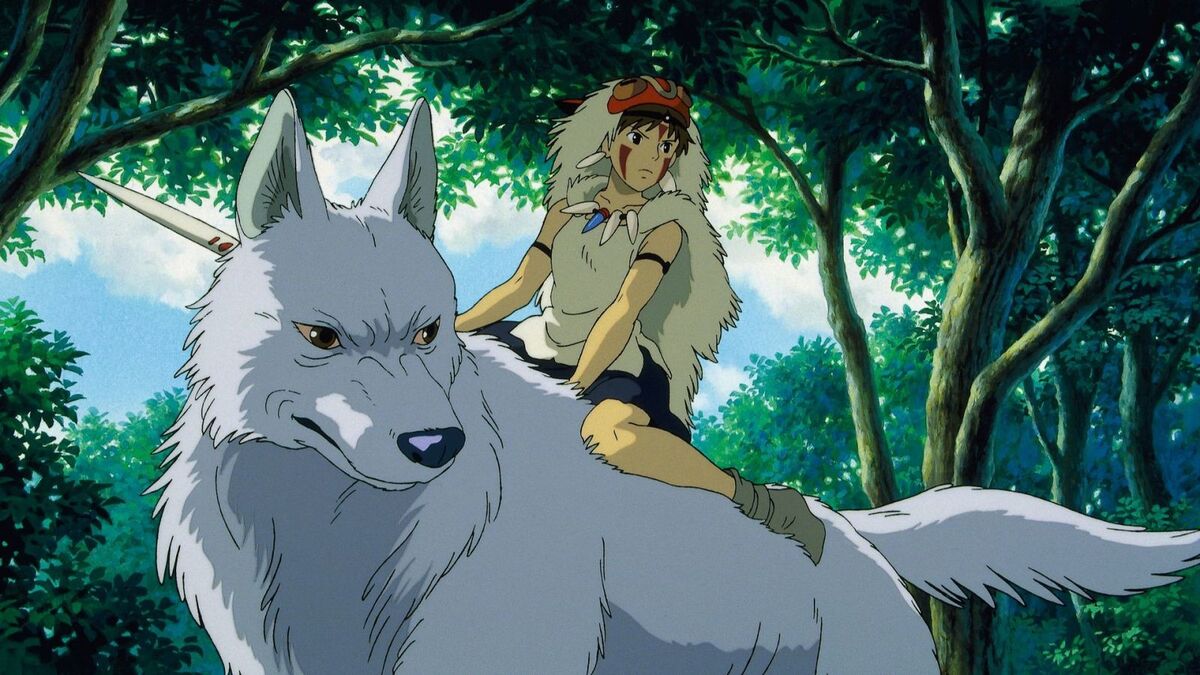
The iconic work of the master of Japanese animation Hayao Miyazaki, "Princess Mononoke," is back on the big screen from August 14! How the anime teaches us to love nature — in our article.
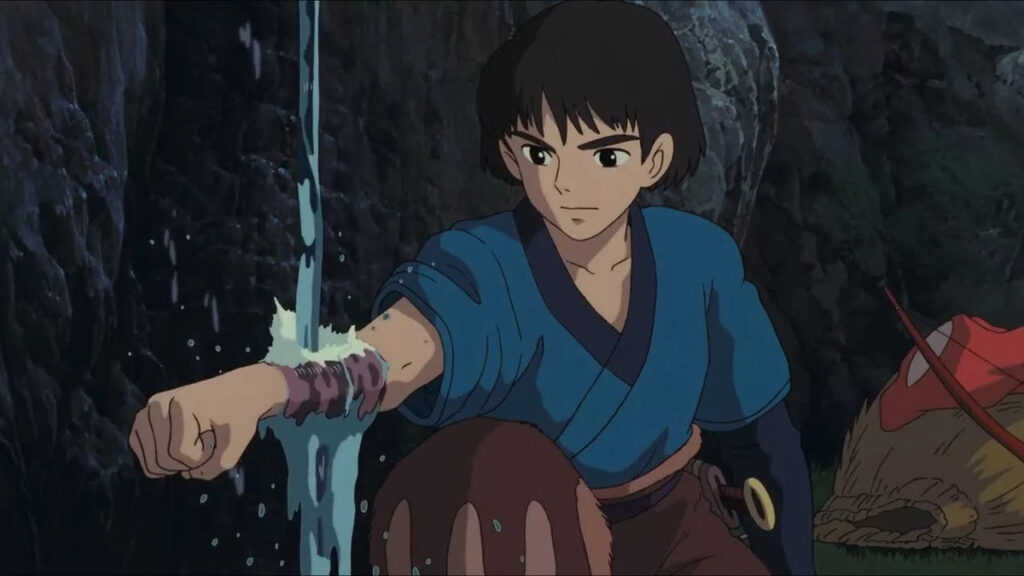
The village of Prince Ashitaka is attacked by a giant boar, possessed by hatred due to a demon living inside it. In an attempt to protect his homeland, the young man has to kill the animal. But during the battle, the demon manages to touch the prince's arm and leave a mark on him, which becomes a curse. The hero has to leave the village. His feet lead him to a land where a war is raging between the forest dwellers and humans. There, Ashitaka meets a mysterious girl called Princess Mononoke.
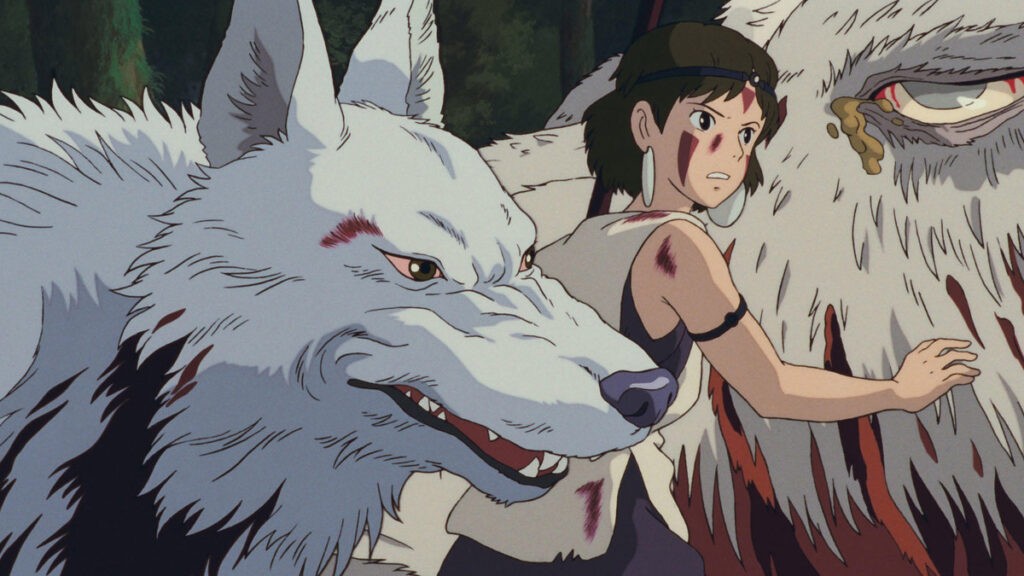
The film was released in 1997 and became the highest-grossing film in the history of Japanese cinema. Currently, this place is occupied by the feature-length anime "Demon Slayer: Mugen Train". In 1995, Miyazaki together with animator Masashi Ando went on a small tour of the ancient forests of Yakushima Island and the Shirakami-Sanchi mountains in search of inspiration for developing the landscapes. By the way, the artists also did this for creating "Nausicaä of the Valley of the Wind" (1984).
Miyazaki created the town of Tatara Ba, inspired by the works of American director John Ford. Therefore, it turned out to be a likeness of a town from a film like, for example, "My Darling Clementine" (1946). The master populated it with outcasts and oppressed minorities, rarely appearing in Japanese cinema, but gave the characters color through their toughness and ambition. Hayao did not aim to meticulously depict historical Japan. The main idea is to show the emergence of a seemingly irresolvable conflict between the natural world and industrial civilization. And this confrontation continues to this day.
Drawing on folklore and his own rich imagination, the director managed to create his own pantheon of gods and unusual forest dwellers, which originated from Japanese fairy tales. And nature became another character telling its own story. Miyazaki endowed it and the animals with their own "voices," conveyed through the images of majestic forests and astonishing animals.
At first glance, it seems that the main message of "Princess Mononoke" is as clear as day — we need to value and protect nature, but in reality, it is a bit deeper. Despite the positive ending, one can't help but wonder: "Is everything really that good?" In fact, the ending looks like a brief lull before an impending storm, in which the forest dwellers will not have an easy time. Miyazaki, like an attentive observer of human history, conveys incredibly complex yet at the same time so mundane and eternal problems through his works.
We are accustomed to war films having clear distinctions between enemies and villains. But "Princess Mononoke" avoids labeling characters. There are no fundamentally "bad" or "good" ones here. People who at first glance seem like villains, polluting and destroying nature, are merely trying to survive in the circumstances they have been forced into. Meanwhile, the princess and the forest dwellers, who seem to be "for good," have long lost their compassion. The long war has hardened their characters and intensified their anger.
For example, Lady Eboshi is the head of the settlement. Her goal is to protect her people. Despite the marginalized population, she gives them hope for something good. And the inhabitants themselves cannot be called bad. Yes, they cut down forests and destroy animals. But what else can they do if this is almost the only thing they can do to survive? And the customs of 15th-century Japan led them to this. Stopping the depletion of nature's gifts equals death.
The exhausted animals are simply trying to protect and preserve their home. "Princess Mononoke" raises the question of "right" motives and intentions. But is there a true truth, where each side of the conflict has its own values and ways of surviving in a ruthless world? This is how everything leads to the fact that ending the war for one side would be a direct defeat.
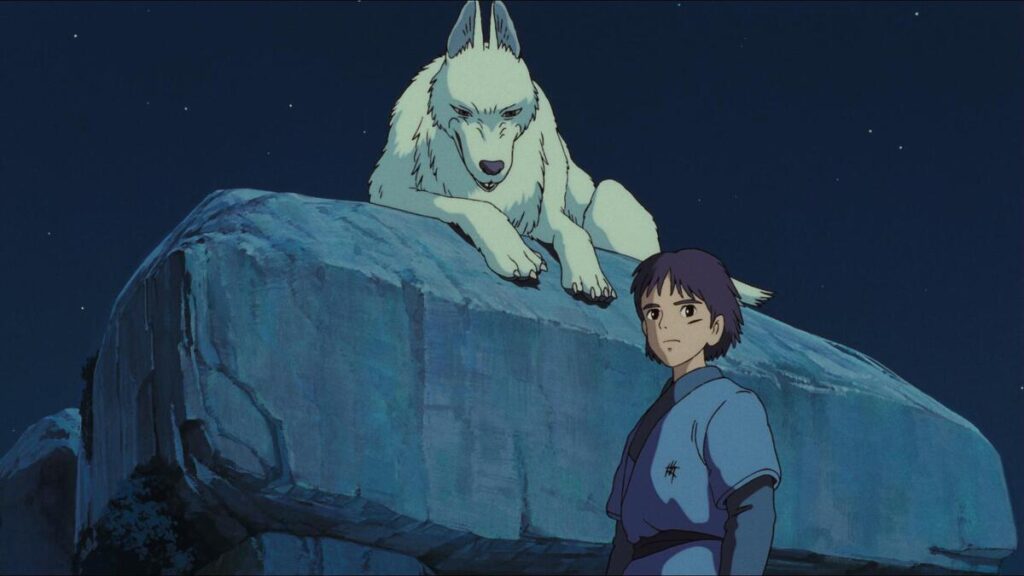
But even in this depth and beauty, "Princess Mononoke" has things to criticize. Not every viewer can understand the Japanese mythology and history that are heavily emphasized. For example, why wolves became key characters. The Japanese wolf is similar to American bison, which were massively exterminated in the USA in the 19th century. Only unlike the artiodactyls, the Japanese wolf was completely wiped off the face of the Earth by the beginning of the 20th century.
And at first glance, you wouldn't say that the population in Lady Eboshi's town are hardened outcasts, but if you dig a little deeper, you find the poor, prostitutes, and other low social strata. Moreover, when it comes to historicism in "Princess Mononoke," there is also fiction. For example, the Emishi tribe, from which Ashitaka originates, was displaced and destroyed as early as the 12th century due to resistance to the arrival of a new civilization from the mainland. While the events of the anime take place three centuries later.
Hayao Miyazaki creates an incredibly beautiful and detailed world in his best traditions. And "Princess Mononoke," like other works of the master, will forever remain a beautiful parable about bad and good, exploring eternal themes.
Comments
0No comments yet.
Sign in to join the discussion.