
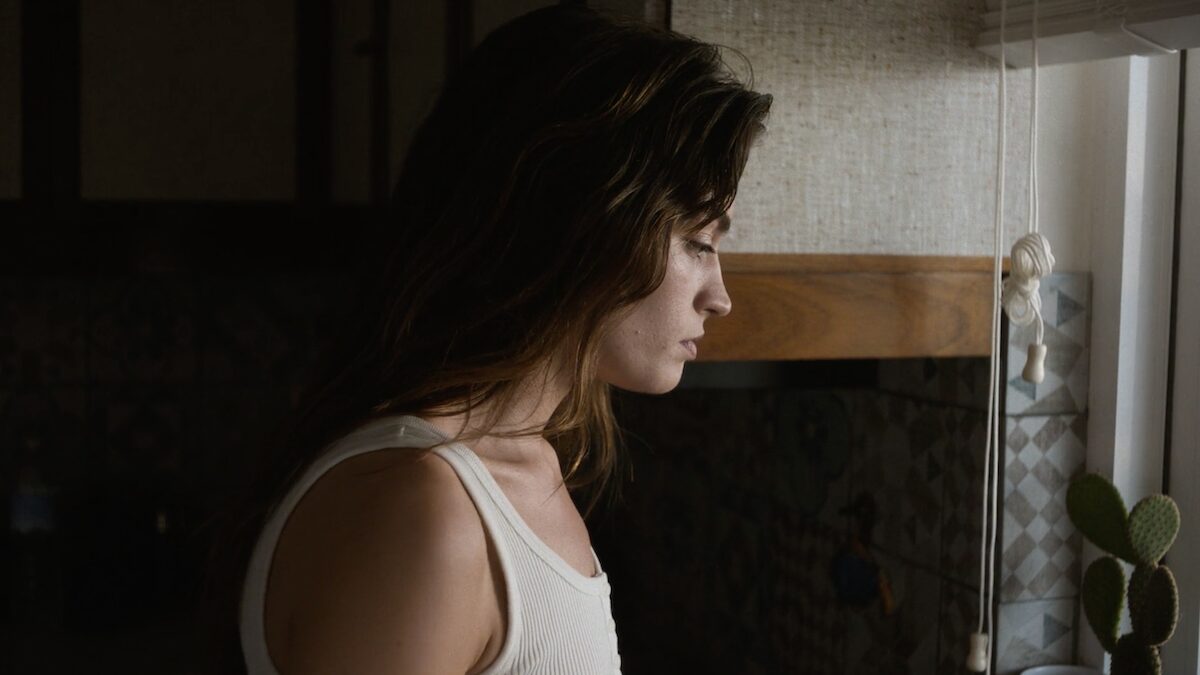
Emma Mackey accompanies Fiona Shaw for treatment in a resort town in Spain. While Shaw seeks healing and Mackey seeks herself, we figure out why "Hot Milk" is an unsuccessful but in some sense curious film.
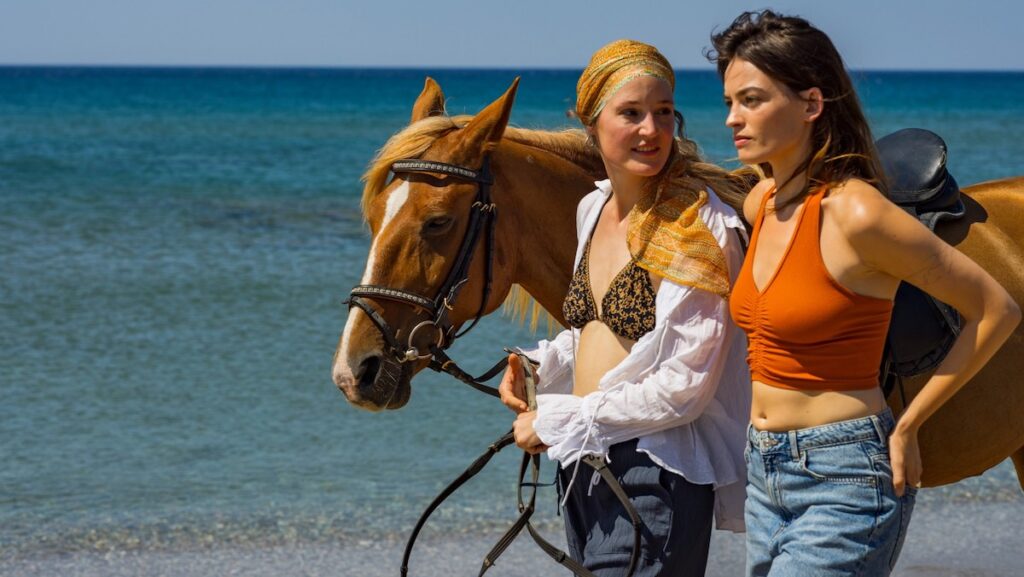
Sophia (as always, excellent Emma Mackey) wants to write a master's thesis in anthropology about Margaret Mead, one of the most important figures in the discipline in the early 20th century. Instead, she lies on the beach and tries to find topics of conversation with Ingrid (Vicky Krieps), a mysterious German woman who, unlike Sophia, is used to enjoying life. In the end, they still talk about Margaret Mead — discussing the weather on the Spanish coast can't last long.
Mead, as Sophia tells us, tried to understand how culture influences our lives and their stages. In other words, is adolescence equally difficult everywhere — in which case it's a natural factor — or are there places where it's unusually good, and then European culture is to blame? Mead believed the second answer was closer to the truth: in the nature versus nurture debate, we see the effects of nurture directly, while nature is always something we construct, formulating its laws to explain what we don't like about ourselves so we don't have to change anything.
This eternal debate concerns Sophia not only because she wants to finally finish her dissertation, but also because of the circumstances that prevent her from doing so. Sophia arrived in Spain with her slightly unbearable mother Rose (Fiona Shaw) and can think about the ocean, Margaret Mead, and gradually Ingrid (closer to the finale, even in reverse order) only while Rose attends procedures at a local clinic. This clinic — quite expensive and with a clear leaning toward alternative medicine — is Rose's last chance to get back on her feet. She hasn't been able to walk for about twenty years, and all this time she has been tormented by pain. Her pain naturally torments Sophia as well: Rose's constant demands for water and complaints about that water form the soundtrack of her life.
Critic Stanislav Zelvensky once wrote that perhaps the most important thing in a film is the beginning and the end. If that's true, then "Hot Milk" is hardly a good film. Its beginning is quite typical for British dramas. It's quite typical even for British dramas with Emma Mackey — she sadly smokes. The end, in its excessive desire to shock, also doesn't impress.
It's a kind of tradition that films about Brits on vacation end, like the vacation itself, on a sad note of realizing one's own mortality, but here it's all somehow too poster-like, albeit illustrative. Fiona Shaw in the finale, let's say, would very much like to take a step forward, but just can't, no matter how much Mackey pushes her. So, in general, the film, despite Mackey's efforts, hardly moves anywhere in the end.
However, should it? In coming-of-age stories — and "Hot Milk" is certainly one of them — success is sometimes measured by the step the hero or heroine takes at the end of their journey. The greater the distance between the sad past and the bright future, the better, it seems, for everyone. However, Mackey's professional path as an artist can be described as a polemic with this tradition, and here she stays true to herself. In "Sex Education," her Maeve Wiley certainly grows, but it's more about internal changes than the length of the step. In , a loose retelling of the biography of writer Brontë, this distance for Mackey's character turns into a dash between dates.
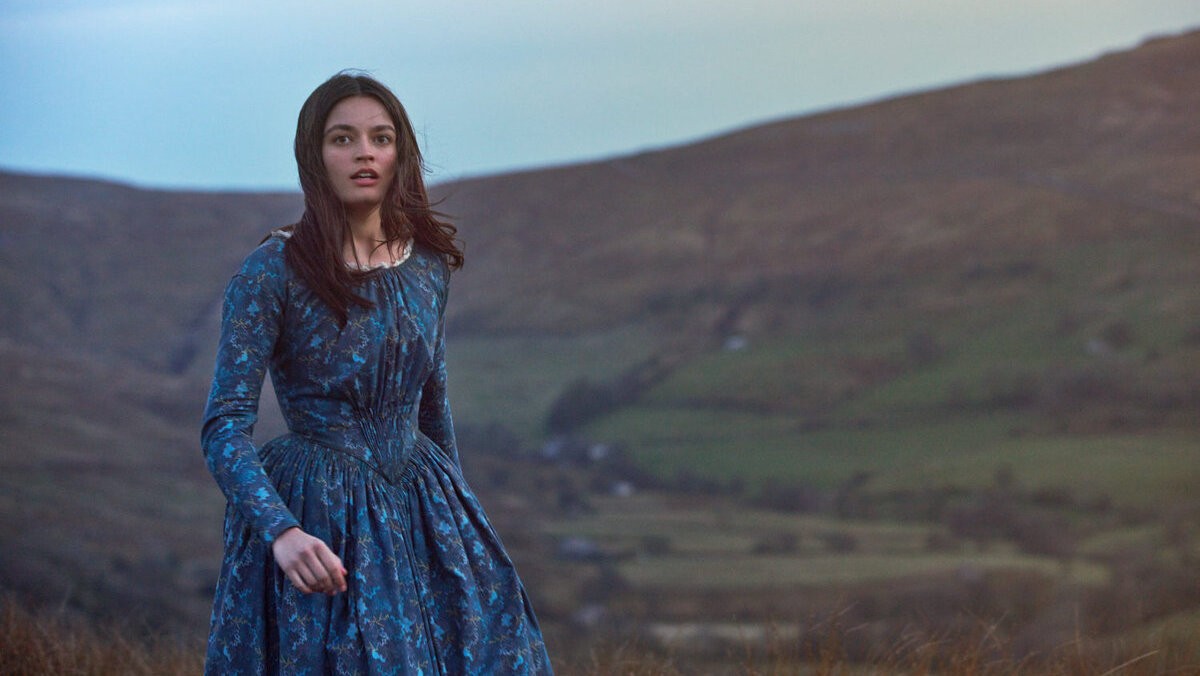
The gothic melodrama "Emily," based on the biography of Emily Brontë, the darkest and most talented of the writing sisters, has been released. About why this film will be interesting not
Open materialIn "Hot Milk," Sophia is ready for the next step but doesn't understand how to take it or where to go. And while she somehow deals with the first question closer to the finale, the second doesn't disappear. Just as we didn't understand along with the heroine what she wants from life, we still don't. For many, this uncertainty — the unwillingness of screenwriter and director Rebecca Lenkiewicz to give the heroine clear prospects — was the last straw. For a British drama where everyone mostly looks at each other thoughtfully, making the heroine so vaguely boring is indeed a bold decision.
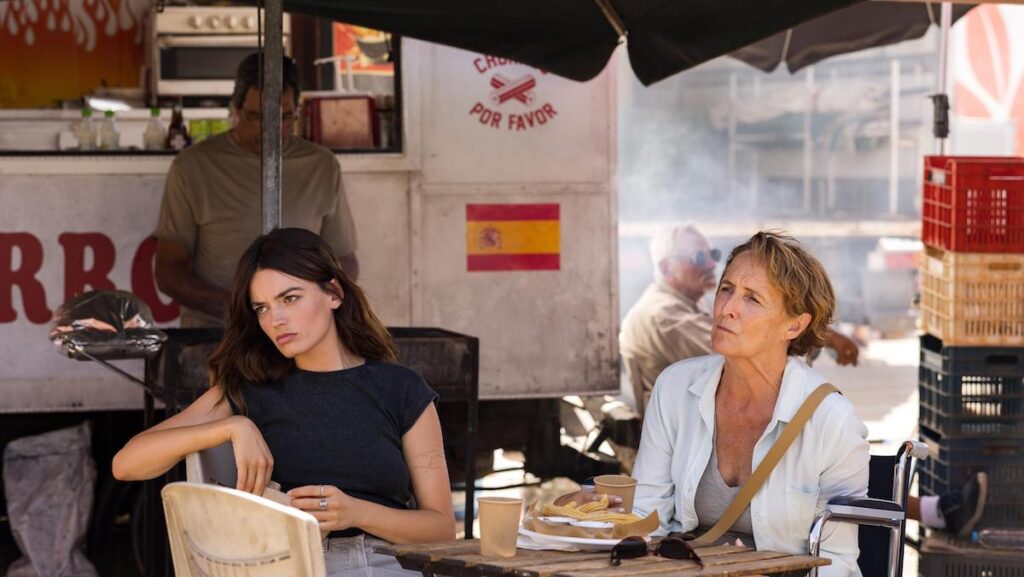
A significant part of Rose's treatment consists of the doctor's attempts to make her confront her past, which greatly frightens the woman. While her mother cannot look back, Sophia cannot look forward. She definitely doesn't live the way she wants, but she has no idea how she wants to live — and neither nature nor nurture can help her overcome this lostness. Nature can probably predetermine our lives — and the heroine fears this — but cannot offer any guidance. And all the guidance that maternal upbringing offers Sophia has over the years been reduced to criteria for choosing good bottled water. "But it's from a mountain spring! There's a mountain on the bottle!" the girl cries in despair near the climax.
The novel by Deborah Levy on which the film is based consists of the heroine's stream of consciousness — we experience events together with her and see everything through her eyes. The film does not try to copy this feature of the source material, and if there is any stream here, it's at best bottled again. We constantly look into the heroine's face but are never allowed into her thoughts. Because of this, "Hot Milk" is certainly hard to call a mesmerizing spectacle. Closer to the finale, thanks to Fiona Shaw's very lively performance as a grumpy elderly Irishwoman, the film even tends to be classified as unbearable.
However, this is a fairly honest and, to some extent, respectful film toward the viewer: in a world where even jokes are explained in comic book adaptations, a film that allows its heroine to maintain some privacy of thought is already somewhat pleasing. Even if only moderately: the storyline with Vicky Krieps, which takes up part of the runtime, sags so much that, although the heroine hasn't found herself during this time, viewers have every chance.
Comments
0No comments yet.
Sign in to join the discussion.