

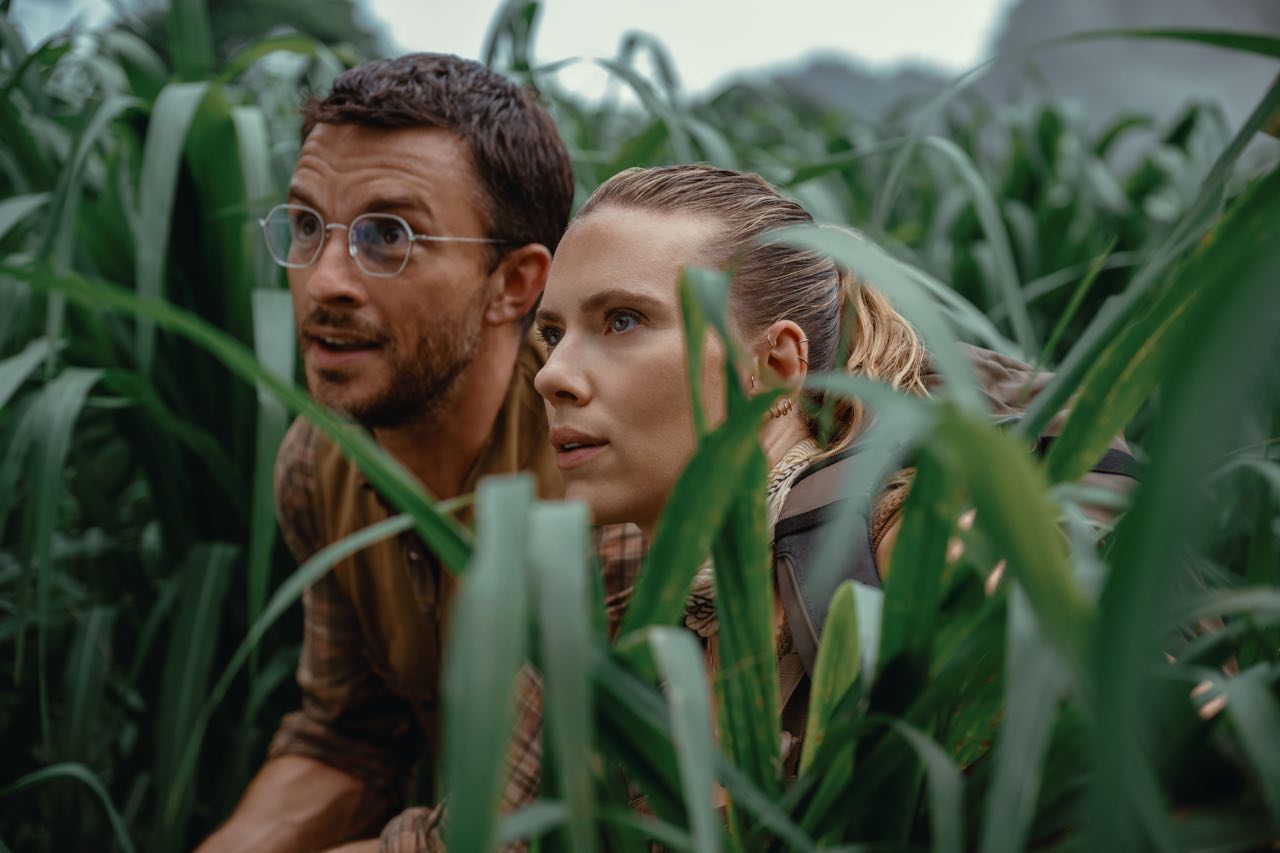
The summer blockbuster, the seventh part of the dinosaur franchise "Jurassic World: Rebirth", has been released on digital platforms. In what mood did director Gareth Edwards make the film and how does the film bitterly mock itself – in our review.
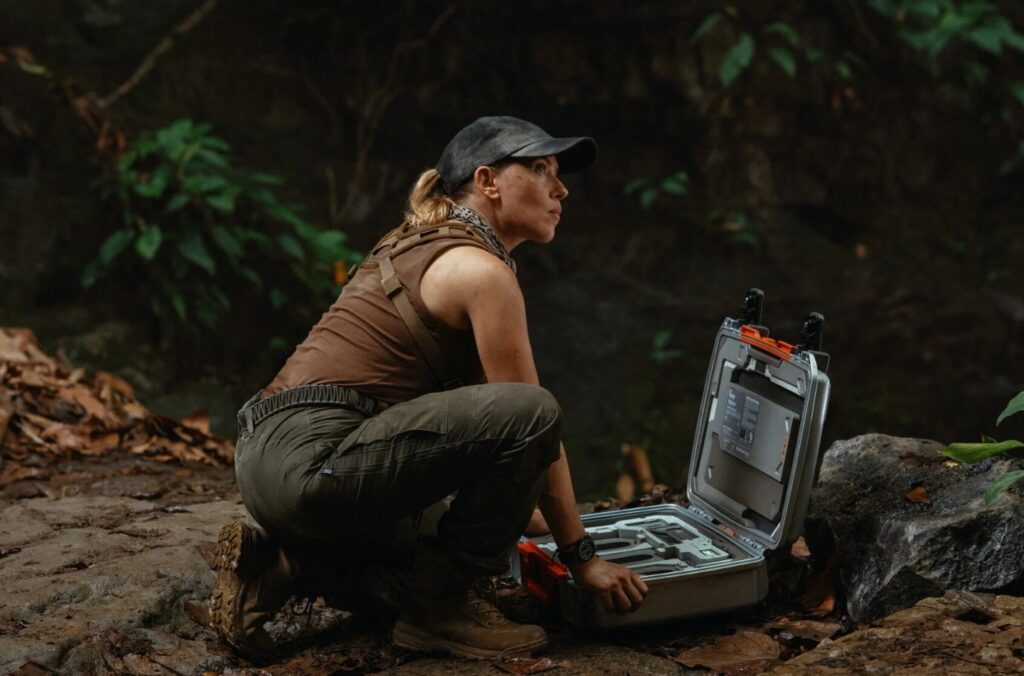
Five years have passed since the dinosaurs escaped from the theme park and spread across the earth. Most species have died out, unable to quickly evolve to new realities: a different climate and bacteria. Some surviving dinosaurs found their last refuge at the equator, where weather conditions were closest to the Jurassic period. But it turned out that in a number of predators, as a result of genetic experiments, extremely useful enzymes formed in their blood, capable of curing humans of heart disease. A representative of a pharmaceutical company, Martin Krebs (Rupert Friend), immediately equips an expedition that includes covert operations specialist Zora (Scarlett Johansson), her comrade-in-arms Duncan Kunkid (Mahershala Ali), and paleontologist Henry Loomis (Jonathan Bailey). Their task is quite simple: obtain the blood of three special dinosaurs and return to the mainland.
Long ago, in 1993, Steven Spielberg made a movie about how man, who imagined himself the master of nature, received a precise and clear answer from it in the form of a couple of strong punches. Since then, a lot of time has passed, and the franchise, created just over thirty years ago and now consisting of seven films, creaking like an unoiled cart, continues its difficult march across world screens, despite the chorus of voices that tearfully beg to leave the dinosaurs alone. Of course, "Rebirth" is not the final point; the running from prehistoric animals will continue. But it is interesting that by its seventh film, the franchise has turned into what it warned against from the very beginning – a bureaucratic conveyor belt for breeding bloodthirsty predators.
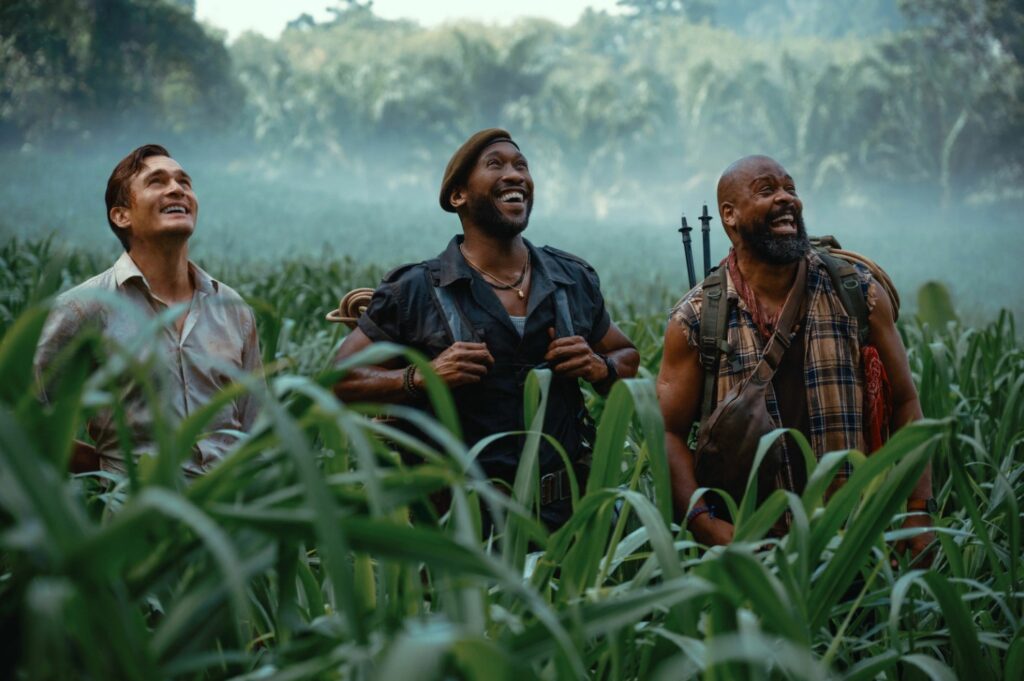
A direct hint of this is contained in one of the scenes, when Jonathan Bailey's character complains that the paleontological exhibition is in crisis: people are fed up with dinosaurs, they want something bigger and scarier (sounds wild, but such are the realities of five years of dinosaur freedom among humans). And then those who made good money from it conspired with scientists and began to breed truly terrifying mutants.
A rather bitter meta-commentary within the film itself, delivering a ruthless diagnosis: the T-Rex no longer frightens the viewer (it, by the way, has long ceased to be the title monster), which means we need to show more teeth, more claws, more horrific metamorphoses on screen. In short, it is quite obvious that the scariest predator here is not the lizard, but the marketing machine devouring the very idea. The franchise, which began as a warning about the dangers of commercializing science, itself became a victim of commercialization. And instead of modestly keeping quiet, on the contrary, it openly speaks about it at the top of its voice. And for such honesty and directness, one somehow does not want to scold the authors.
Gareth Edwards, who previously directed "Godzilla" and "Rogue One", accustomed to acting boldly and decisively when it comes to a decent picture and intricate action, does not hold back the reins in "Rebirth" either, clearly following the simple logic of the plot: a team of scientists and former mercenaries goes to a deserted island for DNA, but instead of a scientific expedition, they get a bloodbath.
Here the film begins to wink vigorously with both eyes at John McTiernan's "Predator". Well, why not? Why break what works so well. Even the helicopter tangled in vines hangs here not just for show – it is a direct quote from the cult 1987 film. Only instead of an invisible alien, the heroes are pursued by larger predators. It is probably better to remain silent about the references to "Jaws" in the water scenes. Everything is already in plain sight.
But if "Predator" hit the mark precisely and did not spread itself thin among characters, then "Rebirth" most often treads water. On the one hand, beautiful visuals, convincing dinosaurs, stuffy thickets where every rustle of leaves conceals mortal danger, oppressive silence before the storm, masterfully staged attacks.
On the other hand, all the same old flaws: cardboard characters with motivation at the level of "a paycheck is a paycheck", idiotic decisions (going into the dark thicket teeming with predators to relieve oneself and not turning one's head), and a new hybrid dinosaur, as if descended from the sketches of Hans Giger – huge, creepy, but frankly contrived title monster, constructed as if for the amusement of the crowd (yes, it strongly resembles the "Alien". Why – the question is rhetorical).

The actors here are only as good as the hastily written script allows. Scarlett Johansson pretends she is not ashamed. Oscar-winning Mahershala Ali repeats the classic gesture with a lit flare and pretends he is interested. And the viewer pretends to believe them.
But the franchise seems to have finally found itself. It no longer suffers from an identity crisis, no longer rushes between science and action. "Jurassic World: Rebirth" is a pure, polished summer blockbuster, made with an understanding of what the audience expects. And in this sincerity lies its main strength.
Comments
0No comments yet.
Sign in to join the discussion.