


The wide release has been taken over by the hit of the Sundance Festival, the film 'Together' by Australian director Michael Shanks. What the 'body horror about codependent relationships' actually turned out to be, we explore in our review.
Tim (Dave Franco), a middling musician, and Millie (Alison Brie), an elementary school teacher, move to a country house in a last-ditch effort to save their relationship. Between them lie unspoken grievances, fatigue from silent reproaches, and the oppressive feeling that love has long turned into a habit that destroys life. One day, Tim and Millie decide to explore the picturesque area where they are supposed to live together happily ever after (one wants to believe), and they find a mysterious cave with bells. Spending their first romantic night in a long time there, full of revelations, they soon realize that their bodies are beginning to physically attract each other with an inexplicable force.
At first, it seems like a strange trick of the imagination: Tim chalks it up to childhood trauma and panic attacks, while the more rational Millie dismisses it, trying not to blame her beloved. But when attempts to push each other away only result in painful skin tearing, and nighttime sleep turns into a nightmare of limbs fusing, hair eating, and sleepwalking around the house, Tim and Millie realize: being one whole is not a metaphor. Their bodies are truly drawn to each other, and the consequences of such 'fusion' promise nothing good. Now they urgently need to find the source of this anomaly and try to reverse it.
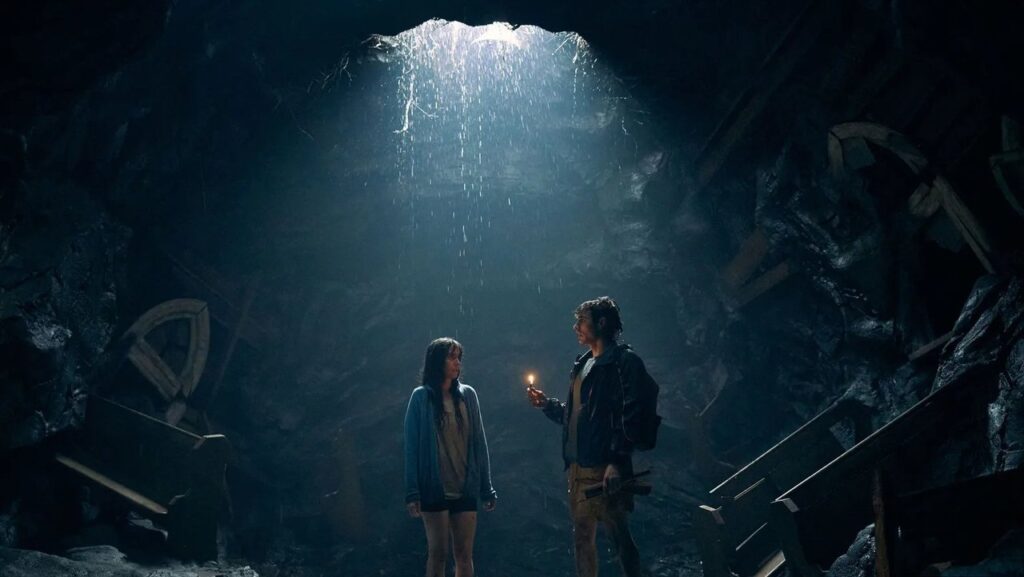
The film 'Together' begins with a line that fires like a Chekhov's gun not yet hung: 'If we don't break up now, it will only be harder later.' How much harder, literally, we will be able to observe over the next hour and a half. This subtle but brilliant irony by director Michael Shanks largely defines the entire mood of the film: a darkly ironic comedy whose humor is built on the impossibility of 'unsticking' from each other.
The body horror genre has long ceased to be just a set of shocking bodily transformations. Today, it has become a powerful artistic tool capable of dissecting almost any social phenomenon. 'The Substance' and 'The Ugly Sister', for example, turned beauty standards and social media pressure into a bodily nightmare where others' gazes and imposed ideals literally deform the body. 'The Shrouds' by David Cronenberg dissected the metaphor of grieving the loss of a loved one and corporate intrigue. And now debut director Michael Shanks decided to use physical mutation to speak about the crisis of relationships. The plot setup, at least, points to this: how emotional dependence can become a physical prison where two people can no longer live either together or apart. But what the director chose to tell next is another question.
'Together' is undoubtedly a body horror (when it needs to scare, the author does not hold back), but at the same time, it is a rare example of a subgenre that is not afraid of lightness. Shanks freely maintains a balance between horror and black humor, using the absurdity of the situation for uproariously funny moments. Another obvious plus: its own special tone. After all, essentially we have a full-fledged 'anti-rom-com' where romantic clichés stumble at every step and are turned inside out, becoming a waking nightmare. The film knows how to scare, but does so selectively; instead of constant tension, Shanks creates a series of absurd and horrifying situations where comedy often outweighs.
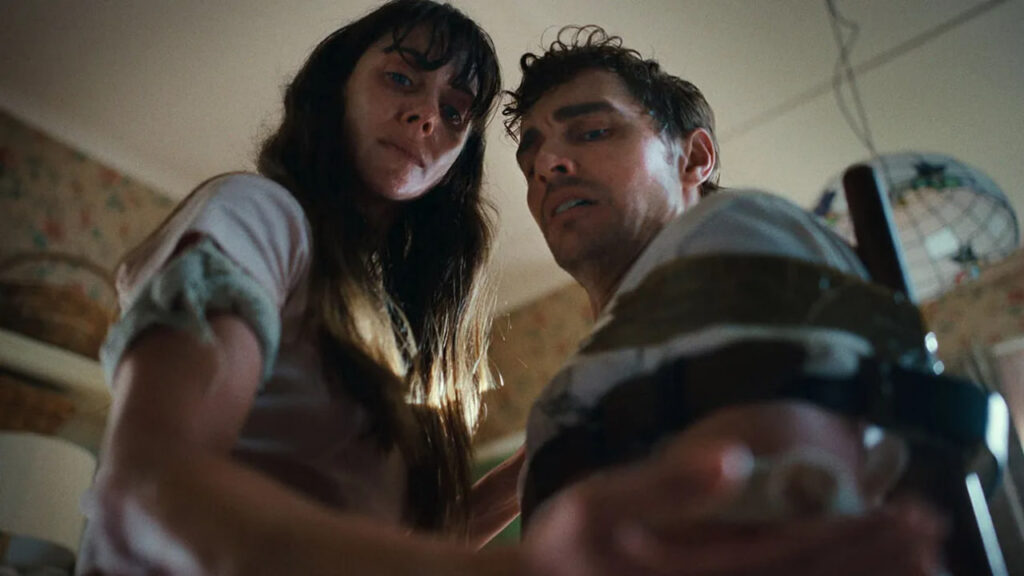
The main theme of 'Together' sounds simple but deceptive: do we dissolve too much in our partner? The film takes this idea to its logical (and physiological) absurdity, turning emotional dependence into an irreversible physiological process. However, the clever director, fortunately, is not lacking in a certain elegance and sense of humor, helping to look at this issue from different angles. Maybe Tim and Millie are resisting in vain? Maybe it's actually better for them? What if it's a happy ending instead of a dark conclusion? At the same time, Shanks does not nag or moralize, but gives the viewer the opportunity, first, to enjoy the ride, and second, to answer the questions posed throughout the film themselves and choose the option they like best.
All this makes 'Together' not just an amusing or shocking body horror. The film is not always flawless in its narrative, but its emotional charge will stir the imagination for some time. The famous lines 'Never part with your loved ones! Grow into them with all your blood' here become not a poetic image but a medical fact. For genre fans, it's a great addition to the collection. For a wider audience, it's an unexpectedly funny and frightening look at what happens when two people breathe the same air. In the most literal sense.
Comments
0No comments yet.
Sign in to join the discussion.