
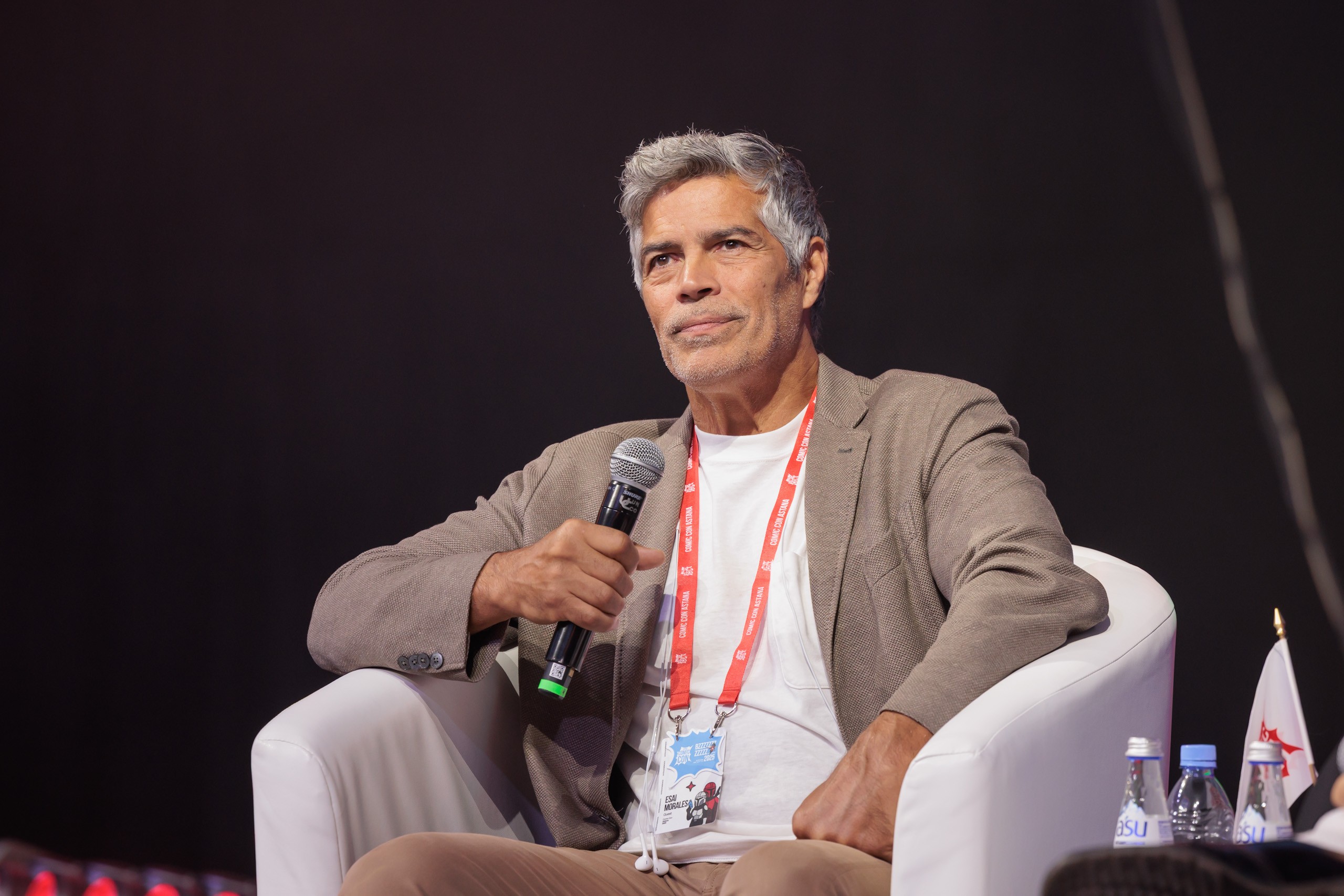
Esai Morales – actor from 'Ozark' and 'Mission: Impossible' – on choosing roles, Latin Americans in the US film business, and the best movie villains.
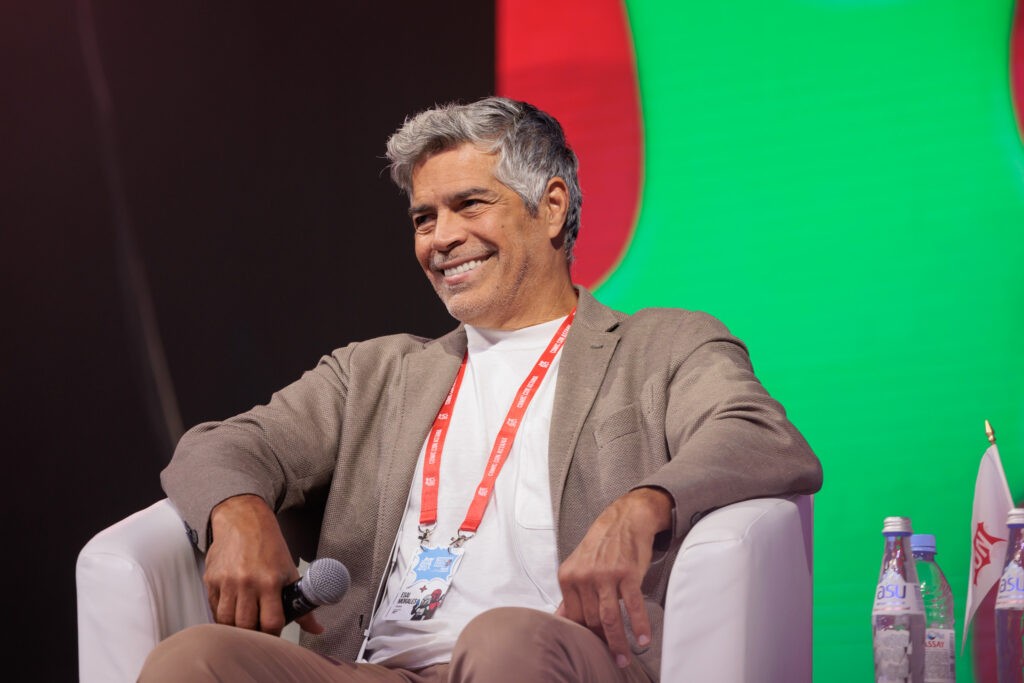
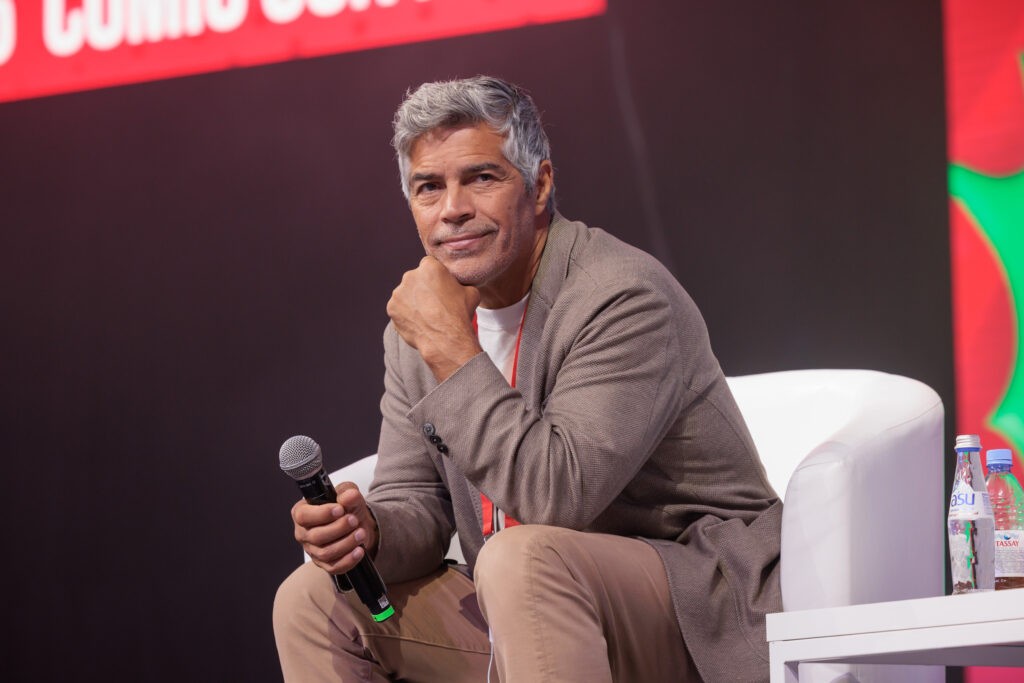
Actor Esai Morales, star of the series 'Ozark' and 'Titans', as well as the last two installments of the blockbuster 'Mission: Impossible', became the headliner of Comic Con Astana 2025. At a meeting with fans and the media, he shared his views on antagonists in cinema, choosing roles, Latin Americans in the US film business, and his love for his culture. We've gathered the most striking moments from the Q&A session and backstage.
On Favorite Villains in Cinema
"If I had to choose, I would pick Alan Rickman from 'Die Hard', Anthony Hopkins from 'The Silence of the Lambs', and Robert De Niro playing Al Capone. In these three characters, I find a certain vibration, a power of rage.
When you watch these films, you see souls with trauma trying to find solace—in revenge, for example, like De Niro. Or with Rickman, where he controls lethality very well. And yet he does it seemingly effortlessly. He doesn't need to shout—his voice alone is frightening enough. He is so focused that you get the feeling he knows something you don't.
And Hopkins is a man with a very beautiful, poetic language. He knows how to work with discourse. He is so comfortable in his psychosis, able to harm while remaining intelligent. That is truly frightening.
We humans sense each other. But psychopaths and sociopaths—they don't feel others' pain. They don't care whether you live well or not.
When I played the villain in 'Ozark', I tried to bring a similar experience. I tried to be deadly calm. Because when you don't shout but express anger quietly—that is truly frightening. I thought: 'I must play the person I would be afraid of myself.'"
Having worked in Hollywood for over 40 years, Esai Morales noted that playing a negative character, a villain, an antagonist to the main character is a great honor and a challenge for a professional. And perhaps, earlier he would have liked to play Che Guevara.
What is a Villain in Cinema
"As I said, the villain is the one who opposes the hero. It's the antagonist.
If you think about it, the villain is a kind of entity that can whisper to others. In the Bible, we call it Satan or the Devil—all-consuming evil.
But in my understanding of human nature, the villain is simply someone who goes against the hero.
In films, often one character is a revolutionary, and the other is a terrorist. It all depends on the point of view. Even if you take George Washington—many questions arise.
The villain is a person who is in so much pain that they want to share that pain with others. To do that, they need power. And power is needed for survival.
Today's villains are those above the law: politicians, people at the top of the food chain. Those who will not face punishment.
The hero is a positive character, but often passive. And the villain has motivation—they want to survive and oppose the hero."
Favorite Roles in Filmography
"At different stages of my life, I had different favorite films.
'La Bamba'—a film from the 80s, one of my favorites.
'Bad Boys'—my very first film. I was 19 then, just a kid.
'NYPD Blue'—the project where I first played a positive hero—for a change of pace.
Every job teaches you something. 'Ozark', for example, rebooted my career. There I played a villain I wouldn't want to deal with myself.
Deathstroke—as a comic book character, a big enemy of many heroes.
'Mission: Impossible'—a project I've been working on for several years.
It's like asking a mother of many children: choose your favorite child. All children are different. Some are calm, some require more attention. It's the same with roles—they are all meaningful to me."
How He Chooses Scripts
"Honestly, I first consider the author. Often, those who want me to be involved in a project already know what they want from me; they already have an idea of what I should do. So, I usually don't have a specific choice here.
I can give an example with the film 'La Bamba'. Initially, I was offered the role of Ritchie—the star, so to speak, the protagonist of the film. But I chose Bob Morales—he had a different story. On one hand, he has the same last name as me, which is quite rare. But mainly, I felt a strong identification with him, the pain he tried to overcome, the empathy I felt when I looked at that story through his eyes.
I tried to give him a three-dimensional dimension. I tried to create a character that would live in people's hearts—one that I know well.
Another important point here: even if I had played Ritchie, a lot would depend on who played Bob. Because Ritchie is light, and Bob is darkness. There needs to be a balance between them. And by and large, it's not even entirely my choice. The people involved in the project had already decided what I should do.
Often, I look at the story. Probably the plot itself influences me the most. A script is like a book for me: when you read, words and letters begin to fill your imagination, you start to imagine how the plot will unfold.
I also rely on instinct. If I start deliberating about what to do—it's probably not my project. After reading the script, I need to understand: does this character suit me? Can I interpret, embody, and portray him?
How close or far is he from me? If too close—no challenge. If too far—there might be too much work. Is it worth it? Can I bring it to life as needed?
And, of course, the people involved in the project are important: directors, producers who do research, the director himself who brings everything to the screen, and the other actors who will play other characters. And not least—how the audience will receive it."
Who He Would Make a Superhero from Puerto Rico
The actor was asked which superhero from Puerto Rico he would like to see in one of the comic book universes, and he replied that it would be LoverMan – a hero whose superpower is love.
"His superpower is to give love, resolve conflicts, stop wars and pain," Morales shared.
On Ethnic Identity and Kazakh Culture
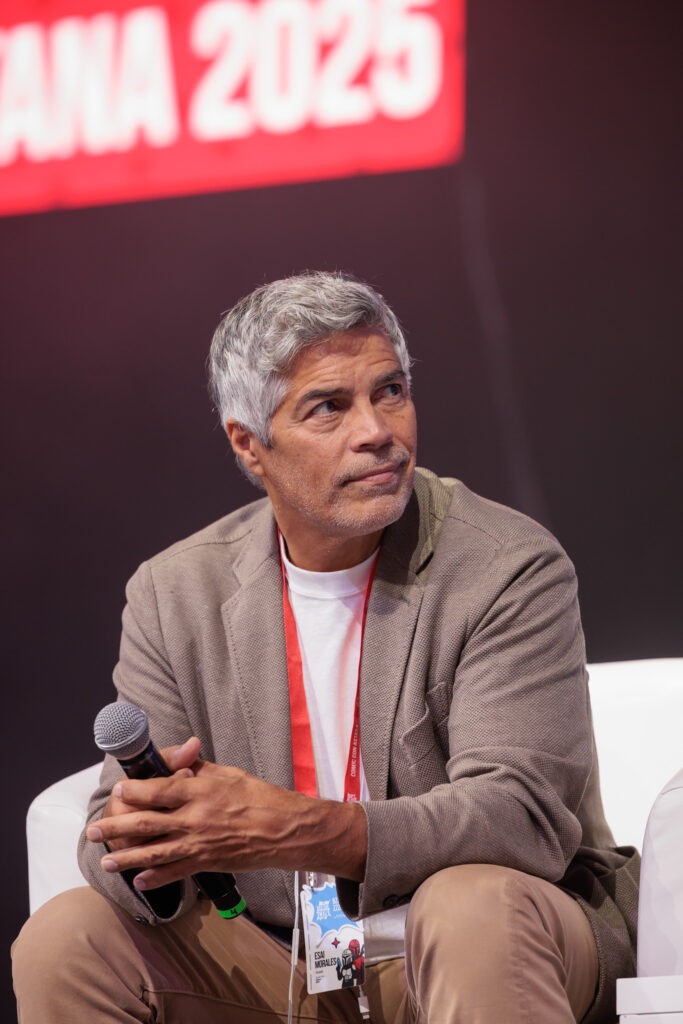
Over many years of work, Esai Morales has become the "voice of Latin Americans" in the US film business. He noted that attitudes towards people from Latin American countries in the US are changing now. Speaking about his ethnic background, the actor emphasized that Puerto Ricans have a lot in common with the Kazakh people.
"My family is from Puerto Rico, which was part of the US, just as Kazakhstan was once part of the Soviet Union. We also had a dominant culture—American—and our native culture. For many years, we were seemingly invisible, a source of ridicule. And now I see that our national culture, which is, so to speak, in our blood, is beginning to manifest itself more brightly, gaining strength and taking its place in society. So I very well understand the feeling of national pride of the Kazakh people. Because in Puerto Rico, we have the same feeling."
Esai Morales is an American actor of Puerto Rican descent. He debuted in the 1980s and became famous after his role as Bob Morales in the cult film 'La Bamba'. He has acted in series such as 'Ozark', 'Titans', 'NYPD Blue', 'How to Get Away with Murder', 'From Dusk Till Dawn', 'Caprica', 'Jericho', 'CSI: Miami', and others. He also starred in the last two installments of 'Mission: Impossible' with Tom Cruise, playing the main villain, Gabriel.
Comments
0No comments yet.
Sign in to join the discussion.