

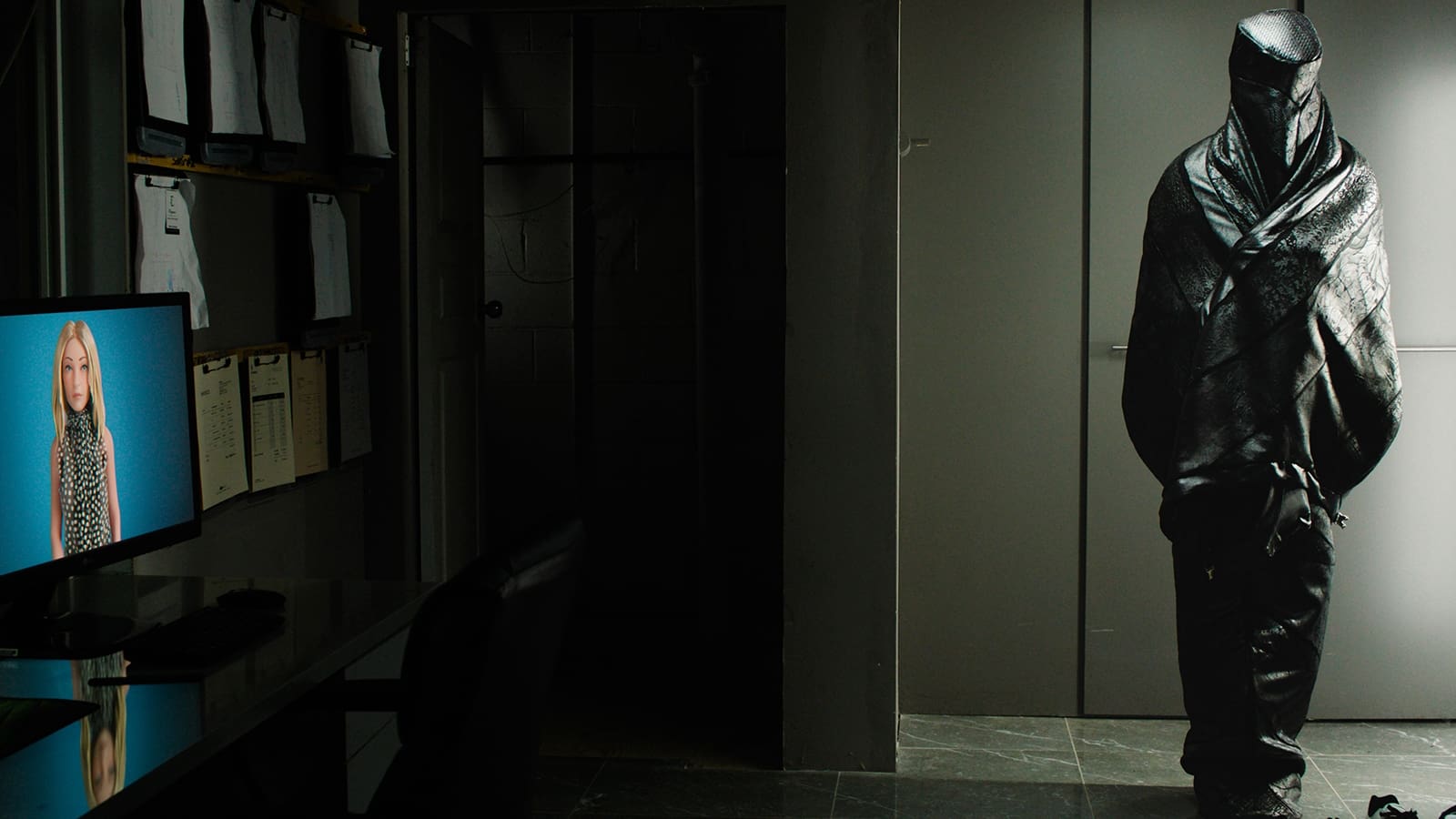
On big screens, the new work of 81-year-old body horror guru David Cronenberg continues its stately march. How a philosophical parable about accepting death gave way to a purely 'human affair' — in our review.
Businessman and creative producer of corporate videos Karsh (Vincent Cassel), after the death of his beloved wife (Diane Kruger), creates essentially a digital cemetery where relatives of the deceased can observe the gradual decomposition of the body in the grave through a special app. Following a slightly unexpectedly comical explanation of how the cemetery works (which also includes a restaurant) to a failed (and understandably why) new love interest, Karsh learns of a vandal attack that destroyed several graves. Among them is his wife's tombstone. Trying to find out the reason for the desecration, Karsh plunges into the depths of production hell and corporate espionage intrigues, where there is no room for subtle matters.
David Cronenberg, apparently the last alchemist of modern cinema, turns to the theme of loss in his new work, but unexpectedly shifts it into the realm of corporate confrontation. Creative producer and successful startup founder Karsh (brilliantly played by Vincent Cassel), who created a company that monitors the bodies of the deceased — a concept that could have been the basis for a psychological drama.
However, instead of delving into the character's experiences, Cronenberg focuses on almost spy-like intrigues, unexpectedly taking a completely different side. The plot begins to revolve around competitors hacking the system, digital avatar spies, and industrial sabotage. Even the relatives of the deceased wife are involved not so much in emotional conflicts as in a struggle for control over the technology.
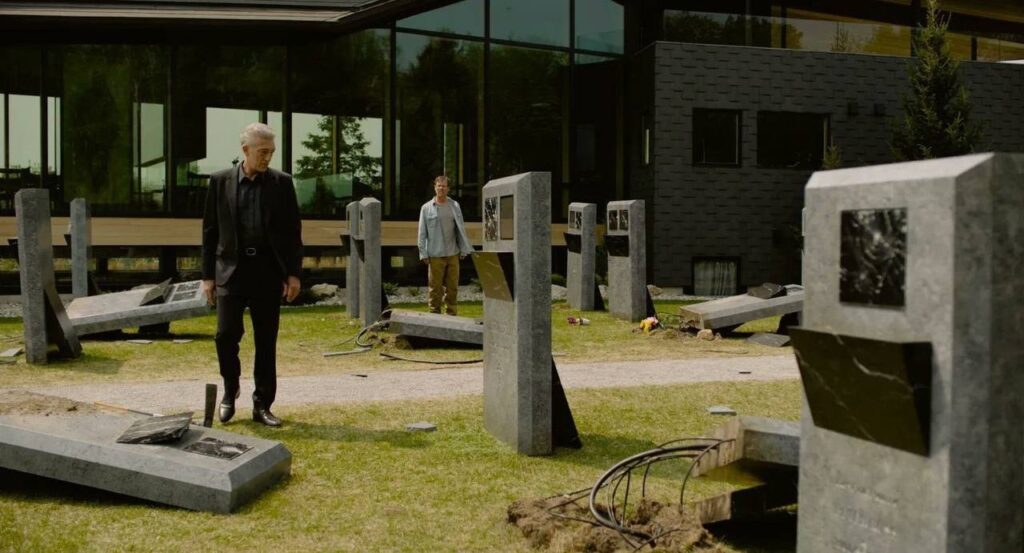
Of course, when the director's credit includes a titan like Cronenberg, one expects social subtext from the film. And the director readily meets these expectations. For example, like many of his colleagues (experienced and not so much), he happily dissects today's digital reality, where even death becomes a commodity in an app. But Cronenberg, whose age already suggests a well-established irony in his work, goes even further: he turns the funeral business into a field of cybernetic confrontation, where the main danger comes not from existential anxieties, but from corporate rivals.
Stylistically, the film resembles not so much classic dramas about loss, but thrillers about techno-paranoia, in the vein of Fincher's 'The Social Network' or Cronenberg's own 'Videodrome'. The cold, almost clinical aesthetic, minimalist dialogue, and emphasis on surveillance mechanisms create a feeling of production hell. But it is often presented so lifelessly that it is quite difficult for someone who has not seen any film from the 'David Cronenberg Presents' category to sit through it.
Although, maybe that was the idea. A film about sad funerals and almost palace intrigues is unlikely to race at the speed of a locomotive and shoot off fireworks on the go. However, Cronenberg has long been allowed to film as he pleases. In any case, 'The Shrouds' is primarily something exotic rather than something ordinary.
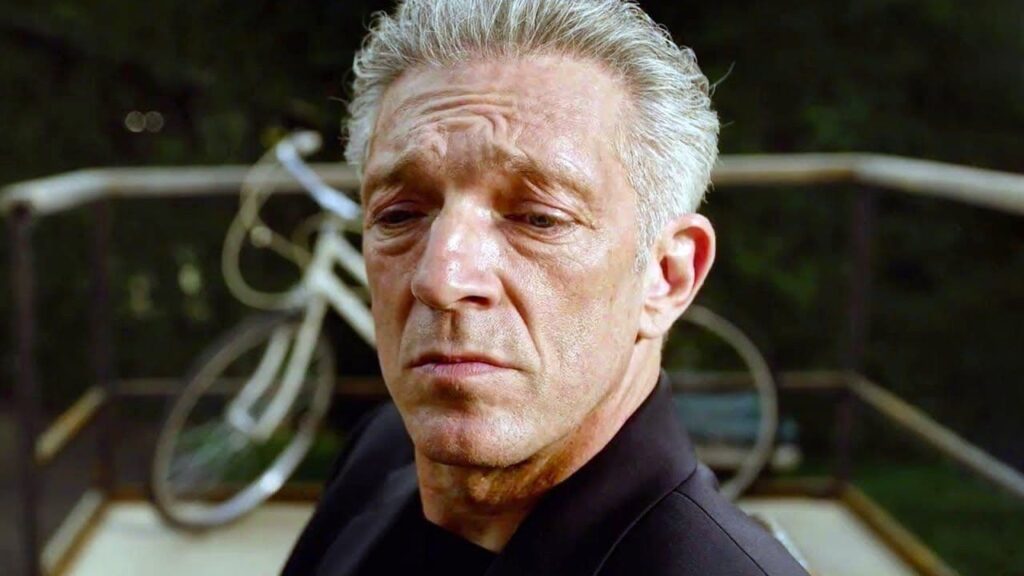
As for the actors in the film, Vincent Cassel easily fits into the concept devised by the director. His Karsh is not just a grieving widower, but an obsessed owner from whom even death cannot take away what belongs only to him. He refuses to let go of his wife, clinging to her remains with the manic determination of a collector unwilling to part with the most valuable exhibit. This 'funeral monopolization' takes the form of a business where every business meeting, every technological upgrade is just a facade hiding an inability to accept loss. In this slightly strange narrative, Cronenberg shows how modern capitalism turns even the most intimate experiences into a battlefield for control and ownership.
'The Shrouds' is not just a film about loss. It is an exploration of how the mechanism of consumption has reached the last taboo — death. There are no simple answers in this film, just as there are none in the master's best works. There are only troubling questions, posed with Cronenberg's characteristic virtuosity. This once again confirms that even at his venerable age, the director has not lost his gift for subtle indictment (it seems that a well-deserved retirement is not yet in his future). And his main warning sounds frighteningly relevant: the real danger comes not from the dead, but sometimes from ourselves.
Comments
0No comments yet.
Sign in to join the discussion.