

The German film "What Marielle Knows" is being released, a satirical look at communication within the family. Our article discusses what Frédéric Hambalek's film, which competed for the Golden Bear at the 2025 Berlin Film Festival, turned out to be.
If teenagers had access to their parents' secrets, the world would go to hell—or at least a couple of family dinners would turn into farce. The new German film "What Marielle Knows" (Was Marielle weiß) by director Frédéric Hambalek, which hits Russian theaters on June 26 through , turns this hypothesis into a satire where family life cracks under the pressure of supernatural honesty.
Independent cinema in Russia continues its struggle with mainstream for the souls and hearts of audiences. We spoke with film company A-One, which brings non-mainstream, often festival films. How
Open materialSeemingly an ordinary family: mom, dad, daughter, a cozy apartment in a faceless German city, and the obligatory set of bourgeois problems—work, school, dinners where everything is discussed except the main thing. But what if one day a teenager gets the opportunity to know literally everything about her parents? Not in the sense of "read the phone messages," but in a direct, almost mystical sense: to see and hear their thoughts, actions, desires—even those they themselves would prefer to forget. That's exactly what happens to Marielle, and from that moment on, family life turns into an experiment where no one knows who is watching whom and who will outplay whom.
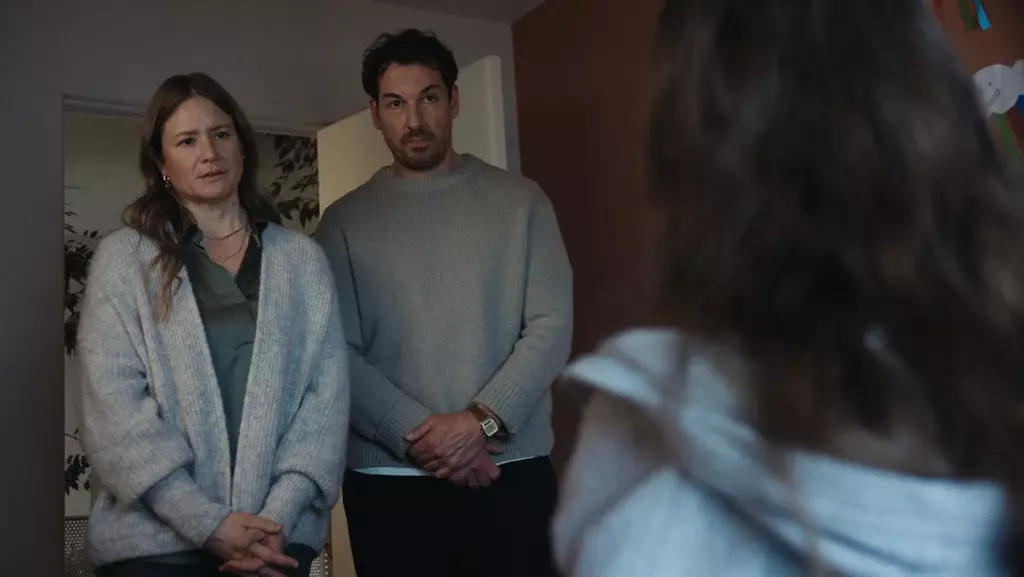
It all starts with a slap—literally. After a scuffle at school, Marielle (Laeni Geiseler) suddenly discovers she has the ability to telepathically "eavesdrop" on her parents. Mom Julia (Julia Jentsch) and dad Tobias (Felix Kramer) quickly realize that their little (and not so little) secrets are no longer protected by walls, French, or even plain denial. Marielle, herself quiet and withdrawn, becomes an involuntary judge in a family court where accusations and justifications replace each other faster than you can brew coffee.
Hambalek cleverly flips the usual dynamic: now it's not the parents watching the child, but the other way around. This is not just a comedy of situations—it's a subtle, sometimes caustic satire of the modern family, where everyone plays a role and sincerity becomes a luxury no one can afford.
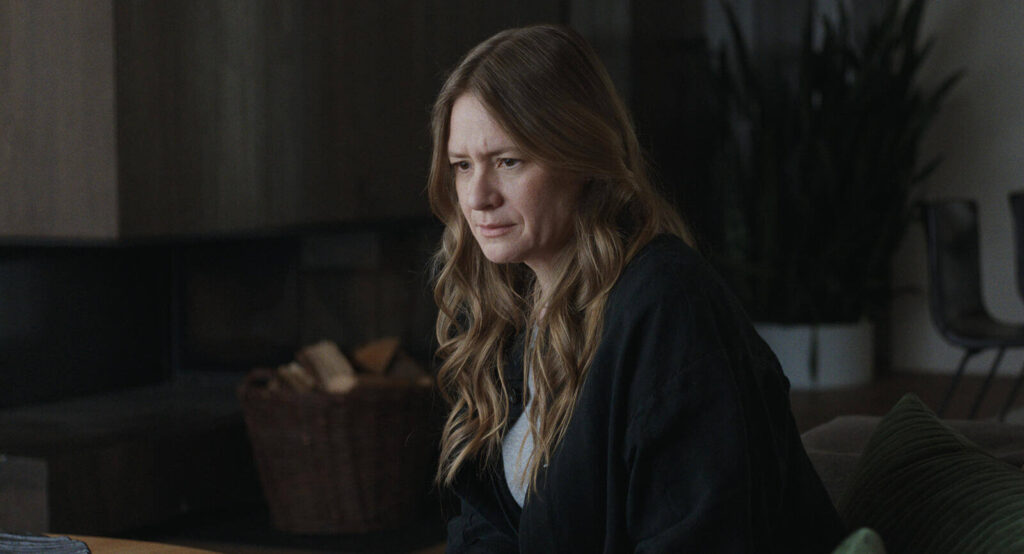
Julia Jentsch and Felix Kramer strive to balance comedy and drama, turning their characters into real people rather than mere carriers of "parental archetypes." Their duo evokes sympathy at times, and at others, a desire to roll one's eyes—these attempts to save face in front of a child when the masks have long fallen off are all too recognizable.
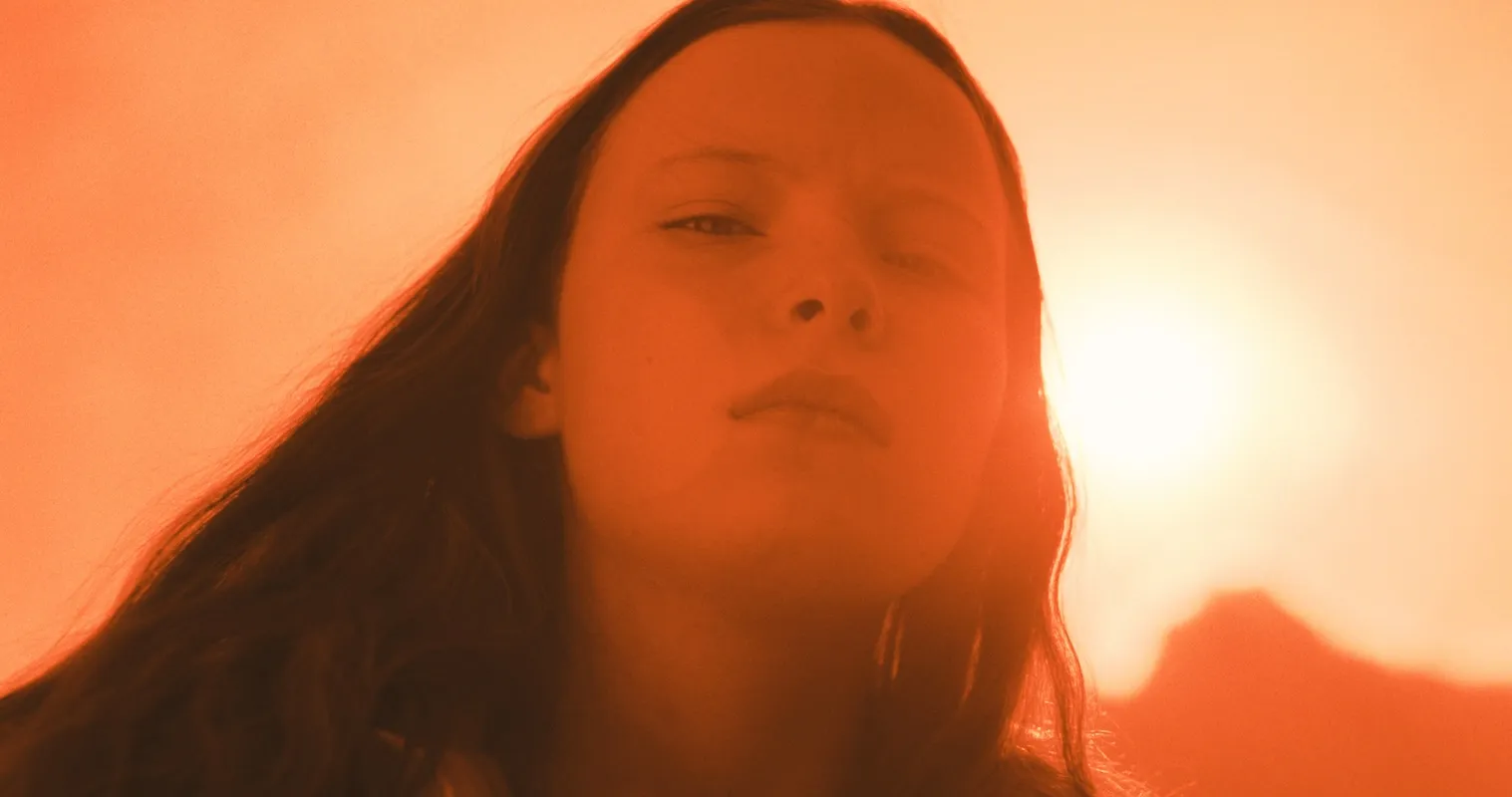
The film is shot in a measured minimalist style: light, music (Beethoven and Schubert as a refrain of family disasters), interior—everything works to create a feeling of fragility and artificiality of family comfort. Marielle, shot from a low angle, resembles either Wednesday or a judge from the adult world.
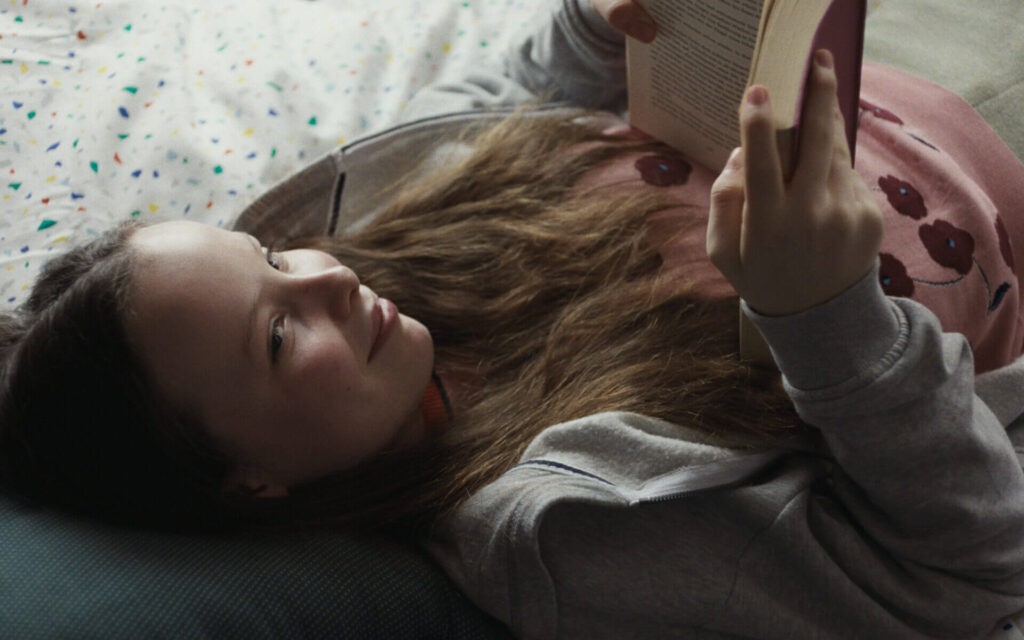
Marielle, despite the title role, often remains more of an observer than a full participant in events. Her inner world is hardly revealed, and at times she seems merely a catalyst for her parents' turmoil, rather than an independent character.
Another obvious drawback is that the film, having started off briskly with a bright idea and sharp (though not always) dialogues, loses pace closer to the finale and does not always follow through on the questions it raises. The open ending leaves room for thought, but some may feel that the authors simply did not dare to give a definitive answer.
"What Marielle Knows" is that rare case where European cinema takes an almost Hollywood concept (what if a child suddenly learns everything about their parents?) and turns it not into another family melodrama, but into a caustic yet humane comedy about how difficult it is to be honest even with those closest to you. There is no moralizing here, no attempts to pass off banal truths as revelations. Instead, there is a subtle game on the edge of foul, where every viewer recognizes themselves: some in the parents, some in Marielle, and some in the awkward silence at the family table. For those who see a psychologist, there will be plenty to discuss.
Would I recommend the film? If you like movies where a simple plot hides a layer of observations about life, lies, growing up, and the fact that sometimes it's better not to know too much about your loved ones. And if after watching you feel like talking to your parents or children a little more openly, then "What Marielle Knows" has hit the right nerve.
Comments
0No comments yet.
Sign in to join the discussion.