

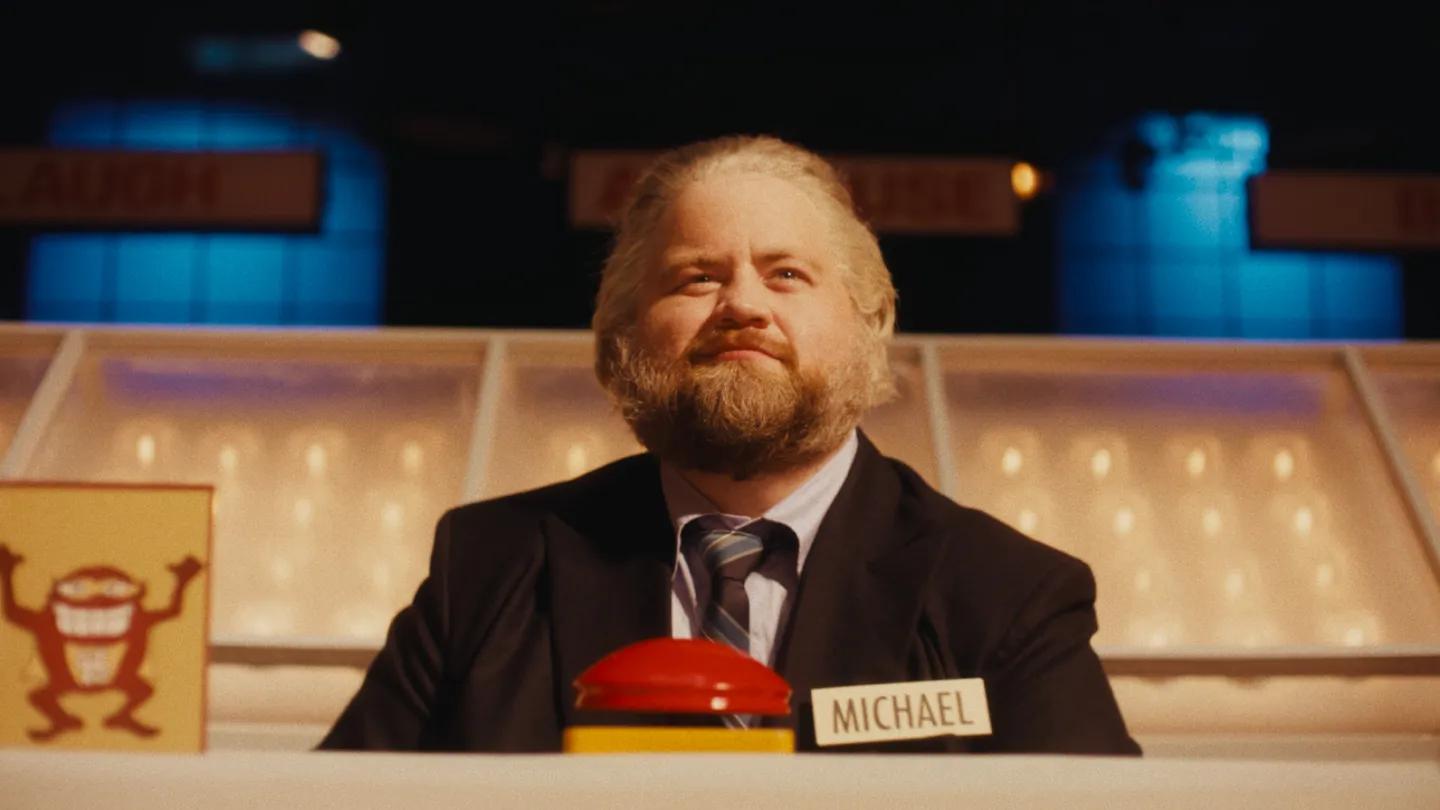
Samir Oliveros’s film “How to Become a Millionaire” has been released in wide distribution. About how Michael Larson, played by Paul Walter Hauser, got his moment of glory and almost didn’t get hurt — in our review.
An ordinary guy, Michael Larson (Paul Walter Hauser), cheats his way through the audition for the show “Test Your Luck.” When the fraud is exposed, the producers see him as the ideal contestant: a simple fan with fire in his eyes. And they let him become a contestant. But Michael demonstrates phenomenal luck, approaching a record win. The TV people panic. They never expected that someone could actually hit the jackpot and suspect Michael of cheating.
After a decade of creative silence, Colombian director Samir Oliveros returns with a film that can be called a cinematic ode to 1980s television. But not the caustic ode it could have been, but a surprisingly warm and nostalgic one. Almost confessional. “How to Become a Millionaire” fits perfectly into the lineup of films with similar themes that have been appearing on screens more and more often lately. They can even be classified as a special genre. “Tube realism,” for example. Or “Tele-noir.” Something like that.
Oliveros’s film follows the mystical “Late Night with the Devil”, which explores how evil can easily enter every home through the TV, the paranoid “Date with a Monster”, or the noisy and talkative “Saturday Night Live”. However, the director turns in a different direction: his television does not devour its creators, does not turn people into monsters, but... suddenly shows humanity.
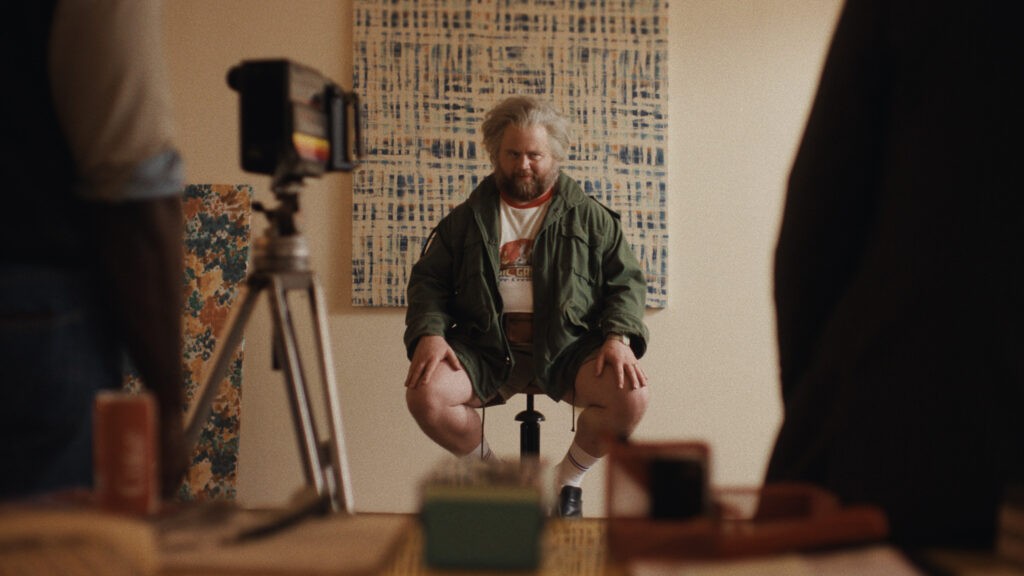
On paper, Oliveros’s project looks quite ambitious, given that the lead role is played by TV star Paul Walter Hauser, who can mimic any director while still leaving room for his own disarming charisma. In smaller roles, you can see David Strathairn (“Good Night, and Good Luck”) and audience favorite Walton Goggins (who has criminally little screen time here).

On August 5, Apple TV+ concluded perhaps the best true-crime series of the year, “Black Bird.” We tell you how the tandem of Taron Egerton and Paul Walter Hauser shines on screen, and Ray
Open materialHauser in “How to Become a Millionaire” is the quintessence of the “little man” who decides to take a risk for his family. He is not exactly a master of transformation. His characters are not always radically different from each other in different projects. But here he hits the mark. Both touching and admirable. Michael Larson is not a genius con artist like DiCaprio’s character in “Catch Me If You Can”, or a life-wise character like Dev Patel’s in “Slumdog Millionaire,” but rather a stubborn dreamer whose naive spontaneity ultimately defeats the cynical system.
The intrigue in the film unfolds quite quickly: Michael’s tricks are not too difficult for the show’s management to uncover, and the viewer is left to guess whether the protagonist will manage to leave the studio with the money or at least not beaten. In the middle, a simple detective element is inserted to maintain the overall tone, and closer to the finale, a barely perceptible drama plays out.
The film does not make sharp plot twists and tries to honestly follow the logic it started to its conclusion. The camera clearly enjoys focusing on Michael’s happy smile, which he obviously shows with pleasure, rightly considering himself the main star of this show both literally and figuratively. But the absence of tricks or gimmicks as such slightly dampens expectations. And this is not a subtle artistic device, but an unfortunate miscalculation. Oliveros seems to have been so carried away by stylizing the era that he forgot to give the viewer the main thing: a reason to empathize.
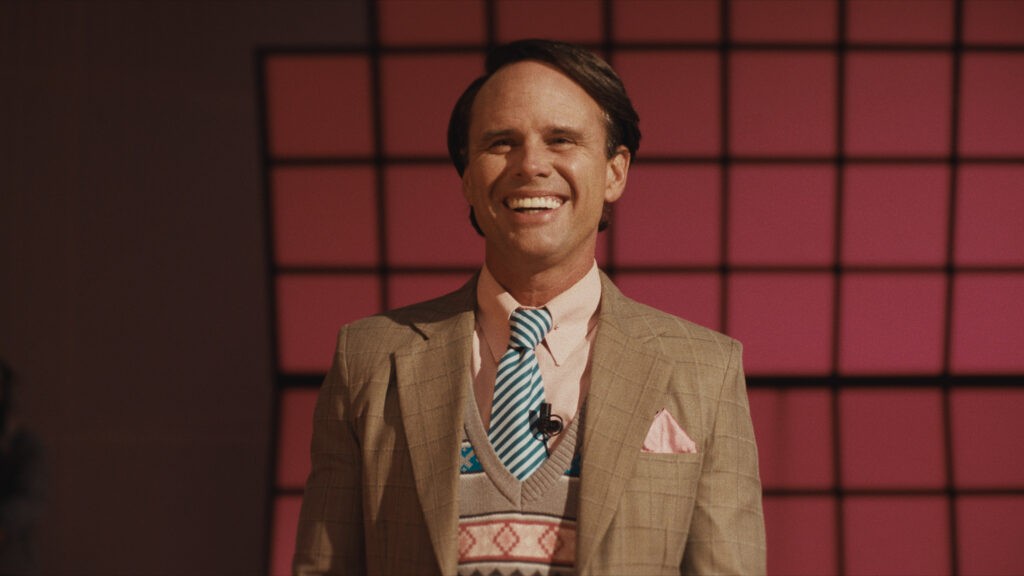
Otherwise, the film crew of “How to Become a Millionaire” did a thorough job. The now rare 90 minutes of screen time without unnecessary scenes, with a meticulously recreated 1980s aesthetic: from grainy film to garish sets and orchestrated applause off-screen. And oddly enough, behind this facade lies a surprisingly kind story. Oliveros decided that there would be no losers in his film. At least for now.
Michael, having had his moment of glory, will remain where he was (although his real story is much sadder), the TV people will boost ratings and turn their defeat into an advantage. But, of course, they will change the rules. Everyone is happy. Even the mysterious mascot of the show in the form of a little dragon, which periodically appears on screen, does not become a harbinger of nightmare (as one might expect) but remains just an unusual, almost psychedelic element of this television world.
The film’s finale is its main paradox. In real life, television mercilessly grinds up people like Michael. But here a miracle happens: the system not only admits its defeat but also allows him to win. This is that rare case when cinema creates not a critical satire but an almost utopian vision where the little man has a chance. Perhaps this is Oliveros’s main nostalgia for those times when there was still room for humanity in the television machine. Or maybe it’s a dream of what television could have been. In any case, we have before us a rare example of cinema that does not expose but almost tenderly remembers. With all its flaws, but also with a warmth that today seems almost fantastic.
Comments
0No comments yet.
Sign in to join the discussion.