

The French rom-com 'Jane Austen Ruined My Life' is still in theaters. Our author professes love for the genre, the writer, and this surprisingly sweet film. And also barely restrains himself from drafting a petition to include a grand ball scene in e...
Good romantic comedies are rare these days. In recent years, there have been isolated examples, like the very sweet 'Rye Street' or the sentimental 'What's Love Got to Do with It?', but the genre is more or less dead. Yet, judging by the film 'Jane Austen Ruined My Life', you wouldn't think so. This movie is made with an understanding of the genre's conventions, a certain conservatism, and such inner confidence, as if ten great rom-coms come out every year, and the film is not afraid of not finding its audience. And the audience, of course, finds it.
You don't have to think that Jane Austen somehow influenced your life to appreciate this film as a rom-com, though knowledge of her novels certainly deepens the viewing experience. Despite the title, Agatha, the main character, like the author of this review, actually had her life significantly improved by Austen. Agatha considers the writer great because she took the contemporary novel and added realistic women to it. And that was, of course, a breakthrough.
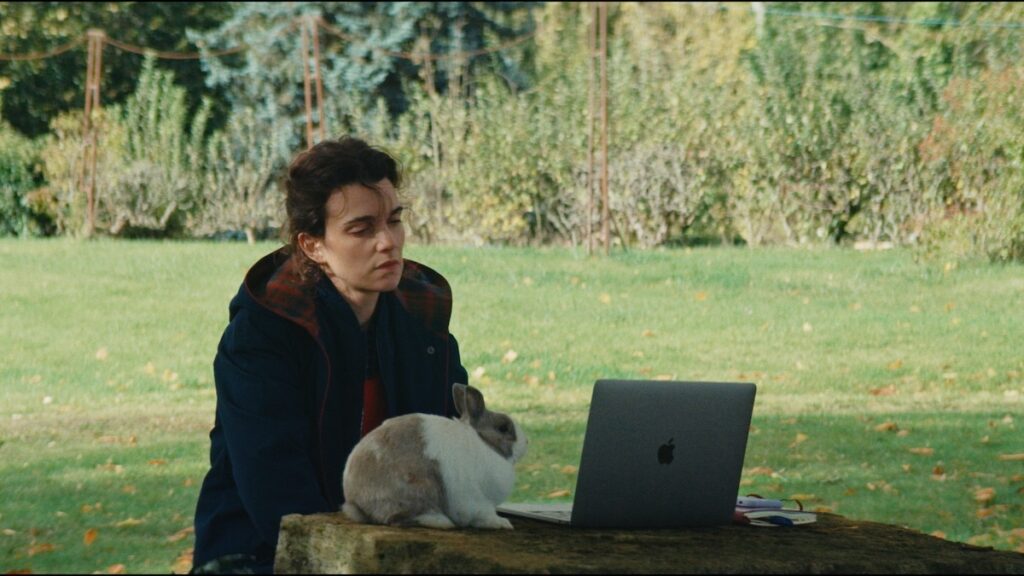
However, this is not the only merit of Austen's prose; otherwise, her works would be of more historical than readerly interest. It seems the main thing in her books is the ability to combine sincerity and irony. Austen often laughed at the rural aristocracy, clergymen, dreamy girls, and men who take themselves too seriously (everyone's favorite Darcy is quite comical at times), but she described this, in a broad sense, secular society in such a way that, on one hand, it's clear why it can be hated, and on the other, it's also clear what can be loved about it.
All of Austen's plots, at first glance, are stories of marriage. However, the wedding at the end of her novels is more the result of internal changes than external ones. Her heroines are mainly looking not for a husband, but for themselves. The screenwriter and director of the film, Laura Piani, conveyed this quite accurately: the film is about a budding writer, Agatha (Camille Rutherford), who has been trying for about ten years to write something she herself likes. She works in an antique bookstore, comes up with novel plots, and abandons them halfway, much like many other things in life.
Her friend Felix (Pablo Pauly), with whom the relationship is constantly one step away from turning romantic, sends one of these drafts to a writer's residency organized by Austen's descendants at the estate where she lived and worked. Overcoming her fears, the Frenchwoman agreed to go to England, where she was met by Oliver (Charlie Anson; 30 years ago, the hero would have been played by Hugh Grant) — a slightly arrogant, ironic, at first glance not the most attractive professor of modern literature. In short, a character familiar to all readers of Austen.
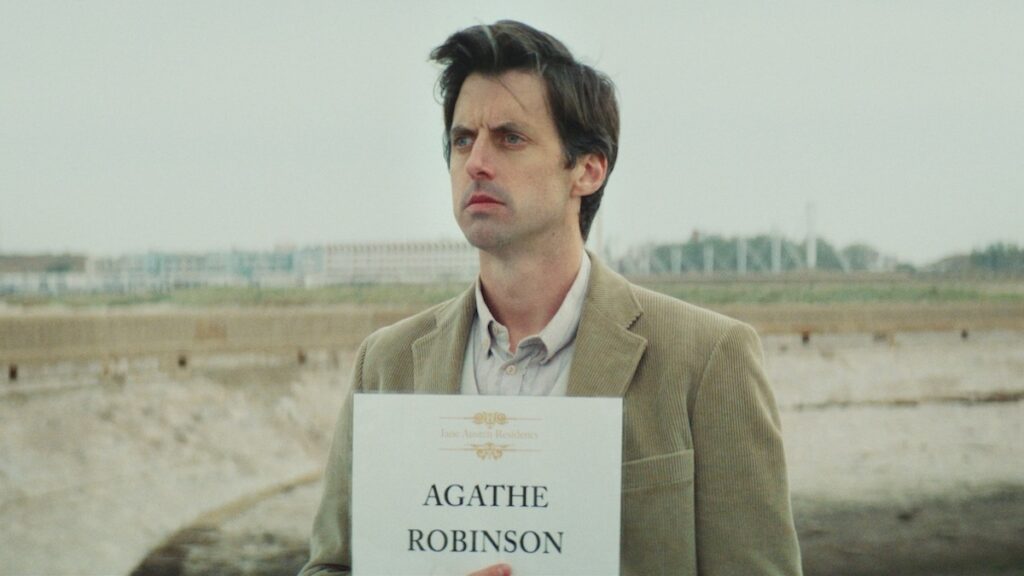
The son and heir of the good-natured retirees who organize the residency, he is not proud of being a descendant of the writer, considering her a deeply minor author. That alone is enough to not delight the romantic Agatha, who measures her life against Austen's novels (her favorite is 'Mansfield Park', but she finds herself in 'Persuasion'). However, we all understand what she does not: you cannot love Jane Austen and not love a man whose place in her gallery of characters is somewhere between Darcy and Knightley (from 'Emma').
The film is full of references, so the heroine's stay at the Austen residency will at times recall 'Northanger Abbey' (an impressionable girl in an old estate), 'Emma' (walks in the woods, a sensual dance at the ball, dialogues by the fireplace), and 'Persuasion' (the heroine's self-denial of things that make up the value of her life). However, the film is not just a collage of selected passages from favorite novels, but also a reflection on what is required for creativity. Suffering? Pain? Experience? Confidence? The film avoids overly banal answers, but the general logic seems to be that cheerful people do not write novels. The heroine struggles to endure life, but it is precisely from romantic suffering that her prose is born. The idea is not new — and in the excellent film 'Emily', this was explored somewhat more seriously — but it is worthy.

The gothic melodrama 'Emily', based on the biography of Emily Brontë, the darkest and most talented of the sister-writers, has been released. About why this film will be of interest not
Open materialDespite the interest in reflections on the purpose of art, Laura Piani does not take things too seriously: her film is first and foremost an excellent rom-com, and only then a film that provides food for thought. And this rom-com works largely thanks to the chemistry between the main characters and the original dynamic between the heroine and her best friend. Rutherford and Anson convincingly bicker and mesmerizingly dance, while actor Pauly, as the best friend, on one hand, always hints at something more, on the other, is extremely convincing and, not at all like a romantic hero, cheerfully snores.
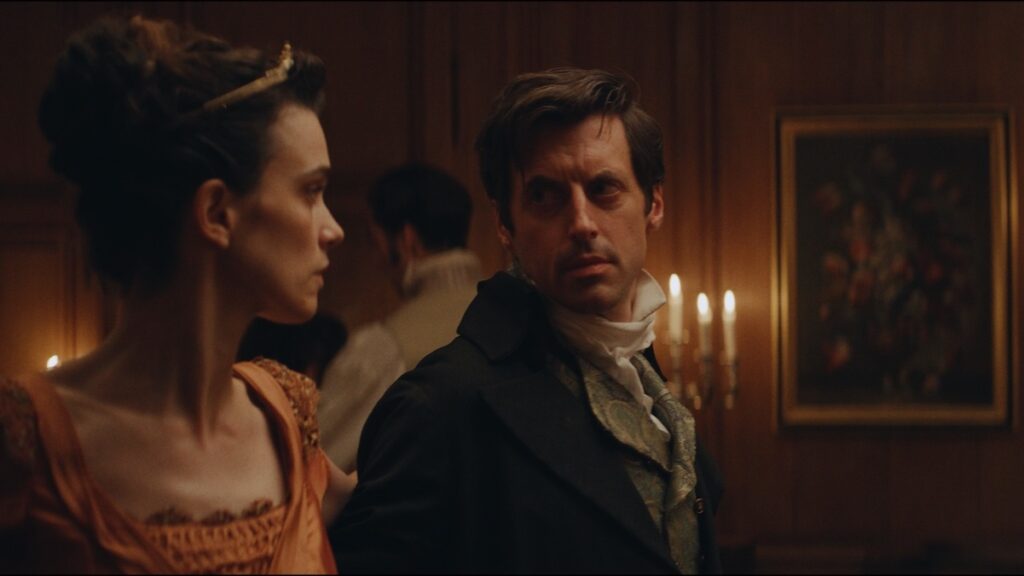
'Jane Austen Ruined My Life', like 'Northanger Abbey', is largely a story about how reading romance novels sets unrealistically high standards for love itself. But, like Austen's book, the film shows that it's not that simple. In the end, novels taught the heroine not so much to expect too much, but a special perception of life. And, like the heroine of 'Northanger Abbey', Agatha ultimately finds happiness not despite her love of reading, but because of it. As, indeed, because there are still places (and films) in the world that know how to hold (and film) a real ball in Regency-era attire.
Comments
0No comments yet.
Sign in to join the discussion.