


"Sinners," which conquered the Western box office, is now available digitally. We tell how Ryan Coogler, freed from the shackles of the Marvel Cinematic Universe, makes a bold leap into auteur cinema with a historical horror film.
Director Ryan Coogler, known for "Black Panther" and "Creed," once again proves his talent with a bold auteur project—the historical horror "Sinners." The film, blending social drama, vampire mythology, and musical magic, has already become a box office hit, grossing $350 million on a $100 million budget, and critics have showered it with praise (97% on Rotten Tomatoes). But what makes this work so unique?
Return to Hell with Blues in the Heart
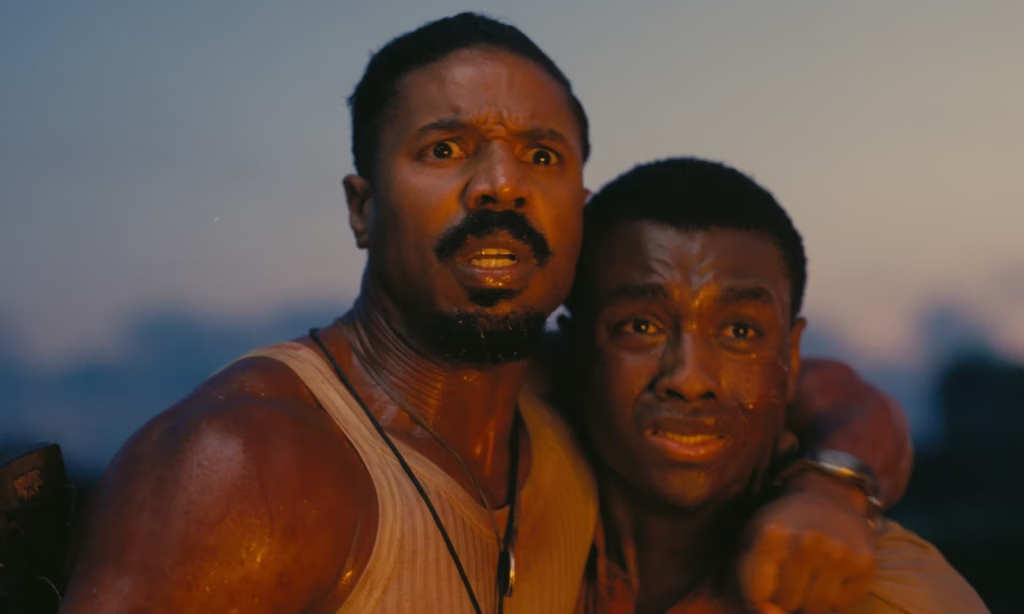
The action unfolds in 1930s Mississippi, where formally abolished slavery has been replaced by Jim Crow laws. Twin brothers Elias and Elijah Moore (both played by Michael B. Jordan)—World War I veterans and former Al Capone gangsters—return home to open a juke joint, a blues club that becomes a symbol of their dream for a new life. However, the building bought from a former Ku Klux Klan member turns out to be cursed: at night, it is attacked by Irish vampires led by the charismatic Remmick (Jack O'Connell). The brothers and their allies—bluesman Sammy (Miles Caton), singer Delta (Hailee Steinfeld), and witch Annie (Jamie Lawson)—engage in a battle with the undead, where music becomes a weapon and the blues a conduit between worlds.
From Comics to Auteur Cinema
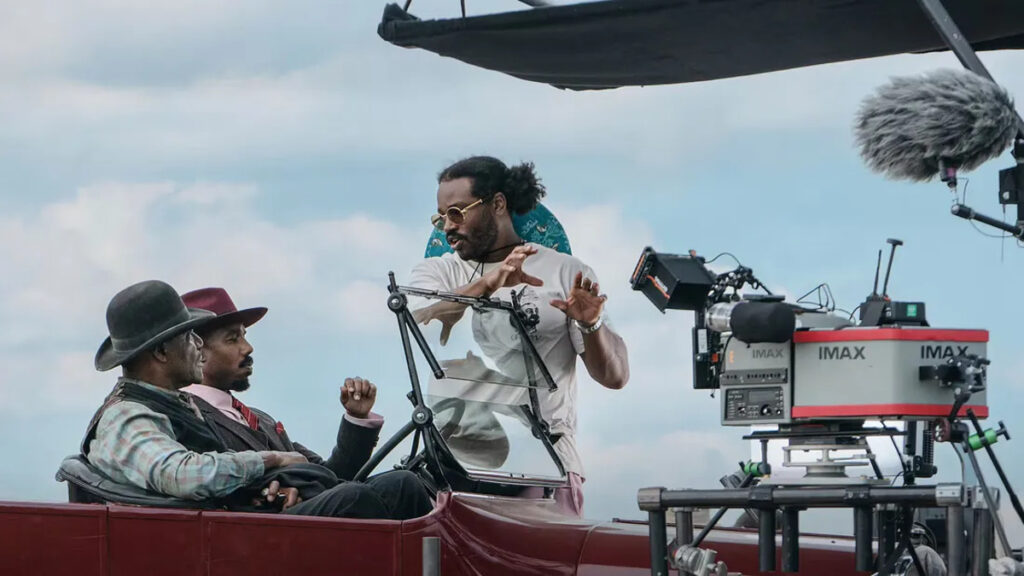
Coogler, given carte blanche by Warner Bros., creates a visually rich world. Panoramas of Louisiana shot on 70mm film contrast with the club atmosphere, where light and shadow dance to guitar riffs. The director blends genres: crime drama flows into horror, and musical numbers (e.g., Sammy's performance) resemble shamanic rituals. Not all critics embraced this cocktail: some comparisons to "From Dusk Till Dawn" were not in Coogler's favor—he lacked the ironic lightness of Rodriguez. Nevertheless, the social subtext about racism and cultural identity adds depth, even if it is sometimes presented straightforwardly.
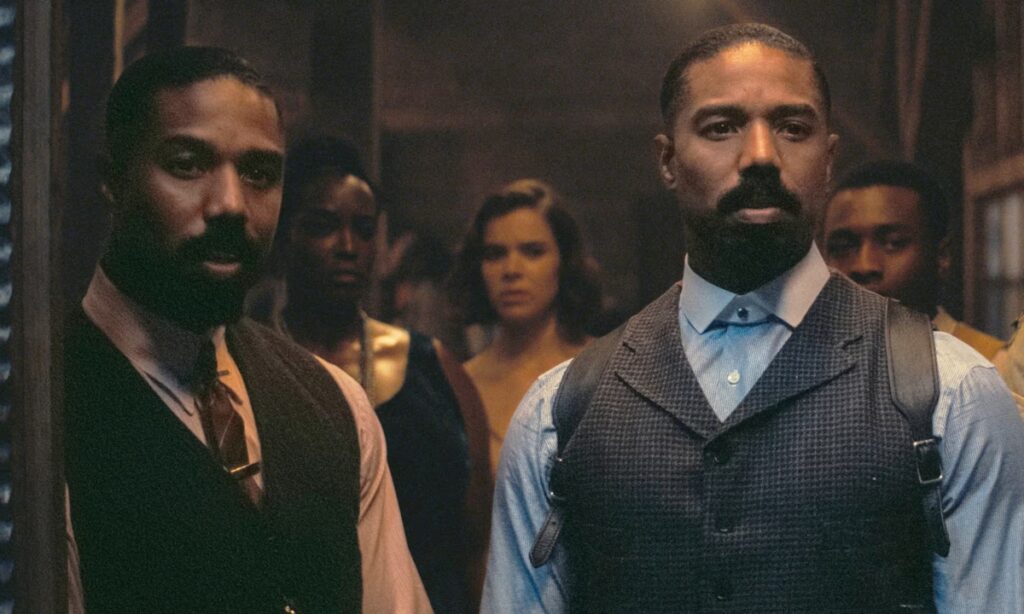
Michael B. Jordan in a dual role is the main star. His characters, Smoke and Ash, are outwardly similar but differ in temperament: one is a pragmatic strategist, the other an impulsive rebel. However, critics noted that the difference between them sometimes gets lost, and the dual role seems more like a technical gimmick. But the supporting characters shine: Delroy Lindo as a harmonica-playing alcoholic and Wunmi Mosaku as a dancing vampire add charisma to the film. Jack O'Connell as Remmick balances charm and cruelty, turning the villain into an anti-hero whose motives are almost justified.
The music by Ludwig Göransson is not a soundtrack but the nervous system of the film "Sinners." The blues here is the language of spirits: guitar bends summon the ghosts of runaway slaves, and vampires sing ballads in Gaelic, making glass crack in time. The legend of Robert Johnson, who sold his soul to the devil at the crossroads, becomes literal—a cameo by 88-year-old Buddy Guy as Blind Louie turns into a mystical ritual: when he plays, the camera captures the trembling of his eyelids, as if the musician sees the otherworldly.
On the Cracks in the Foundation
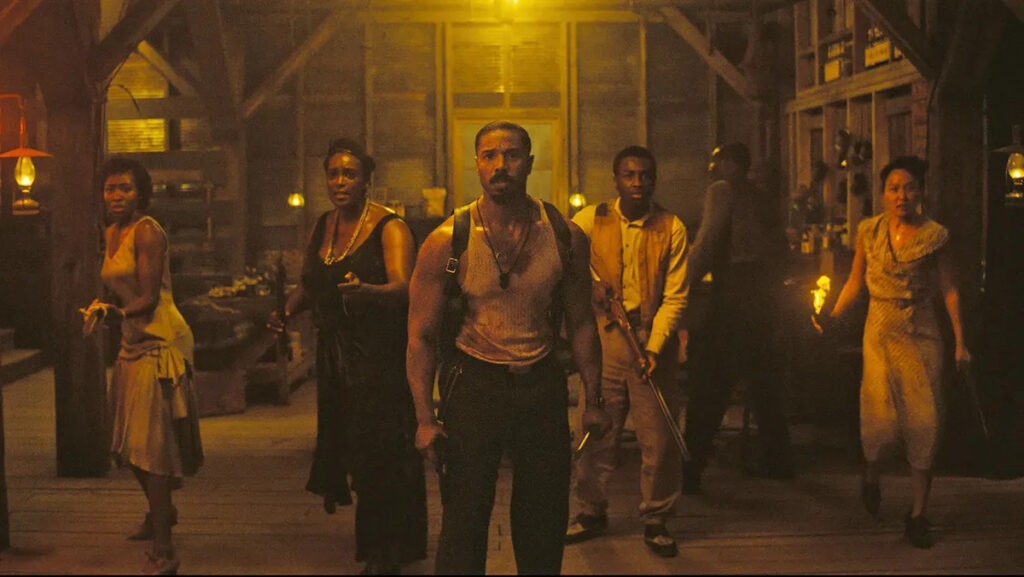
For all its hypnotic power, "Sinners" is not without noticeable flaws. The most prominent is the structural overload of the finale. The grand 27-minute battle in the flooded club, where vampires glide over water like shadows and guitar riffs blow up wooden beams, gradually loses dramatic tension, turning into a series of spectacular but emotionally flat stunts. The excessive use of CGI (especially in the "blood whirlpool" scene where hundreds of vampires dissolve into digital substance) dulls the sense of real threat so carefully built in the first acts. The genre imbalance makes itself felt: the powerful social allegory (vampire Klansmen literally drinking the "blue blood" of the local elite from crystal goblets) sharply recedes before the need to fulfill action quotas, leaving promising themes, such as the metaphor of racism as an age-old curse, unexplored.
Michael B. Jordan's performances are technically flawless but suffer from script imbalance. By the middle of the film, the differences between Smoke (his post-war nervous breakdowns manifesting in a tremor of his left hand) and Ash (cold calculation reflected in his manner of slowly lighting a cigar before killing) are smoothed out, reducing their conflict to a formality in the key sacrifice scene. Even the soundtrack, brilliant in isolation, sometimes drowns in the mix: the subtle nuances of Gaelic vampire ballads are lost under the cacophony of explosions and screams in the climax, and the piercing monologue of the witch Annie about the "music of the dead" is drowned out by deliberately loud door creaks. These rough edges do not destroy the whole but remind us that Coogler's ambitions sometimes outpace flawless execution.
Between Masterpiece and Spectacle
"Sinners" is a promising project that strives to be everything at once: an allegory about racism, a tribute to the blues, and a horror film with action elements. Not all ideas are perfectly balanced: social themes sometimes get lost in the action, and the final battle feels drawn out. But the film captivates the viewer with its energy, visual aesthetics, and powerful soundtrack. This is a movie to watch on the big screen to feel the floor shake from the bass and the vampire howl merge with the guitar solo. And yet, it is a captivating experience. In the scene where the vampire's ultrasonic howl merges with the note of a resonator guitar, and the camera flies through the club wall straight into a Mississippi thunderstorm, Coogler creates cinema as a tactile experience.
"Sinners" is not a masterpiece, but undoubtedly one of the most memorable films of the year, proving that Ryan Coogler can surprise outside the superhero genre.
Comments
0No comments yet.
Sign in to join the discussion.